With a rainy Sunday forecast (a week ago), Barbara and I decided we must stay local to make our annual bluebell hike on Saturday instead of our plan to head up into the mountains. Of course, there are a number of trails that we schedule to coincide with flowering of hepaticas, bluebells, trilliums, or orchids (and others), and we were certain this would be the peak week for bluebells (Mertensia virginica, below).
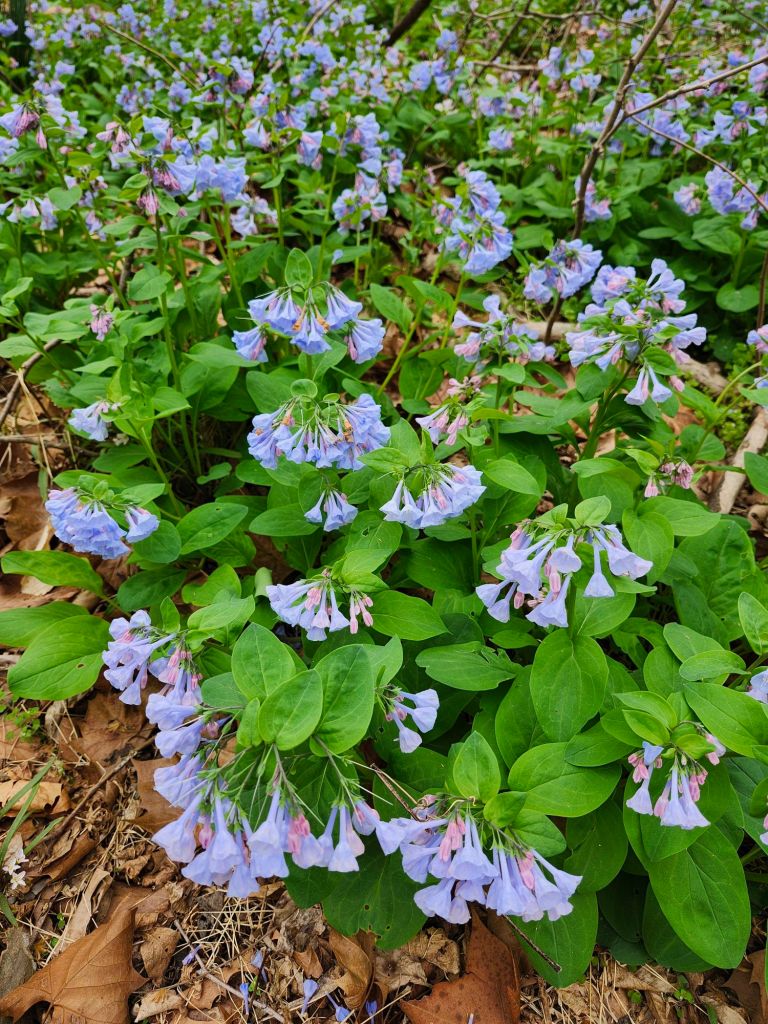
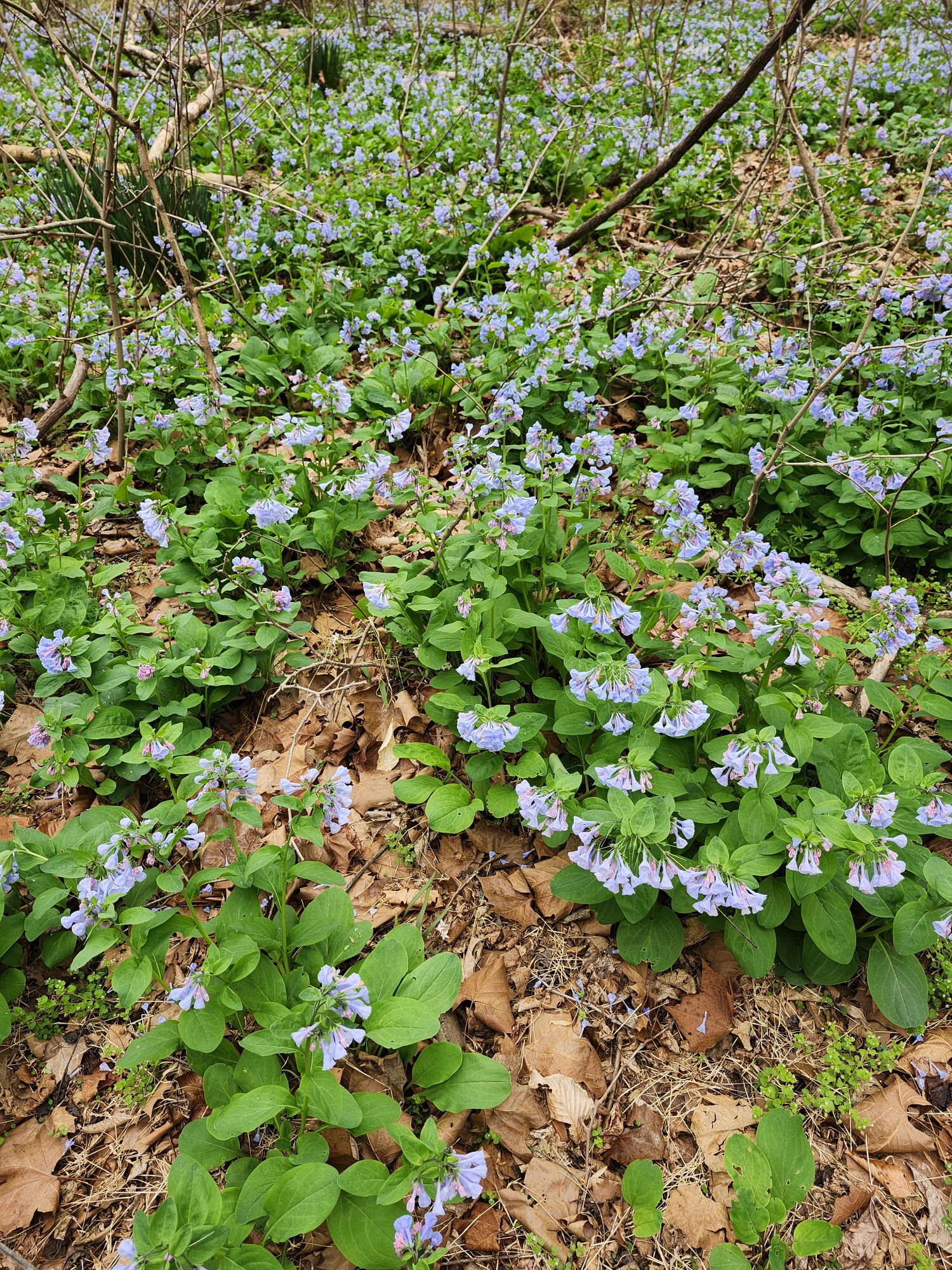
A time or two, we’ve taken advantage of a warm early spring day to go to the mountains, then something comes up, and we hit the bluebells as they’re fading. Not this year, and we decided to hike a trail along Bull Run that winds back and forth between hills and the water. It could not have been better. We’ve never been on this trail at the peak bluebell season, so we were thrilled that so many other wildflowers were also at their peak.
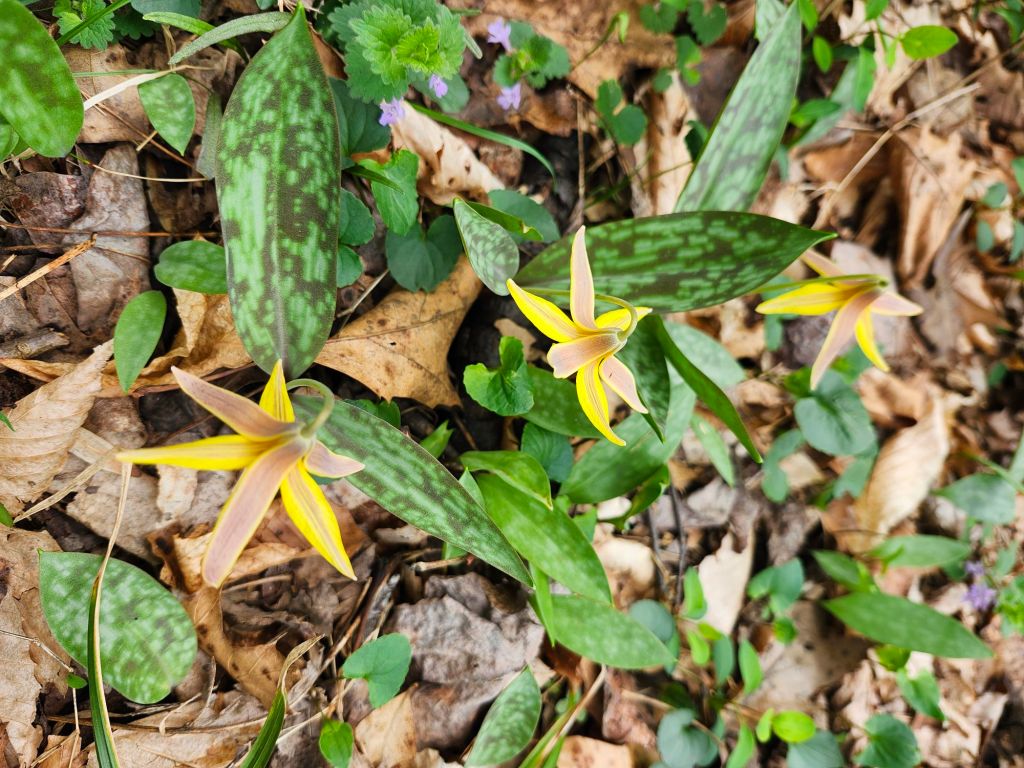
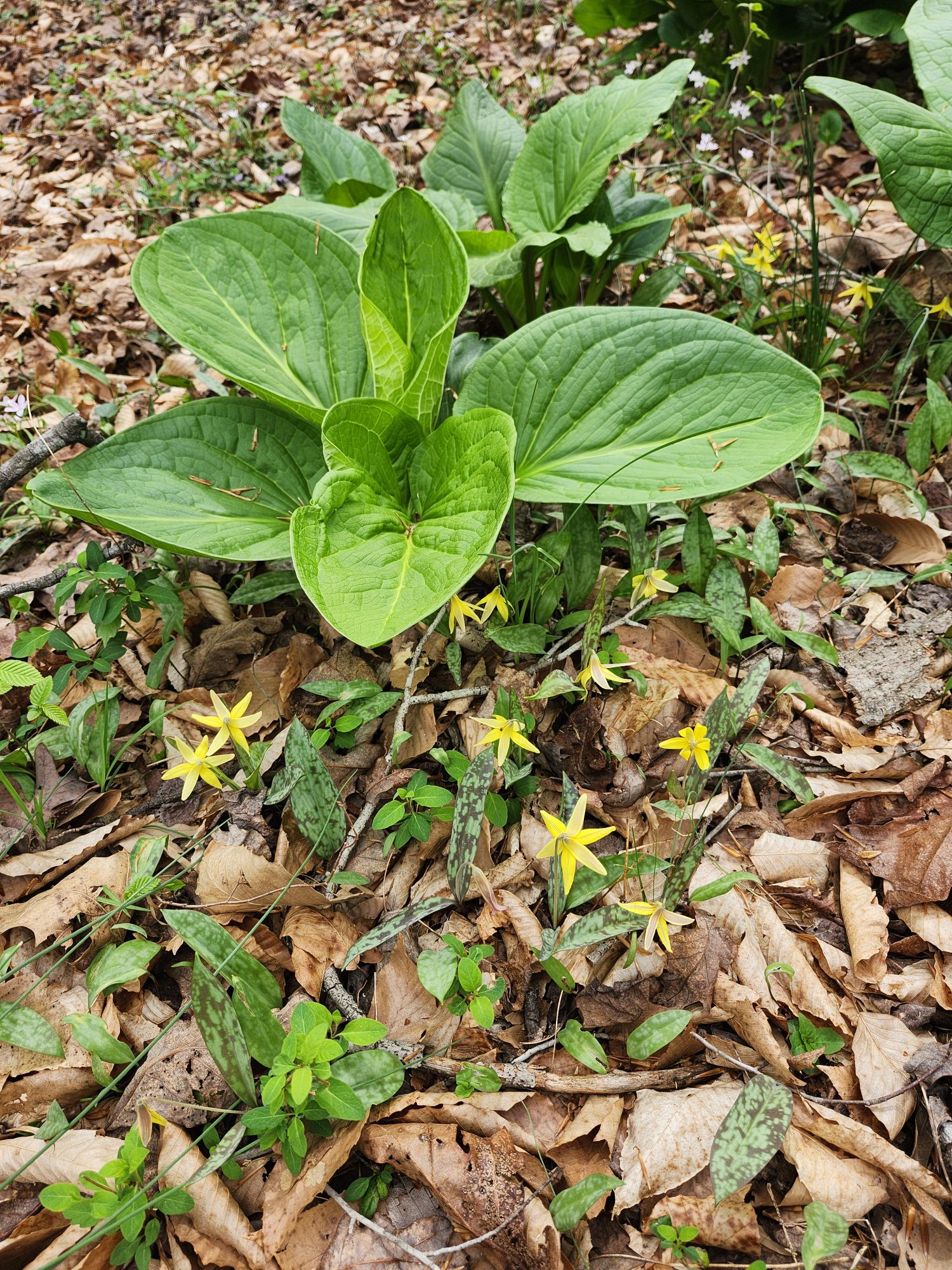
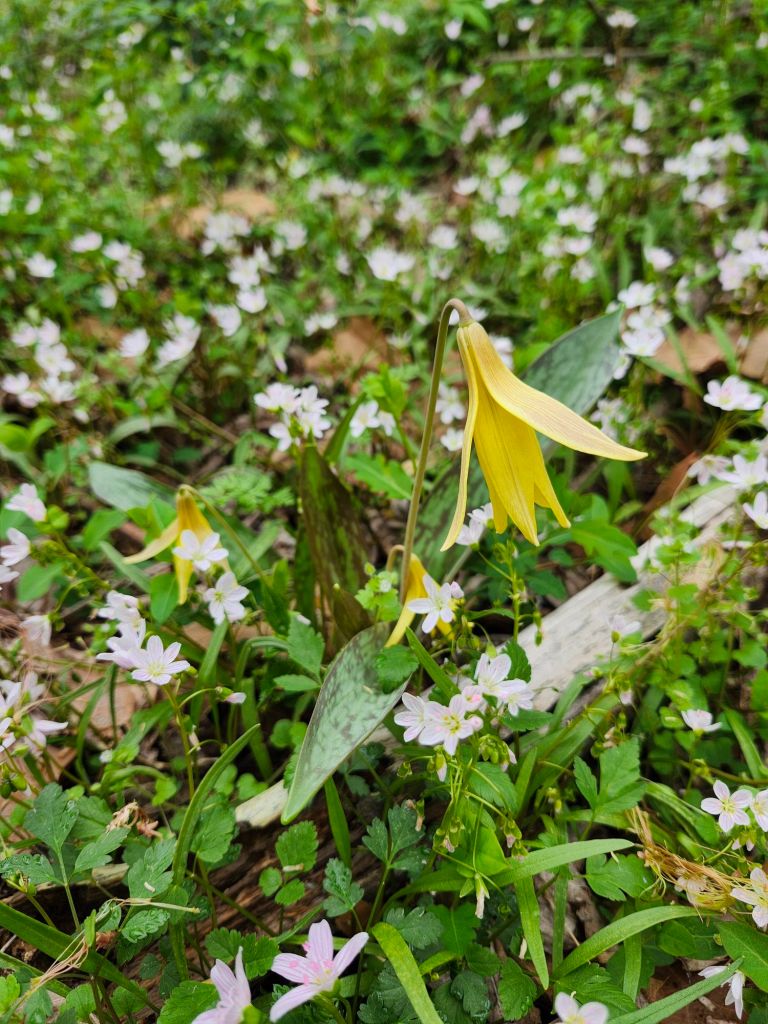
I’ve been whining that somehow, the one large clump of trout lilies (Erythronium americanum, above) in the garden has disappeared, and of the many dozens that were more recently planted, none are flowering. So, when we hiked down the slope to Bull Run, there were abundant bluebells on one side of the trail through the flood plain and trout lilies on the other. Only one was flowering of the hundreds in this first group, but as we hiked further, there were many thousands and many trout lilies in bloom (below).
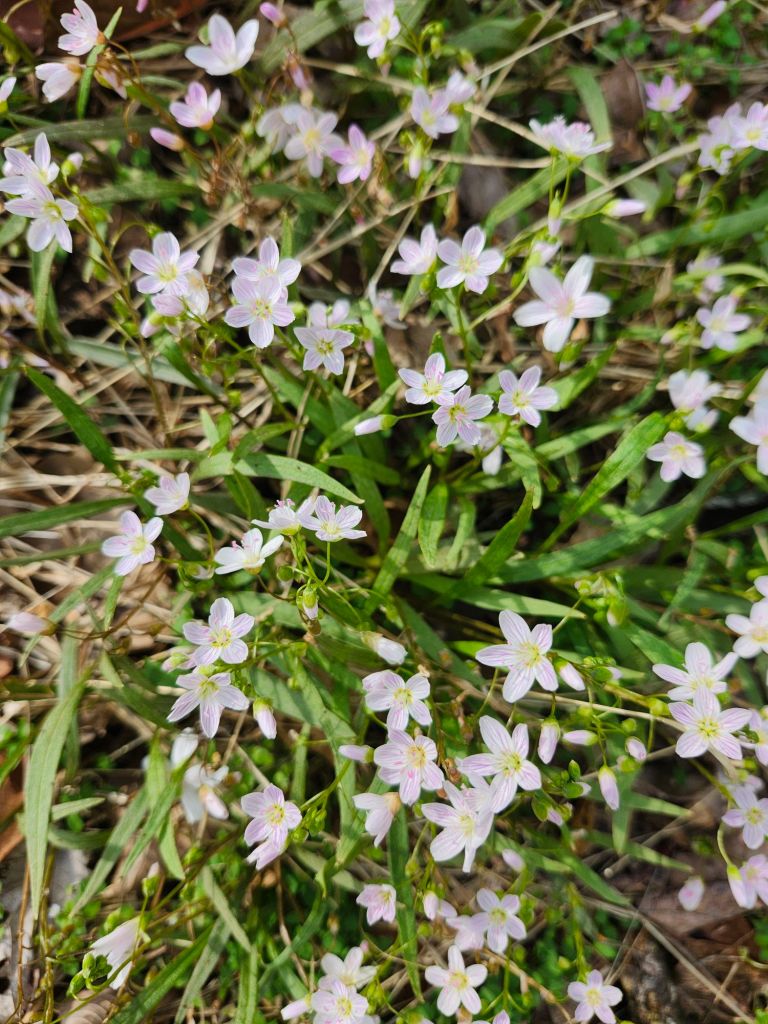
Our usual bluebell hike has scattered patches of other wildflowers, and we frequently noted that Virginia springbeauties (Claytonia virginica, below) did not clump densely. But not here, where large swaths filled areas not occupied by bluebells and trout lilies.
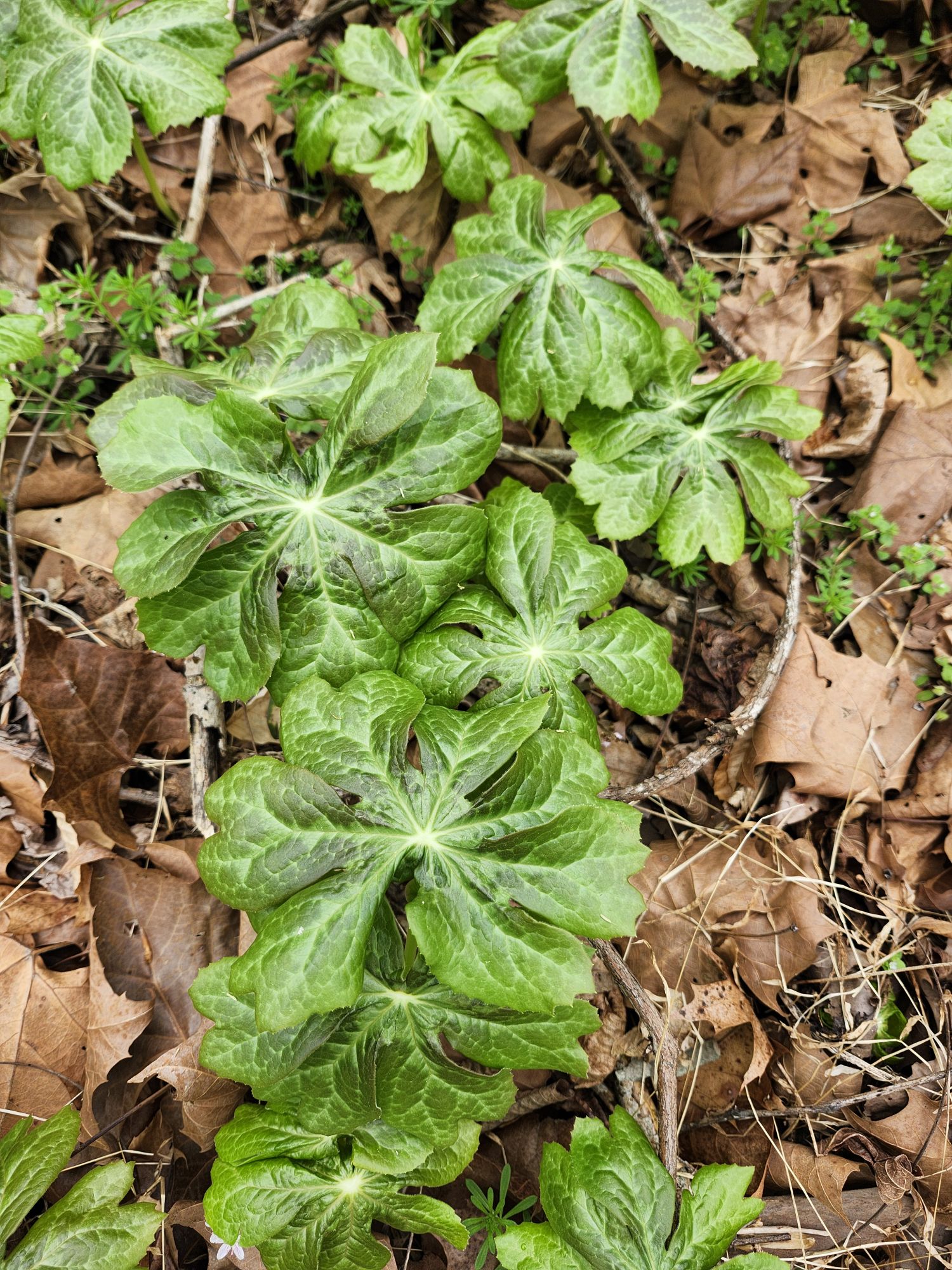
I’ve planted a number of native (Podophyllum peltatum, below) and Asian mayapples in the garden, but I always enjoy seeing them in the wild. The native mayapples rarely persist into the heat of summer, but they’re a favorite of mine even though the flowers are barely noticed beneath the large leaves.
We realized that we matched the ideal trail on the perfect day. This will go on our calendar as a yearly event.
 Ramblin' through Dave's Garden
Thank you for sharing this beautiful perfect hike!
Today, we’re headed out in search of trilliums, though my wife says there’s less urgency with the number we have in the garden.
Have the mayapples spread in the garden? There is a place several miles from here that if you drive down a particular road you can see mayapples growing all in the woods.
The Asian mayapples increase more quickly than the natives, but I see annual increases.