Already, dozens of tiny Japanese maple seedlings are fully leafed while hundreds of newly germinated seedlings do not yet show the distinctive maple leaf. Most of the seedlings not weeded out a year ago will soon be pulled and discarded, though I am always on the lookout for an unusual leaf form.
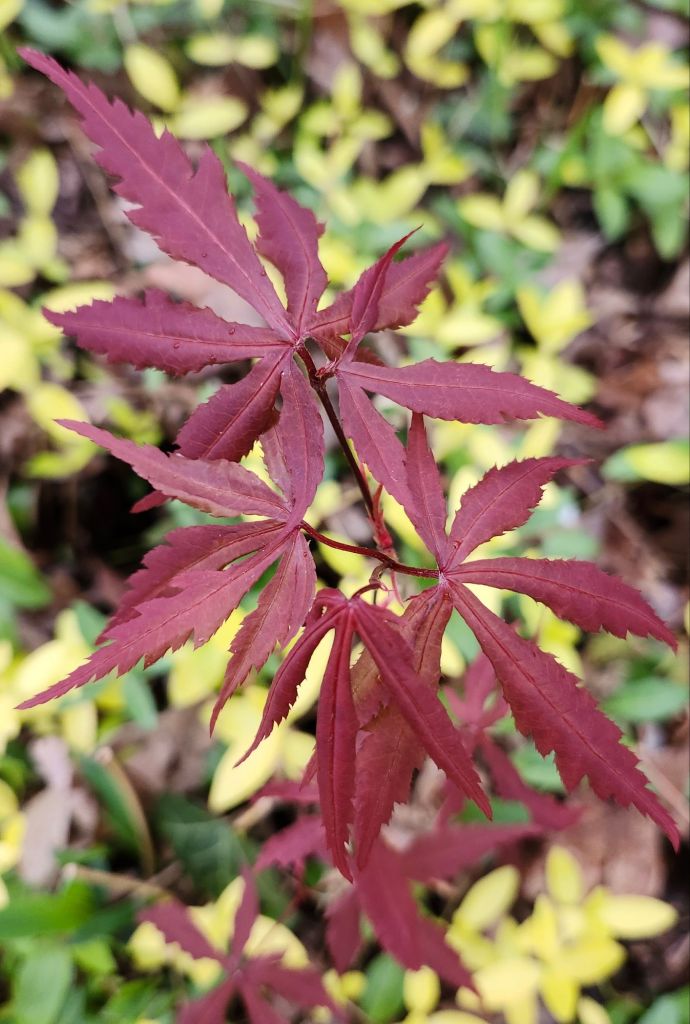
But, the evaluation of interesting Japanese maple variations is a longer-term project than I have space or patience to undertake. Most of the small maples will be pulled and dropped, with a few that have grown taller, escaping my previous weeding efforts, potted to give to visitors (below).
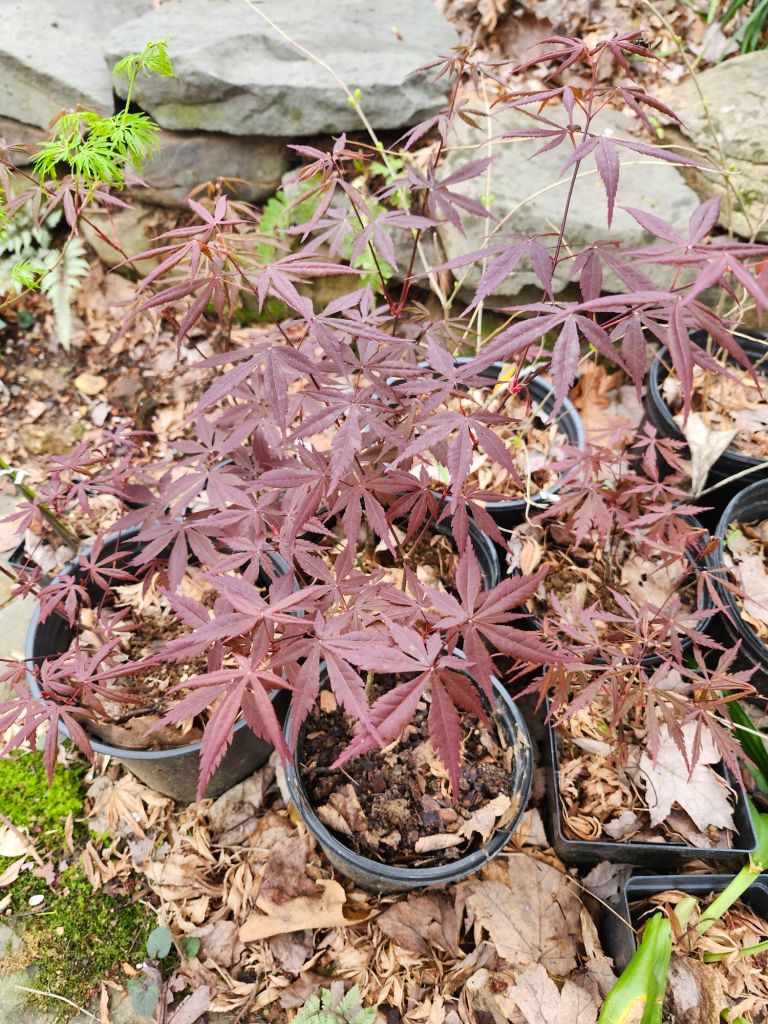
Unsurprisingly, a slightly unusual leaf form at this early stage often grows to become similar to the most common red leafed Japanese maples, though there are other criteria that might distinguish a maple from others. If the pursuit of new and interesting Japanese maples was serious, I would plant the seedlings in rows where they could be evaluated over years. This won’t happen, of course, but the seedlings are interesting weeds and rarely considered a problem.
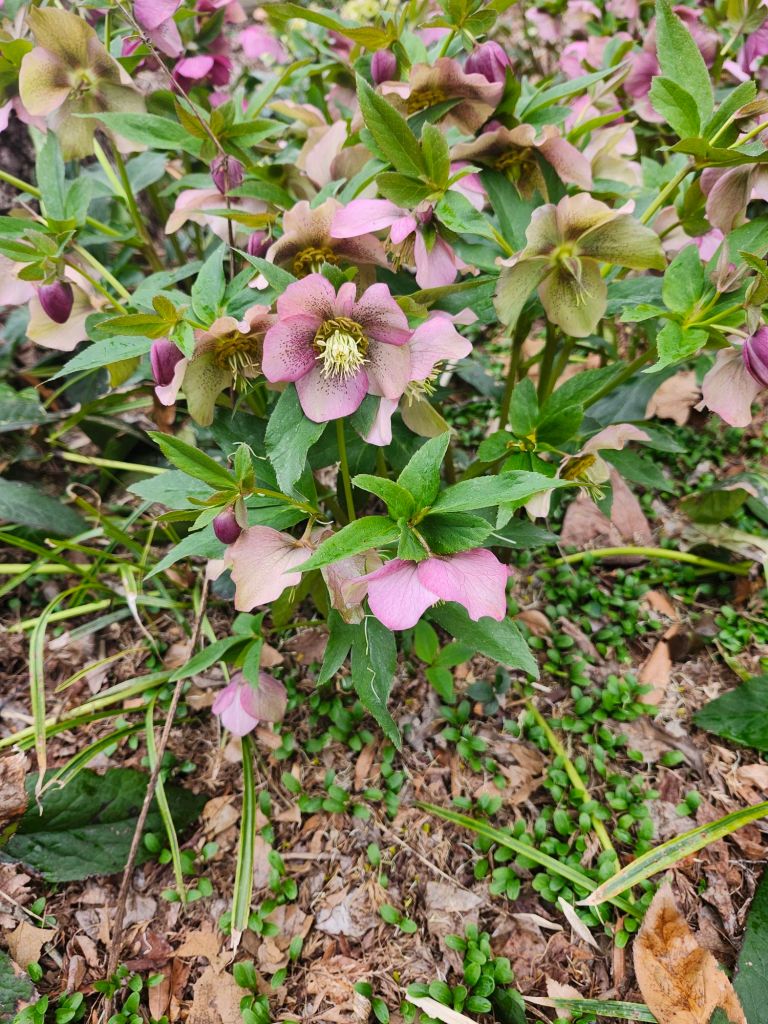
Hellebores undergo a similar process, though today, there are thousands of seedlings surrounding many of the hundred or more mature plants (above). These are even more difficult to evaluate since hellebores will not flower for several years. Most seedlings are weeded out with some that survived into a second year potted as giveaways or transplanted into an open space.
So, enough about overly abundant seedlings that must be weeded out and discarded. There are many other plants that reproduce in more modest numbers, and often, these are encouraged to grow in place with some moved to fill a gap.
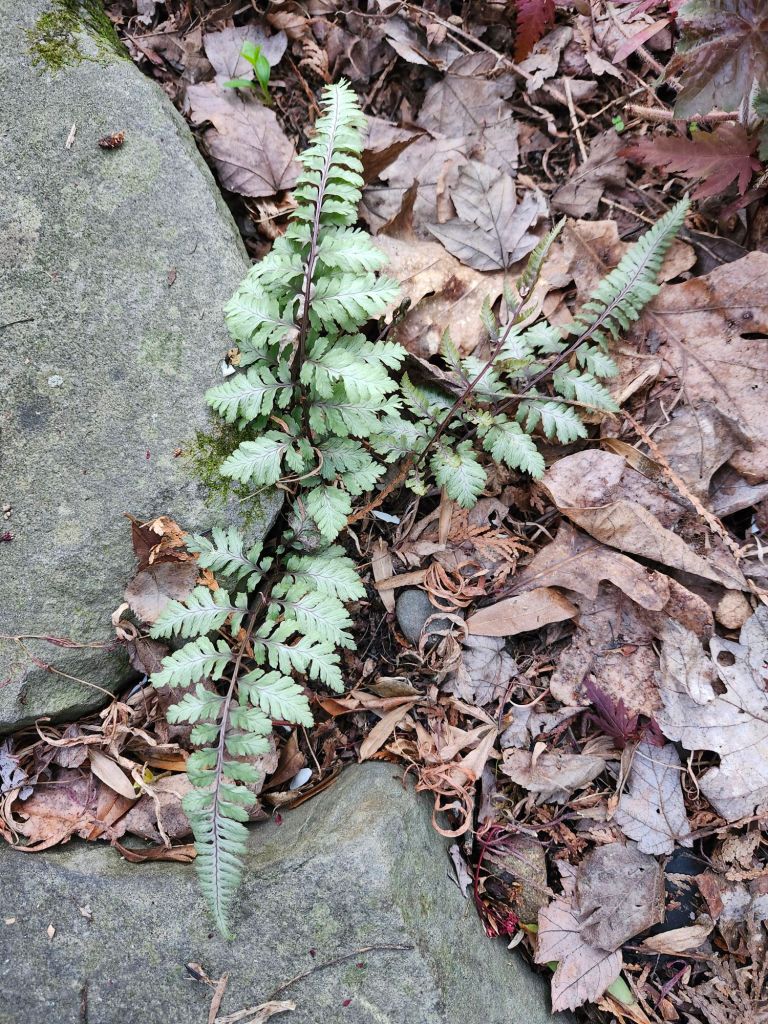
While not as prolific as maples and hellebores, numerous Japanese Painted fern sporelings (above) are scattered about the shaded rear and side gardens. Occasionally, one must be weeded from gaps on the stone paths, but they’re never a threat to neighboring plants, and the delicate foliage blends well with broader leaves. Over years, I now have no clue which ferns were ones I planted.
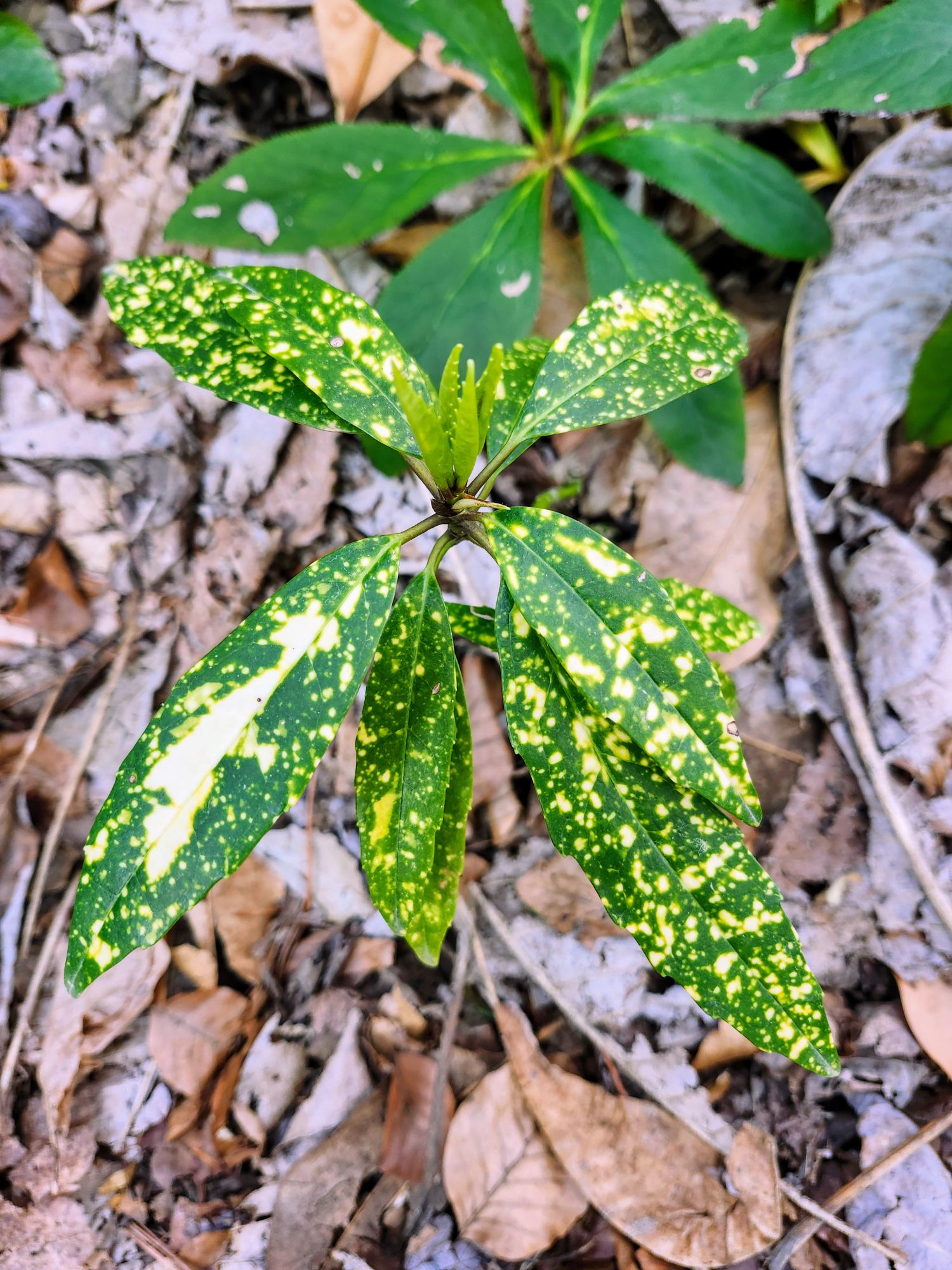
Besides adding new plants to the garden at no cost, seedlings and sporelings are also indicators of happy plants. A hosta or Japanese aucuba seedling (above) reminds me that pollinators are doing their deed and that I’ve done my part to provide a good home.
 Ramblin' through Dave's Garden
thank you, Dave, for each of your posts. I read them all, but rarely take the time to stop and write a thank you. Always a joy.
(i’ll be changing out my email address in a moment, but will remain a subscriber)
Thank you for reading.