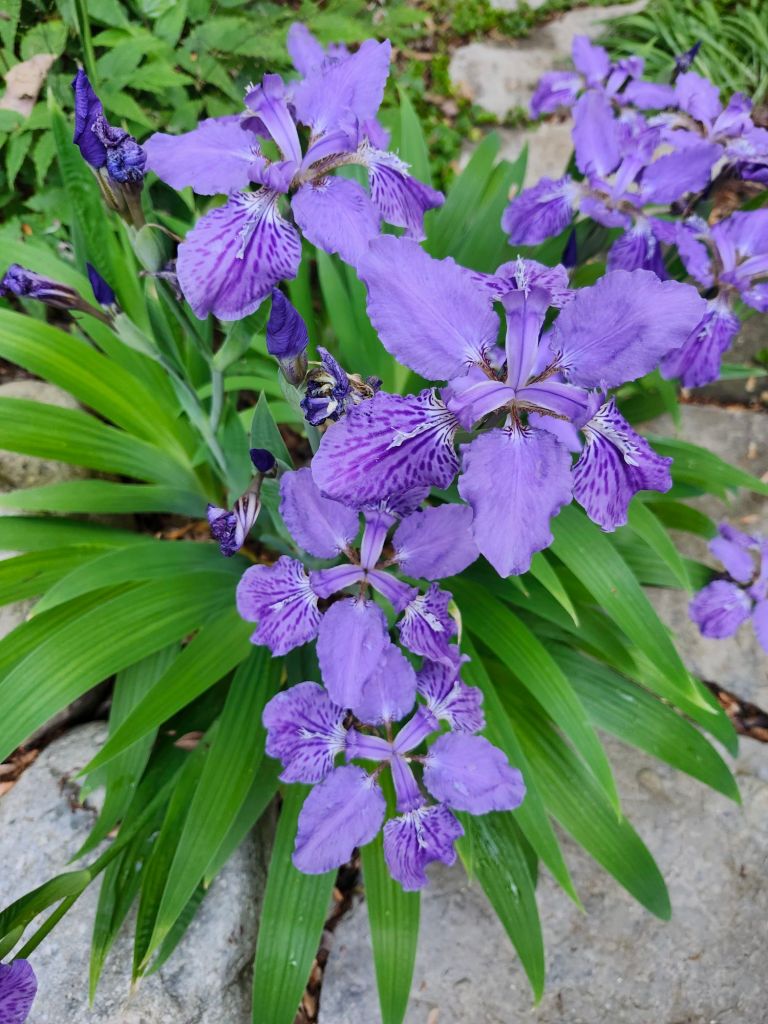
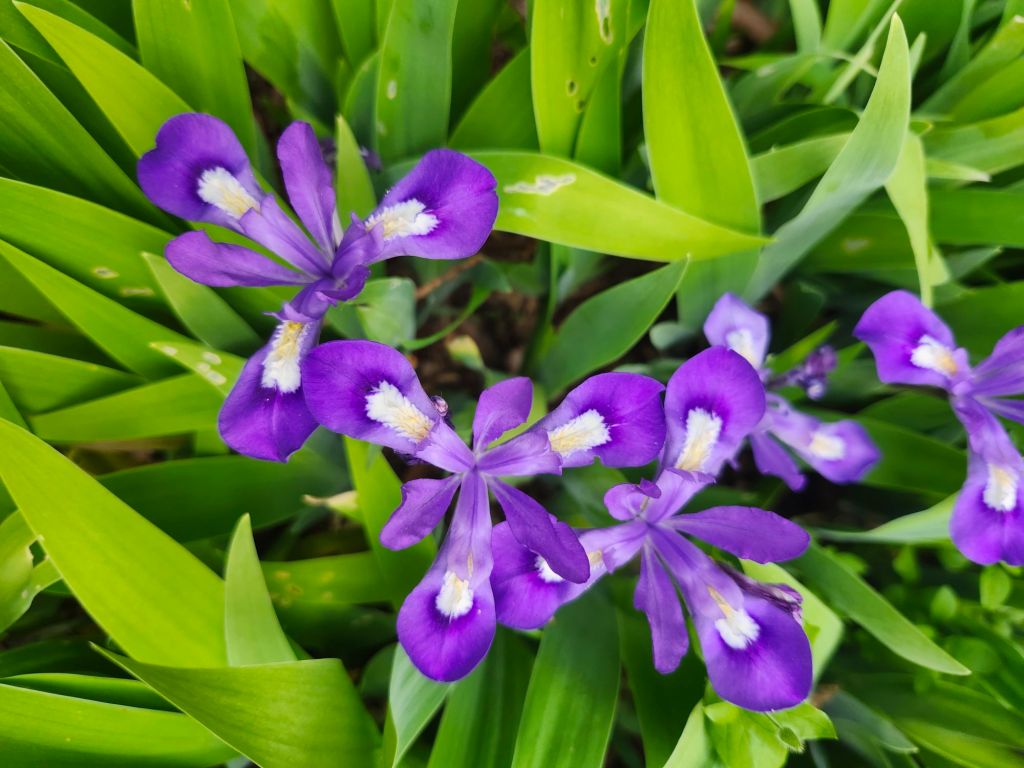
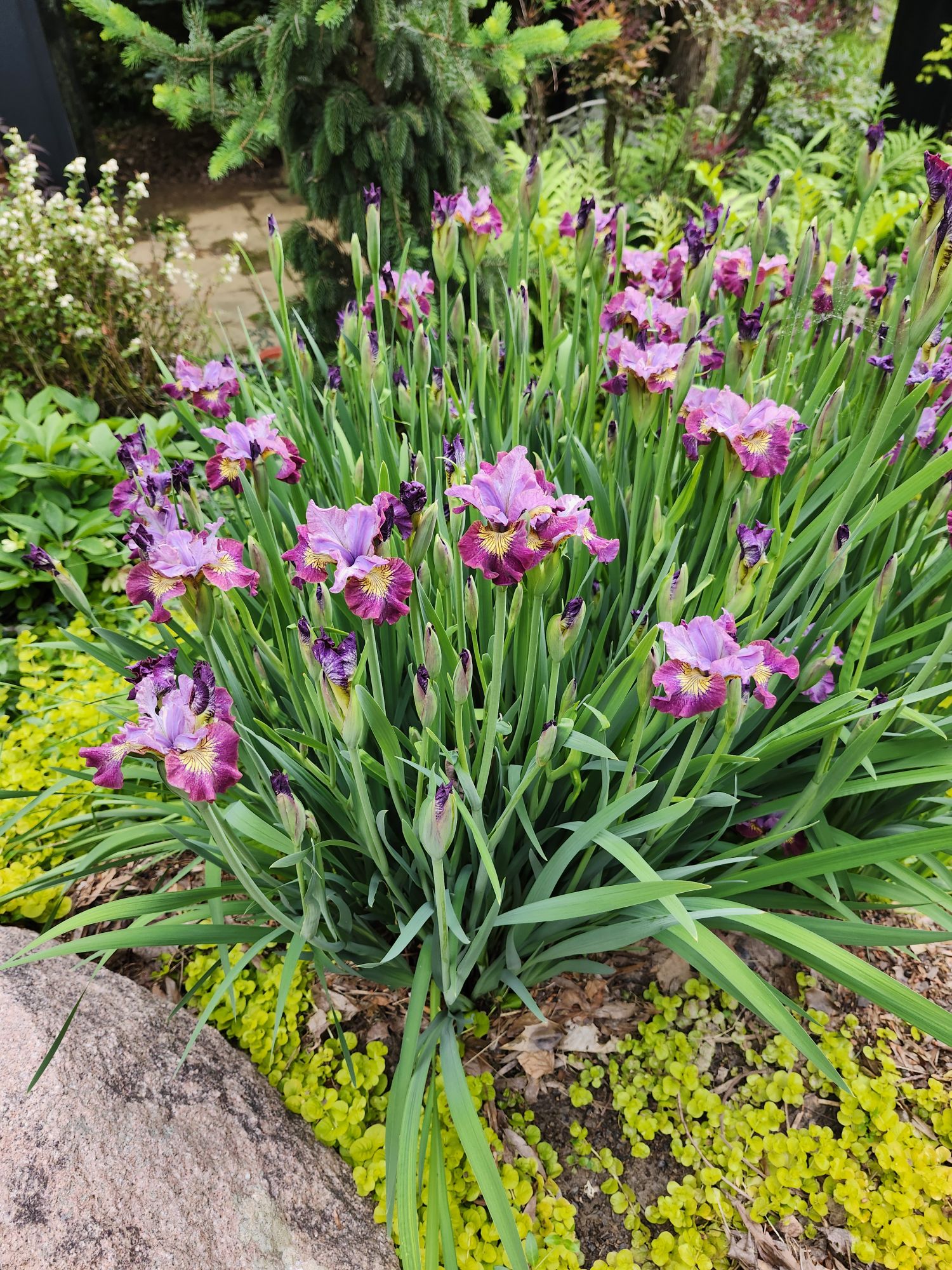
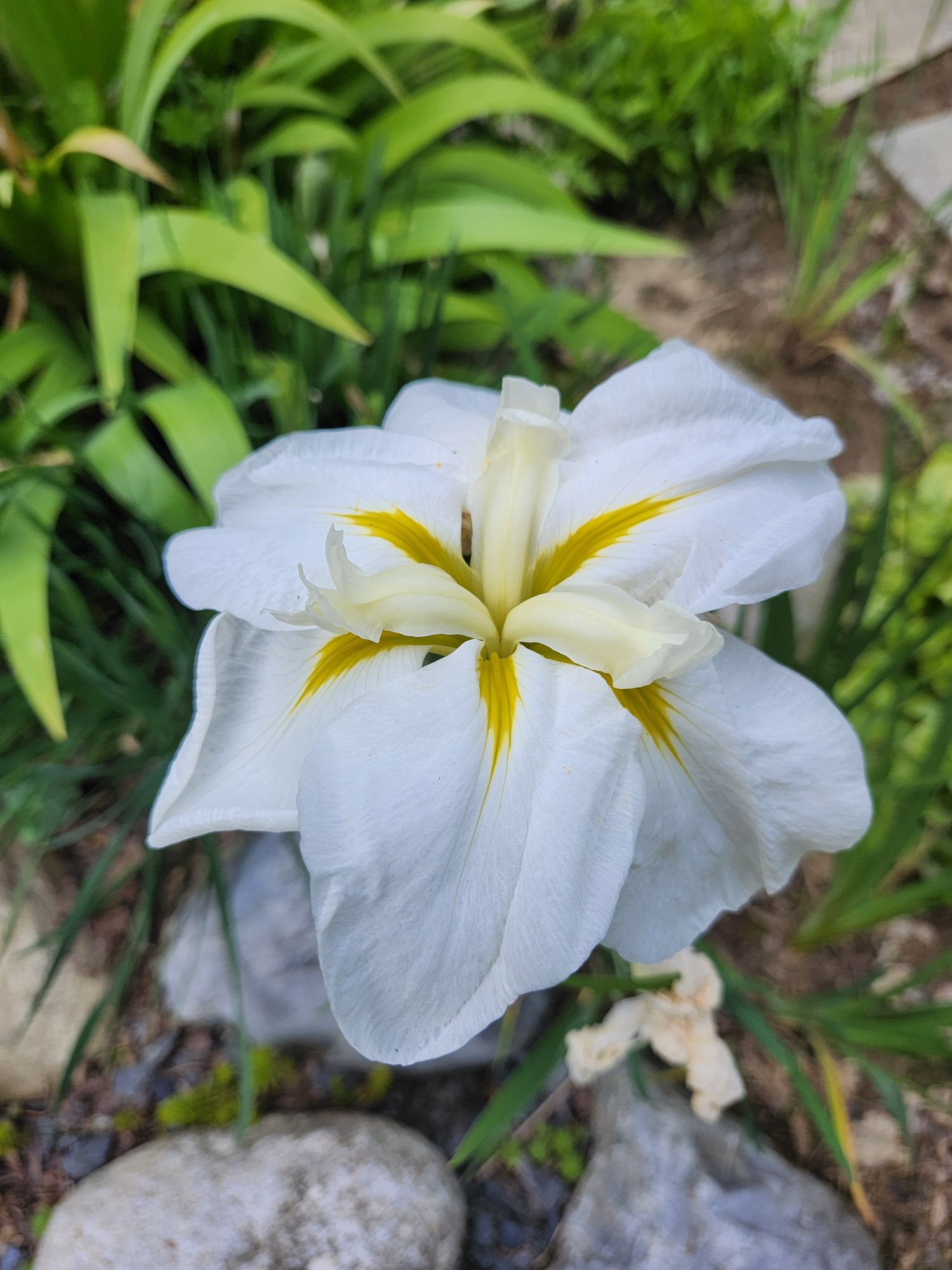
Flowers of Crested (Iris cristata, below) and Siberian irises (Iris sibirica) have faded, and today the many Japanese irises are nearing their peak. All are exceptionally easy, with Siberian and Japanese irises particularly useful for planting in clay and damp soils.
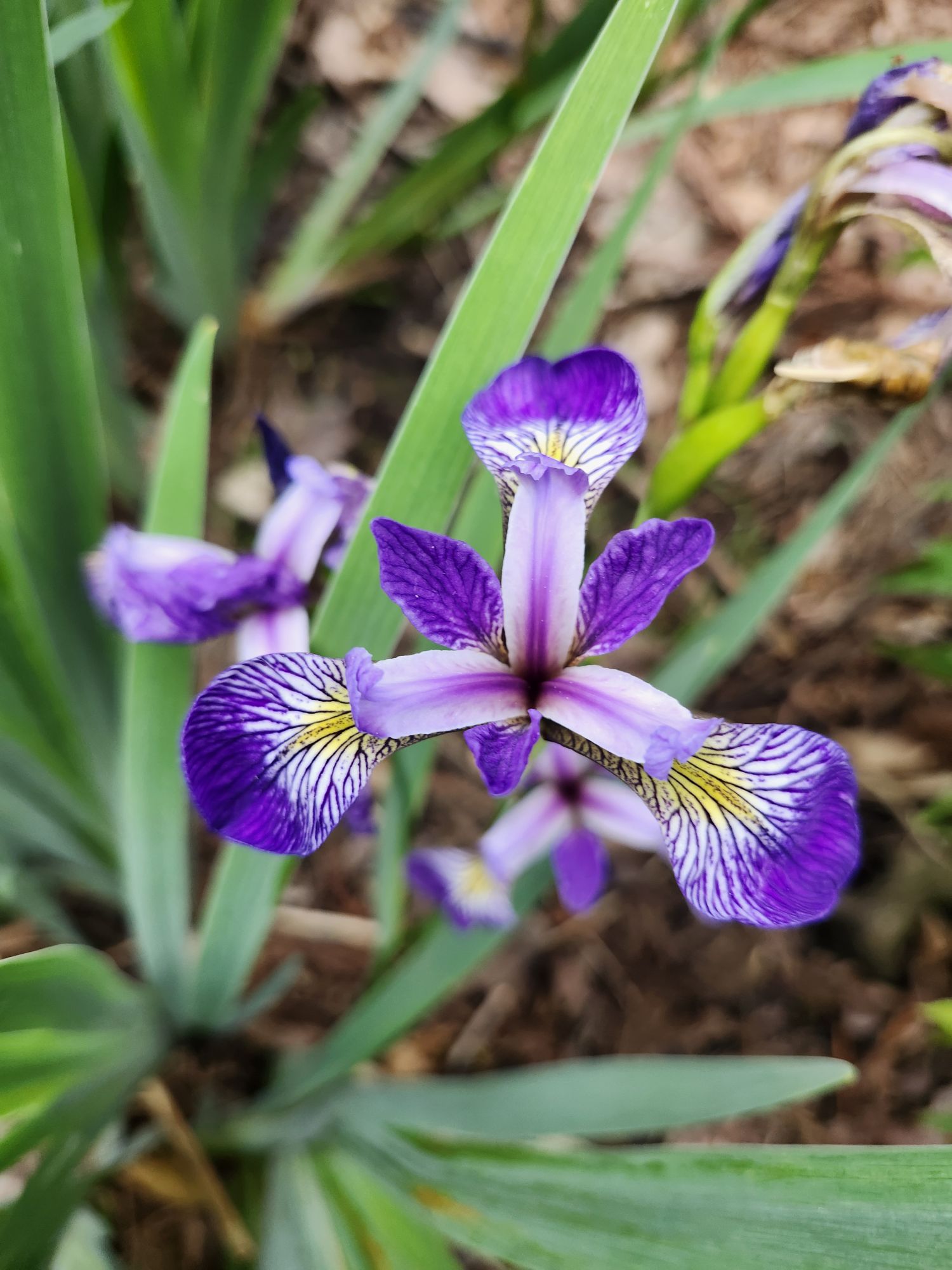
Sadly, glorious Japanese irises (Iris ensata) that were planted in gaps between boulders surrounding the koi pond have been completely lost. I suppose a bird or beast of some sort introduced seed or roots of the yellow flag iris (Iris pseudacorus, below) to the filtration area of the pond and it spread from there. Japanese irises are not beautiful weaklings, but they succumbed as the invading yellow flags spread through the pond.
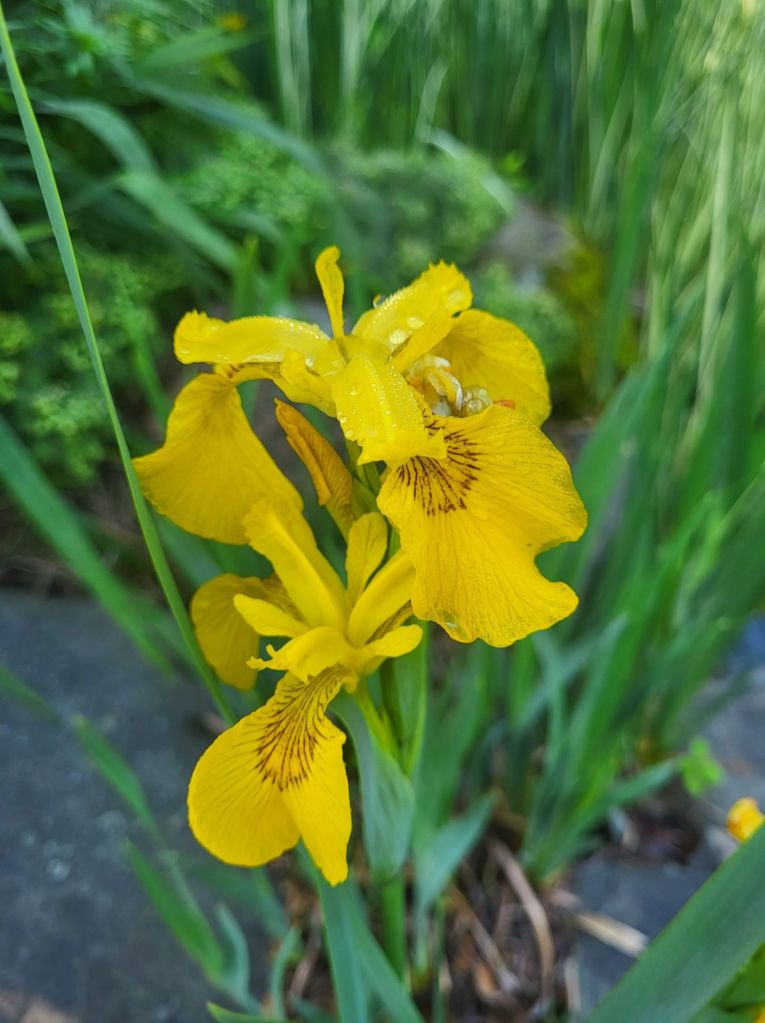
Foliage of yellow flag is similar to the Japanese iris, so by the time their identity was confirmed, the two were hopelessly entwined in the shallows of the pond. Inhabitants of the edges of the pond are not easily dug out, so I’m stuck with the yellow flags and monitor so they don’t escape into nearby wetlands.
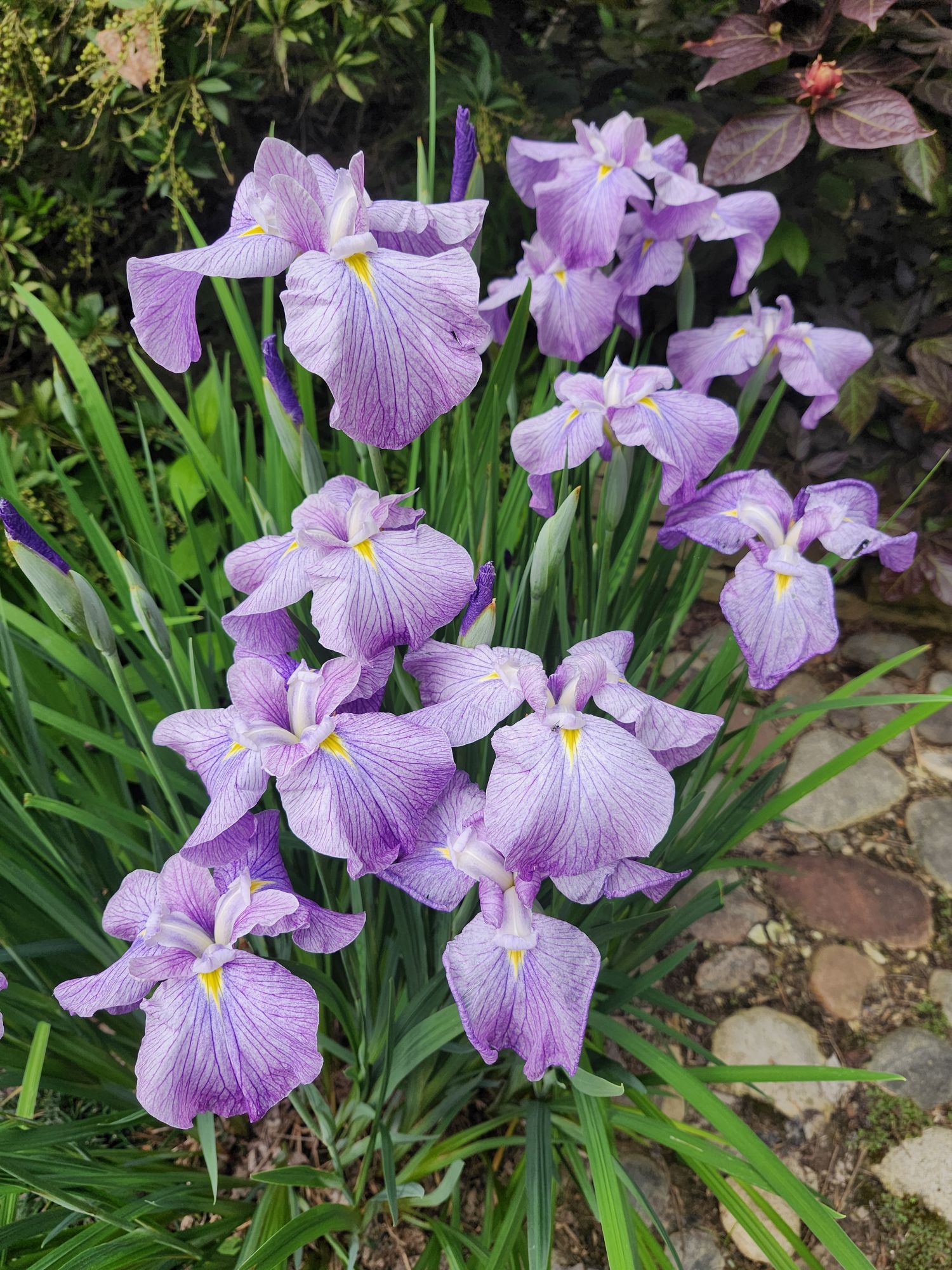
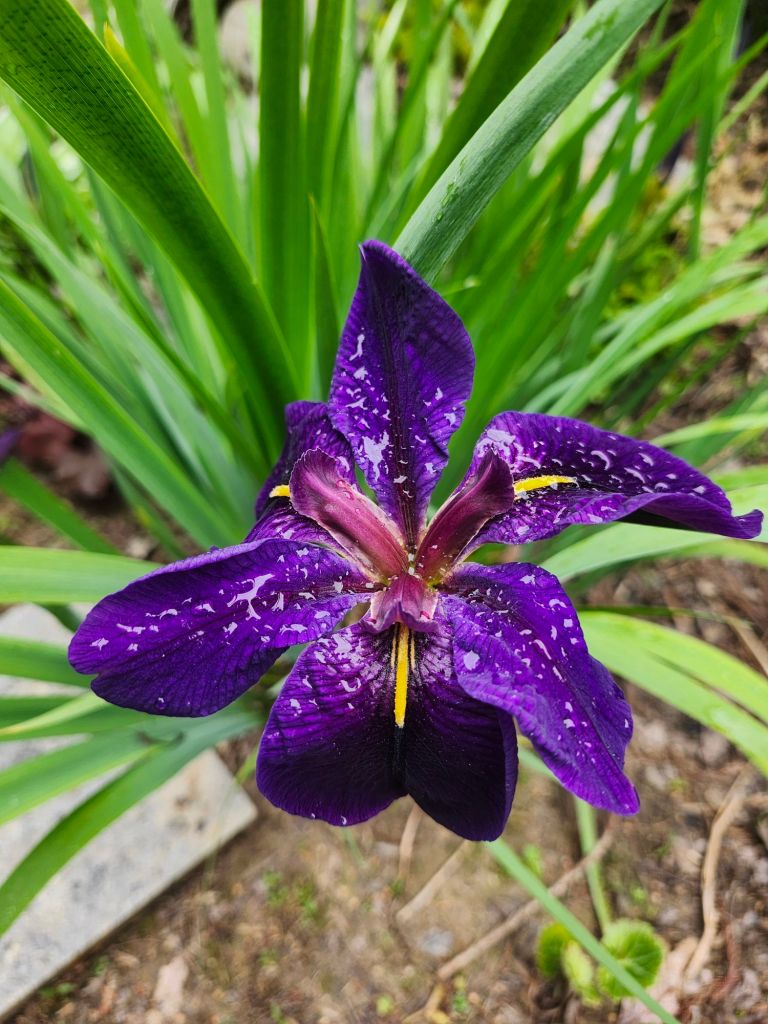
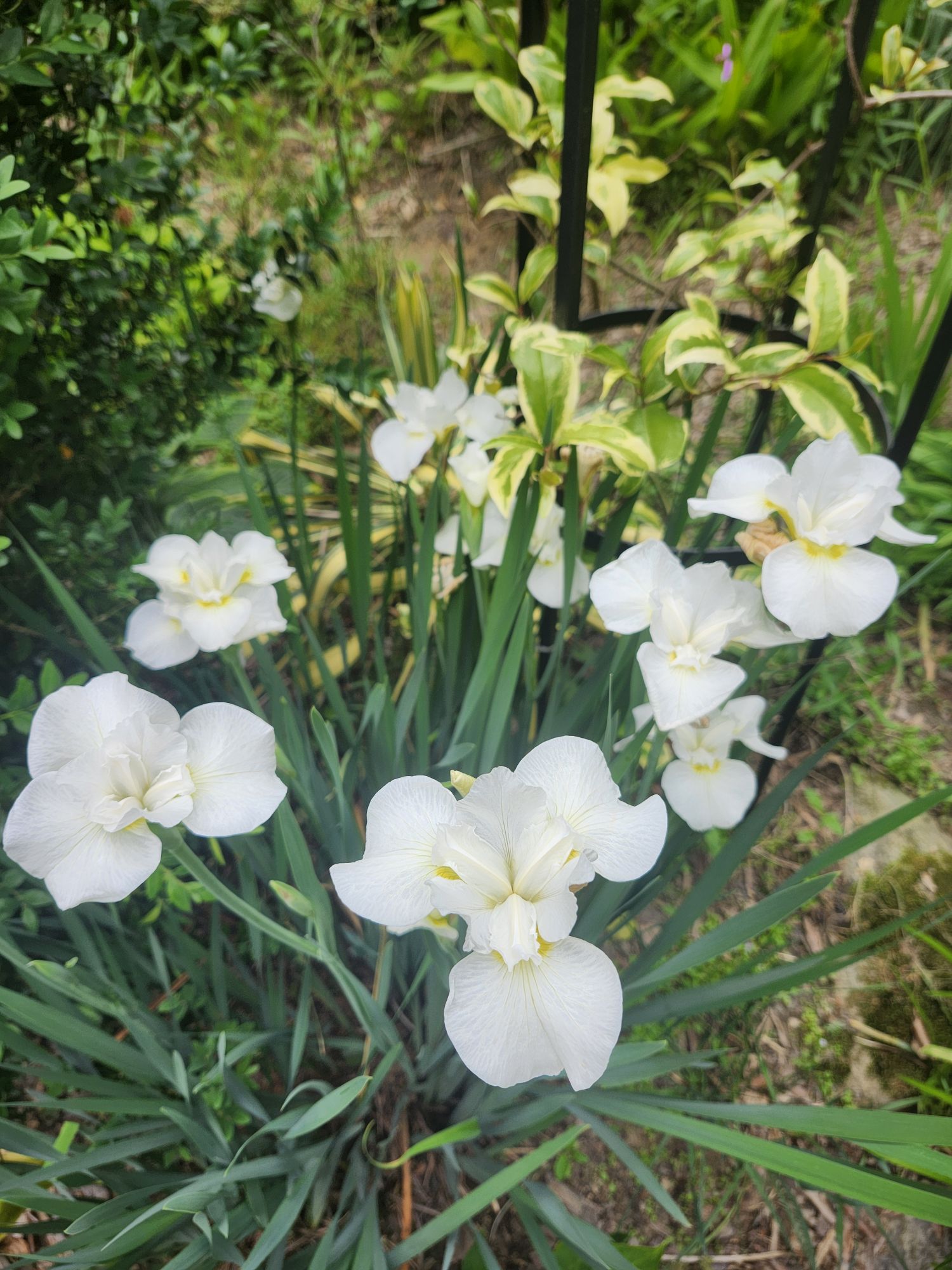
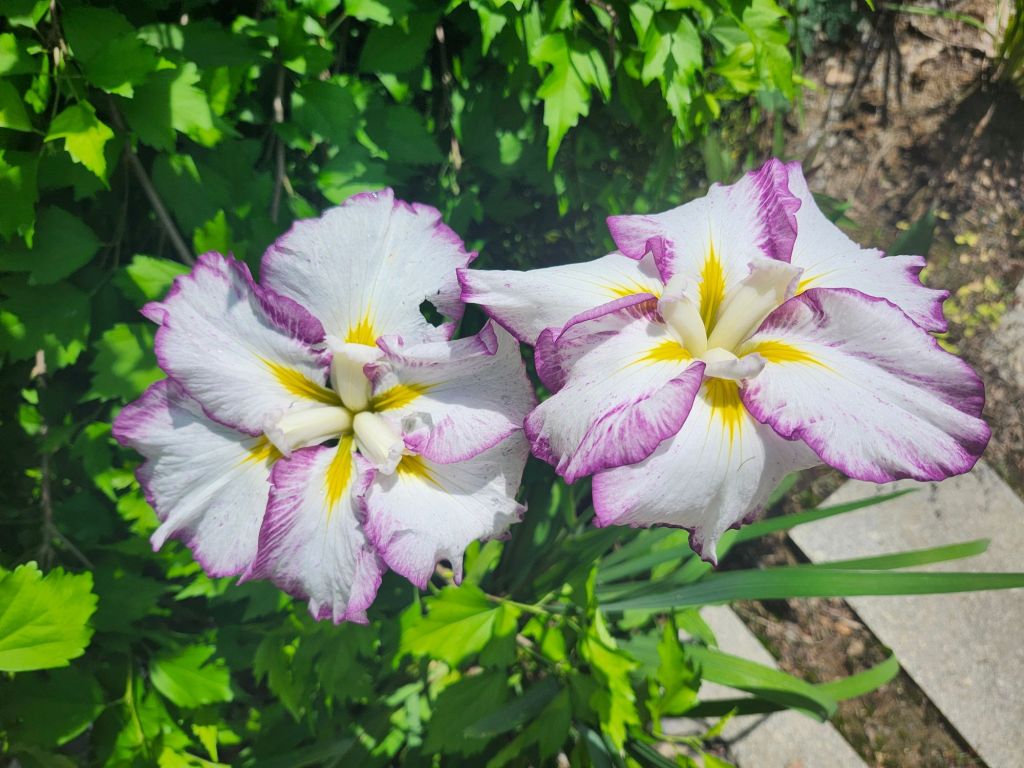
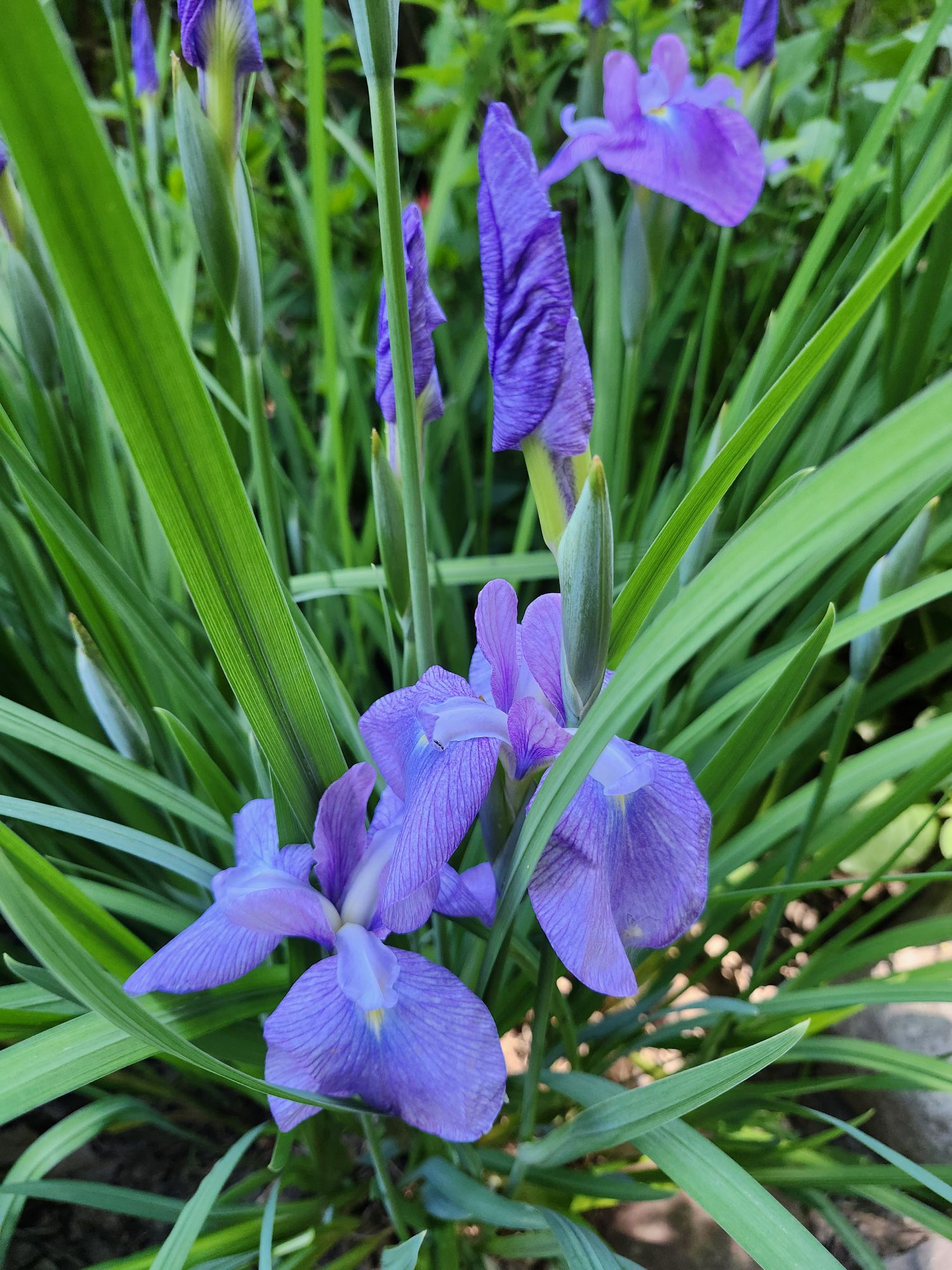
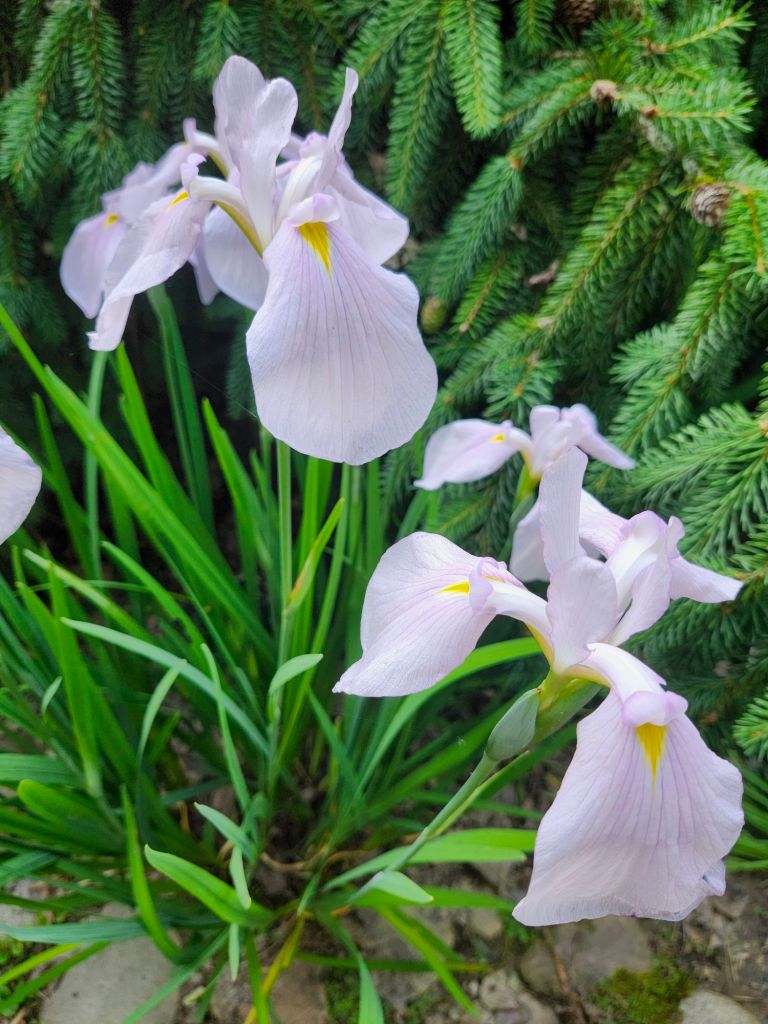
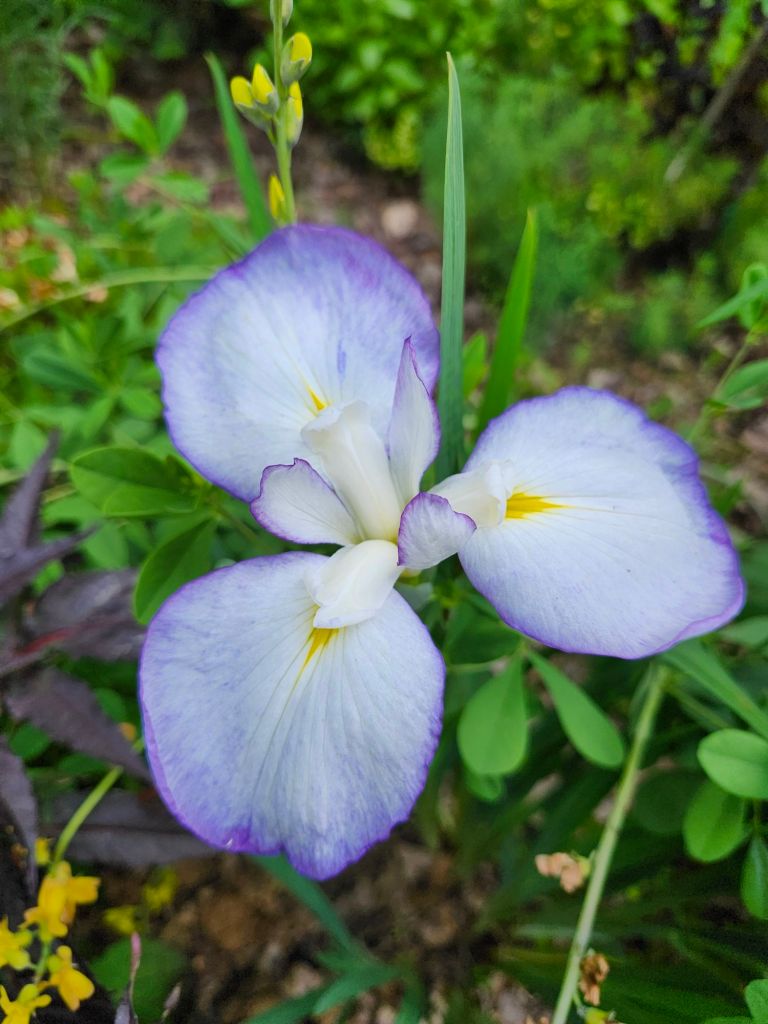
But, I wanted Japanese irises back (and a few Louisiana irises), so when I decided to expand the lower rear garden and dug drainage swales to channel runoff, irises were perfect for edges of the swales. A few clumps are still young, but the clumps fatten up in a few years. Today’s blooms tell me that I still need to add a few colors.
 Ramblin' through Dave's Garden
So, so gorgeous, …a virtual cloud of purple, pink and white, … such beauties…💫
Each flower doesn’t last long, but with different varieties they’re flowering for several weeks.
These are so beautiful and remind me of my mother’s love of irises. I transplanted quite a few bulbs the past 2 seasons but only a few bloomed. Do I just need to be patient?
I assume transplanting might delay flowering for a year.
Absolutely gorgeous blossoms!