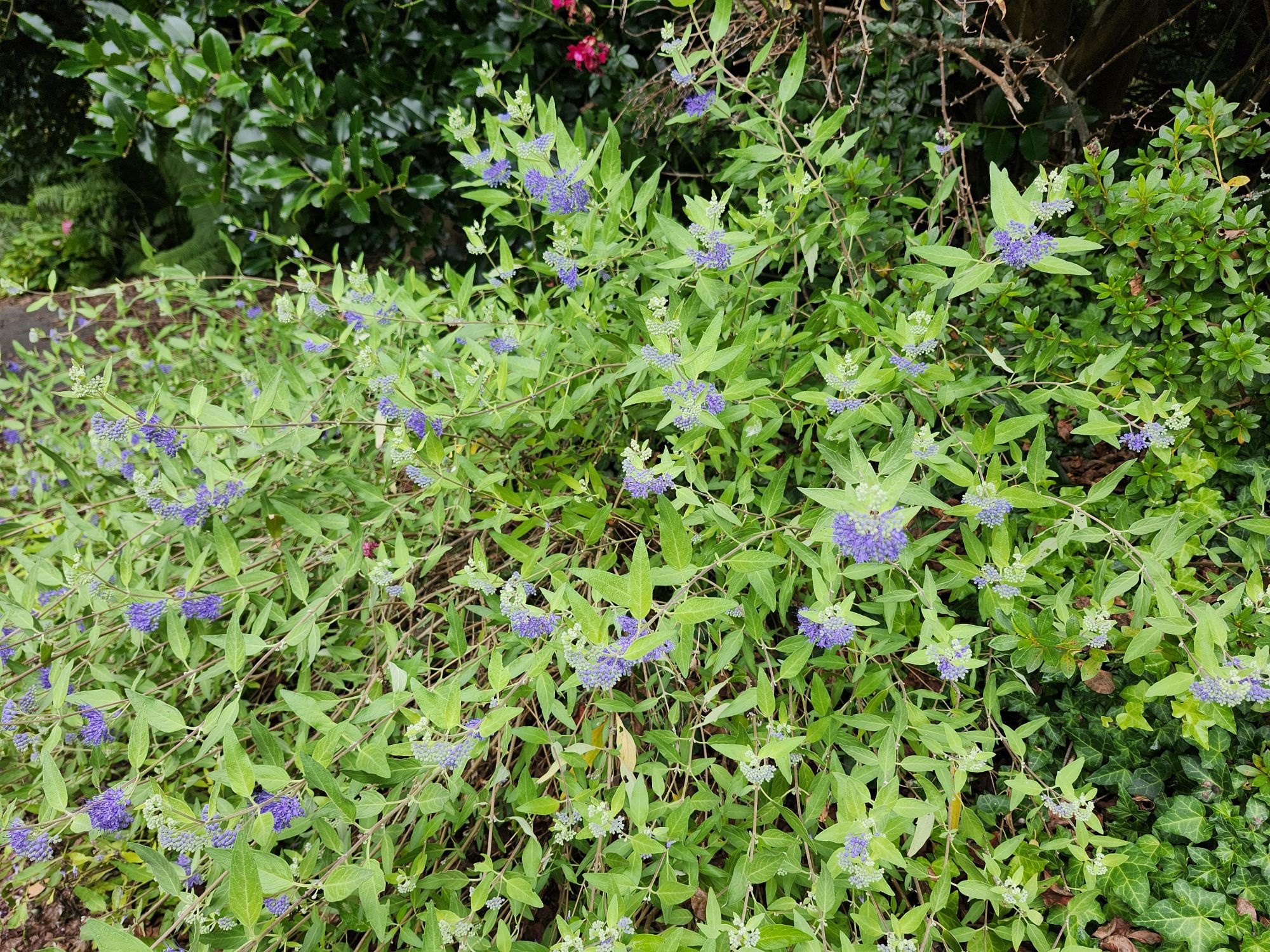
Surviving the reflected heat of the driveway must be a challenge, but the yellow-leafed ‘Worcester Gold’ bluebeard (Caryopteris x clandonensis ‘Worcester Gold’, below) thrives despite this unfortunate placement bordering the asphalt. In fact, this could be good fortune as other bluebeards have been overwhelmed by neighbors or shuffled about in search of a small spot of sunlight.
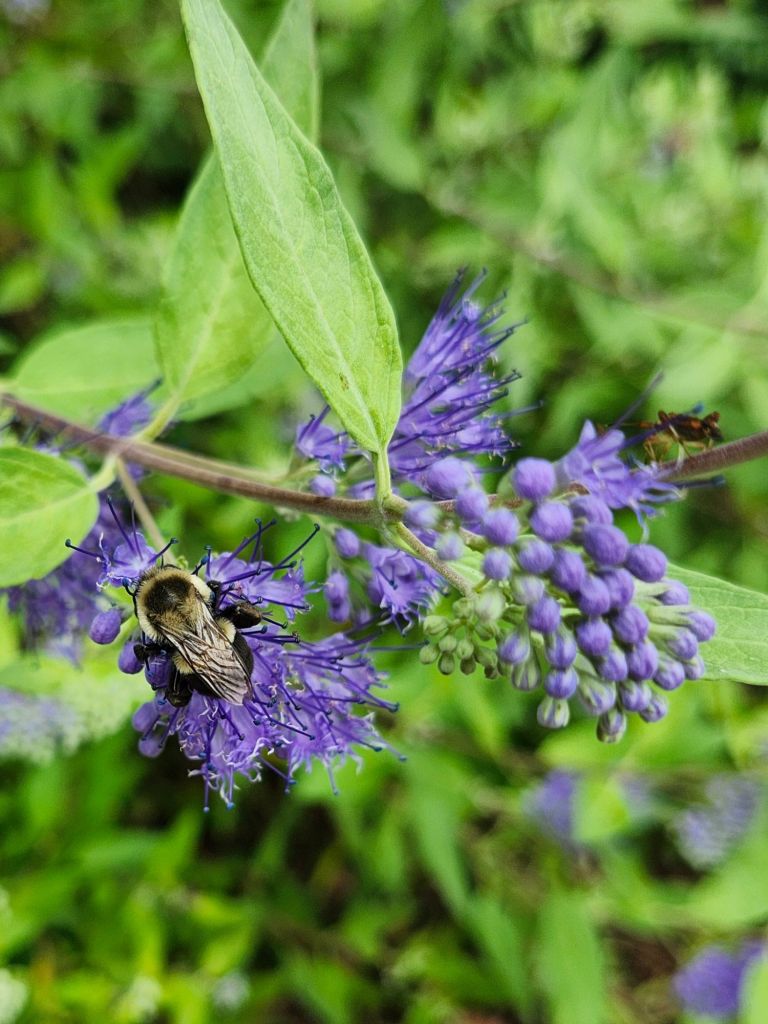
Certainly, other yellow-leafed bluebeards have superior foliage, but ‘Worcester Gold’ remains while ‘Sunshine’, with more substantial stems and leaves that faded less in summer’s heat, perished with competition from neighboring shrubs. I was late in moving it.
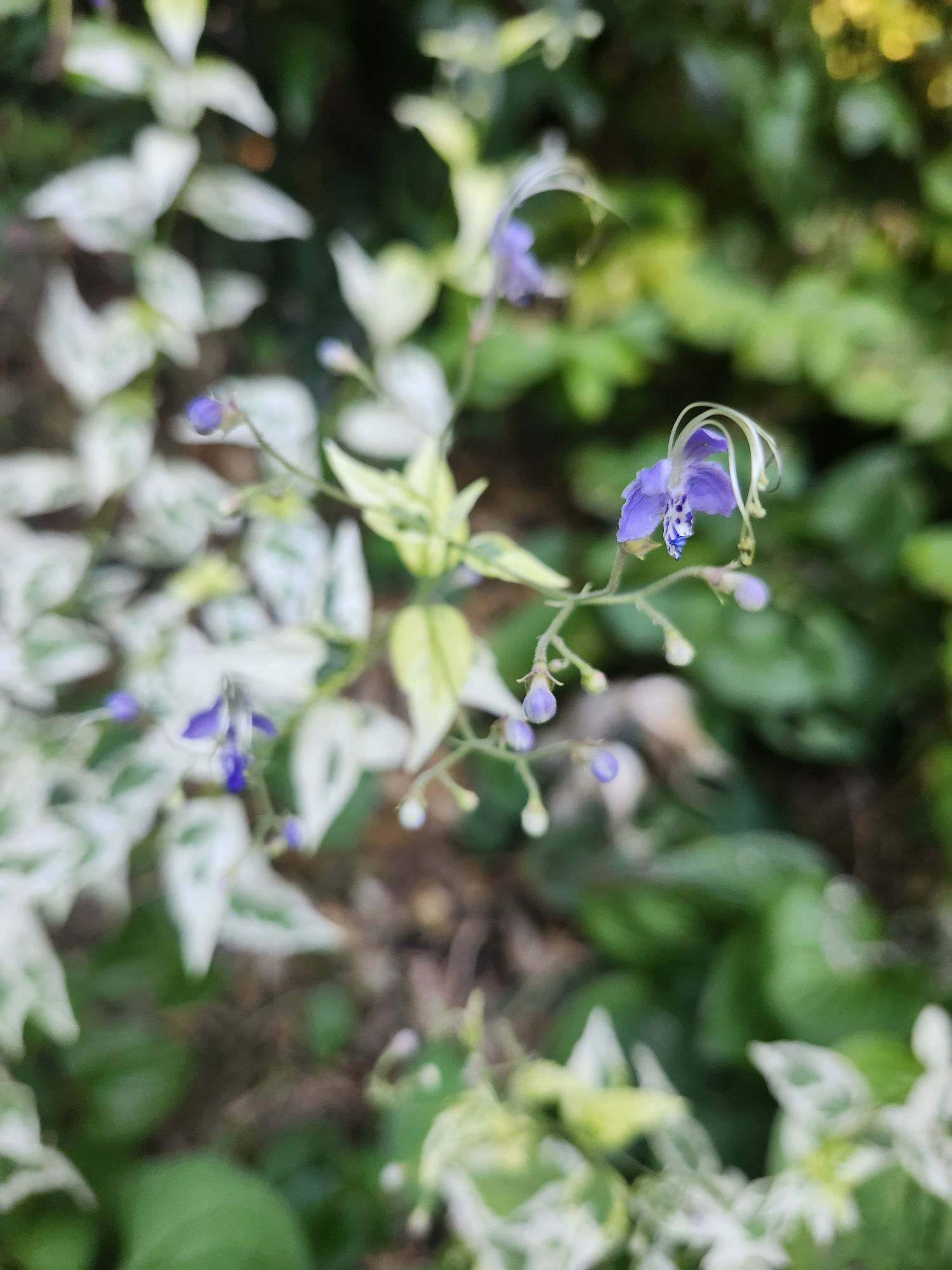
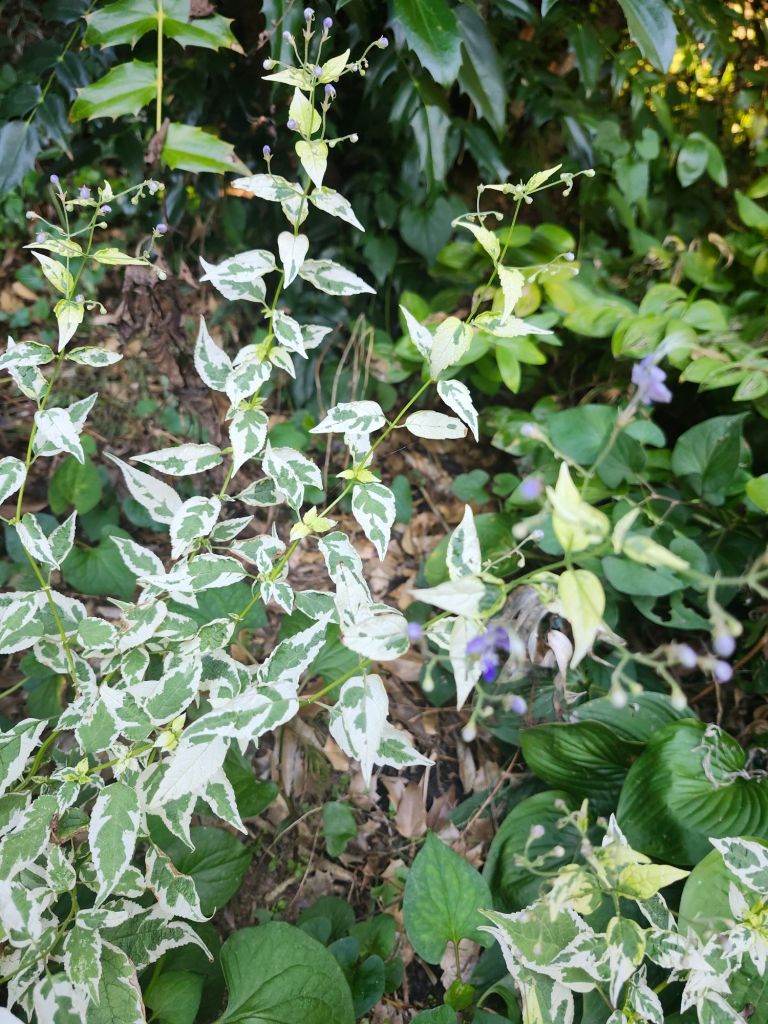
There is no fault with the standard green-leafed bluebeards, but I prefer the contrasting colors of flower and foliage. The variegated ‘Snow Fairy’ (Caryopteris divaricata ‘Snow Fairy’, below) is soft-wooded and often must be cut back considerably in early spring to remove winter-damaged stems. ‘Snow Fairy’ was rescued a year ago as ‘Chardonnay Pearls’ deutzia spread. Today, it has regained its vigor though it is delayed in flowering by a shadier position.
An American beautyberry (Callicarpa americana, below) planted along the driveway in recent years suffered from this placement, though it appears on the way to full recovery. Spots with exposure to sun are limited in the garden, and I’ve failed a few times getting the native beautyberry started. Today, it is flowering and berries will follow shortly.
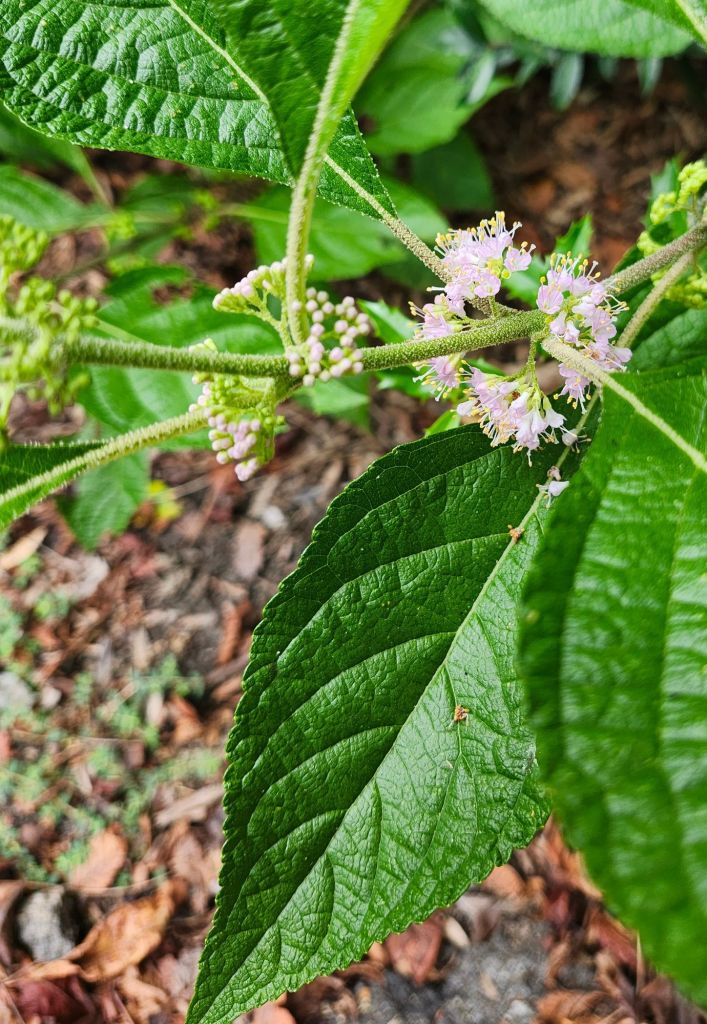
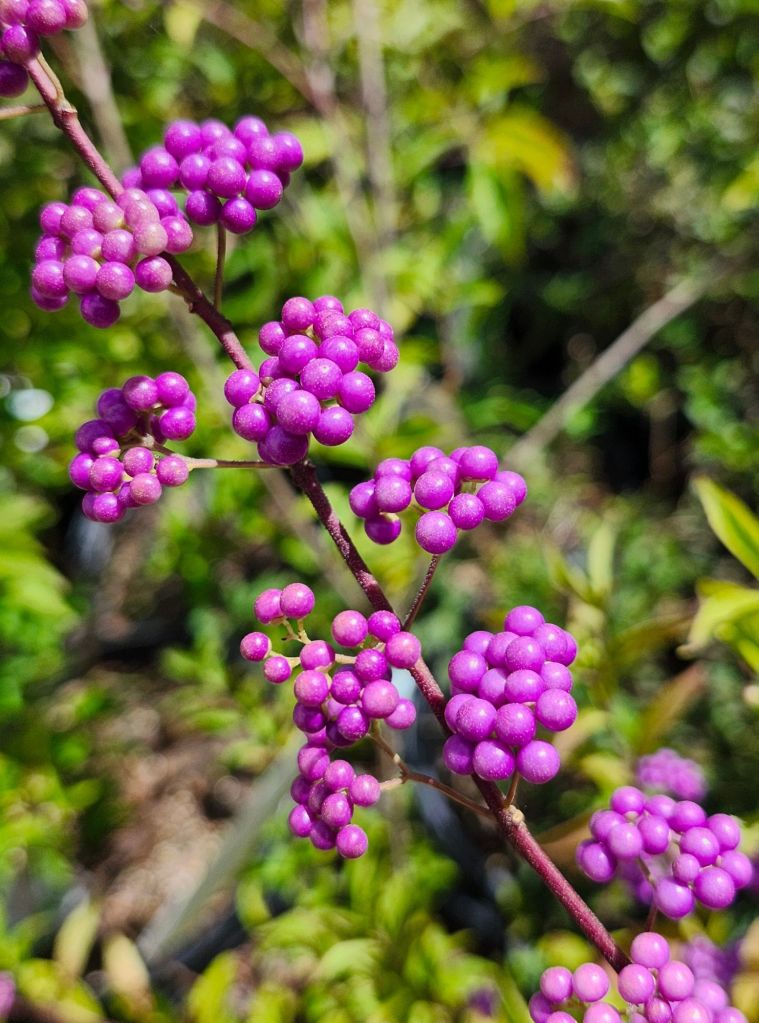
The native beautyberry is distinct from others in the garden with flowers, then berries that wrap around stems. The berry clusters are slightly larger than on non-natives, but both are equally ornamental. Both purple and white berried beautyberries are long-established in the garden. I see no reason other than my actions that have caused the native to be persnickety, but I’m hopeful that it will thrive in this challenging spot along the driveway.
 Ramblin' through Dave's Garden
As my hummers fill up and hornets get nastier I am grateful for plants still alive in this drought here in the area between Manchester and Exeter NH. Yours’s seem to be ok only my annuals get a bit of water every few days.
After a very wet first half of July, we’ve had only a trace of rain in recent weeks. Plants were pumped up by the extra rain and many are not happy. Fortunately, the shade over much of the garden helps retain moisture.
Yes my poor Hydrangea are looking sad praying for rain tomorrow but all of mine in afternoon shade look much better.
Are any of the native beautyberry white, or are all the white cultivars non native?
Oh, I just looked online to find that ‘Alba’ is a cultivar of Callicarpa americana with white berries! I should have remembered that.
I have white-berried seedlings that are from the Asian Callicarpa dichotoma ‘Duet’, the white-berried, variegated leaf beautyberry. ‘Duet’ has sparse berries, but seedlings are typically abundant berries, but white. I have not seen ‘Alba’ in the trade, and of course, the purple berries of beautyberries are the attraction.
Yes, the bright purplish pink are best because the color is so distinctive. However, white is my favorite color. If I were to ever acquire a white beautyberry, I would prefer it to be the Callicarpa americana, so it is good to know that is an option. My beautyberry were a gift. They grew from wild seed in Virginia. I am very pleased with them, but I know of no others here in California.
We have a rather straggly ‘Worcester Gold’ here and it’s great for bees at this time of year. Common carders seem especially attracted to it.
The proximity to the driveway does not discourage bees from visiting our bluebeards.