I have a problem. Many, I think, but today’s issue is the constant desire to add plants and the lack of space available in this thirty-six-year-old garden.
Several weeks ago I removed an American persimmon with pendulous branching (Diospyros virginiana). It was okay, but it didn’t fruit without a nearby male for pollination and there is no room for another tree to add a male. It hadn’t grown too large yet. I suspect it was stunted by soil that remains slightly damp in the lower rear garden, but if it grew, it would eventually take up too much space. In particular, for an unremarkable tree. So, it’s gone because I had another idea. After this impetuous removal, I gave it a thought and realized I should have dug and potted it to pass along, but it’s too late now.
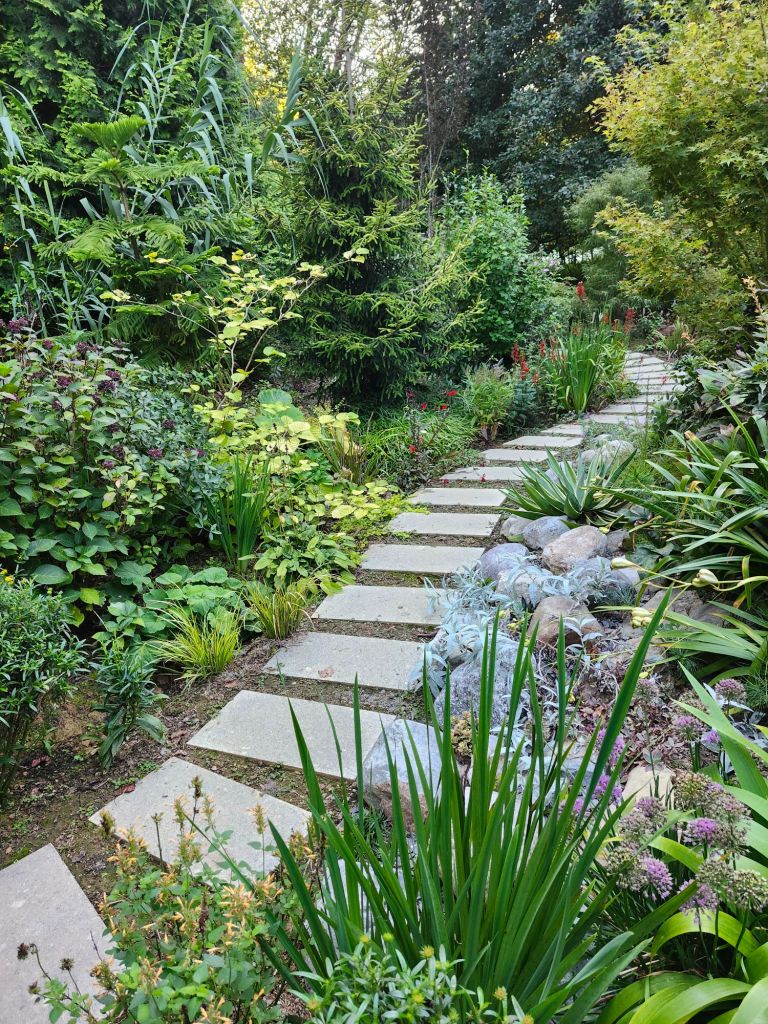
I had various ideas of what to plant in this slim opening, but after a recent vacation hiking in the Azores, I had a hankering for a Norfolk Island pine. I know, it’s not cold-hardy, but I dig and store other plants indoors through the winter. So, why not?
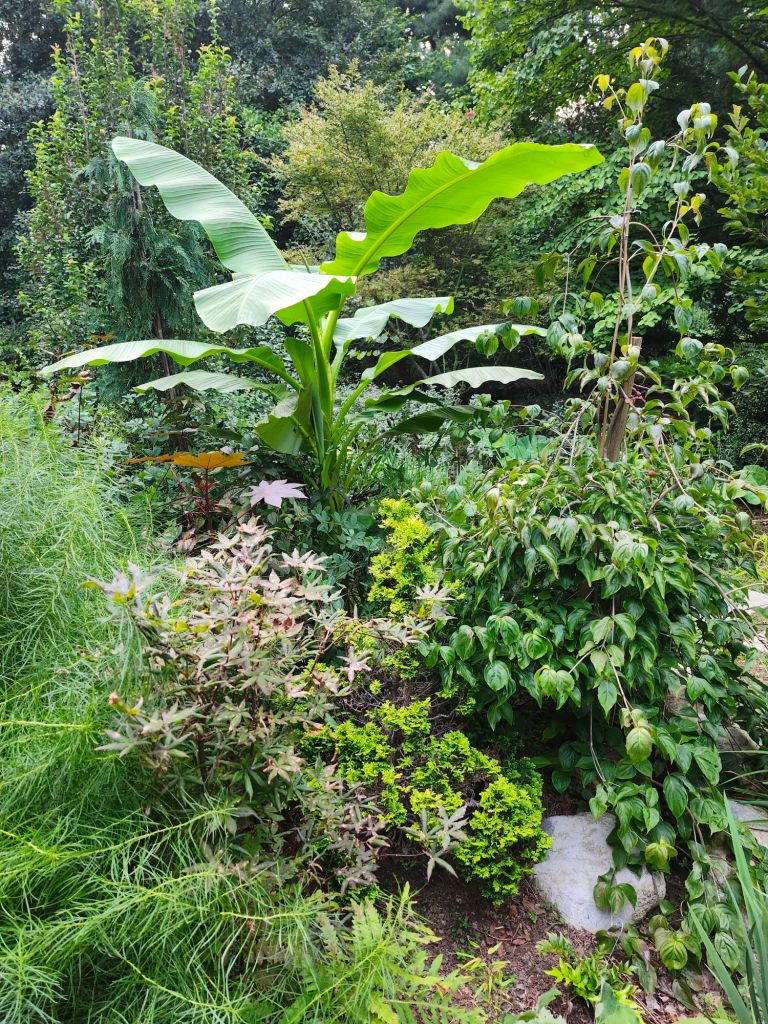
The lower rear garden has become a bit of a hodgepodge (above), even more so than other parts of the garden. There are Japanese maples, cold-hardy bananas, and a rock garden. None of this works together, but so what? My wife tells me that the last sunny spot in the garden is quickly becoming shady, and how does a tropical pine fit into this?
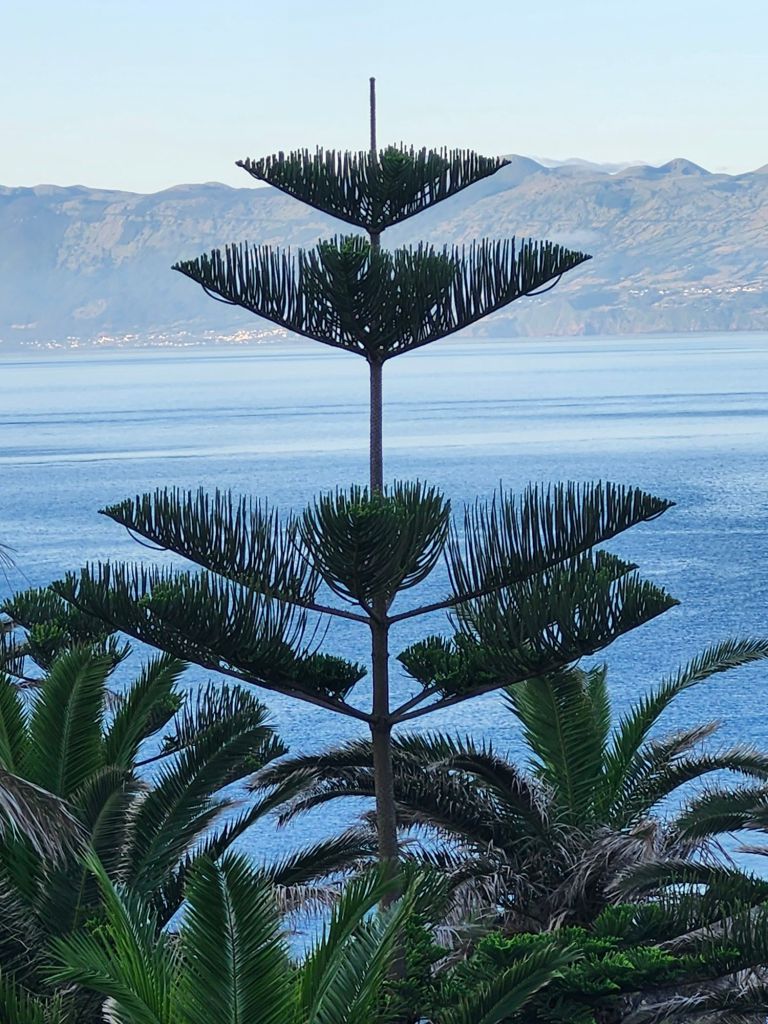
In the Azores we saw palms and conifers side-by-side (above), and that makes no sense from a horticultural standpoint. But I liked it. So, why not here? The garden should inspire the gardener, so bananas, tropical pines, and dogwoods are a splendid combination.
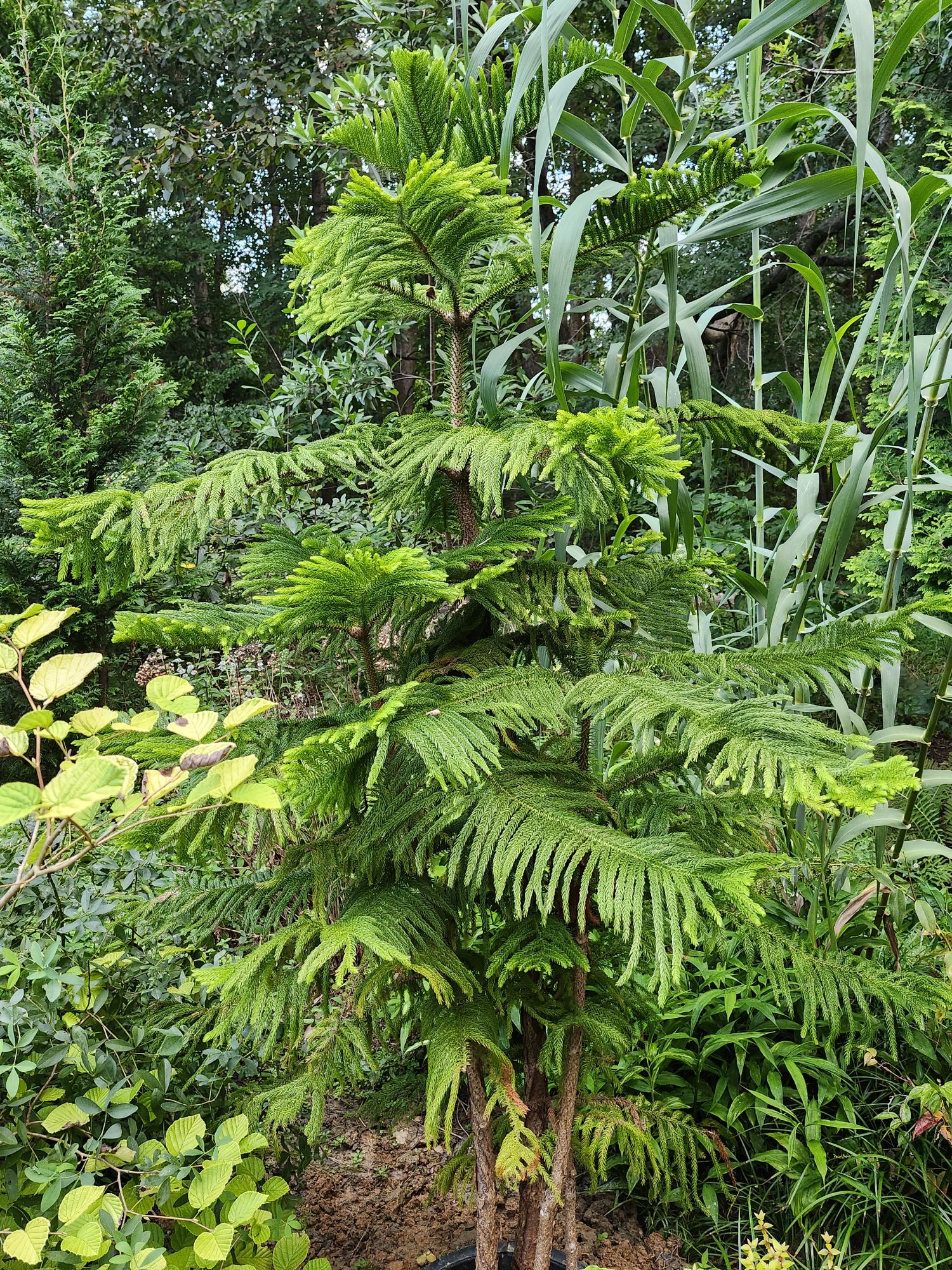
So, I looked for a Norfolk Island pine, but in July these don’t exist in local garden shops. And a three-footer wouldn’t be best in this spot. Fortunately, the high school where I volunteer in the horticulture department had a big one that they shuttle into the greenhouse for the winter and jam onto a walkway with other tropicals in the summer. While small Norfolk Islands hardly show the character of the pine, this beauty is about seven feet tall.
Today, it’s dug into the garden, in the pot, and planted high for drainage. It’ll be pulled out in mid-autumn, and I’ll have to figure out where it’ll go in the house, but I’ll worry about that in a few months.
Of course, this is a short-term planting. The pine will need to be moved to a larger pot, and soon enough the pot will be too big to move, too tall to fit in the house, or I’ll be dead and gone. But, I’ll enjoy it until one eventuality or the other.
 Ramblin' through Dave's Garden
Be aware that it may not develop the symmetrical form that you observed in the Azores. Norfolk Island pine, outside of its most favorable environments, develops floppy growth and sculpturally irregular form.
I’m not expecting much. The pine is already better than the small one I expected. I only want it to remind me of hiking volcanoes looking down on the vast ocean.