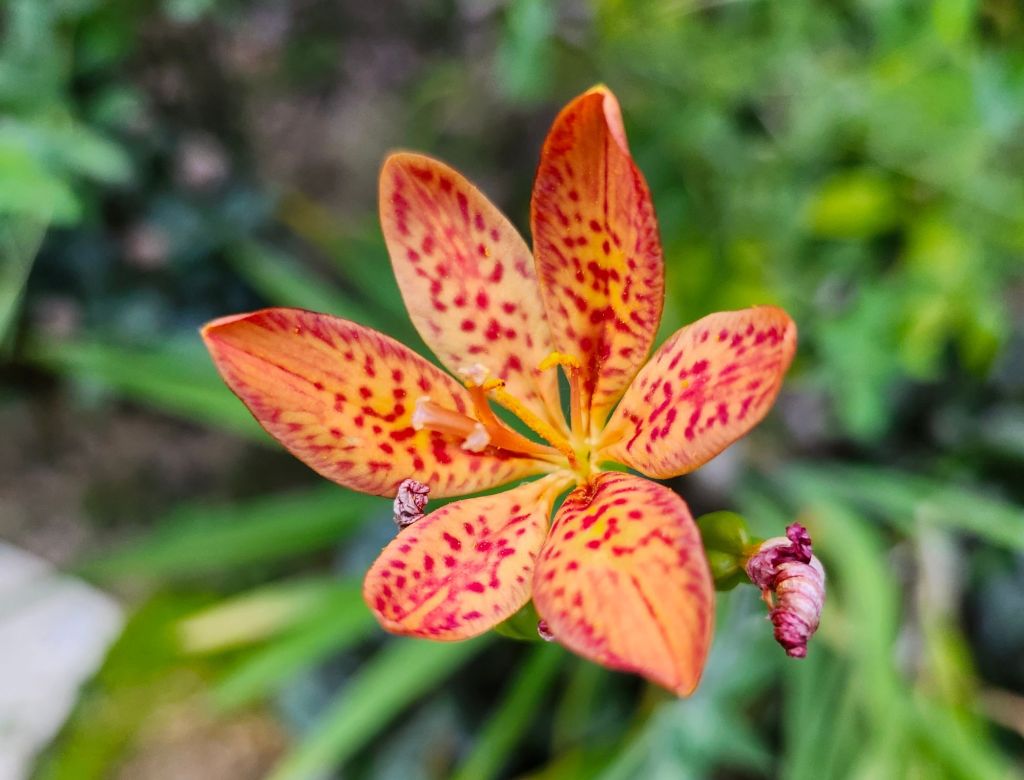
A few stray flowers remain on blackberry lilies (Iris domestica, aka Belamcanda chinensis, below), but most have moved on to seed production with some seeds already ripe. Several times, I’ve harvested seeds to start in the greenhouse in late winter, though I think that direct sowing is similarly successful.
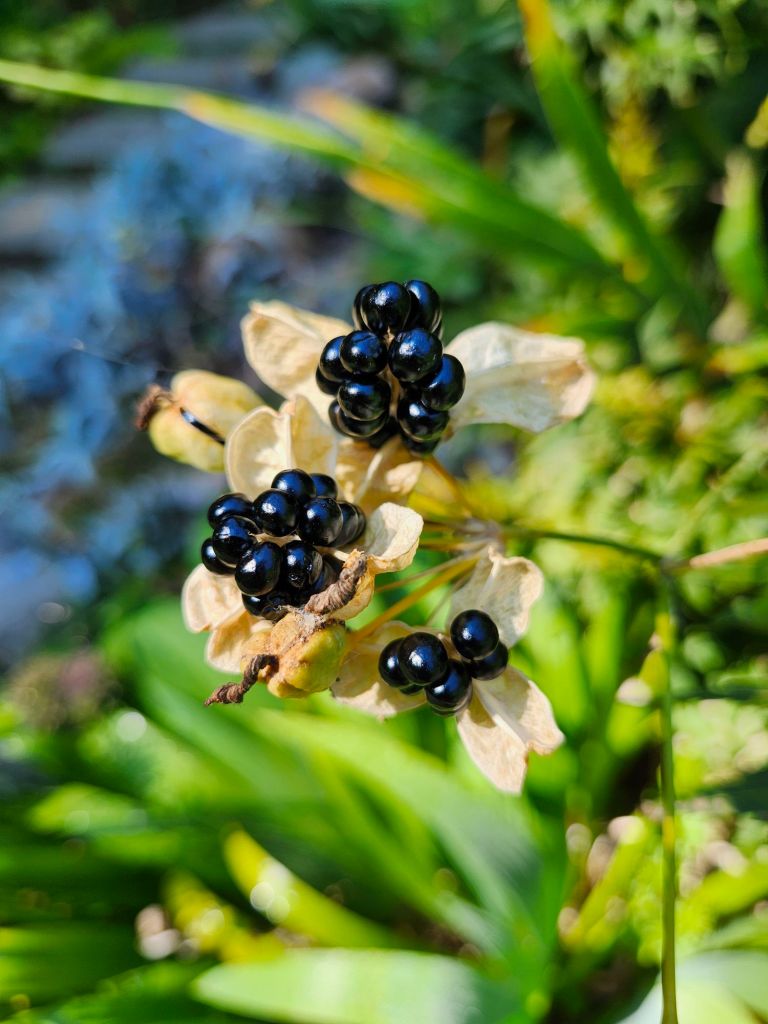
This year, I plan to leave seeds (below) in place since no more are needed for the garden. I could easily harvest seeds in several weeks if there’s a need at the botanical garden where I volunteer, but I have a poor record for tending newly germinated seeds so I’ll give away seeds but not seedlings.
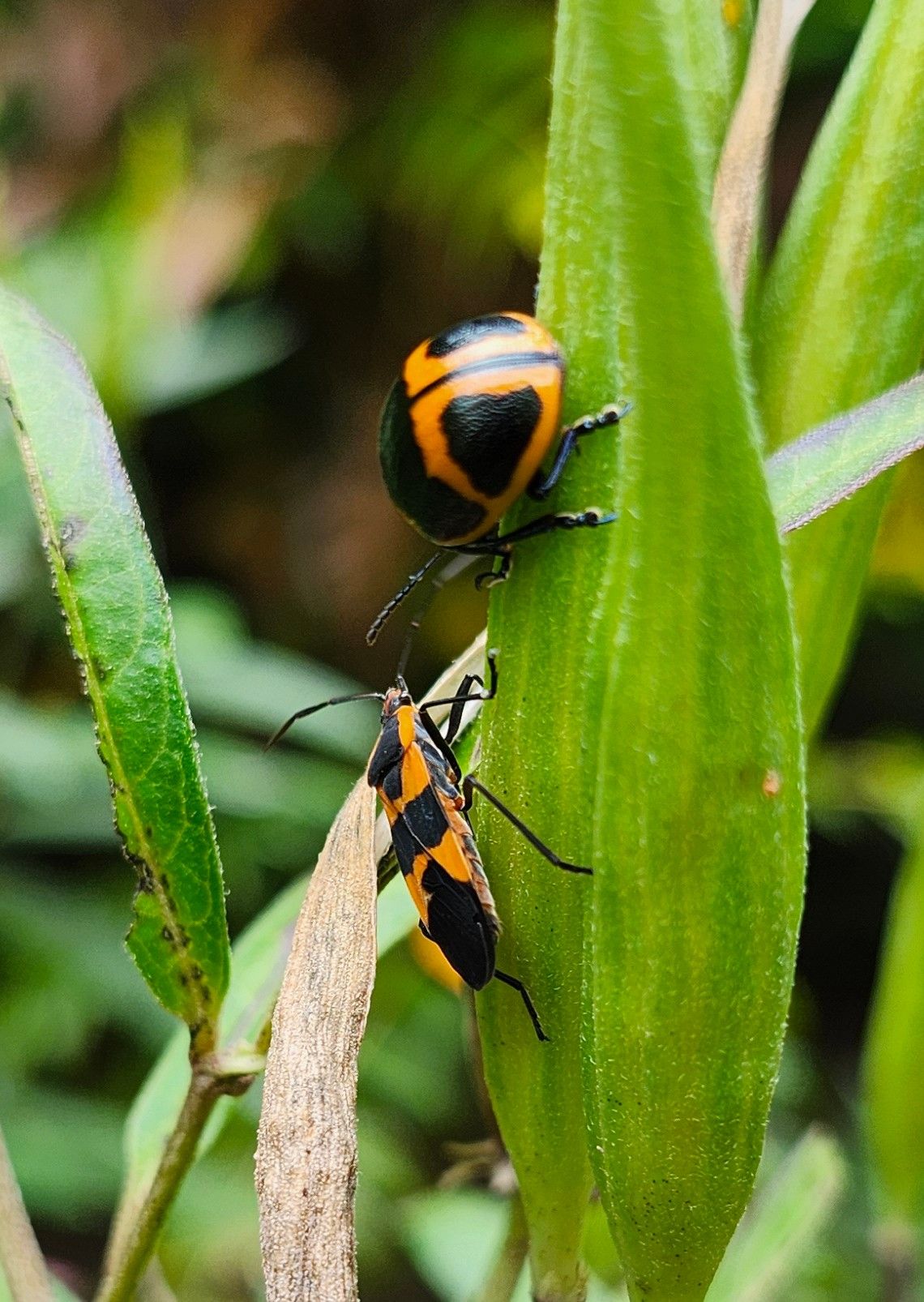
Again, no Monarchs have been spotted in proximity to the milkweeds (Asclepias incarnata, below) but multiple beasts move in as the flowers fade. After the absence of aphids for several years, they’re back, and this time without the small beetles that feast on them. There are milkweed bugs and beetles that feed on the seed pods, but these seem to do no harm.
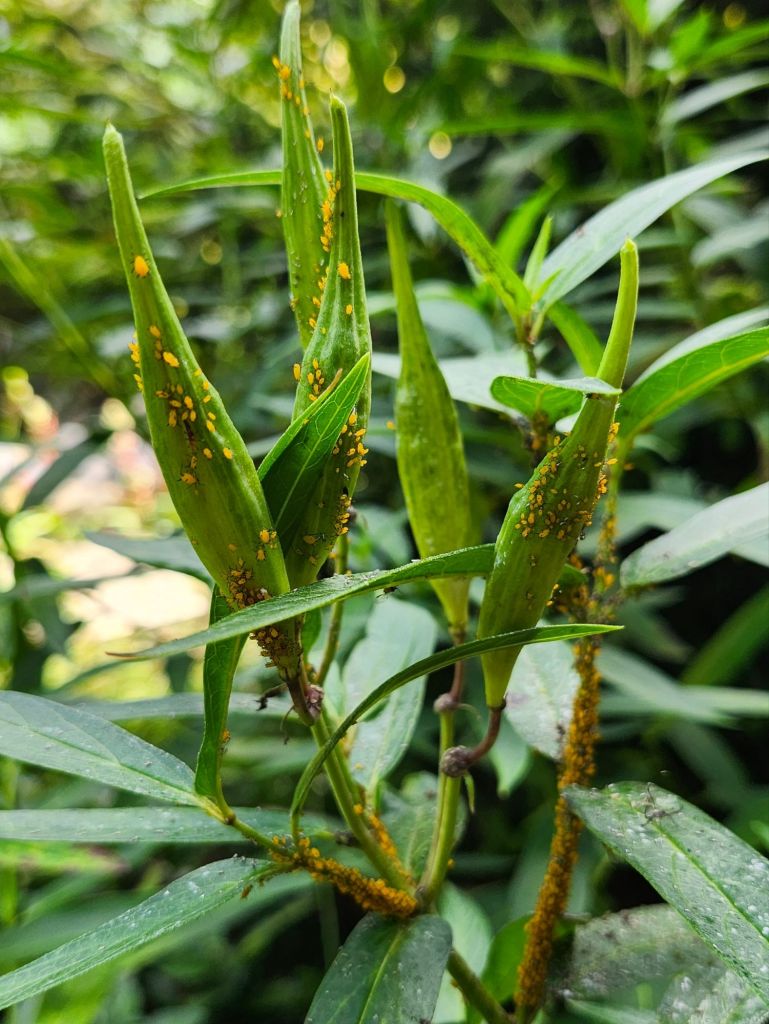
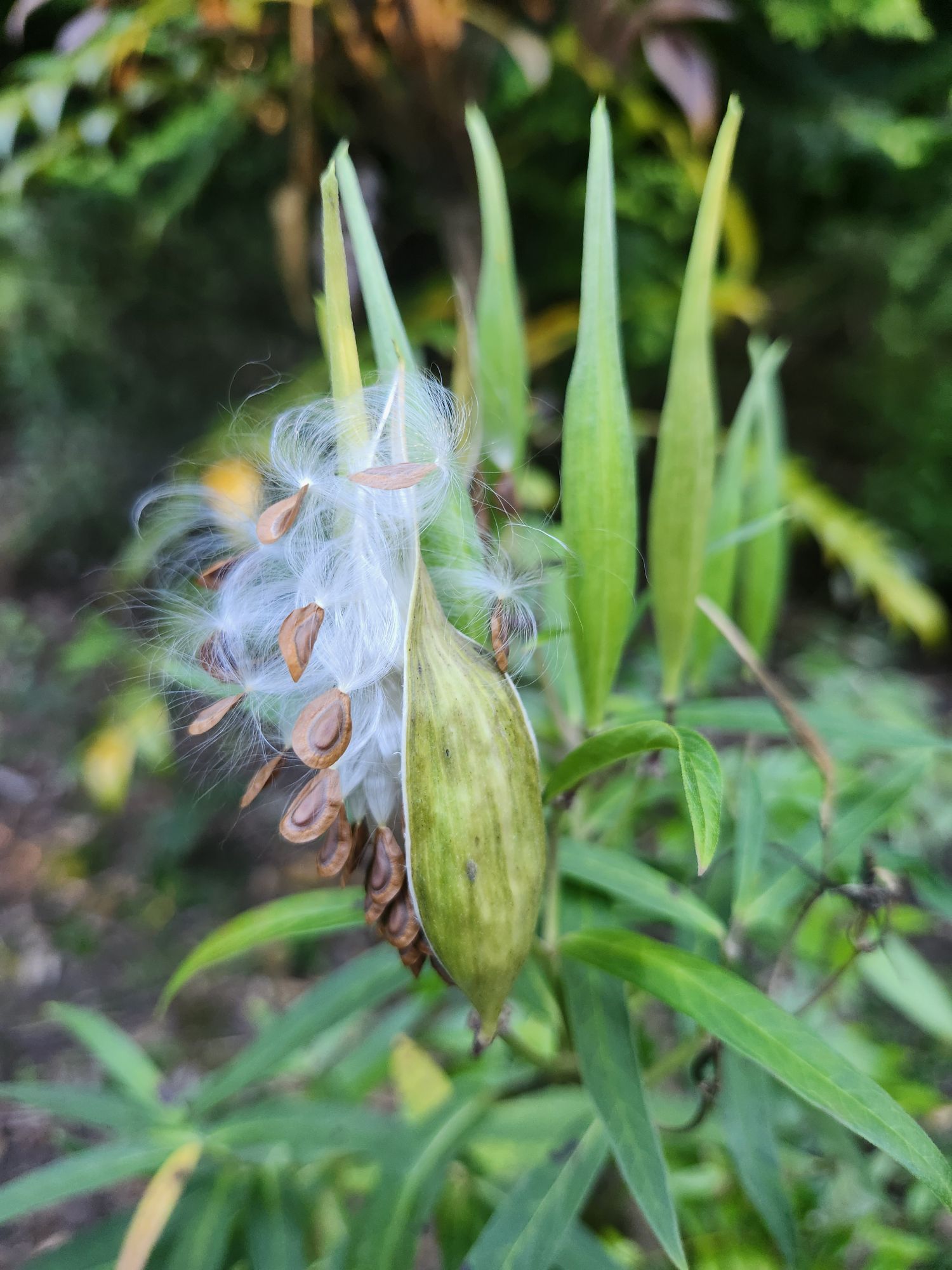
This is a modest infestation of aphids, and while I’ve witnessed injury to stems in the past, there are always seeds (below) to increase the small milkweed colony.
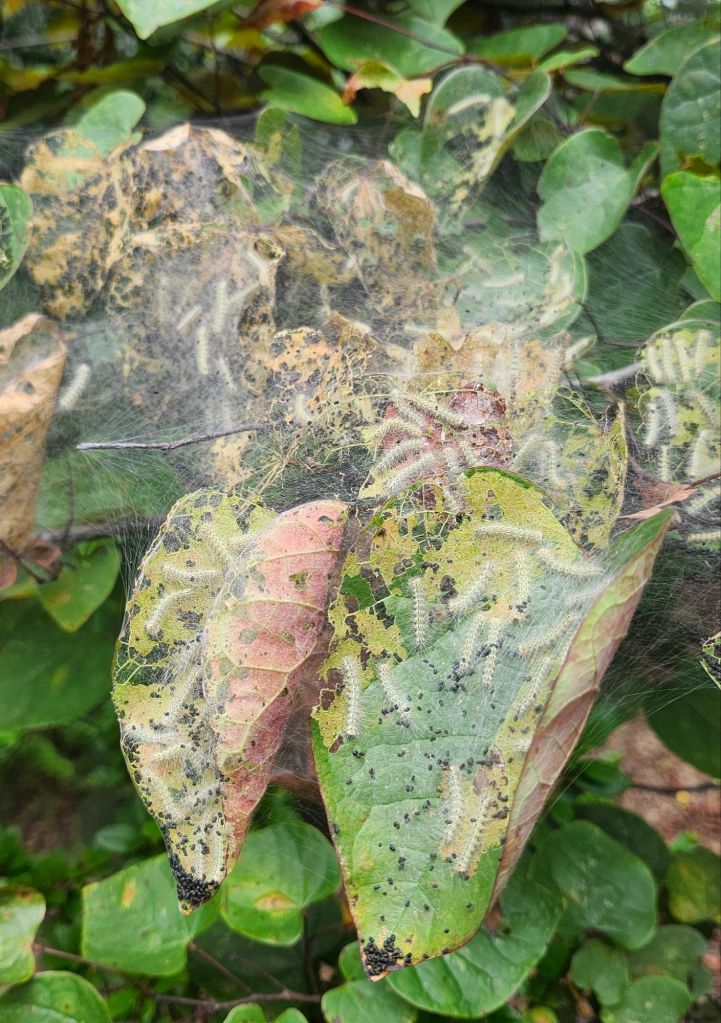
While aphids have been absent for a few years, it’s been longer without fall webworms (below). Their target in this garden has been redbuds, and today they’re back and again on several redbuds. It would be simple to remove the webworms to limit the damage, but late in the year no harm is done except leaves are lost for the next few months. I’ve done nothing in the past and expect to do nothing this year.
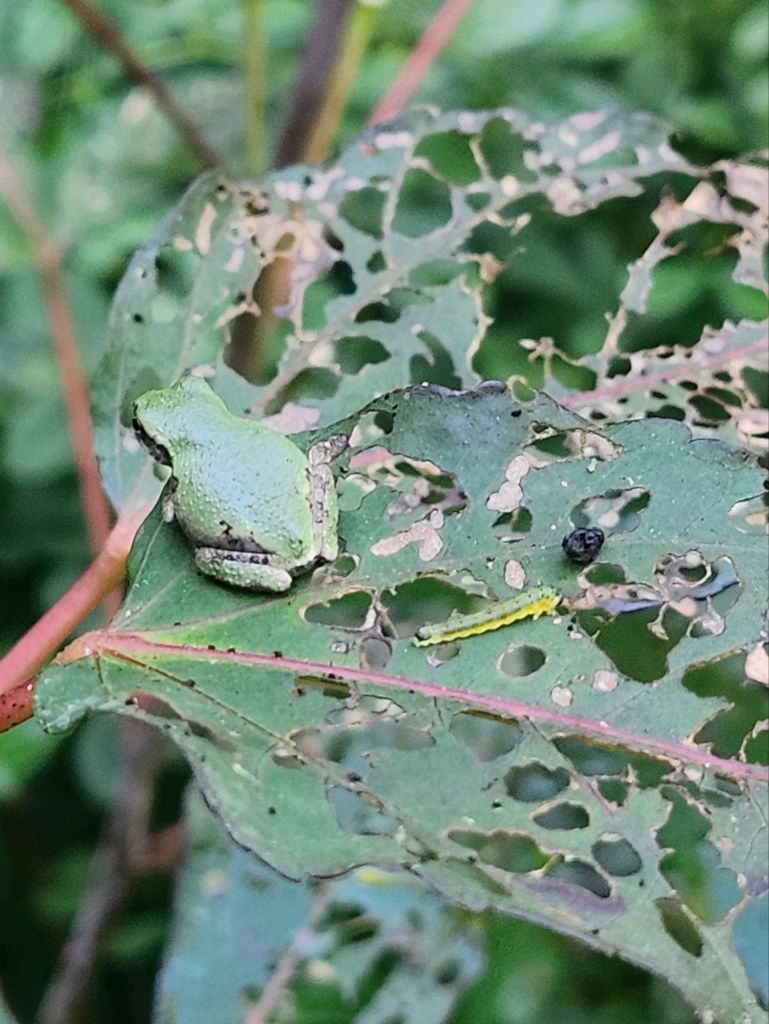
There are several sawflies in the garden feasting on foliage, but only one on this hibiscus that is visited by a small frog (below).
 Ramblin' through Dave's Garden
I had these in my garden at one time, but they have all died off now. I should buy some more. They are a very unique flower.
That’s a great photo too, by the way!!(❁´◡`❁)