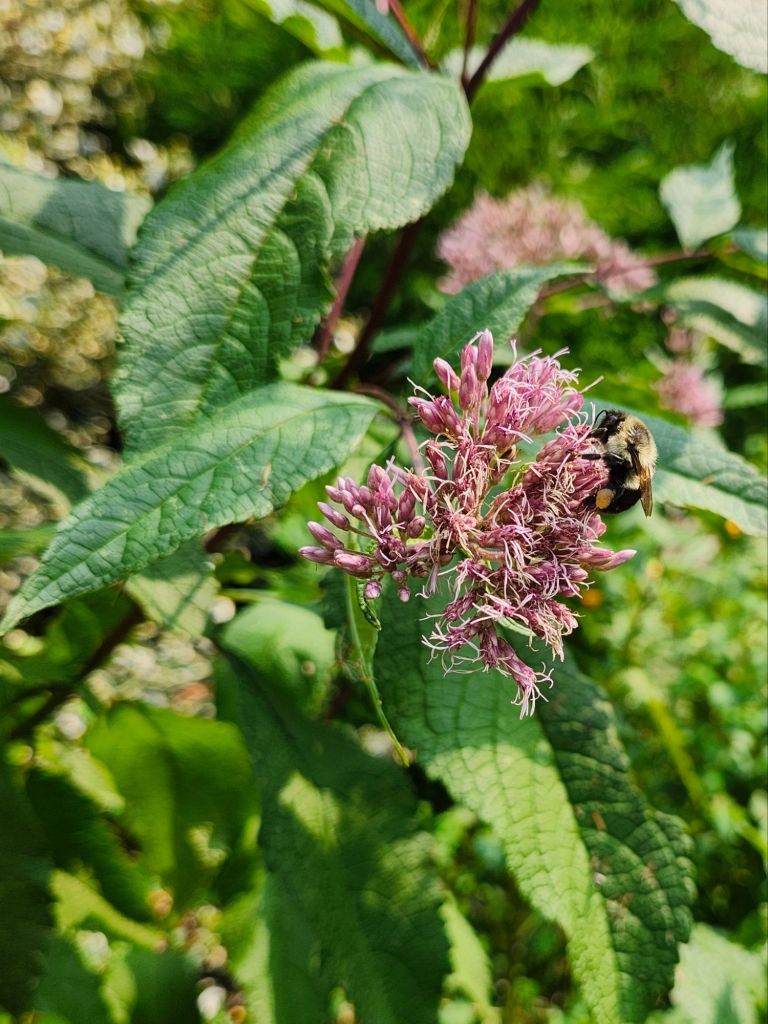
Several Joe Pye weeds (Eutrochium spp., below) pruned by deer months ago are flowering weeks later as others have faded by early September. The remaining flowers attract swallowtails and bumblebees, though in smaller numbers than early August when many were flowering. With fading flowers of mountain mints (Pycnanthemum muticum) visited only by bumblebees and carpenter bees harvesting the last remaining nectar, most pollinators have moved on to fresher blooms.
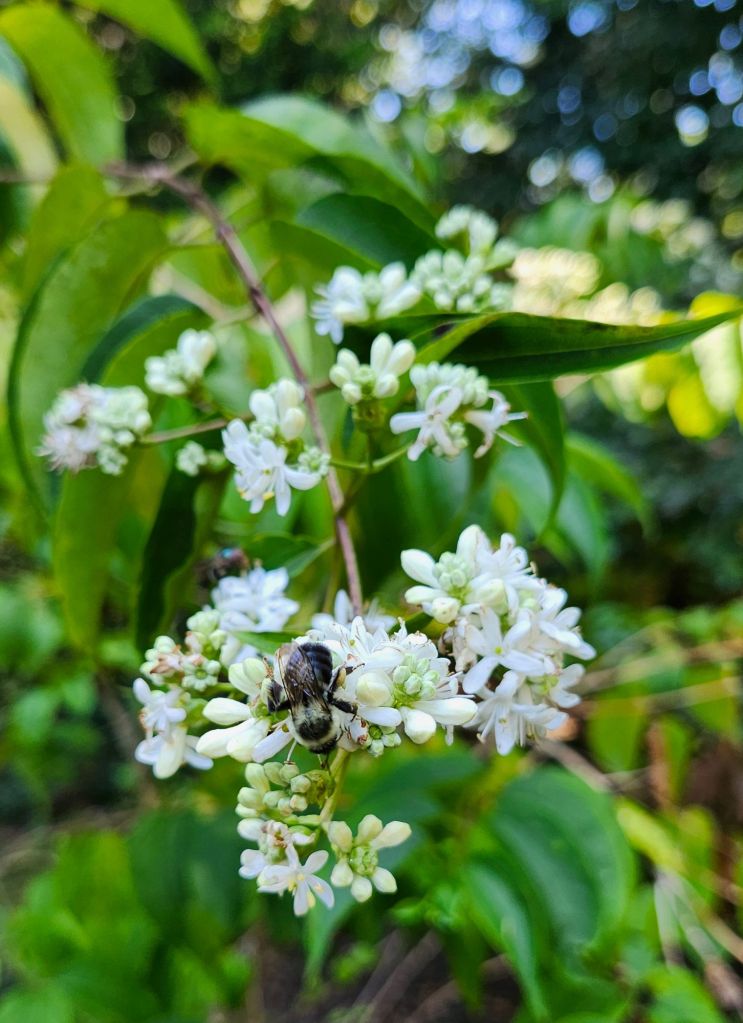
Flowers of the Seven Son tree (Heptacodium miconioides, below) in the lower rear garden opened this morning, and even before the midday sun, bees have found them. The clusters of small white flowers are attractive, but surpassed by rose-pink calyces that will remain as flowers fade in early autumn. The Seven Son nearer the house is more shaded and its few scattered flowers will open a week later.
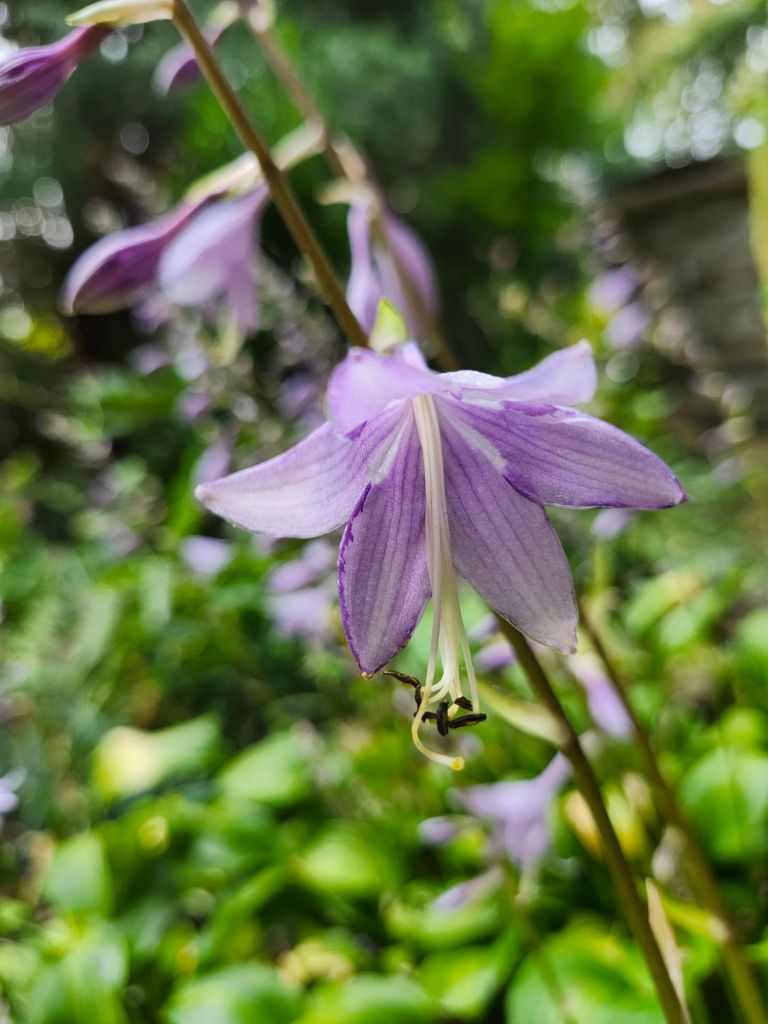
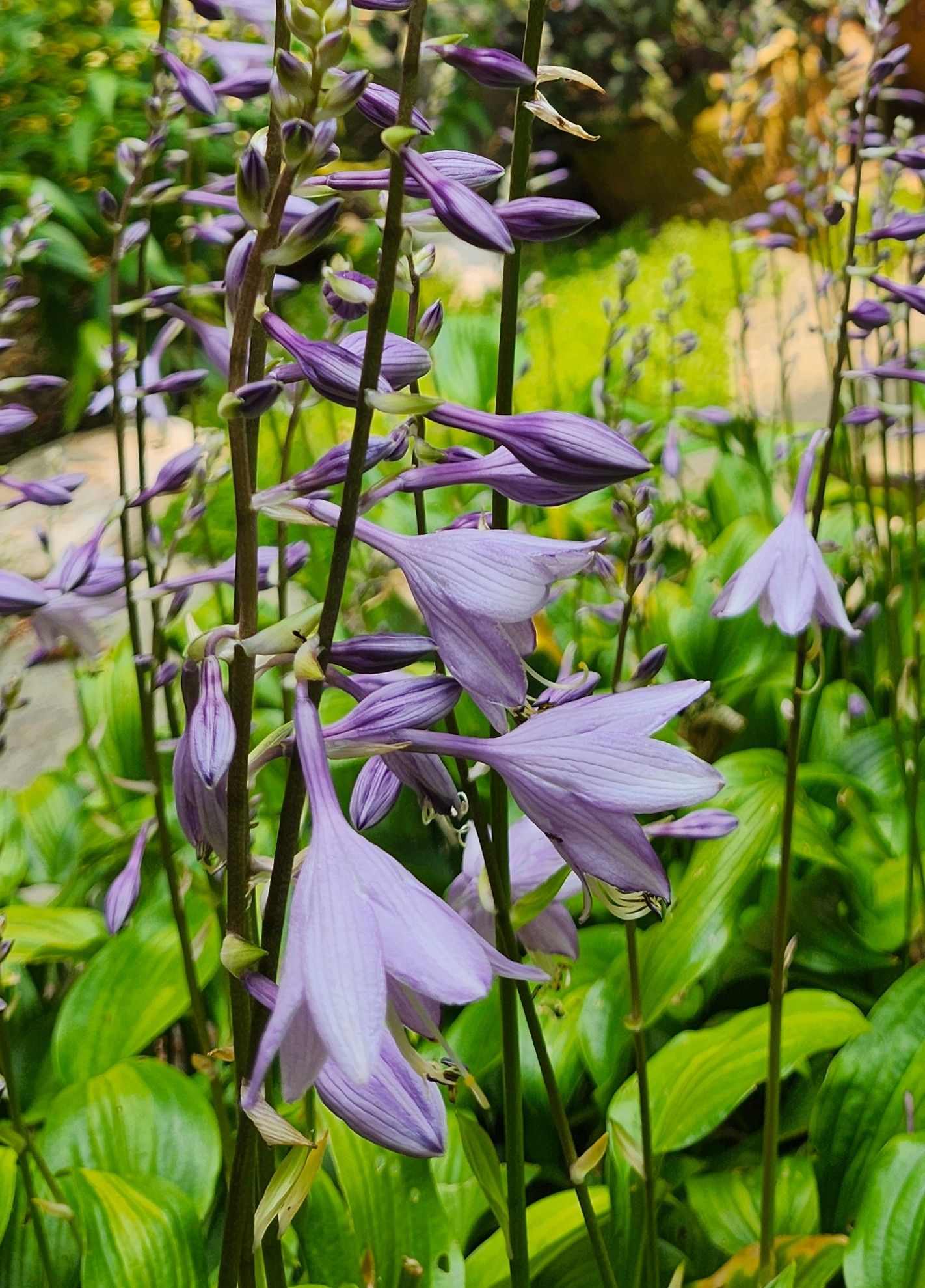
The flowering season for various hostas extends from early summer into autumn. I regularly see hummingbirds visiting late summer bloomers, and while none have been selected in this garden for their flowers, some are exceptional.
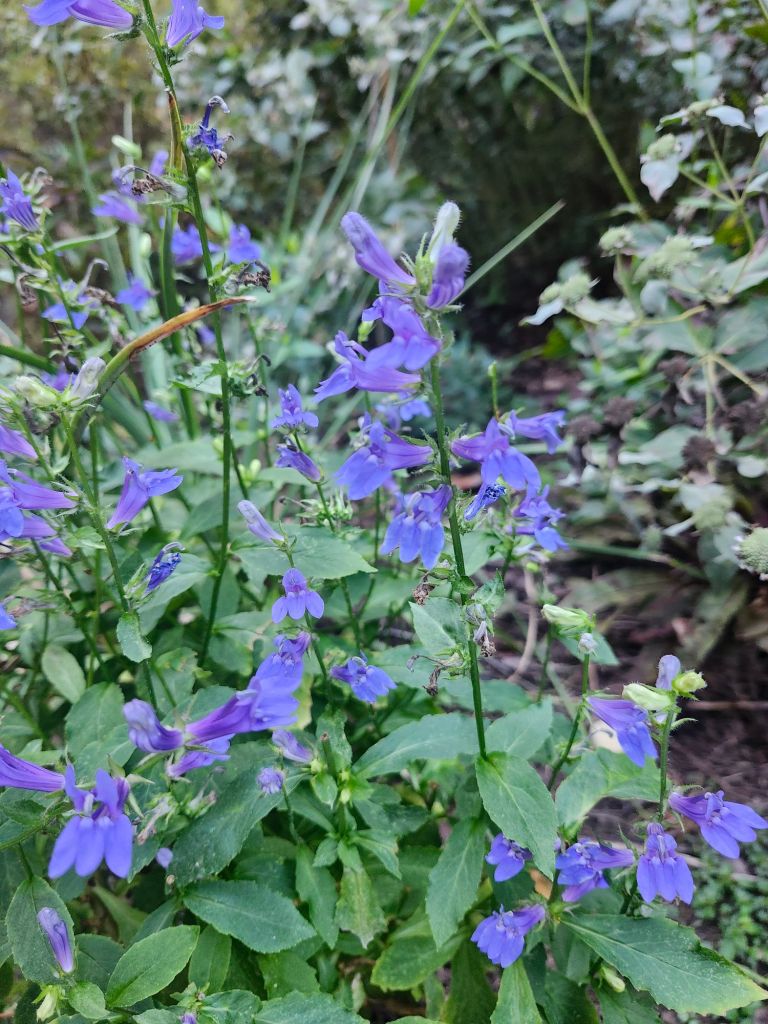
The mystery has been revealed. A perennial planted a year ago in a low area in the lower rear garden struggled, turned brown, and then faded completely after the first frost. I expected it was lost and forgot about it until it appeared again in mid-spring. Still, I wasn’t certain this was what I planted, or if it was a weed. Now I know, and while I forgot what I’d planted, it was a blue-flowered lobelia (Lobelia siphilitica, below), perfectly suited to this damp soil.