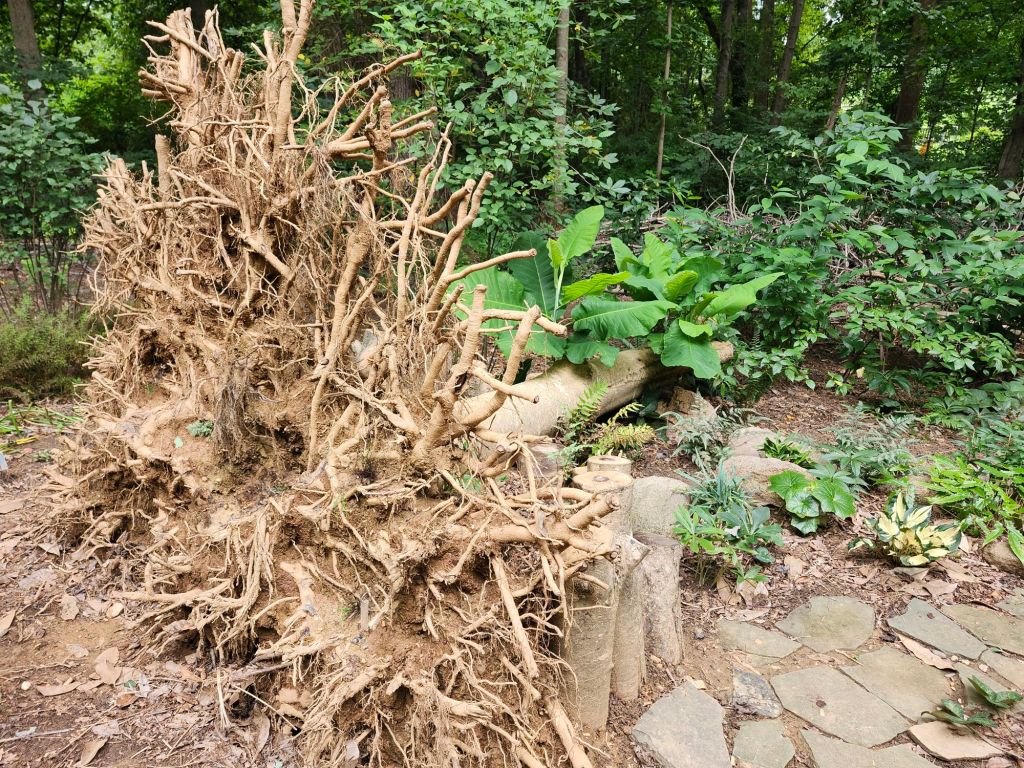
The bigleaf magnolia (Magnolia macrophylla, below) refuses to die, though it toppled over roots and all in a late June storm. I’ve removed the bulk of the large tree, but the roots and a section of the lower trunk remain as a feature of the garden since too much work would be required to dispose of these.
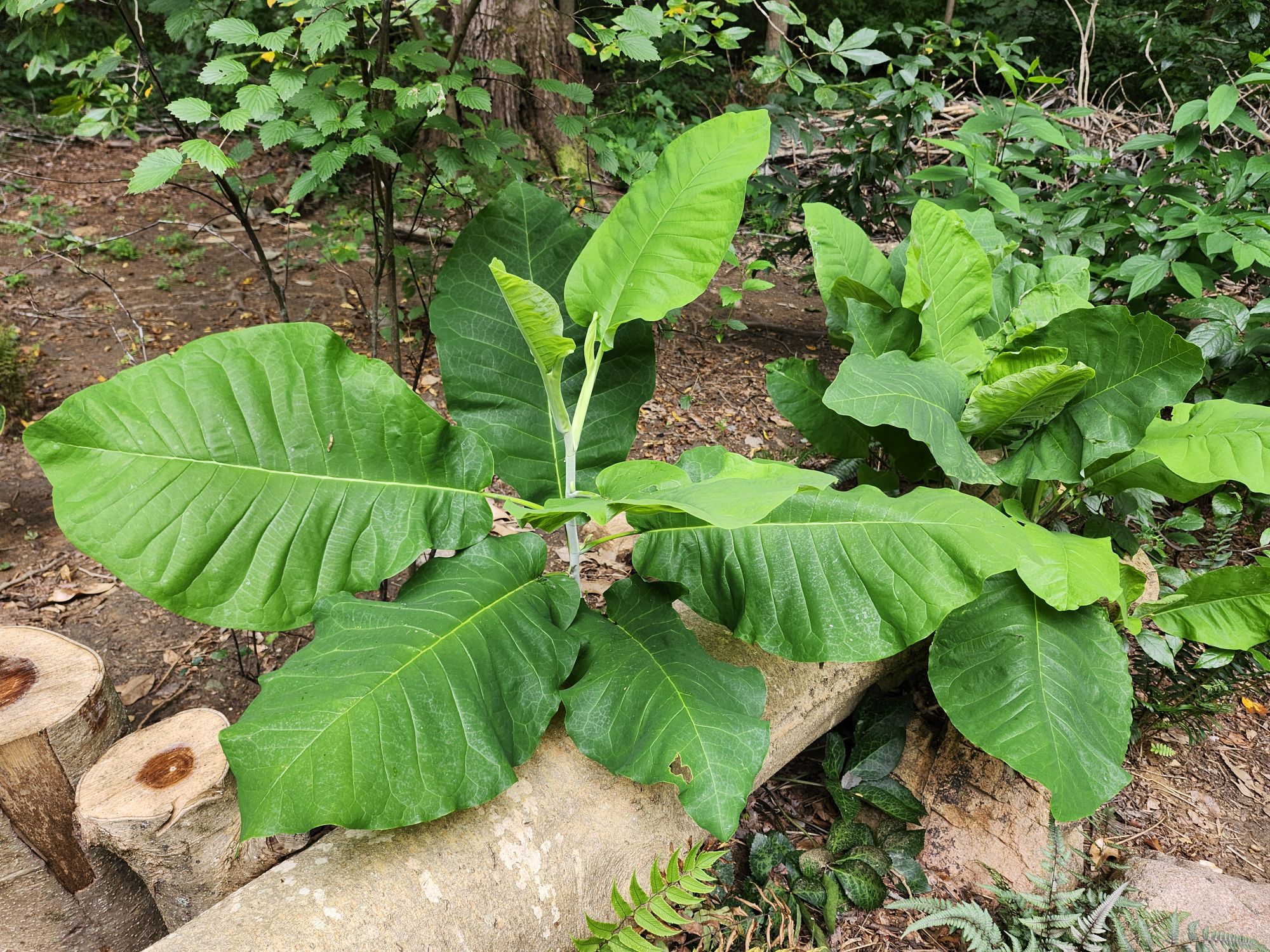
I shouldn’t be surprised that the trunk has sprouted several sets of very large leaves (below). No doubt, there’s stored energy that feeds the leaves, and I assume there’s a small part of the roots still intact. Of course, with lots of energy and few branches to support, the leaves are huge.
I’m certain this won’t last long. Leaves will fade in autumn as always on this deciduous magnolia, and in spring, there will be none. But, I will have transplanted a seedling from the nearby thicket. It will be moved a few feet only, but enough that it will have more light and more space to grow.
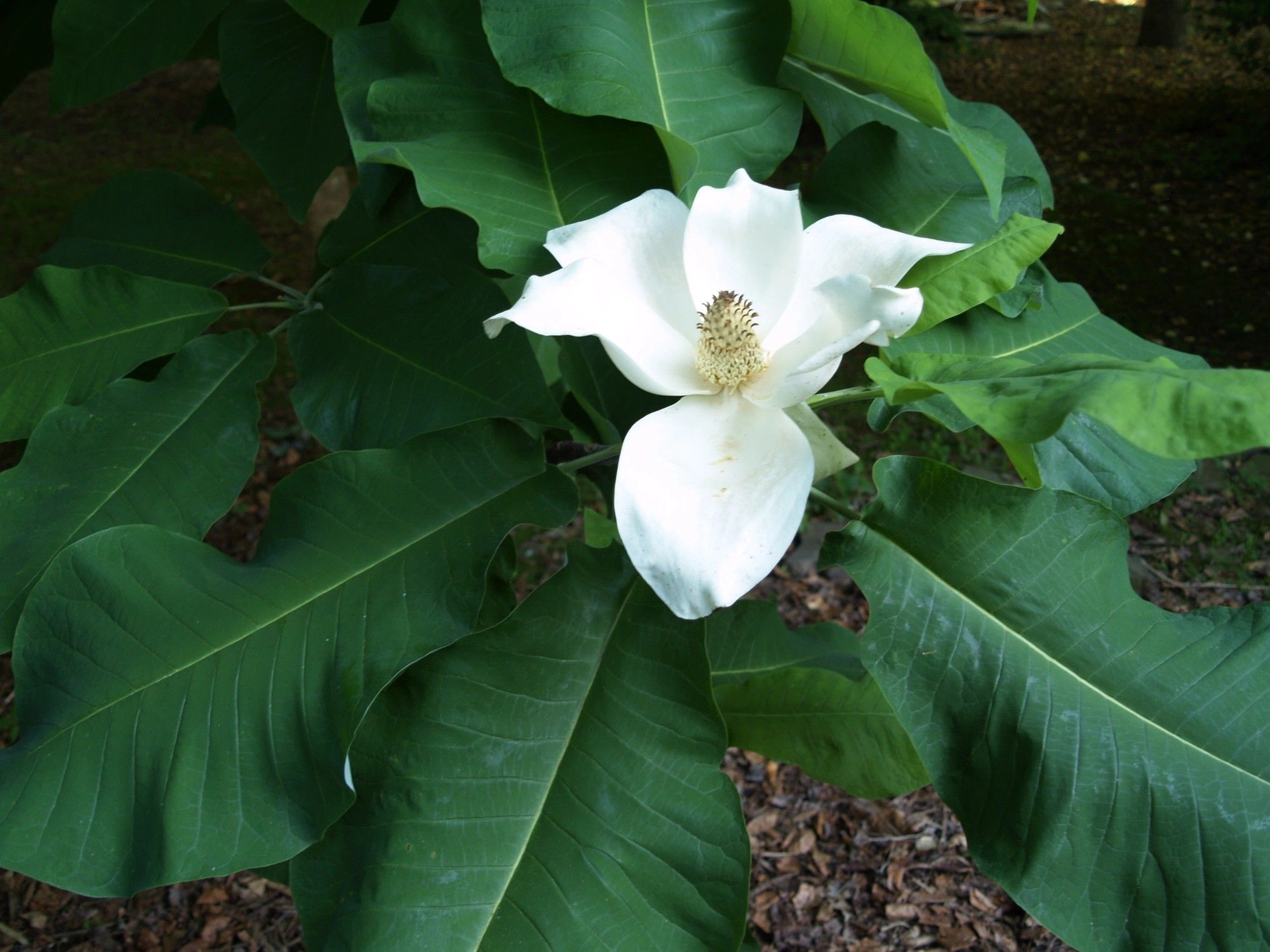
Certainly, the seedling will not grow to the size of the parent tree in my lifetime. Almost forty years ago, I discovered this lonely magnolia left behind as dogwoods and maples were harvested from a nursery field a few miles outside McMinnville, Tennessee. I suppose a small group of bigleaf magnolias had been planted for resale though this particular magnolia was not popular at the time and is still not common. How it was left behind is unknown, but I laid claim to it the moment I saw it.
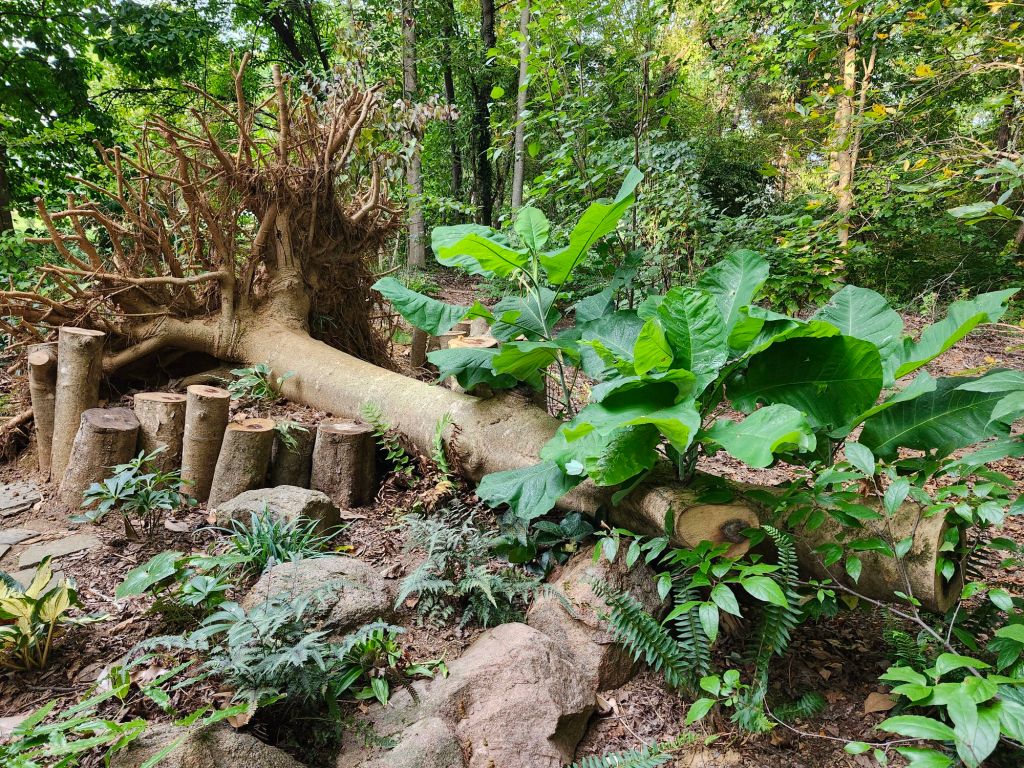
Today, the roots of my treasured magnolia jut into the open sky with ten feet of trunk lying parallel to the ground. These will remain, though in what form I’m uncertain. A considerable mess of branches has been pushed aside to tidy up with cooler temperatures. That is likely to coincide with the fading of the magnolia’s leaves and the transplanting of the seedling. I will have planted a smaller tree, a redbud or dogwood more appropriate for the space with mature neighboring trees.
The magnolia’s loss was a sad day, but the garden will change, the seedling will grow in the background, and the stump and roots will slowly decay.
 Ramblin' through Dave's Garden