Berries of the native beautyberry (Callicarpa americana, below) have tardily turned to purple with more colorful berries still to come.
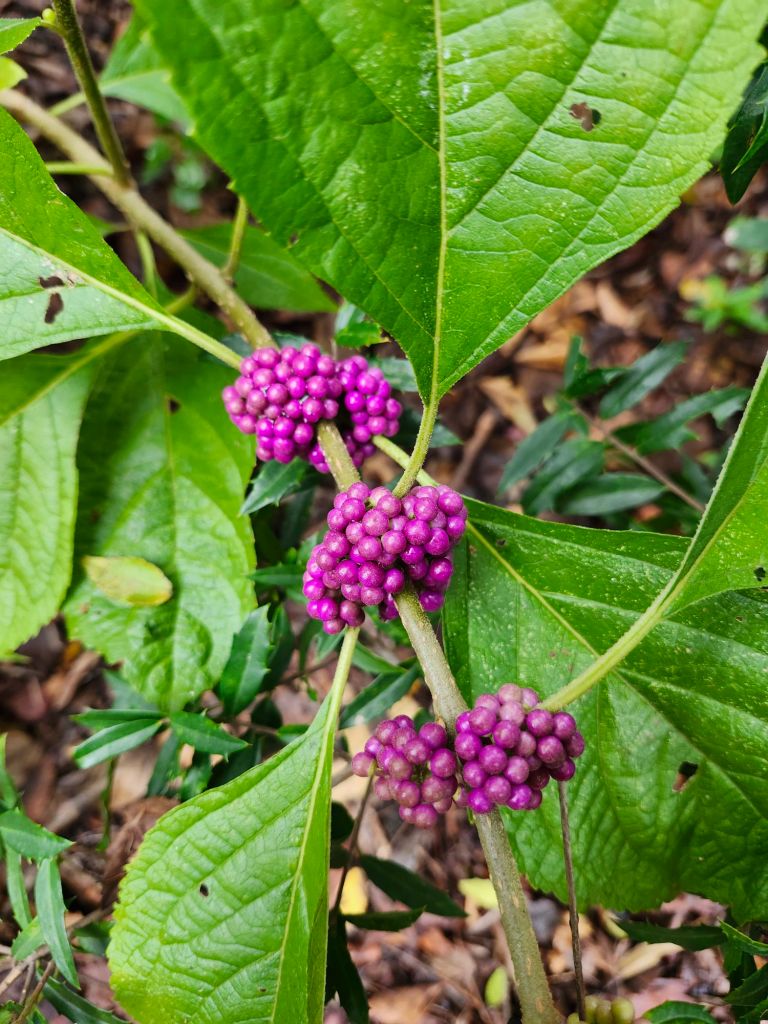
I’ve struggled with the native while Asian beautyberries have thrived (I expect due to questionable placement), but after suffering in a difficult spot beside the driveway the American beautyberry has made a comeback. I’m quite pleased, though the late growth after cutting stems to the ground caused late flowering and berries that are coloring weeks later than non-natives.
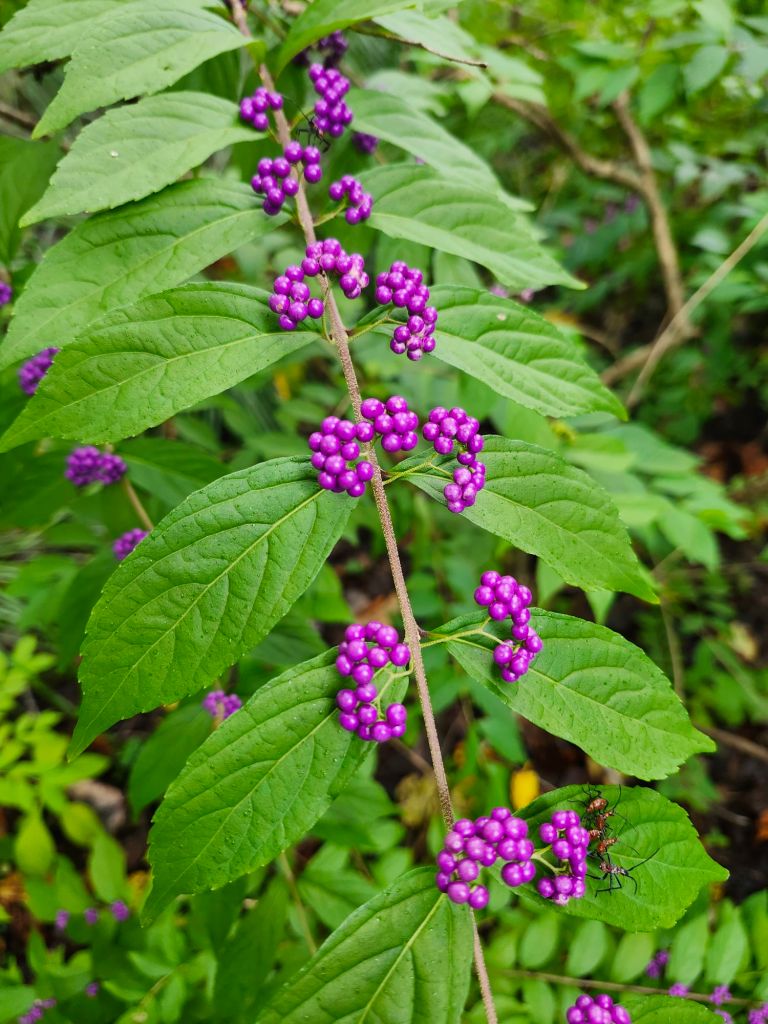
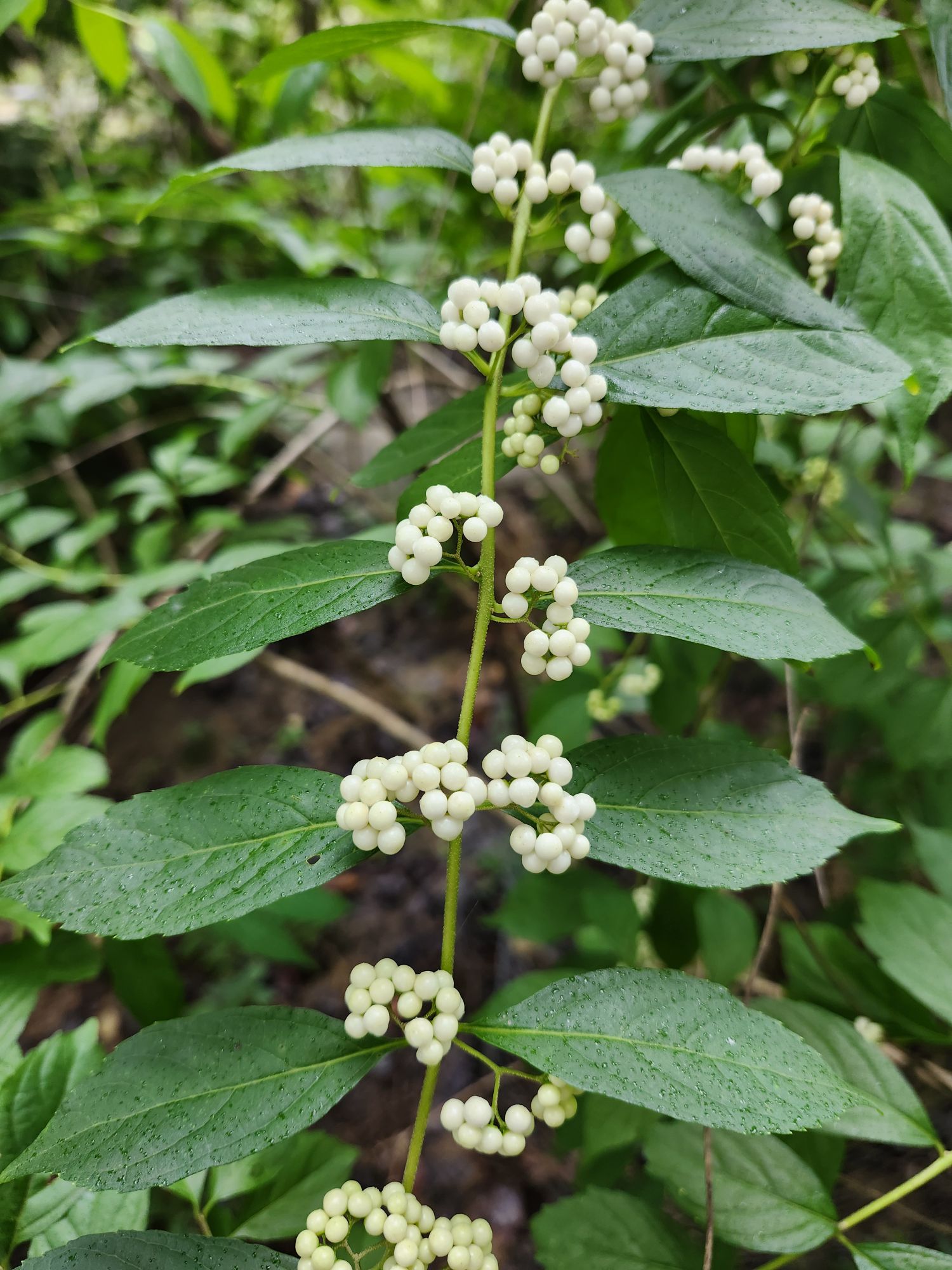
I am perplexed that a purple-berried beautyberry has turned to white. Of course, I know this is not possible, but I was certain the large shrub in the lower rear garden had been purple. What am I thinking? In any case, seedlings growing close by in a rarely tended area are a mix of white and purple berried beautyberries (above) that I occasionally dig and pot to share. I must remember to tag each with the berry color, and no, I’m not concerned that the non-native beautyberry spreads seedlings six feet from the parent.
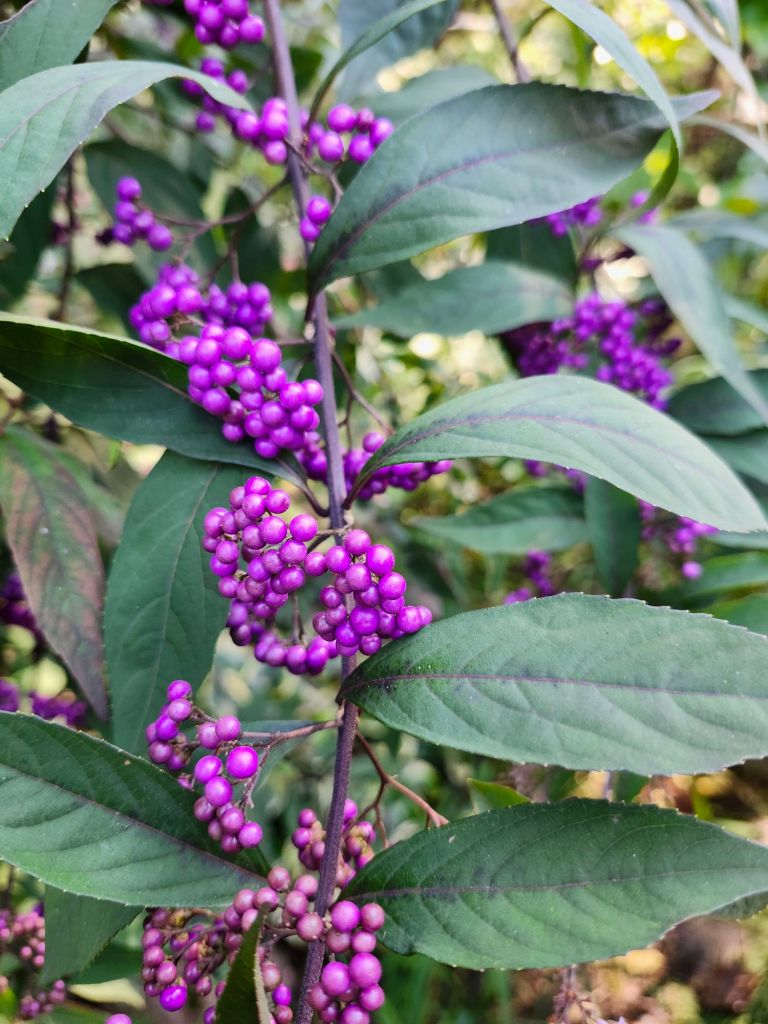
I’m certain the American will be a favorite once it gains more size, but until that day, the vigorous Purple Pearls (above) is the one. It’s grown larger than other beautyberries, nearly perfect for its location with a minimum of pruning, and its darker foliage is attractive. With parts of the shrub in sun and shade, there are abundant purple berries, but also small flowers (below) that will become berries in several weeks.
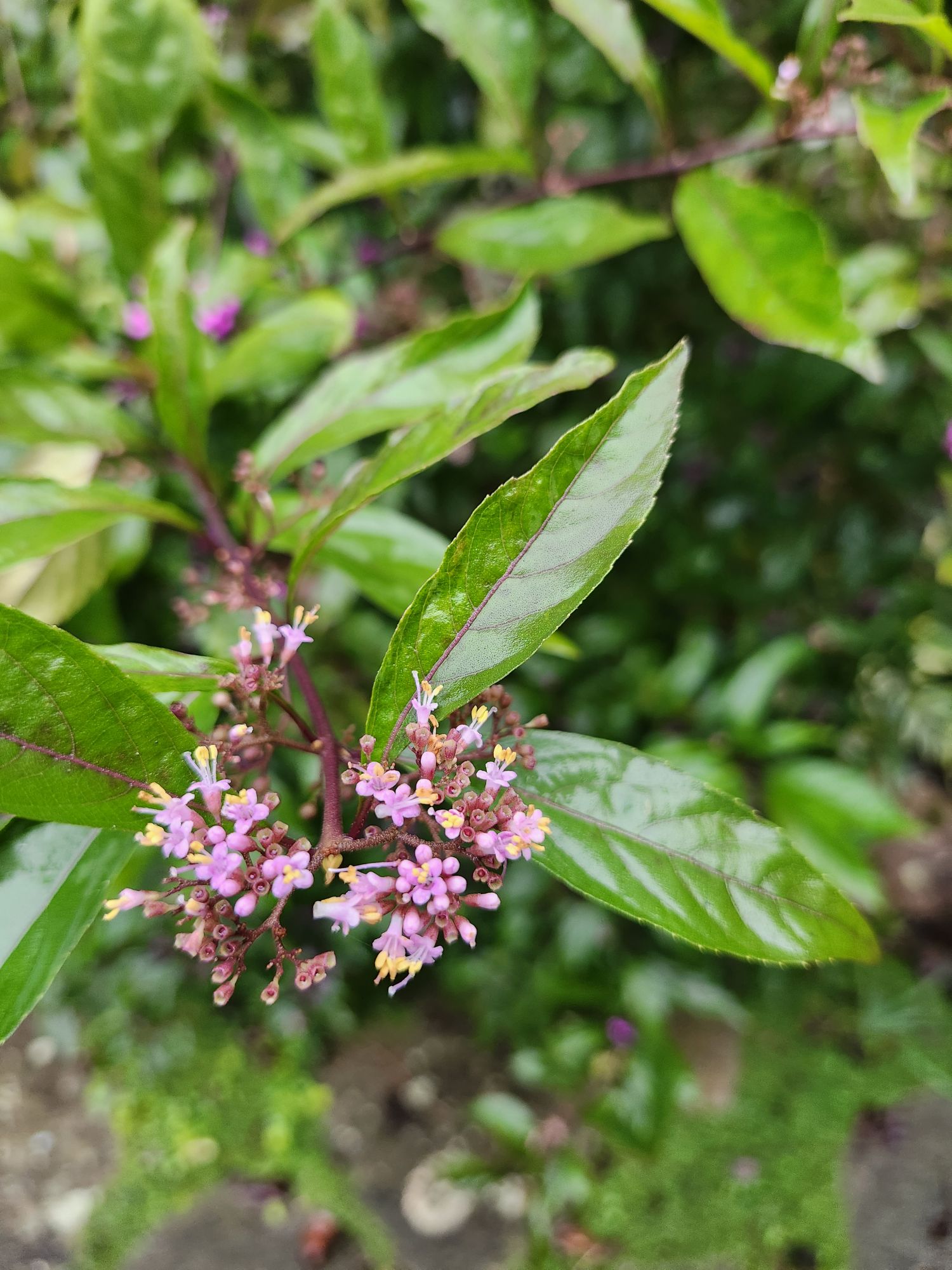
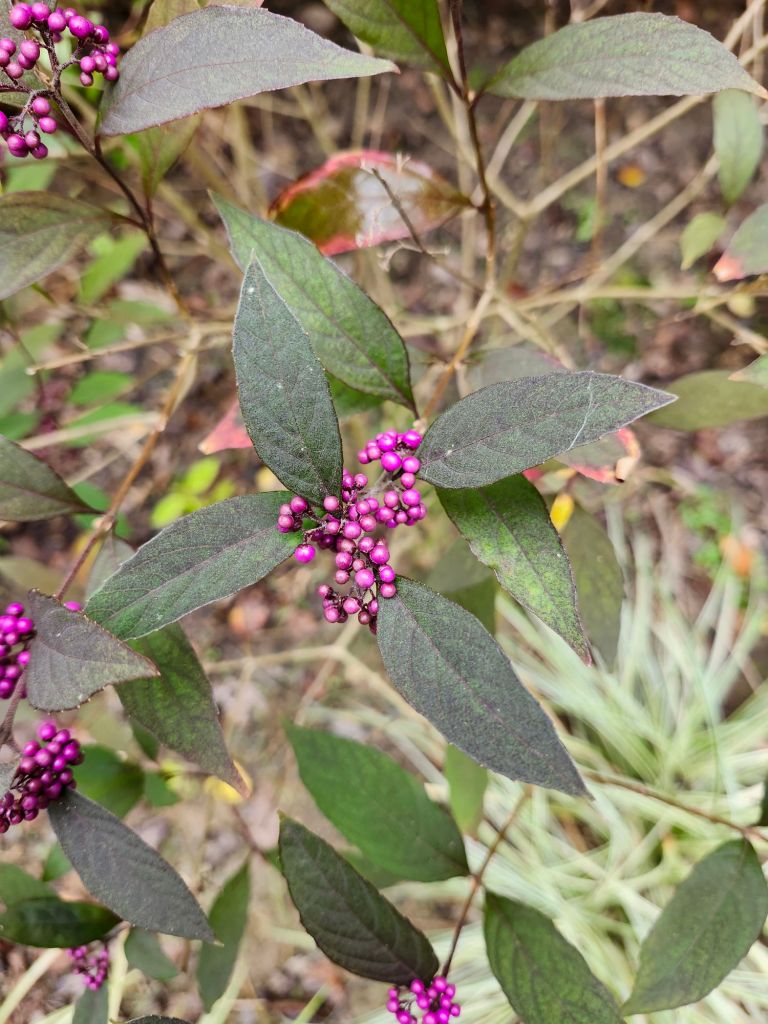
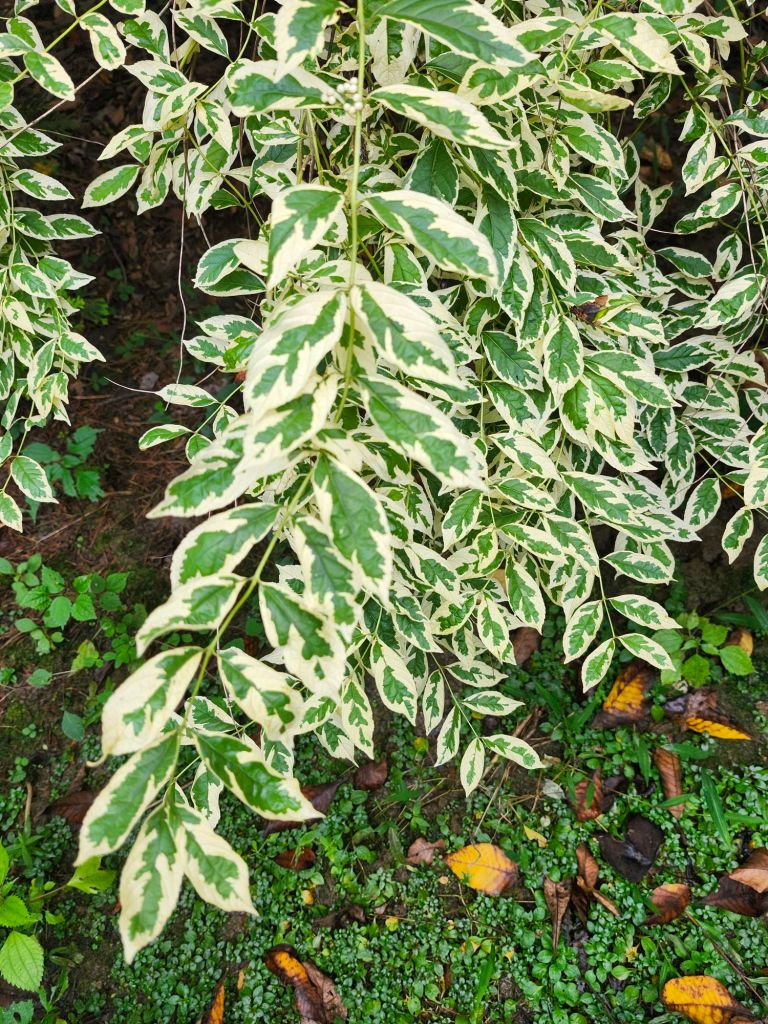
Two beautyberries underperform by comparison. At best, the variegated leaf ‘Duet’ flowers and berries sparsely, and this year I see none with shade that increases annually. The dark-leafed Pearl Glam (below) has been a disappointment with very slow growth in a partially shaded spot, but possibly with damper soil than it prefers.
 Ramblin' through Dave's Garden
Oh, they are pretty. American beautyberry is new to me. Their berries ripened earlier, so are now deteriorating.
With a late start, my American beautyberry will still have colorful berries into November.