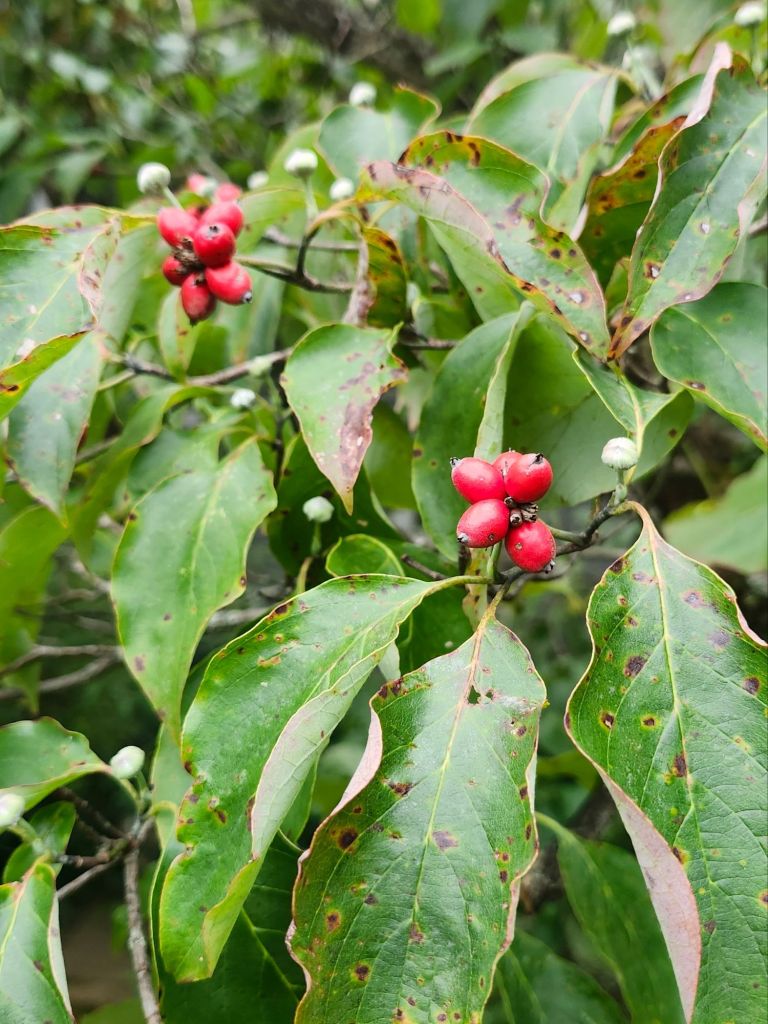
In May, I was worried. The dogwood (Cornus florida) along the front walk was struggling. It was one of the early plants in this thirty-six year old garden, and while it has long suffered from the black spotting, powdery mildew, and galls common to the native dogwood, this was a turn for the worse.
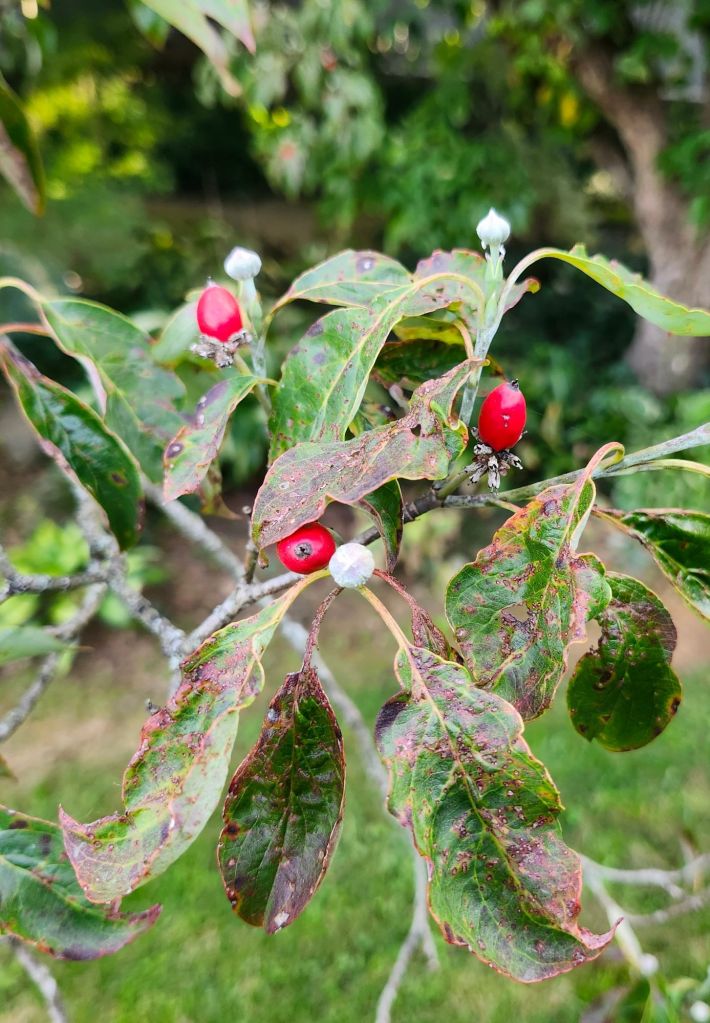
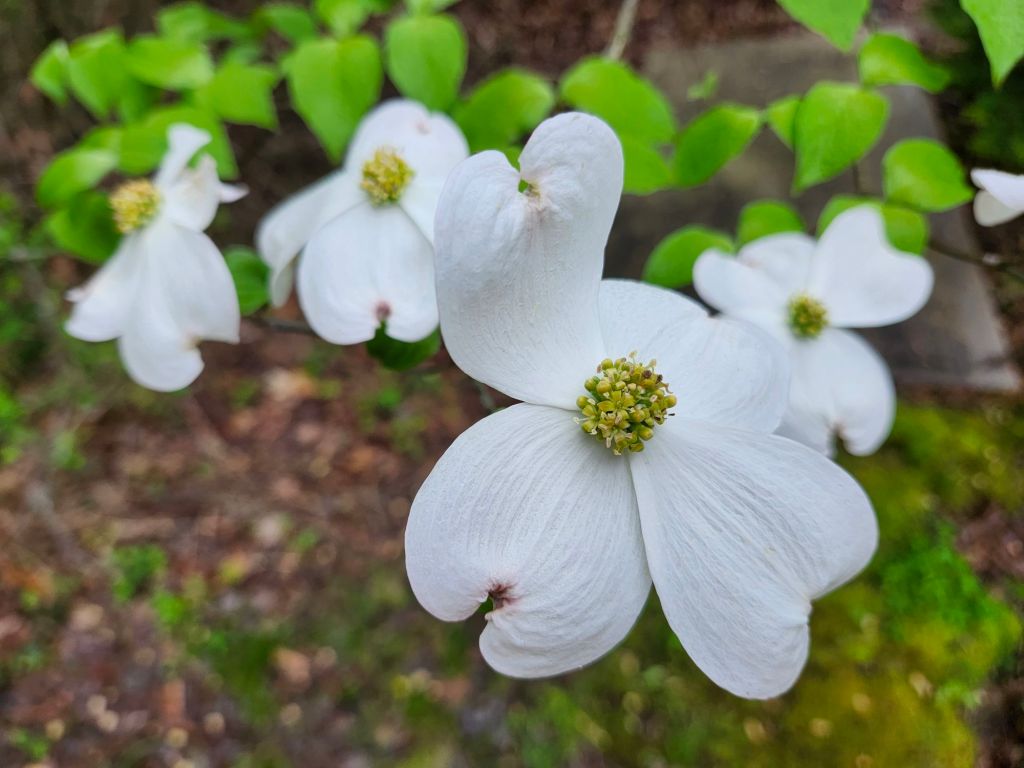
Every year, I plan for the dogwood’s demise, but it pulls through to follow a familiar cycle of glorious bloom, then black spotted and mildewed leaves before red berries and new flower buds in early autumn. But, this spring there was significant dieback in uppermost branches. I decided to wait and see, but plan for its loss and begin to consider its replacement.
A consequence of tending a garden for four decades is the inevitable loss of cherished plants to disease, injury, or old age, and certainly, this dogwood is old and treasured. It was first planted nearer the house, but a wide spreading Japanese maple beginning to obstruct the walkway forced me to rethink the front garden design.
The maple was moved, quite an adventure when a towing strap was attached to my car to pull the stubborn roots after considerable digging. The Japanese maple survived without a problem, and the dogwood was easily transplanted to the outside of the front walk. Inside the walkway, two ‘Seriyu’ Japanese maples were planted. Yes, too close to the house and walk, but planned so that you would walk under the maples’ arching branches. Eventually, this worked to perfection, but now the dogwood is in danger.
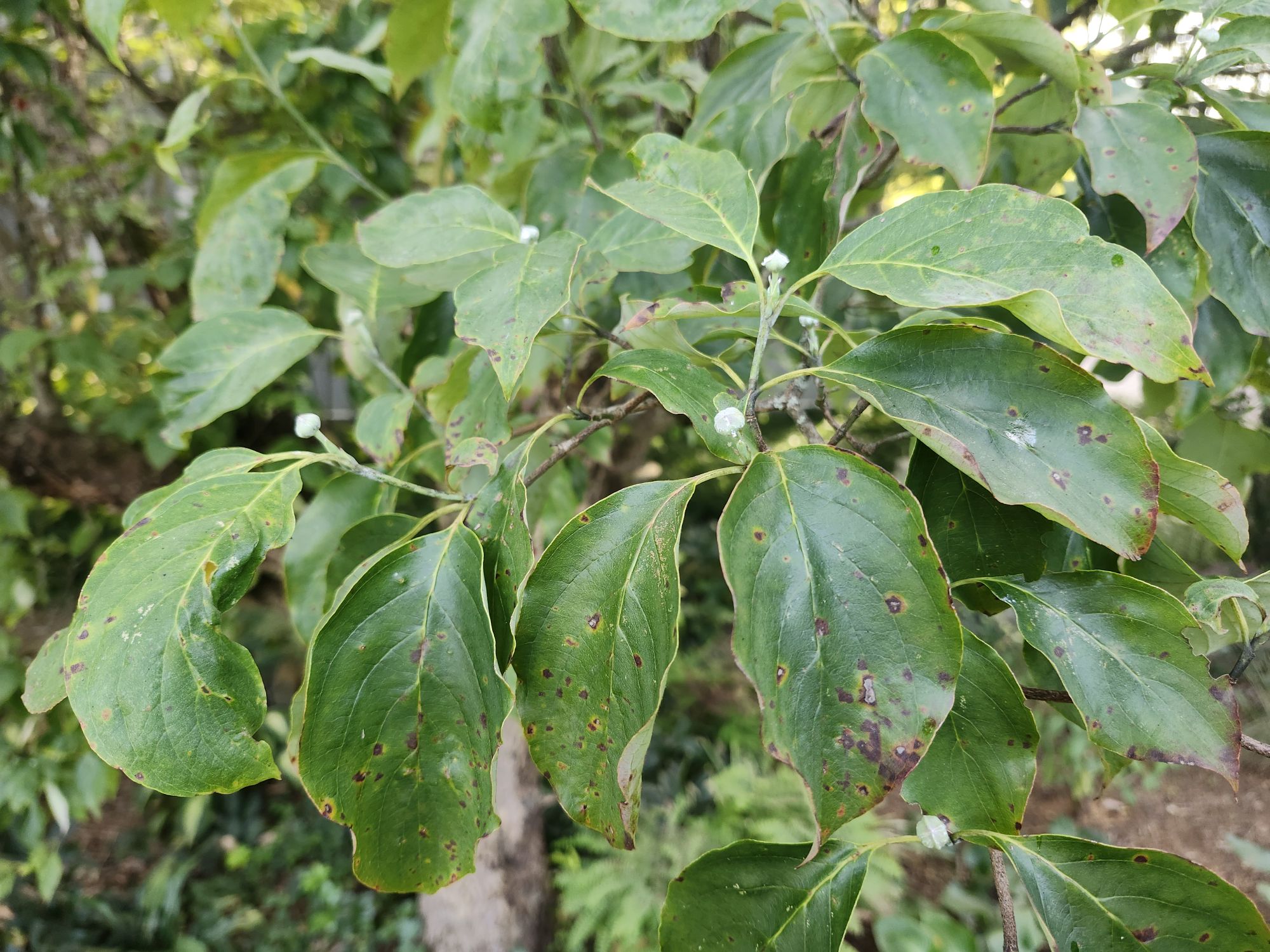
The wait-and-see has worked, at least for now. While several lower branches have been removed, upper branches are partially leafed. But, there’s been vigorous growth just below with larger leaves that are slightly black-spotted contrasting with older branches and contorted, heavily spotted leaves. The problem has not been solved. I suspect this is a last gasp effort for survival, but the dogwood will survive for another year.
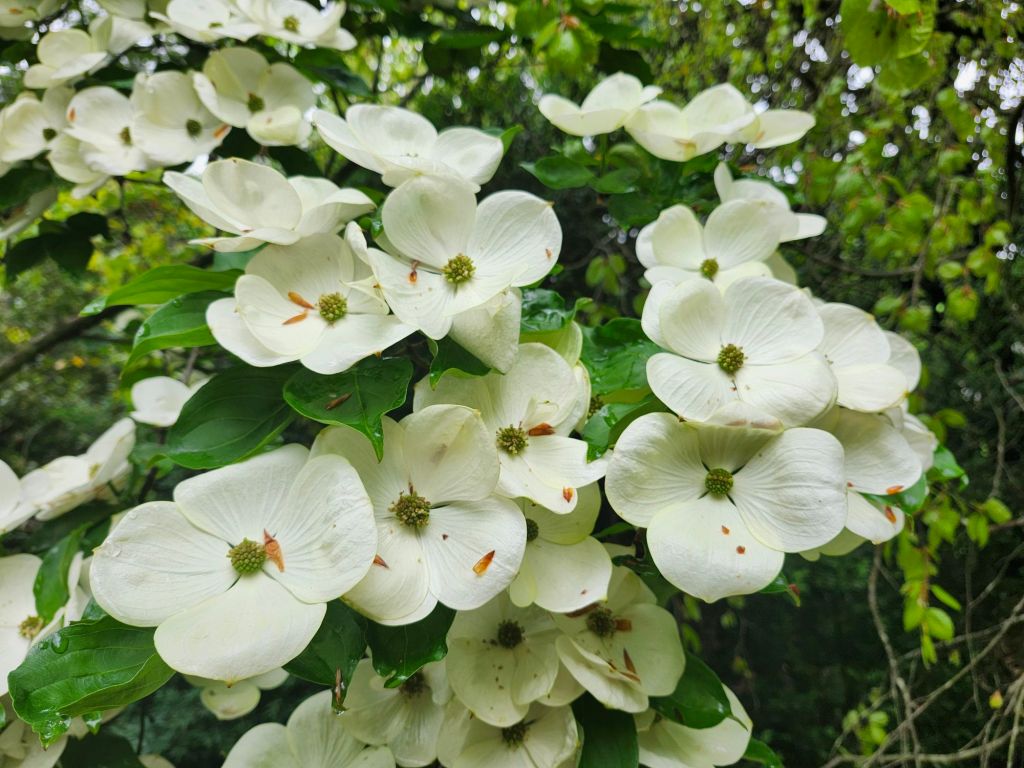
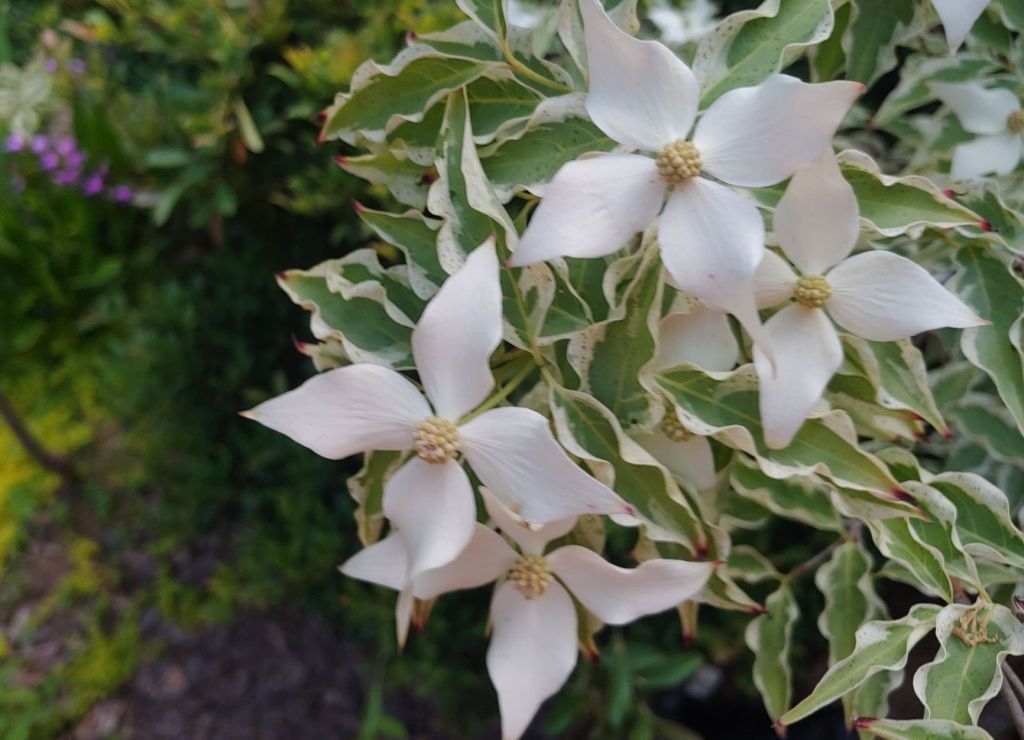
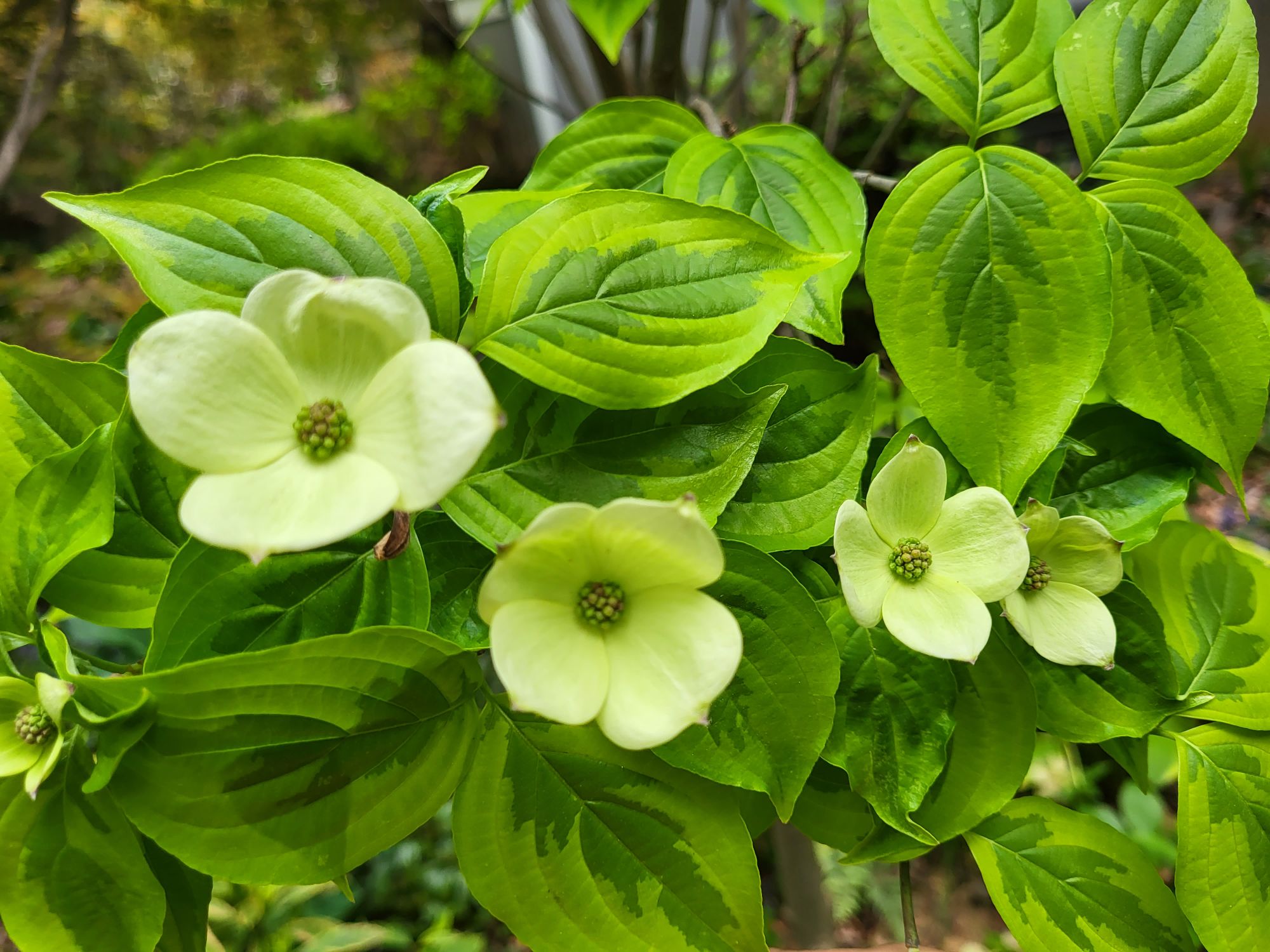
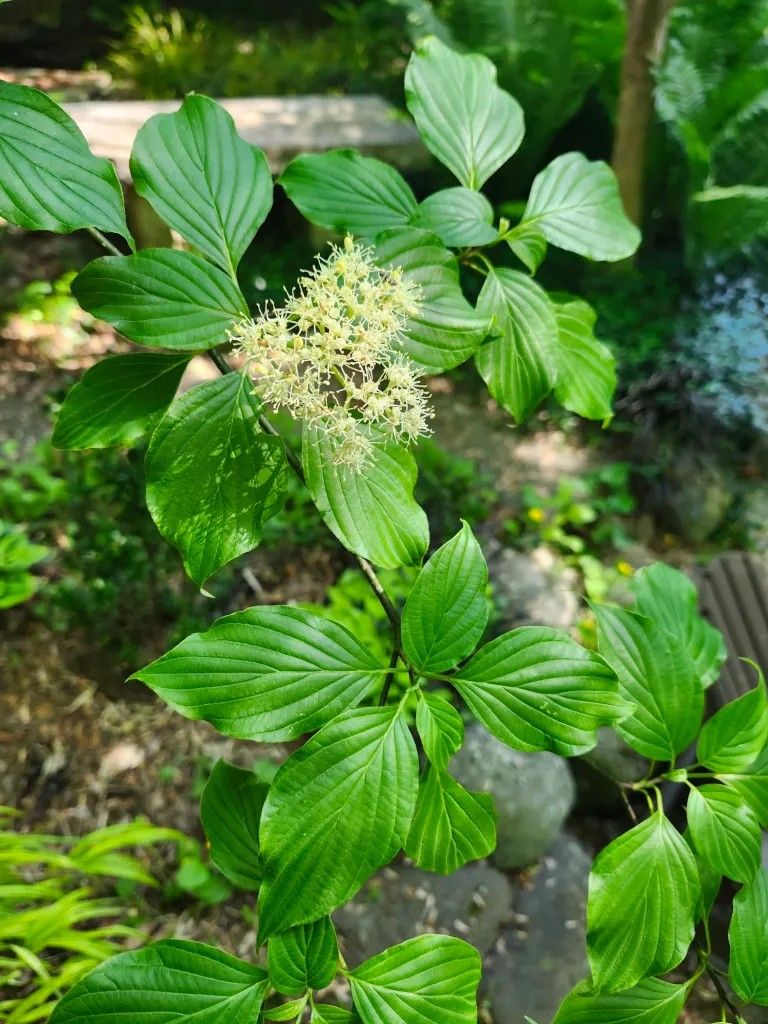
This native dogwood is the last of three planted decades earlier. A variegated ‘Cherokee Daybreak’ was never happy and a red-flowered ‘Cherokee Chief’ perished after a few decades as soil in the lower rear garden became damper. There are a handful of yellow and redtwig dogwood shrubs that thrive in the moist soil. A variety of Chinese dogwoods (Cornus kousa, above), several hybrid dogwoods, a young variegated Wedding Cake (Cornus controversa) and native Pagoda dogwoods (Cornus alternifolia, below) are scattered through the garden. All are thriving.
When, and if the dogwood perishes, will I replace it with another native dogwood or opt for one that is more disease-resistant? Many of my choices depend on what’s available at the moment. A replacement must be large enough to match the surrounding mature garden, so today, I don’t know. This native dogwood has survived into its fourth decade, and there’s little doubt that another will outlive me.
 Ramblin' through Dave's Garden
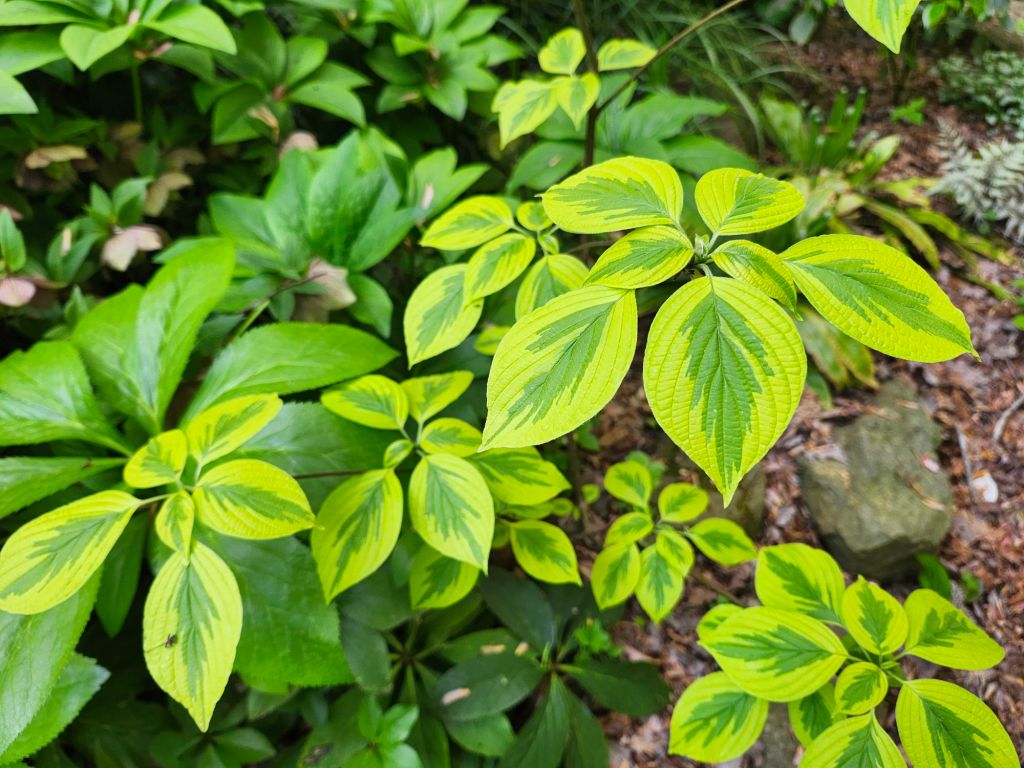
Hi — I’m a longtime fan of your posts and an avid gardener in Leesburg with a question about your Celestial Shadow dogwood. I love anything variegated and was thrilled to find and purchase a Celestial Shadow about four years ago. It’s growing quite well in morning sun/afternoon shade and is gorgeous in the Spring, but its leaves lose their variegation circa June. Some variegation is slightly evident once the leaves turn reddish in Fall. Is this the case with your Celestial Shadow as well, or is there something I may be doing/not doing (perhaps too much sun?) to be losing the coveted variegation after Spring? Thx much in advance for any thoughts you may have, Andrea
The variegation of my Celestial Shadow, and ones my sons have planted, all fade in summer. A previous one that perished in damp soil was very shaded and it also faded. Mine is favored among other dogwoods since I visited the renowned Shadow brothers nurseries in Tennessee and met the brothers and their dad, a memorable character.
Thank you, at least I can now stop fretting about what the “fix” is! And perhaps just commiserate with the otherwise lovely tree, as I too “fade” in the heat and dry of our summers… 🙂