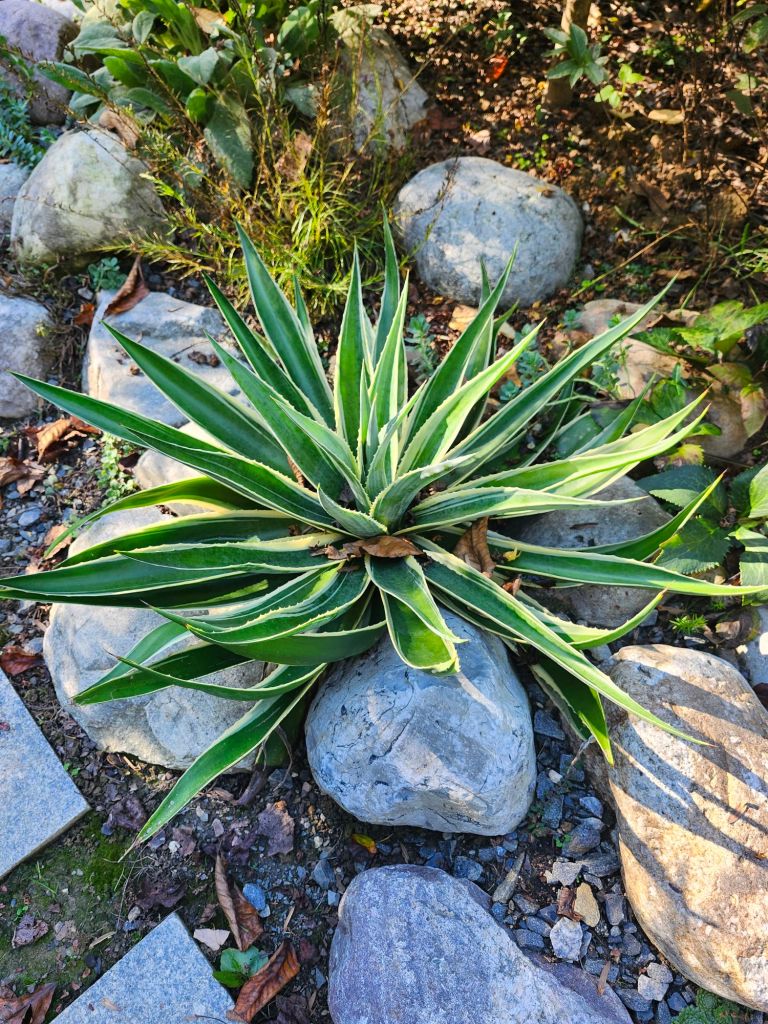
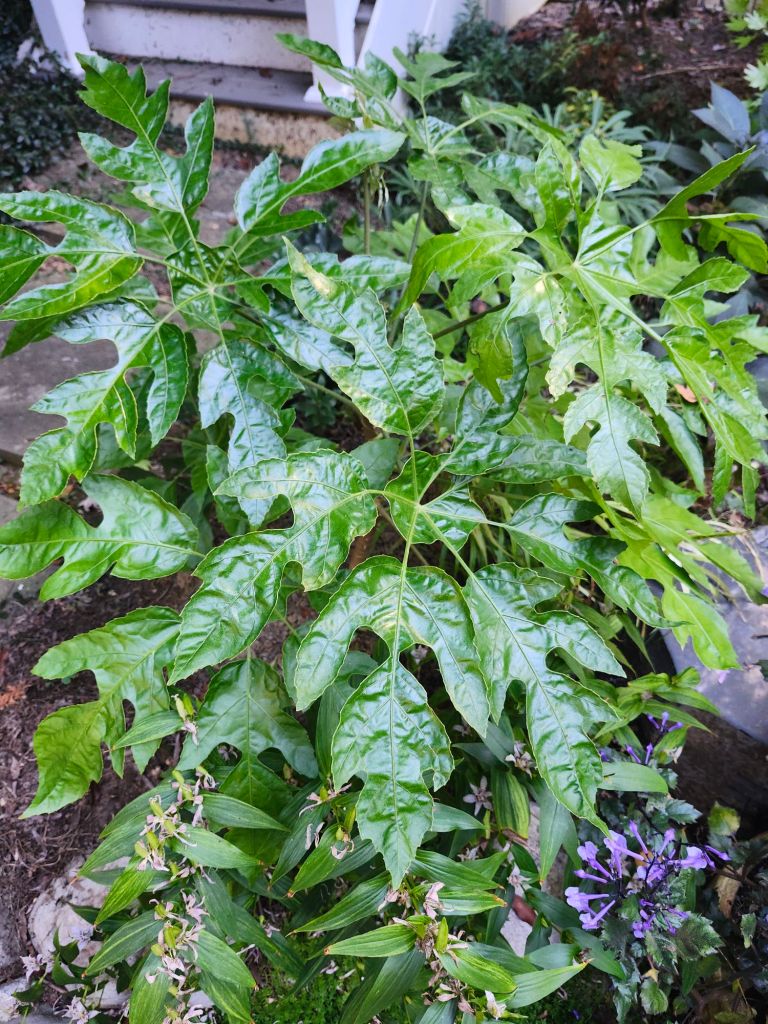
The rice paper plant (Tetrapanax papyifera, below) has disappointed this year. I was pleased when last year’s stems did not die fully to the ground, but cutting back to a side bud has slowed its growth. Instead of growing to ten feet, they are a bit more than half that height. In this climate, the rice paper plant will die back partially or to the ground, but next year I’ll cut stems to the ground so that all grow from a terminal bud.
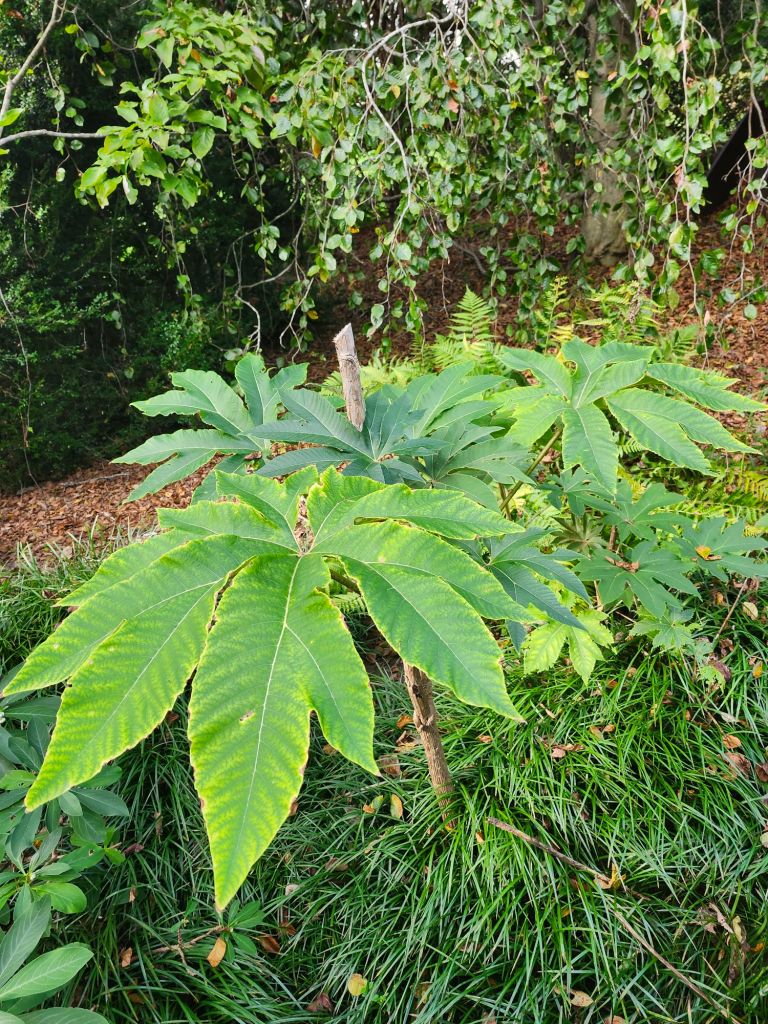
In late spring, I divided and transplanted a small clump that is surviving though not thriving. This, I expected in its first year, and I have hopes for more vigor next year.
The single castor bean (Ricinus communis, below) that germinated from seed directly sown in early spring has fared even worse, just now growing above a neighboring Amsonia. Of course, I am to blame for this failure (and many others) since I did not start the seed in the greenhouse in late winter. I suspect the castor bean would have grown to ten feet in height if it had been started early, or if it had been given a full sun position rather than shaded beneath the dense amsonia.
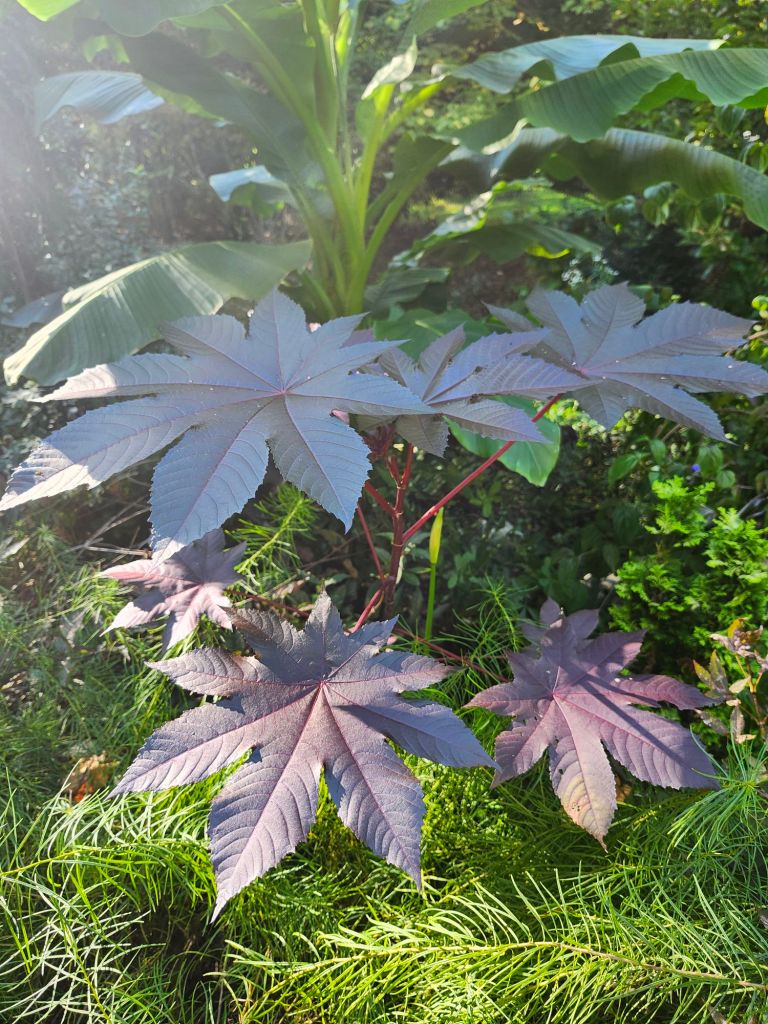
I’ll find a better spot for the purple-leafed castor bean next year, and if you’re reading, Jake (my son who is more attentive and successful growing from seed), you should grow a few extras with one saved for me.
So, enough of the worst. After two years of disappointment growing the hardy banana (Musa basjoo, below) in a spot that I knew was too shady, two new plants have thrived. Just a few feet from the struggling castor bean in the lower rear garden, a small plant has skyrocketed to ten feet in raised soil and part sun. This banana has several trunks, the start of a substantial clump that I hope will require control so the lower garden does not become a banana plantation in future years.
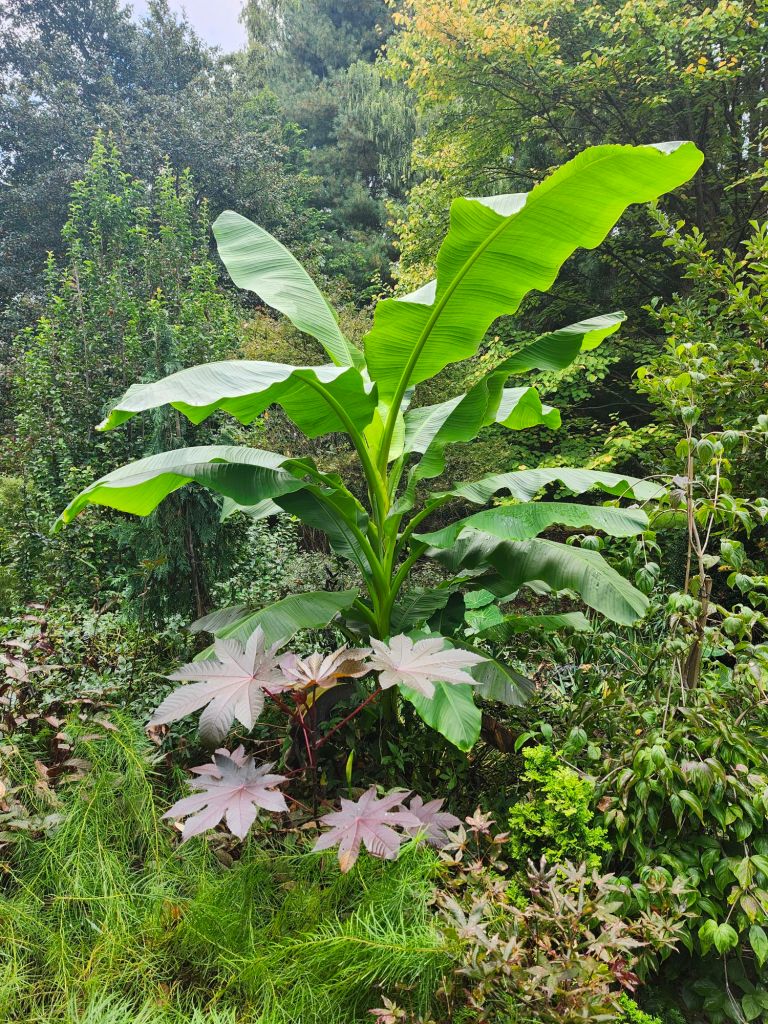
The second banana has grown acceptably in more shade, but to half the height. I’ll see how it grows next year to decide if it stays or needs a better spot. The banana that struggled for two years, never growing taller than four feet, was moved a few weeks ago. It now has plenty of sun, and if it’s happy in this new position it will be prominently viewed as you enter the rear garden.
With overnight temperatures forecast to fall into the mid-thirties, I’m starting to think about moving non-hardy plants into the basement and greenhouse. I’ll take a chance through this week’s thirty-four degree night since temperatures will not be nearly as cold in the week that follows. It’s possible that the non-hardies might not have to be lugged indoors for another month, and of course, I prefer to wait as long as possible.
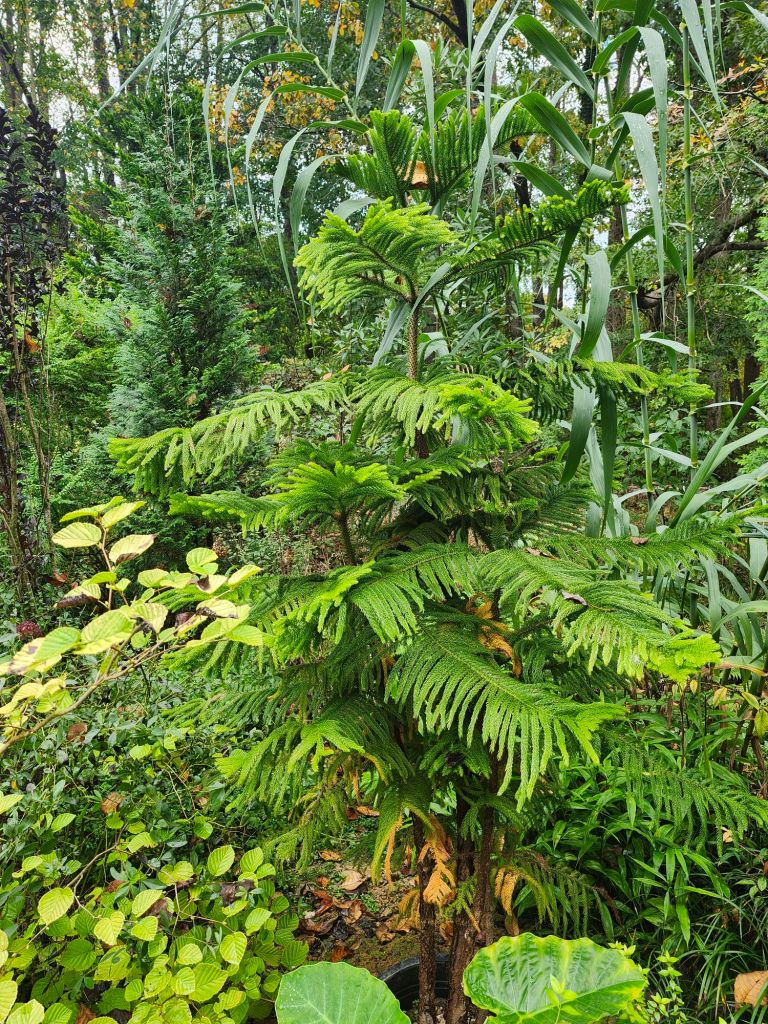
The tall Norfolk Island pine (Araucaria heterophylla, above) with its plastic container dug into the ground in the lower rear garden is looking good. This will be an easy one to move into the basement, though it’s a long carry for a large pot up to the house. Several other non-cold hardy plants will be dug just before the first forecasted freeze. In recent years, that’s often in early November, and it’s really not a difficult task, but it marks the start of the long winter so I don’t look forward to it.