Arching branches of the ‘Royal Star’ magnolia (Magnolia stellata ‘Royal Star’, below) readily root in moist soil in the lower rear garden. Several have been dug and transplanted and a few have been potted to share with acquaintances. Today, two planted in shaded spots are flowering. The parent tree is nearing its peak at the forest’s edge with no immediate threat of a hard freeze to ruin the blooms.
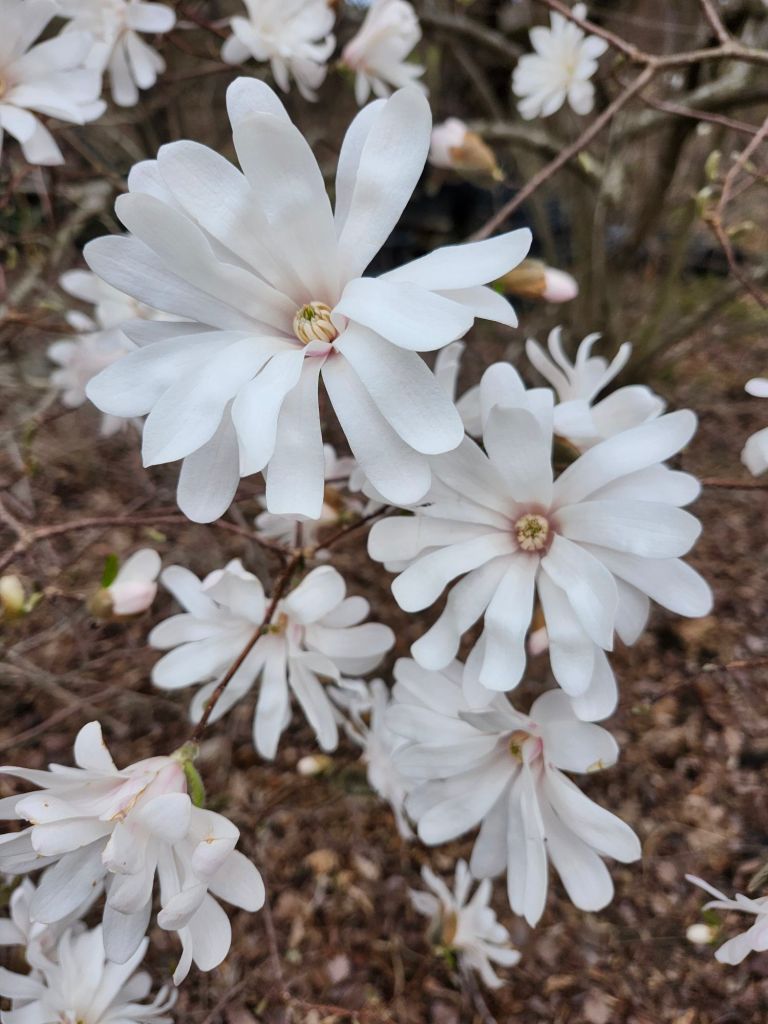
The small collection of early blooming magnolias are favored for filling the garden’s tree canopy with flowers until redbuds, then dogwoods take over. Two yellow flowered magnolias (‘Elizabeth’ and ‘Yellowbird’) will flower alongside the redbuds.
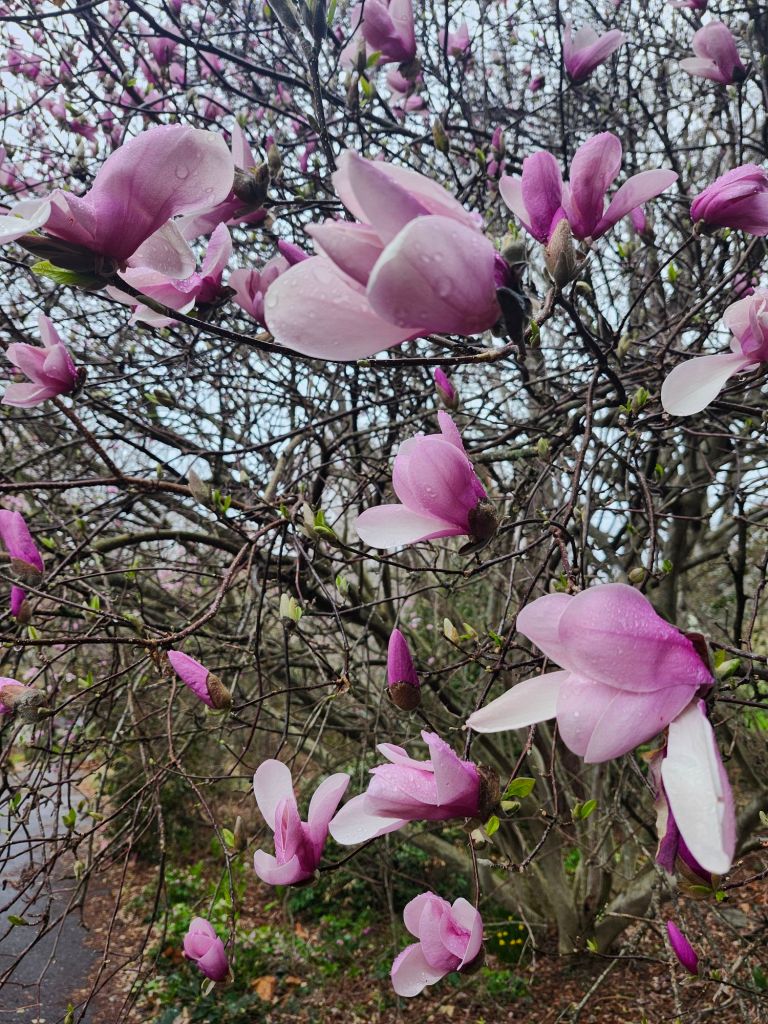
‘Merrill’ (Magnolia x loebneri, below) is the first of the magnolias to flower in the garden, several days ahead of ‘Royal Star’, and the largest of the garden’s magnolias despite the loss of its top third in an ice storm in the recent decade. ‘Merrill’ is most visible from our sunroom through naked branches of a few Japanese maples and an ‘Ivory Silk’ lilac (Syringa reticulata ‘Ivory Silk’) that will leaf fully as the magnolias fade from bloom.
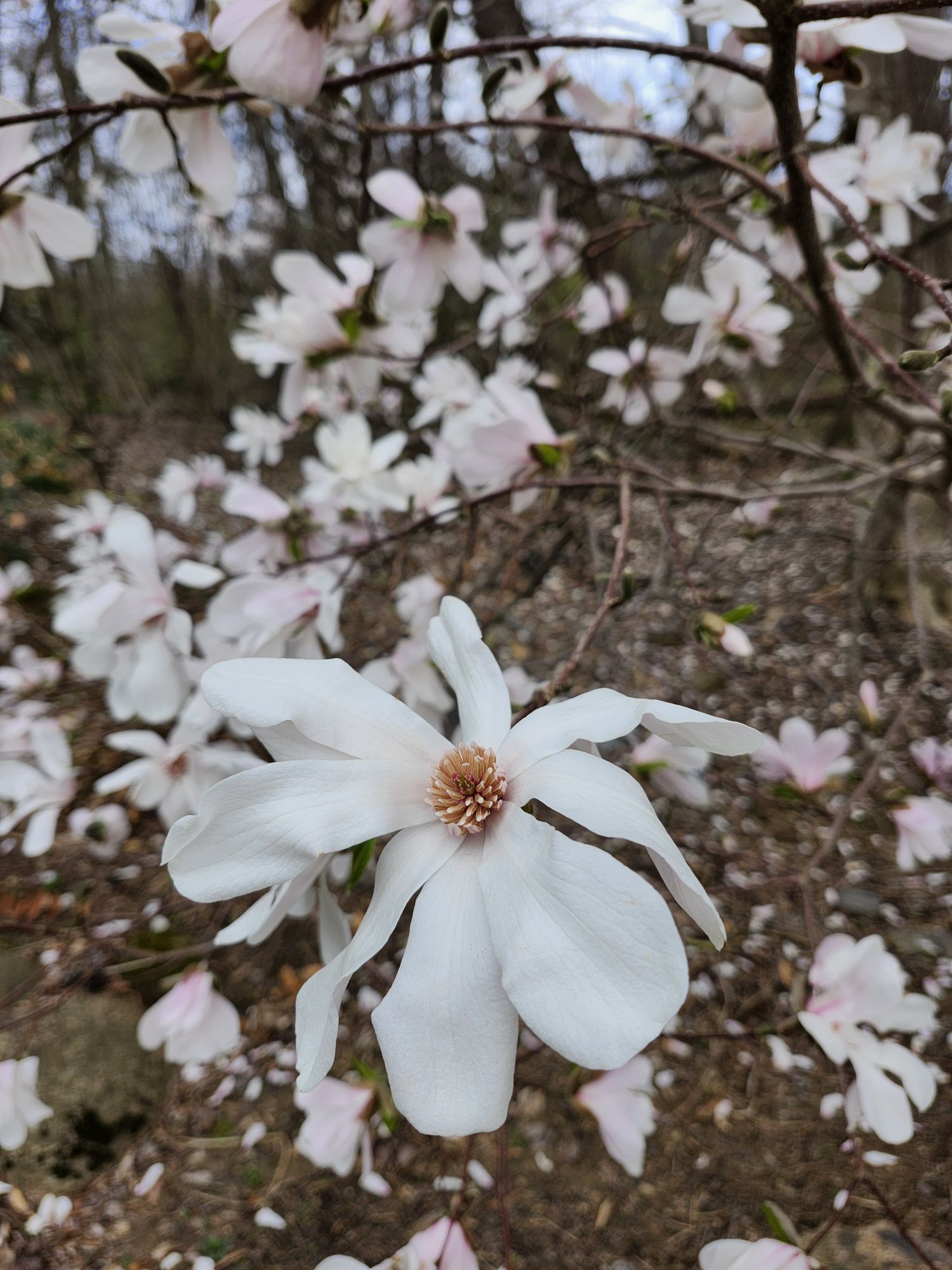
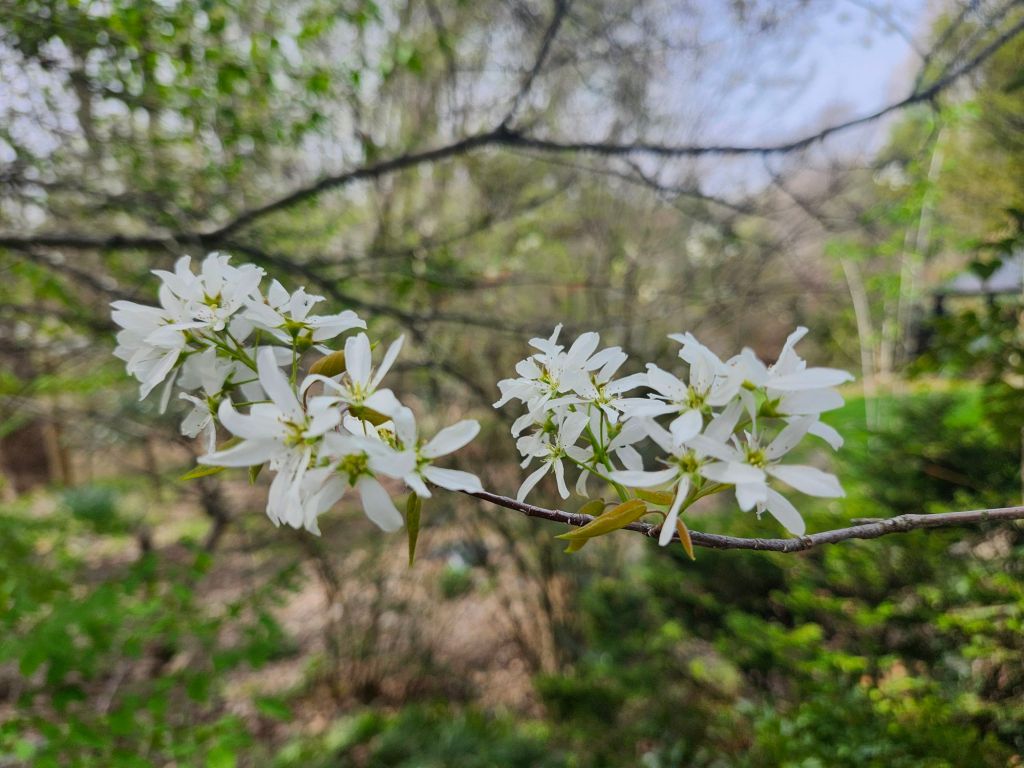
The Serviceberry (Amelanchier canadensis, below) gets lost in the view from the sunroom. ‘Merrill’ is close behind with many more flowers. Unfortunately, the serviceberries do not produce fruit that is edible to our resident birds due to juniper-apple rust, but it is an exceptional tree and a pleasure as I walk the path along the stream.
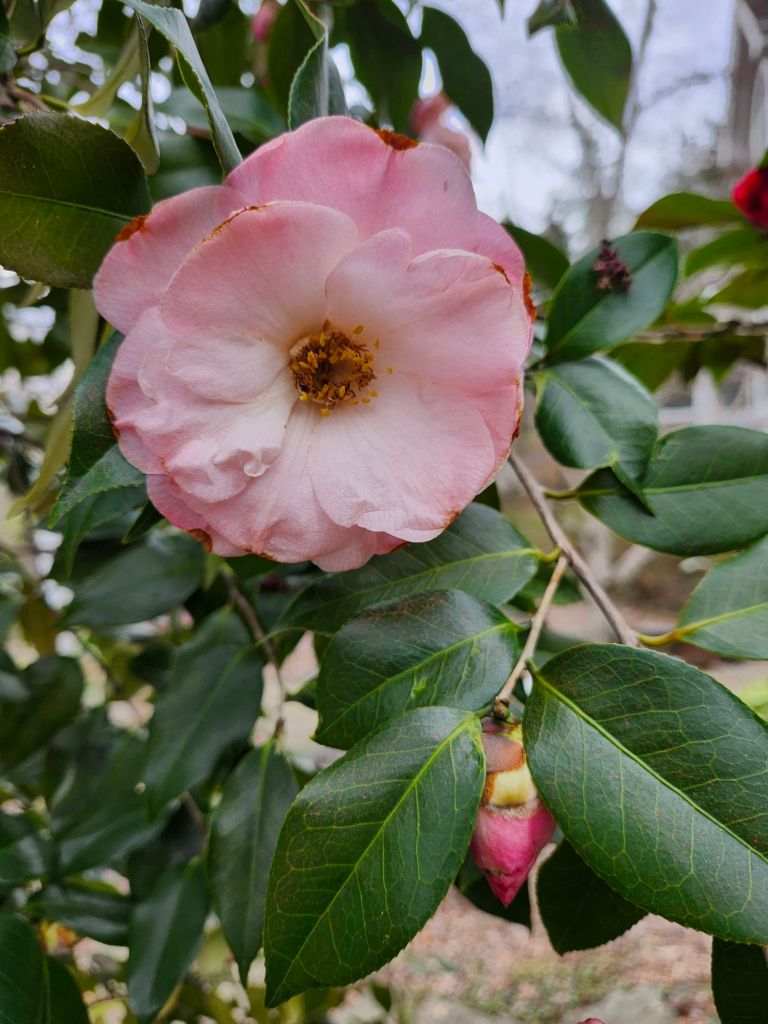
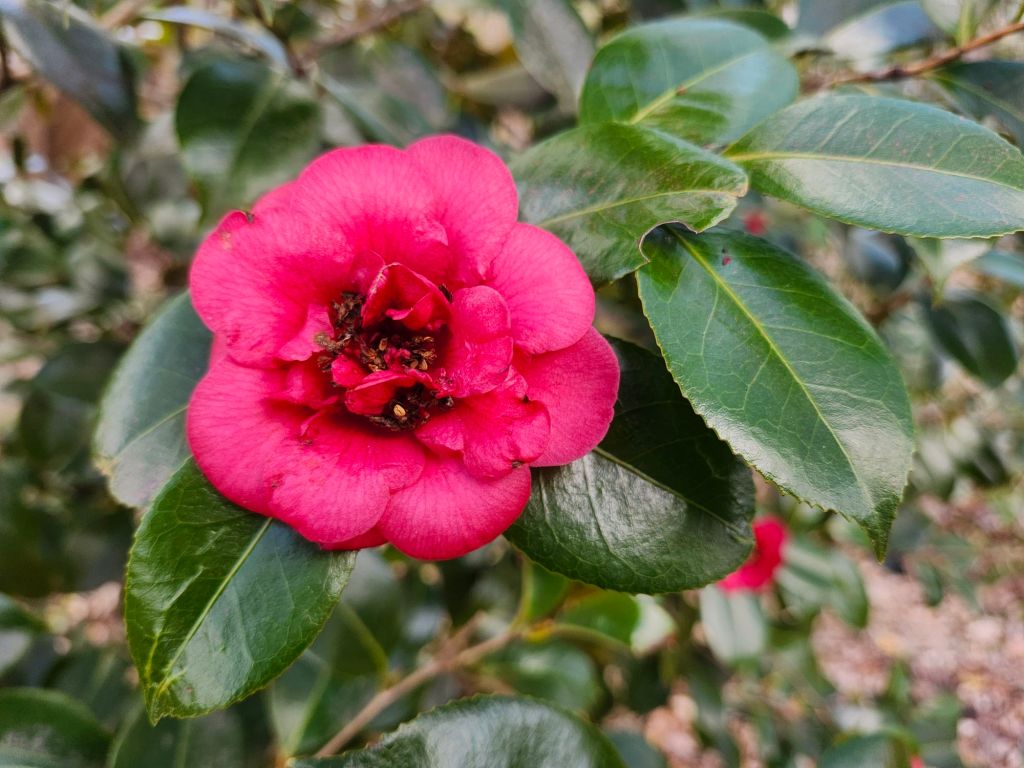
Many of the camellias’ spring flowers (below) have suffered minor damage from recent low temperatures. Fortunately, the camellias were tardy coming into flower, so there will be many more as we move into a week of warm temperatures.
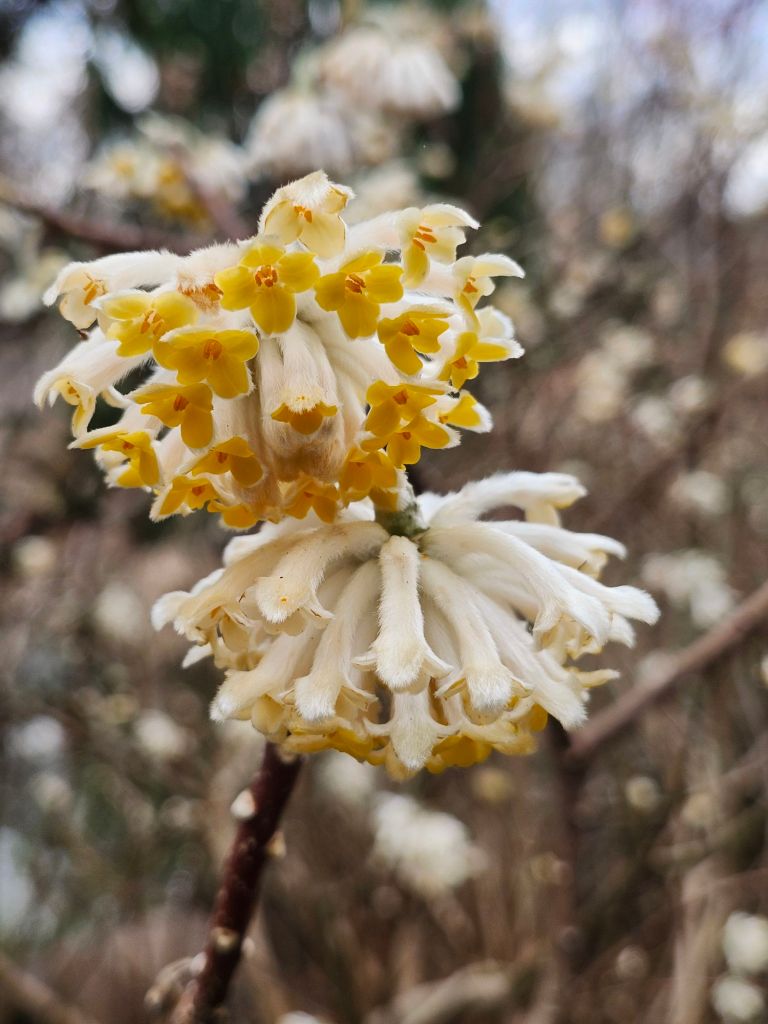
With a late start, the paperbushes (Edgeworthia chrysantha, below) were not the typical harbinger of spring flowering in late February. Flowers are beginning to fade and buds damaged by a sub-zero night in January and a week below freezing have opened into much smaller flowers with much less damage than expected.
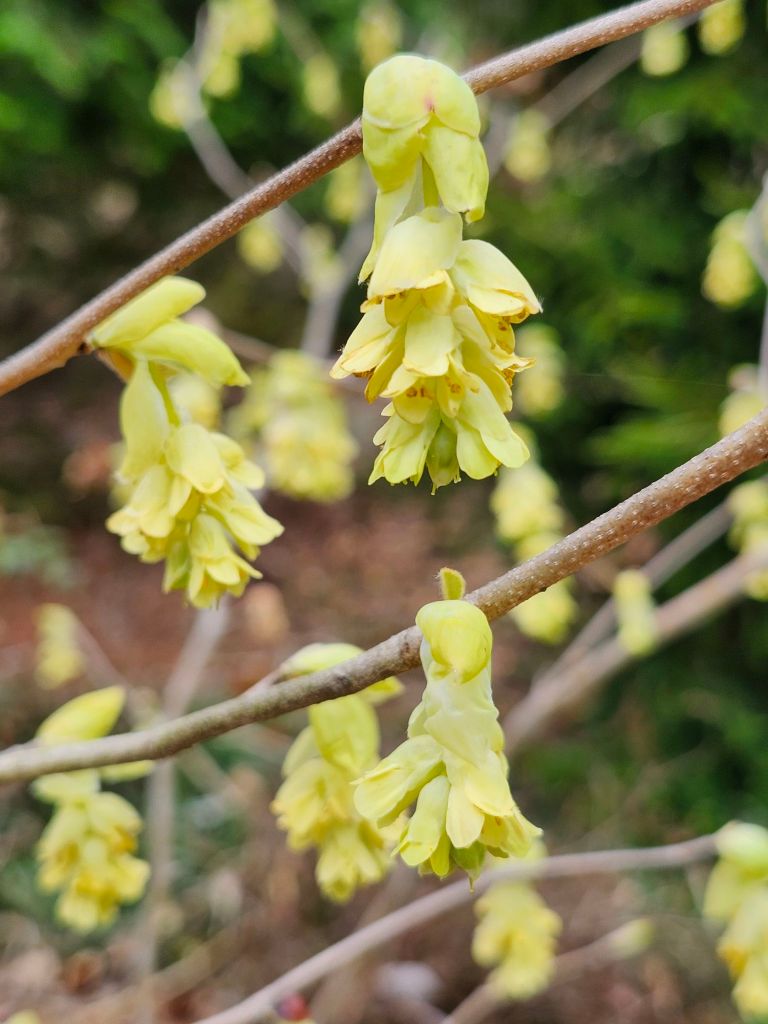
The yellow-leafed ‘Ogon’ winter hazel (Corylopsis spicata ‘Ogon’, below) has been a mild disappointment, with sprawling branches and scattered flowers. Until this year, when I considered pruning to encourage denser branching, but today I see this is no longer a consideration. It’s taken a few years, but the winter hazel has filled in acceptably with an excellent crop of flowers.


What a wonderful richness of spring flowers you have…the magnolias are gorgeous.
And more every day.
Dave, question regarding your comment “Arching branches of the ‘Royal Star’ magnolia (Magnolia stellata ‘Royal Star’) readily root in moist soil …
Does this only happen with layering, or can cuttings from the mother plant be taken for rooting in moist soil??
I have one of these trees, which could use some pruning. I would feel happier doing so if the trimmings could provide more plants. Thank you! — Cindy
Short sections of the current year’s growth can be rooted in late spring. I do not have the patience to do this so I can’t give any practical tips. I believe that it requires a rooting hormone and well drained soil rather than sticking a branch in moist soil as you would do with a willow.
Thank you. I will give it a try.