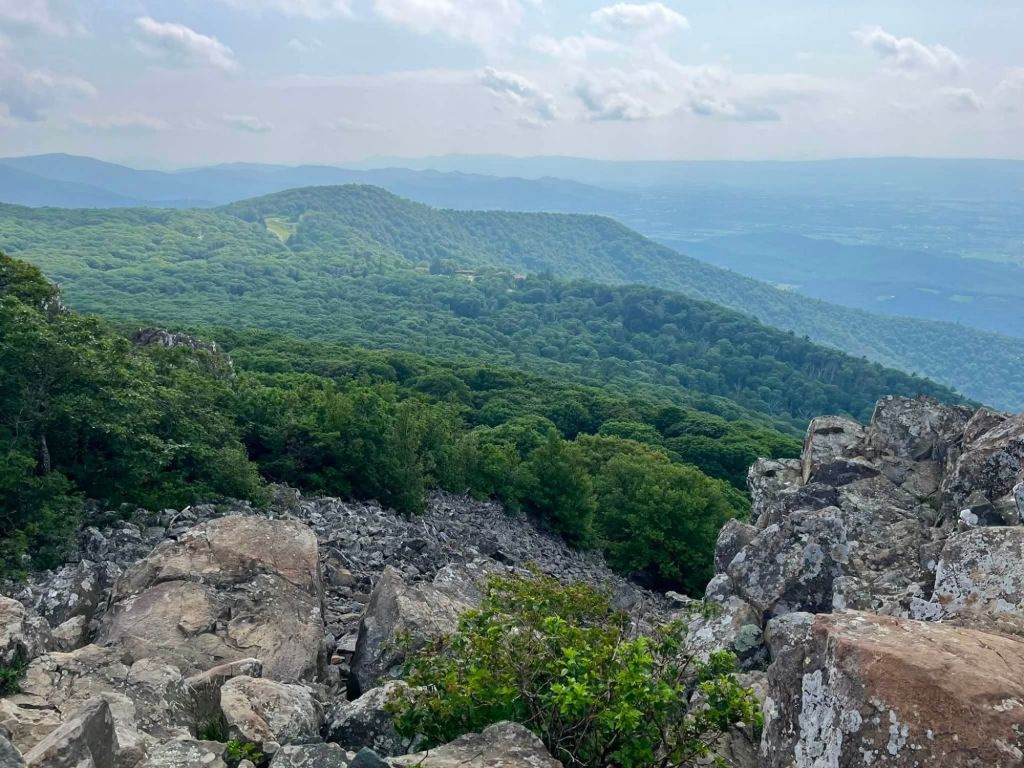
Barbara and I have recently returned from visiting gardens and hiking snowy mountains (and chilly beaches) in Washington. We didn’t waste a moment, so our first few days back home were spent in well earned relaxation and necessary recovery. But, enough of that. Yesterday, we escaped the ninety degree heat with a hike just up the road in the Appalachian Mountains. Despite proclamations to the contrary while trudging up a snowy slope on Mt. Rainier, these are real mountains, and also beautiful.
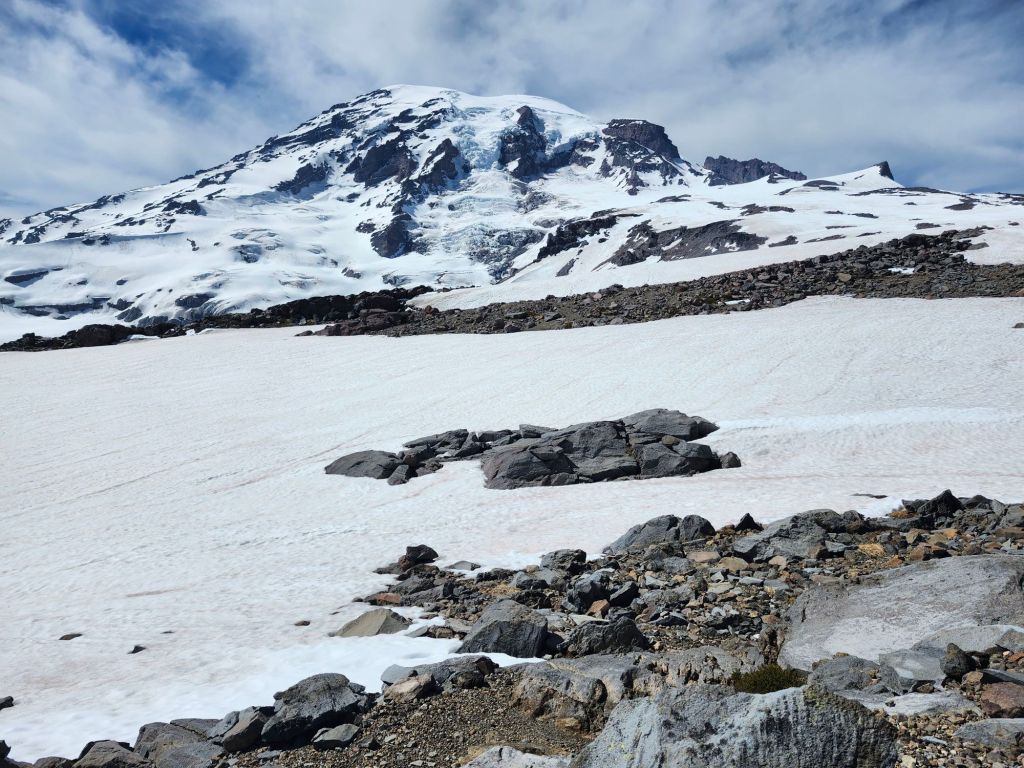
We were fortunate on Mt. Rainier and in the Olympic Mountains to experience the peak spring flowering at mid-elevations which is long past in our Virginia mountains. I didn’t expect a lot of color closer to home in early summer, but much of our trail was bordered by beautiful blooms. Certainly, not the first flush of spring, but a surprising mix of flowers in the ground and shrub layers of the forest.
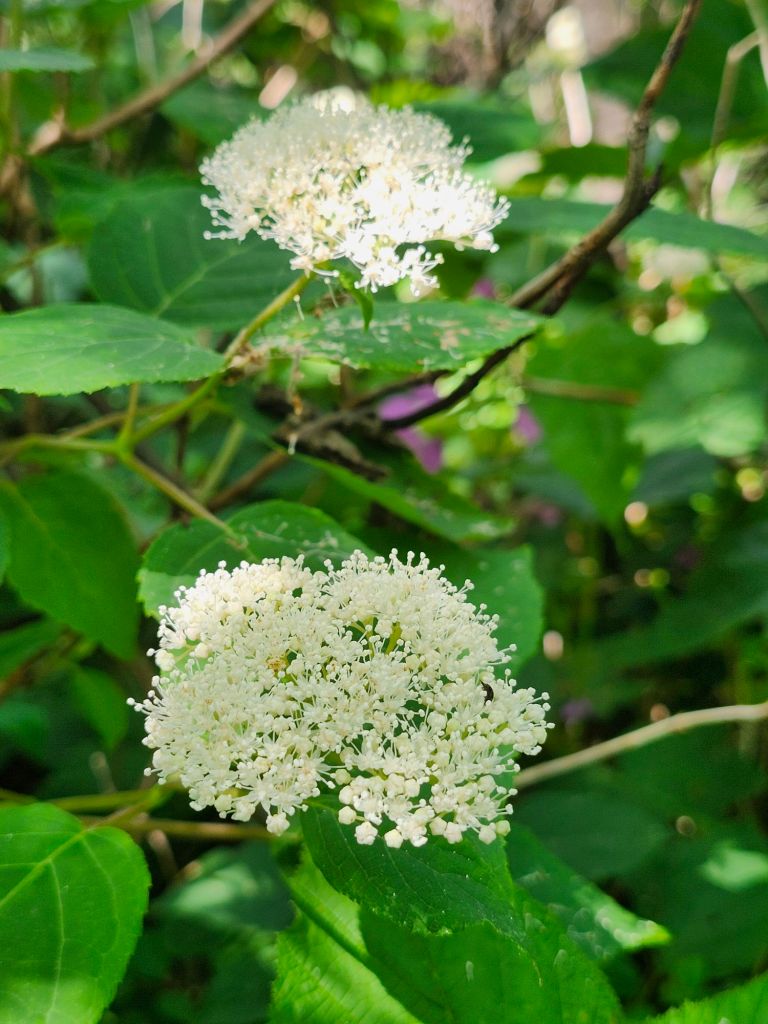
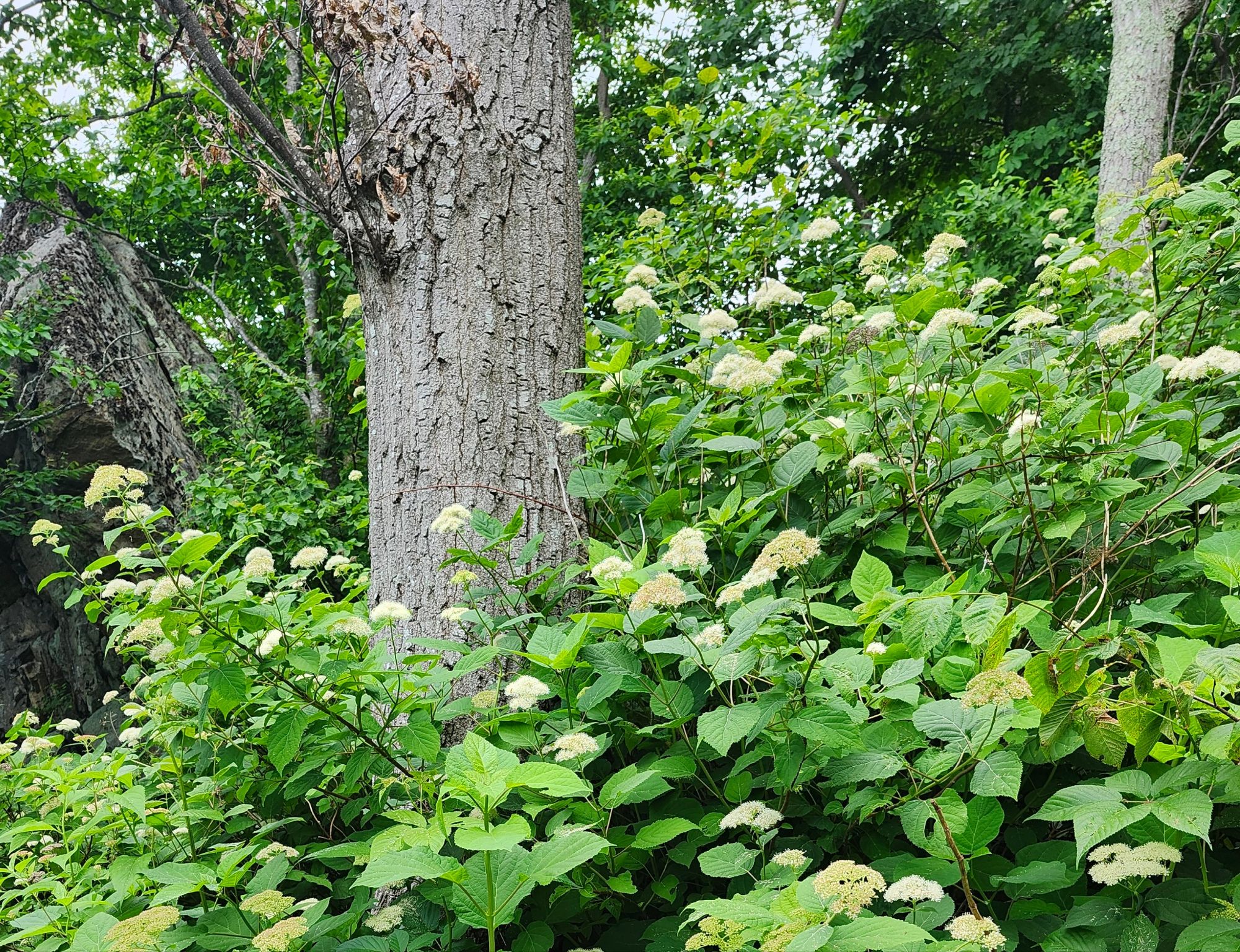
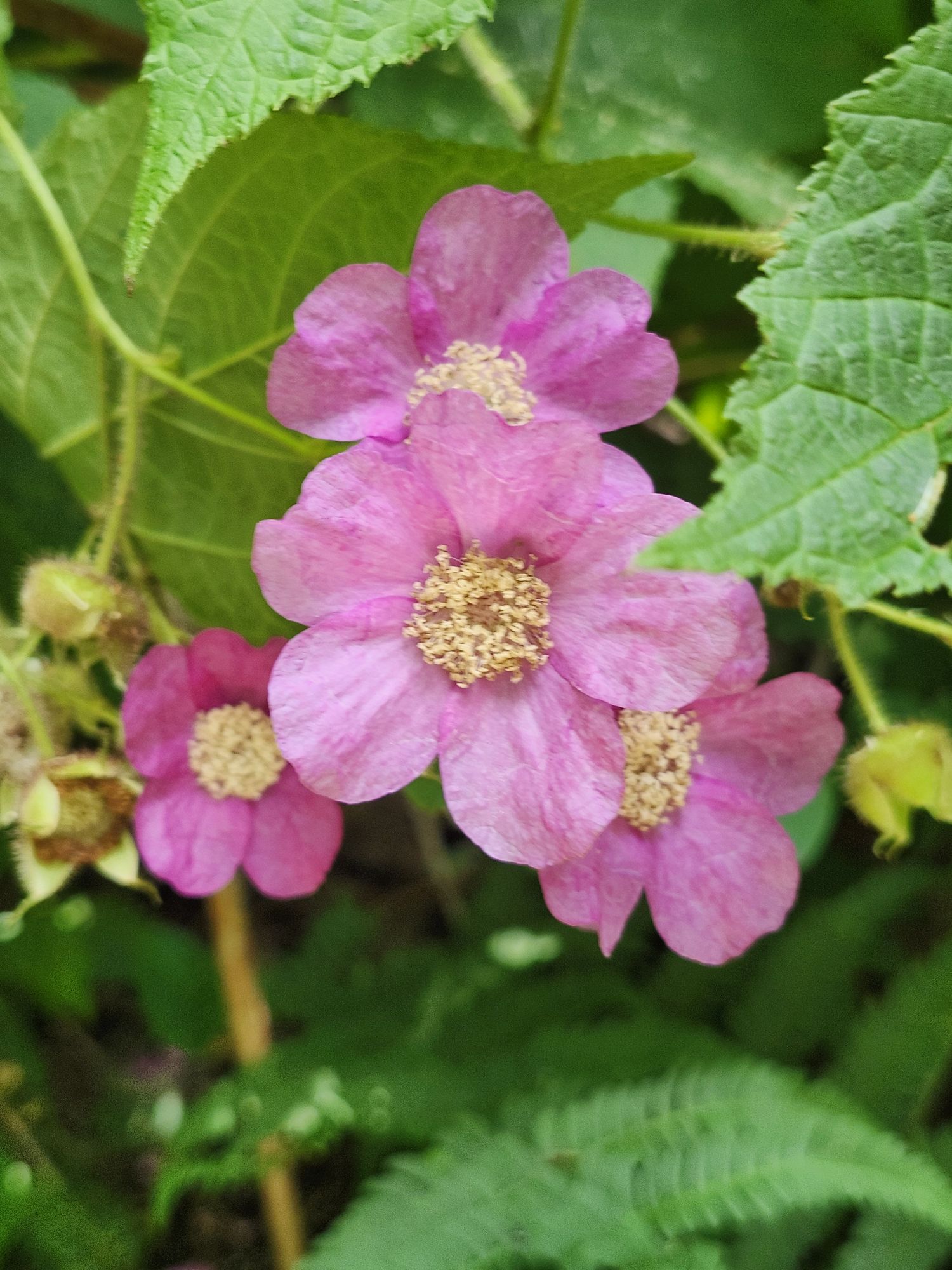
The day’s highlight were the smooth hydrangeas (Hydrangea arborescens, above) and flowering raspberries (Rubus odoratus, below), but there was much more.
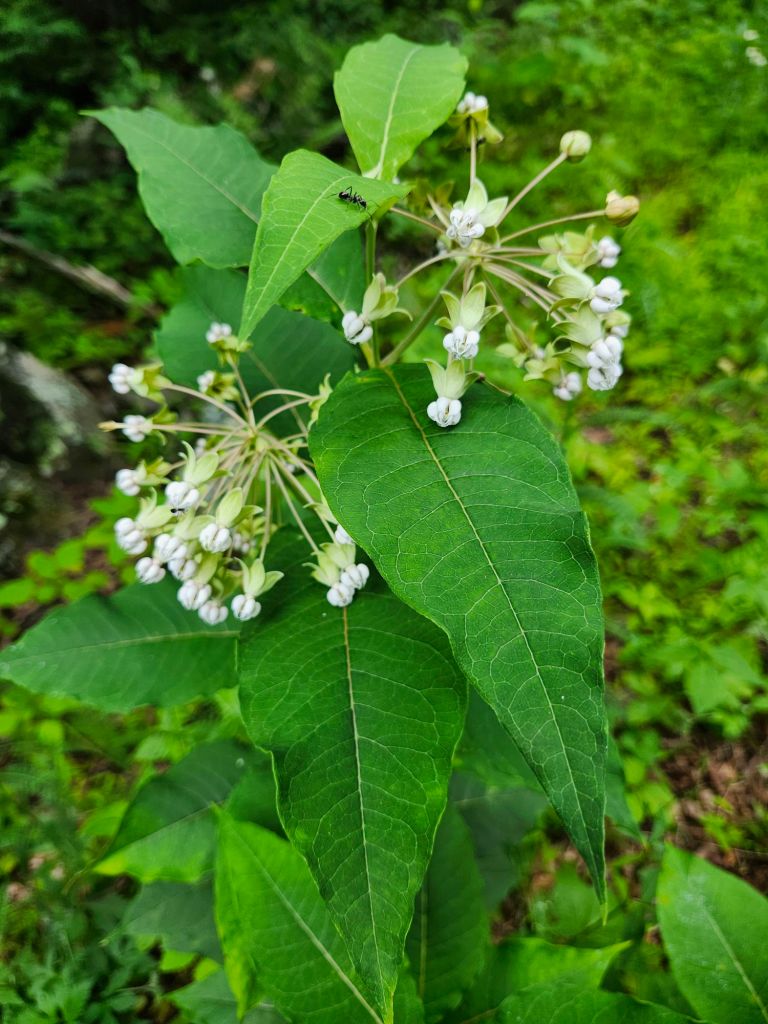
We see a variety of milkweeds through the summer but most are in sunnier locations. In more shade, there were plentiful Poke milkweeds (Asclepias exaltata, below) just beginning to flower, though only a few butterflies.
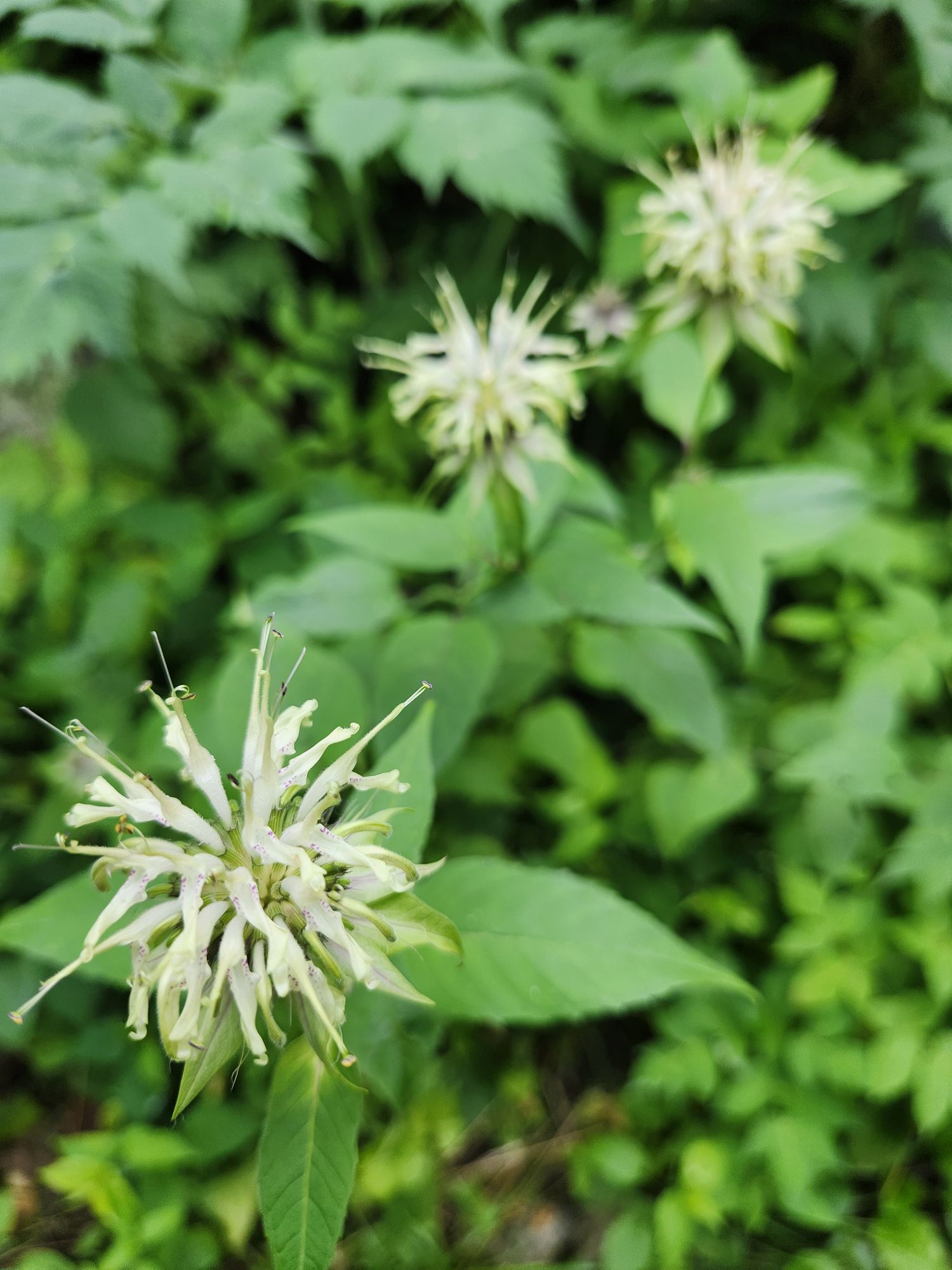
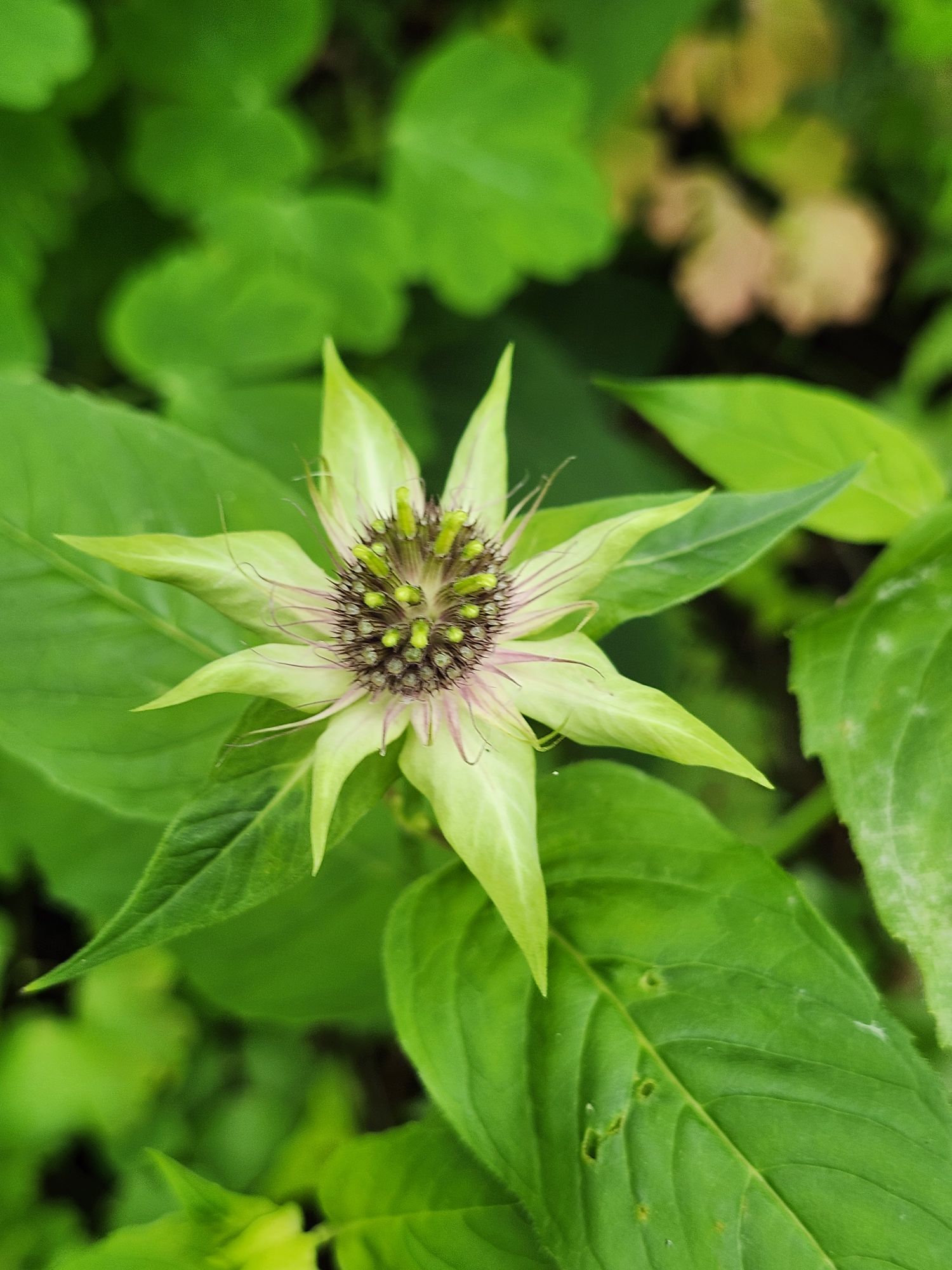
While flowers attract attention, spent blooms are rarely ornamental. The white Monarda (Monarda clinopodia) is fading, but look what follows (below).
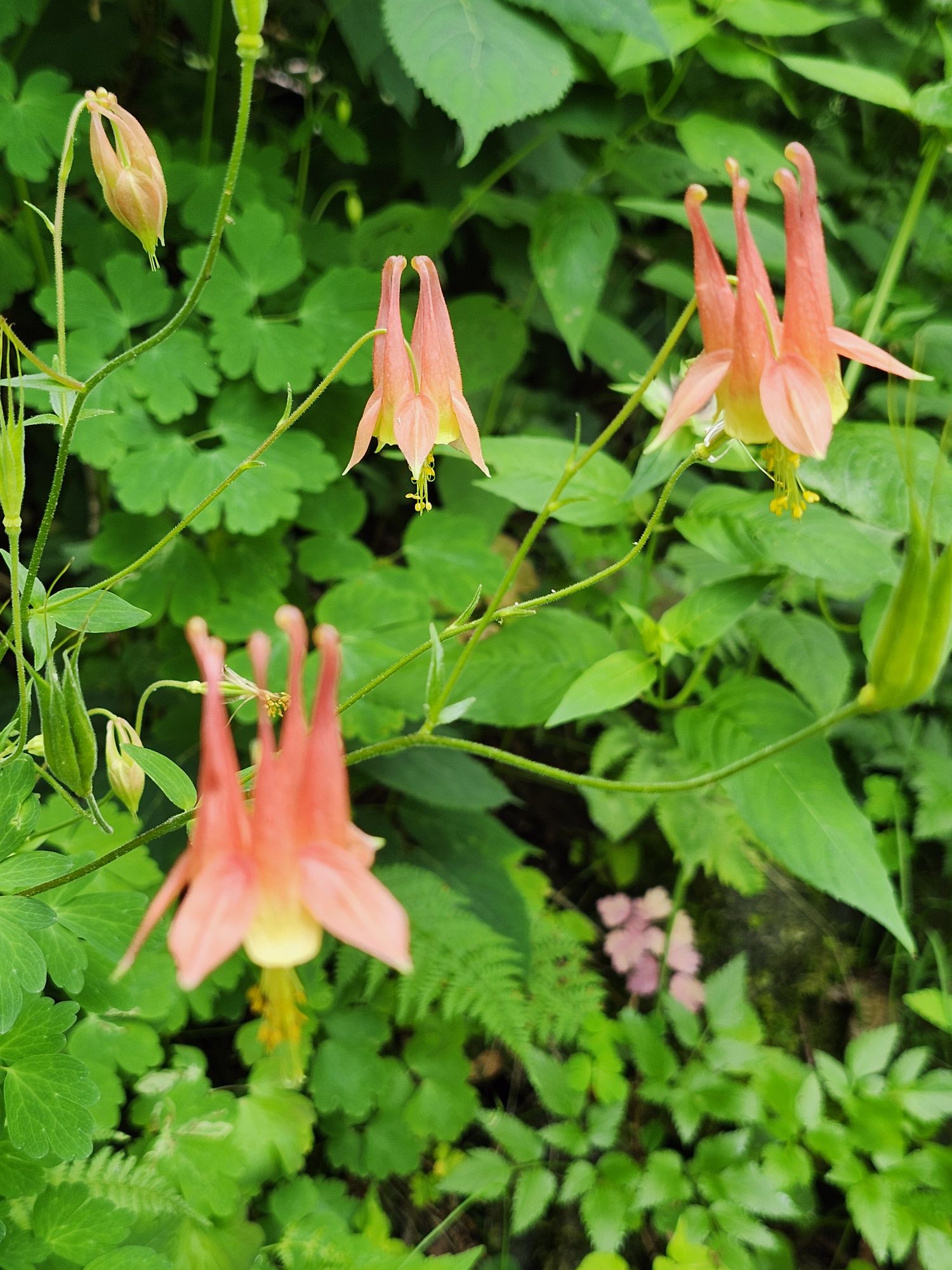
Columbines (Aquilegia canadensis, below) are frequently seen along the trail, though most are weeks past their flowering. In one spot there were several in bloom.
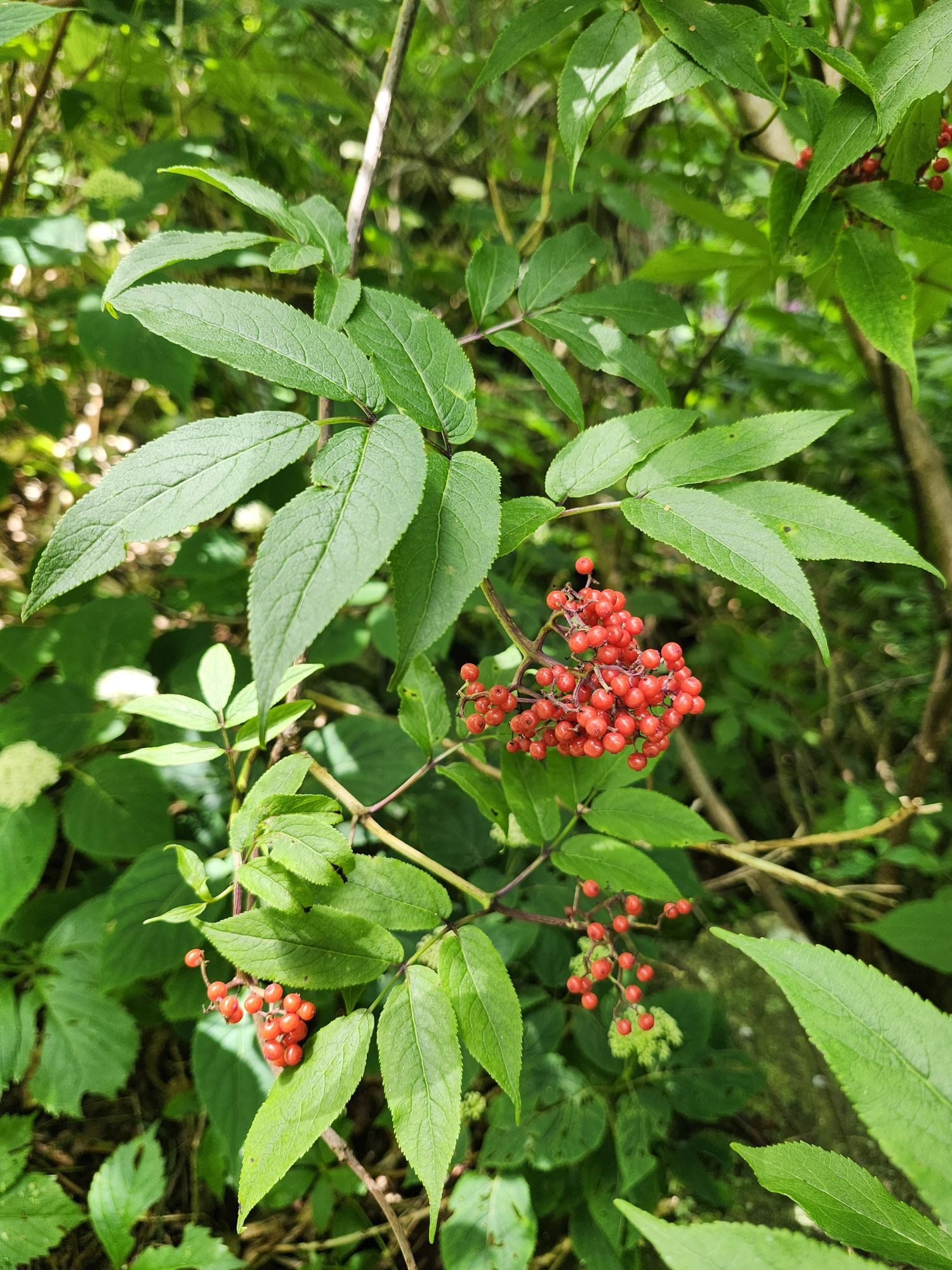
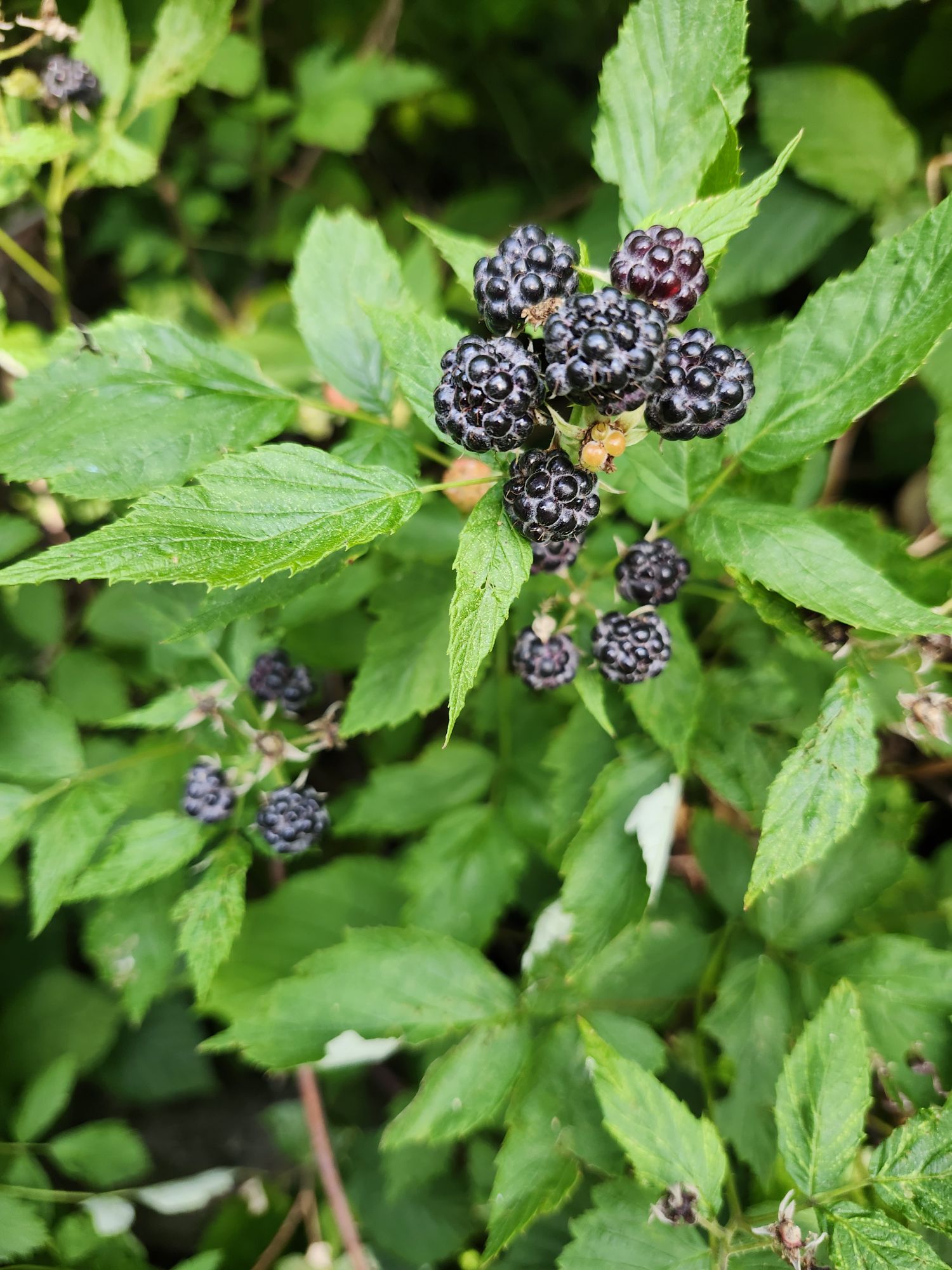
Earlier in the spring, we enjoyed flowers of elderberries (Sambucus racemosa, above) and black raspberries (Rubus, below). The ripe blackberries are very small, so we resisted picking them for snacks.
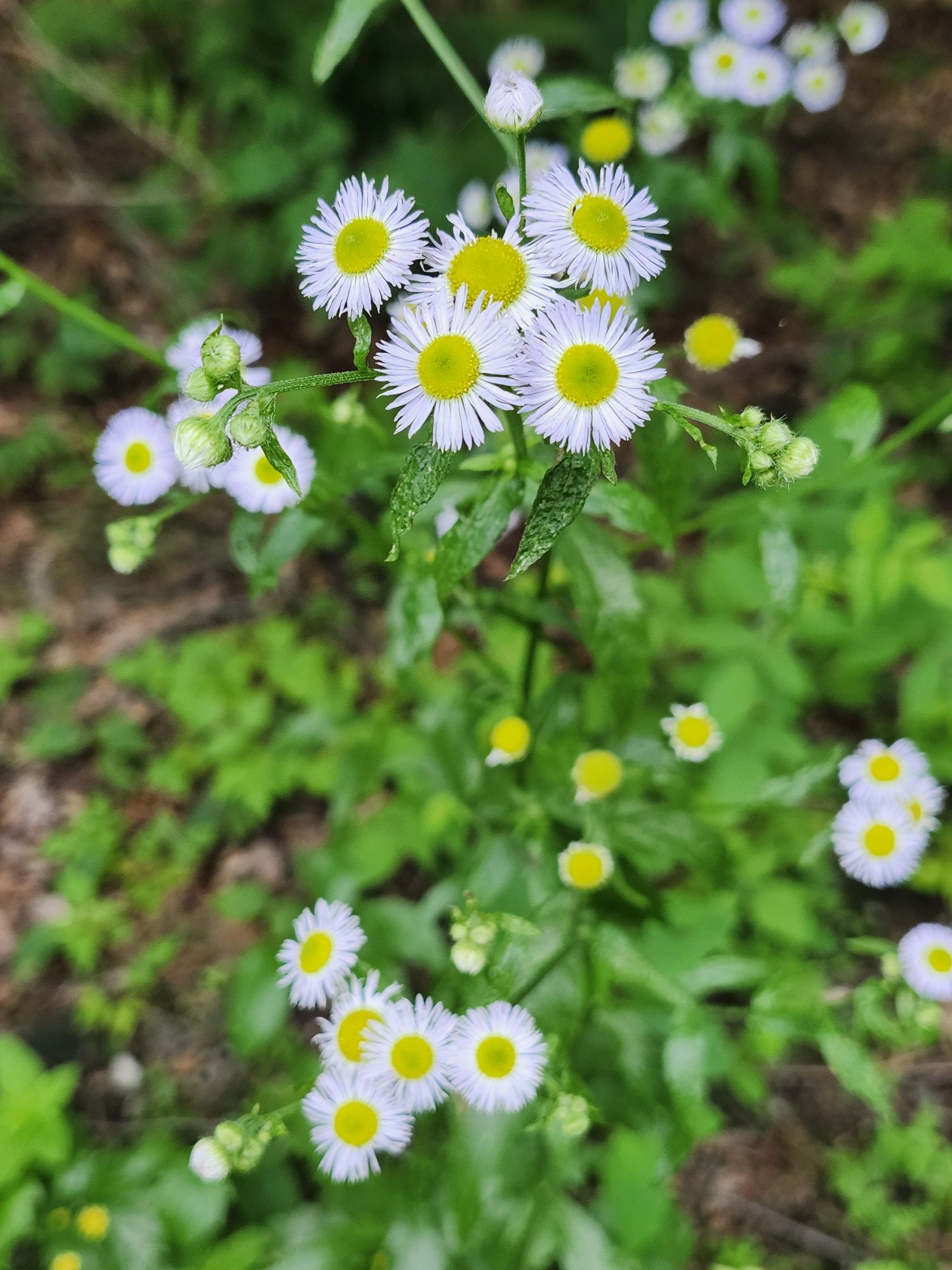
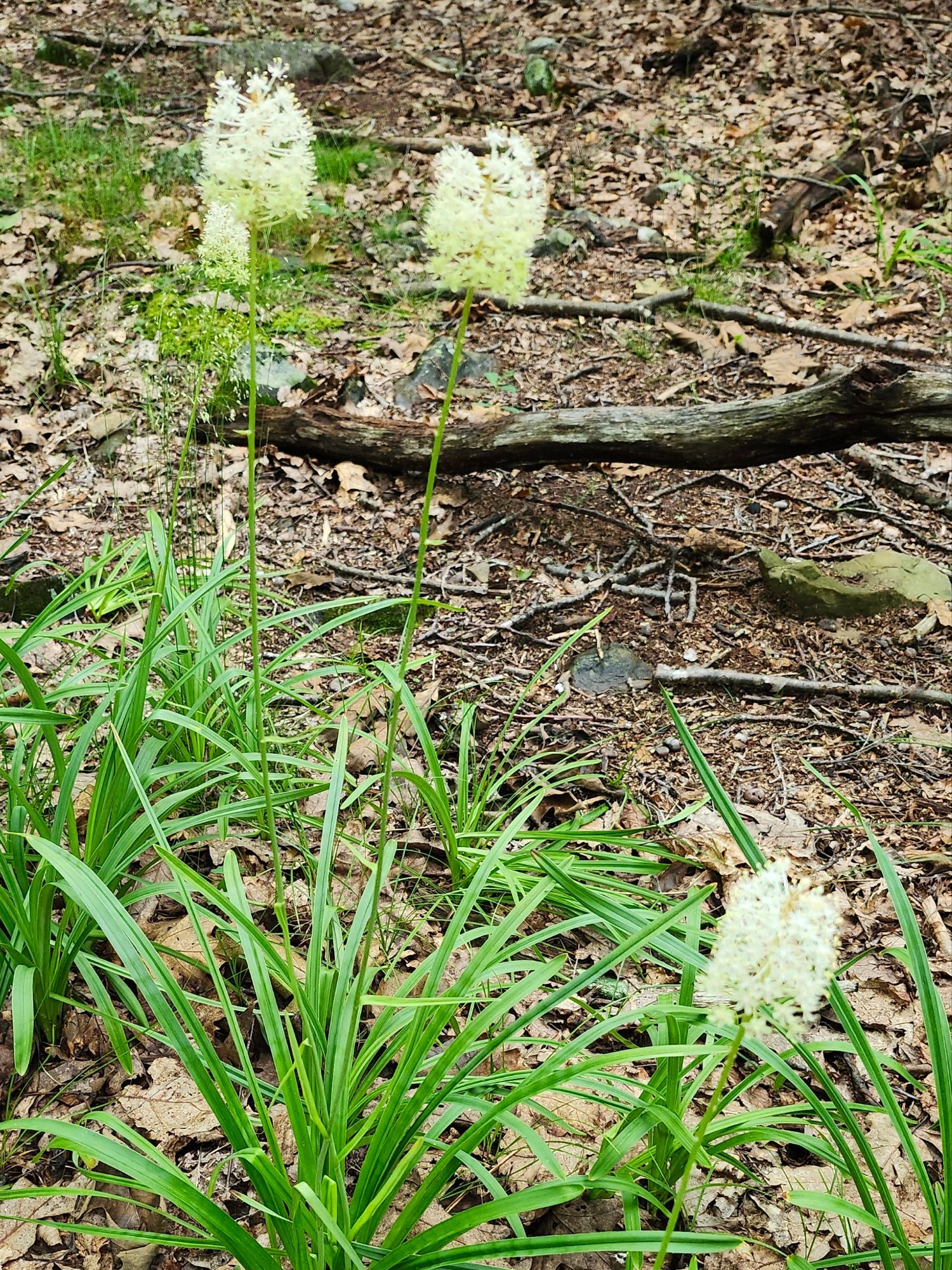
We have seen Fly Poison (Amianthium muscitoxicum, above) along this trail many times. I presume that its pollen is not toxic, though as most often is the case, few pollinators are seen in shaded areas of the forest.
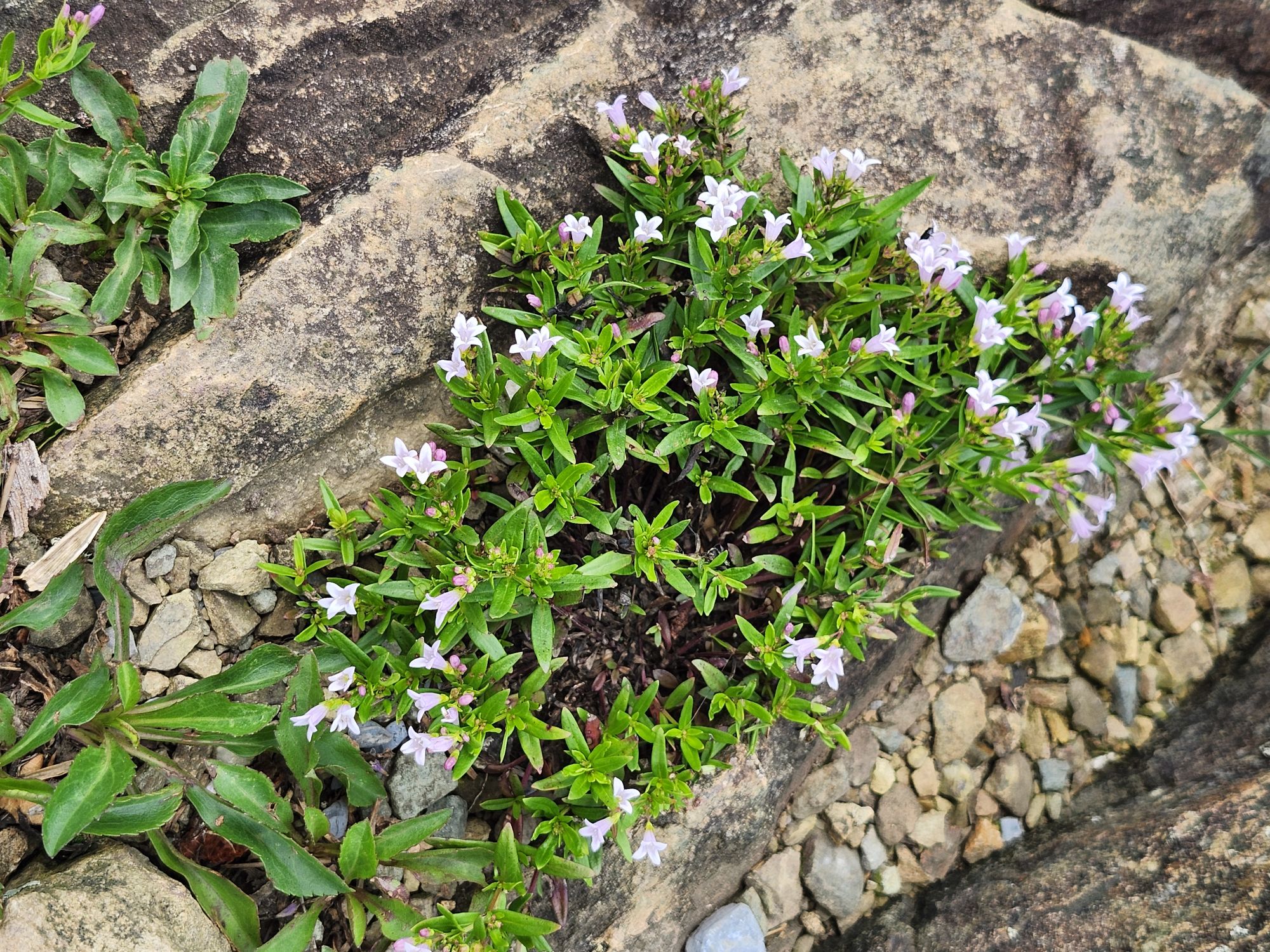
The long leafed bluet (Houstonia longifolia, above) is found in exposed, gravelly crevices along ridges. It flourishes in our rock garden with no supplemental summer irrigation. Here, I opted for a sharper edged boulder rather than this cushy seat to rest my weary bones.
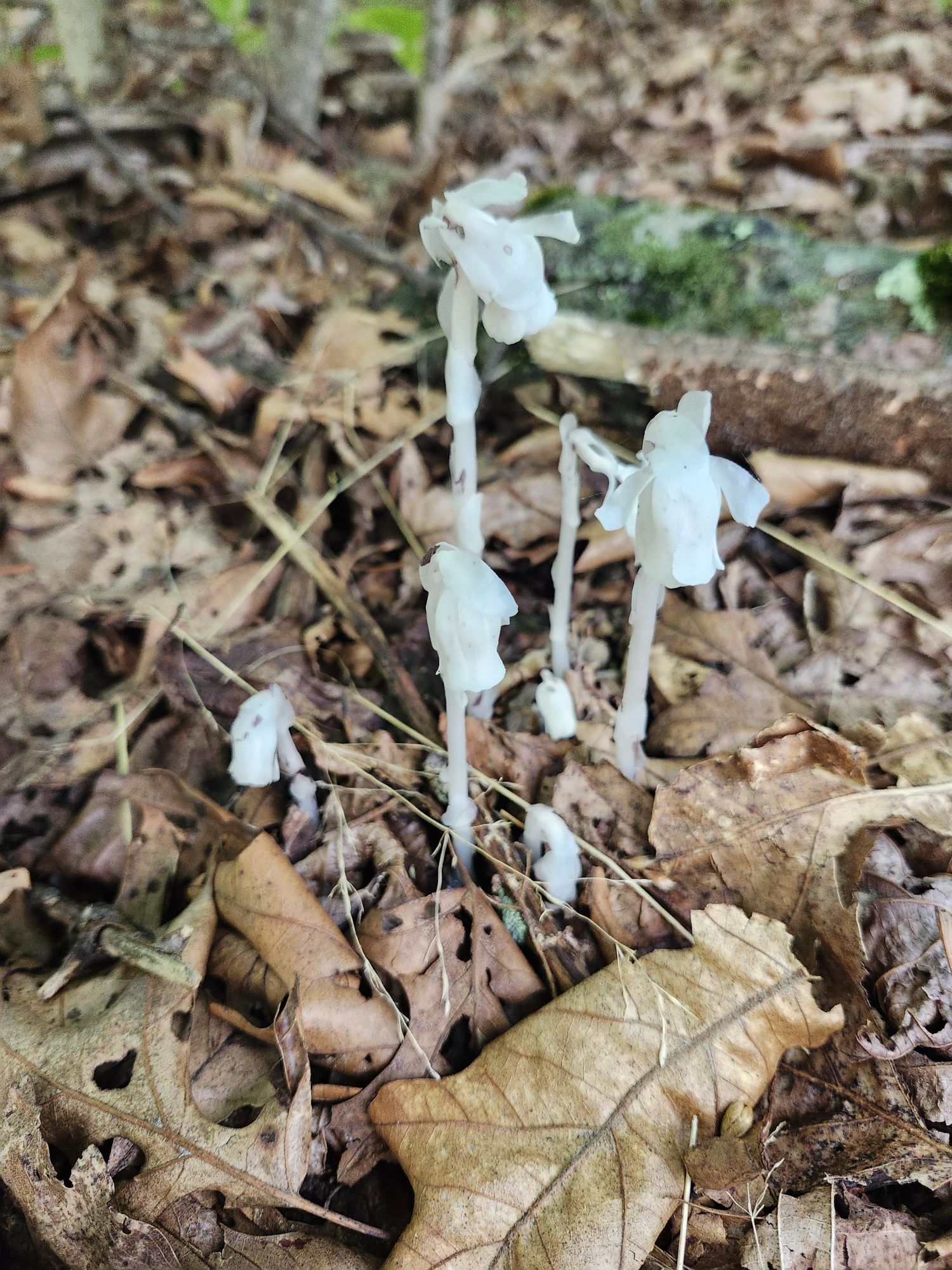
Indian pipe, or Ghost pipe (Monotropa uniflora, above) is occasionally seen on our hikes. Despite its appearance, it is a plant and not fungi.
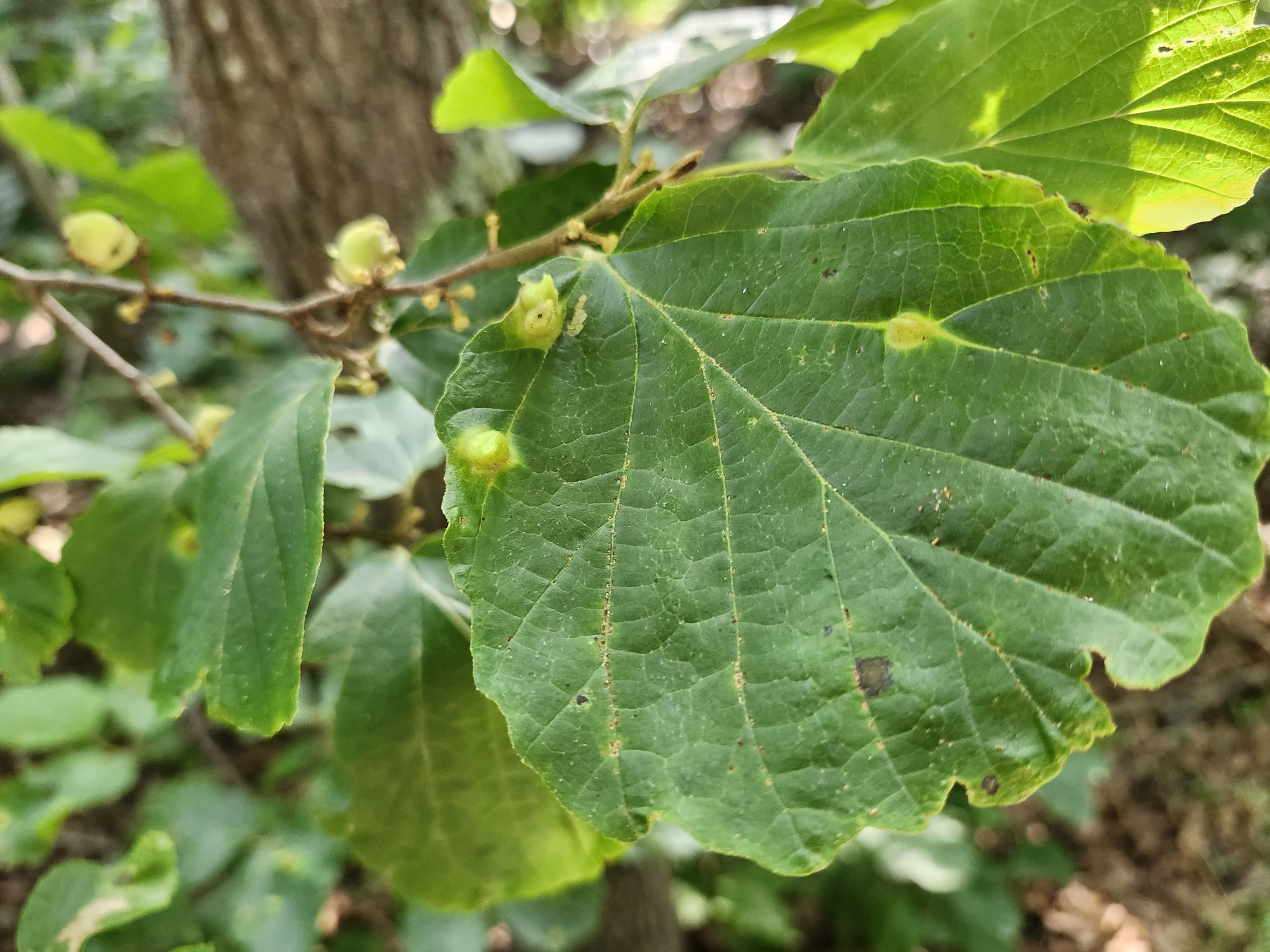
I see Witch hazel Cone gall aphids on many native witch hazels (Hamamelis virginiana, above) that border the trail. In our garden the aphid galls infest the Ozark witch hazel but not the more shaded Common witch hazels. They do no harm to the witch hazels though the River birch (Betula nigra) at the far end of the garden drips with honeydew in late summer.


Awesome wildflower photos. Poke Milkweed?? Never heard of that one. I feel a google coming on.
Hmmm I see that it is rare. Thanks for introducing me to it. Wildflowers hold a strong fascination for me!
As you can see, we make frequent stops on our hikes to admire plants.
I fully understand that!!!! I even do it driving down the road in the car.😂😂
Beautiful photos of beautiful plants. I love learning about the different milkweeds in different regions. Poke milkweed is new to me and lovely. Here, in Oregon, Showy Milkweed (Asclepias speciosa) is our native milkweed. Fun to see your photos from Washington. Oregon and Washington share many of the same wildflowers, including Bunchberry!!
There’s no better place to be in June than the PNW. We might come back every year. Our most common milkweed is the Common milkweed, Asclepias syriaca that flowers a bit later, but along with the other wildflowers we were happy to see all in bloom for this hike.
Red elderberry is also native to the Cascade Mountains and the Olympic Mountains.
While I sort of shudder to disagree with someone who knows so much more than I do about local vegetation, I must disagree with your “Wild blackberry” id. Those are wild Black raspberries. I have both on my property, & the differences are easy to tell.
Thanks. Of course, you’re correct. I lazily didn’t even think about it, but it’s corrected with no evidence of my error except your correction.
Thanks for not taking offense. I so love your site, your posts, & your knowledge, that it took me awhile to buck up the courage to disagree with you – lol!
I’ve been married for 49 years. I’m accustomed to regular disagreement.