The garden is a mishmash of styles from rock gardens to Japanese maples and an increasing number of large leafed plants that are tropical in appearance. Some are cold hardy (Tetrapanax papyifera and Musa basjoo, below) and others are not. While little care is required for much of the garden, the non-hardy plants must be protected through the cold of winter.
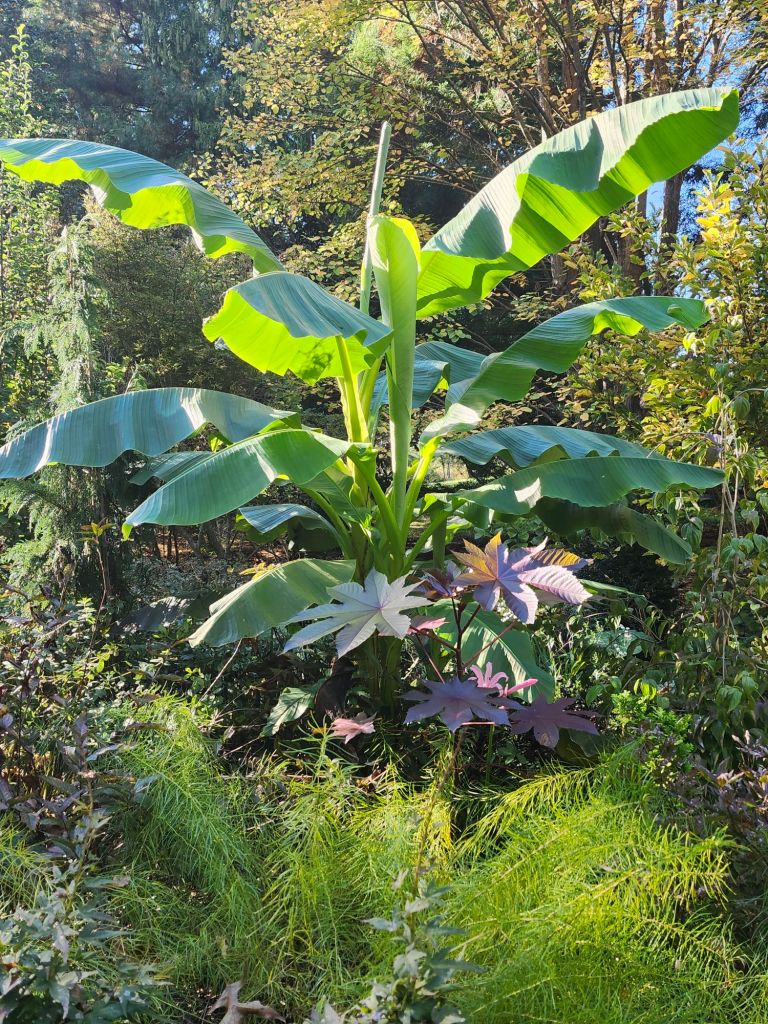
There is a principle involved here, though only for my personal satisfaction. Marginally cold hardy plants must not be brought indoors or into the unheated greenhouse too early. I have no reason to wait until the last hour with the sun setting for a night when temperatures will drop into the low twenties, but with several nights this week when frost is possible, I know the time is near. The garden will thin out soon enough with trees dropping their leaves, so I value every moment that the garden is filled.
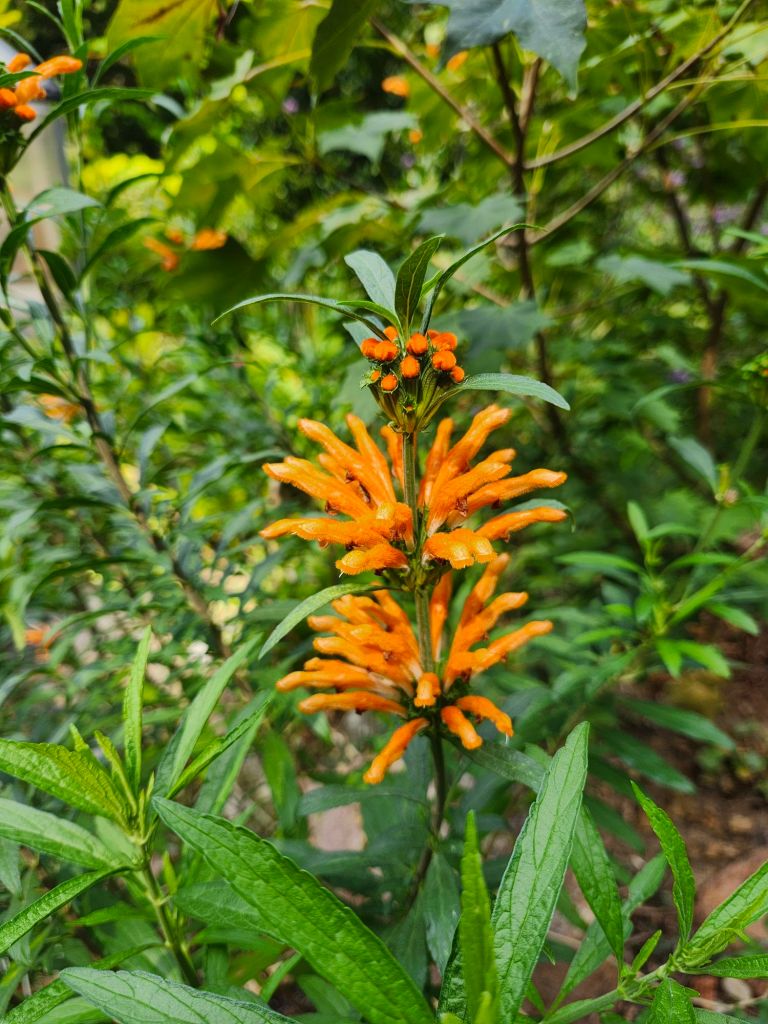
Why not bring everything in today so I avoid a last minute panic? This defeats the purpose of stretching plants into zones where they will not survive winter temperatures. To stretch, I must stretch to the limit, and with milder temperatures forecast for another few weeks I’m happy to hold off, knowing that a last minute forecast change could force a rushed day of digging and lugging pots. Of course, this is nonsense to most gardeners and other sensible folks.
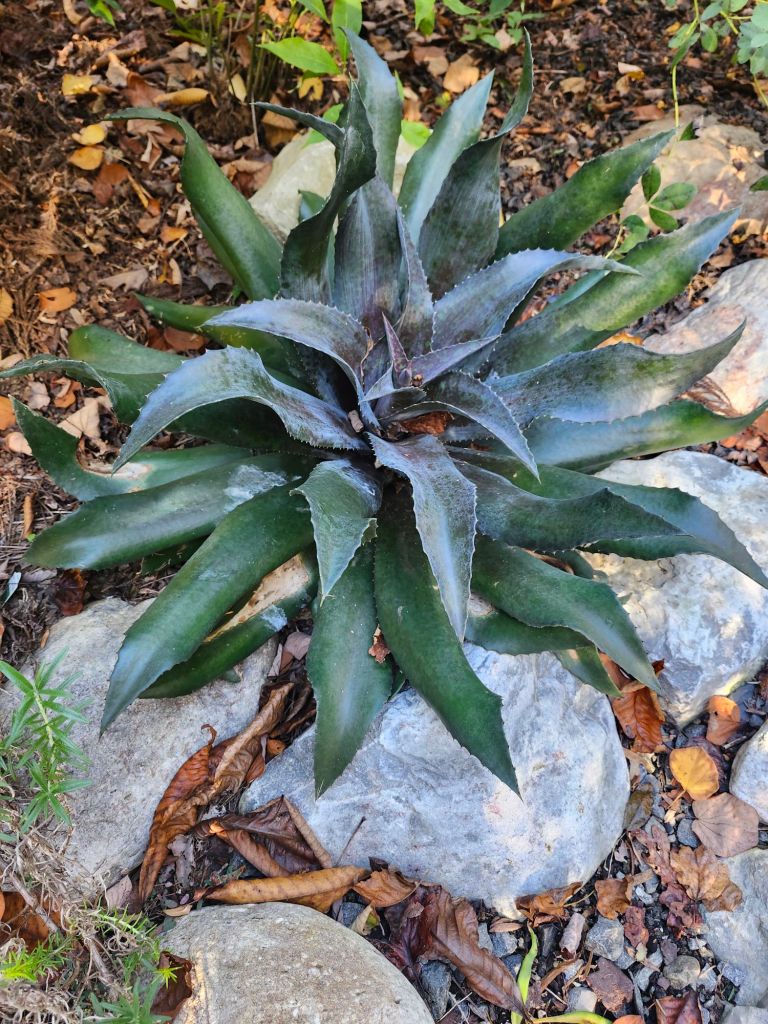
Besides the decision of when to move plants to protected areas, I must also decide what comes in and what is sacrificed. The tiled area in the basement will hold a dozen larger pots with other smaller pots stuffed on a shelf. I suppose I’ve added a few plants this year, so last minute decisions will be made. Some will be left behind.
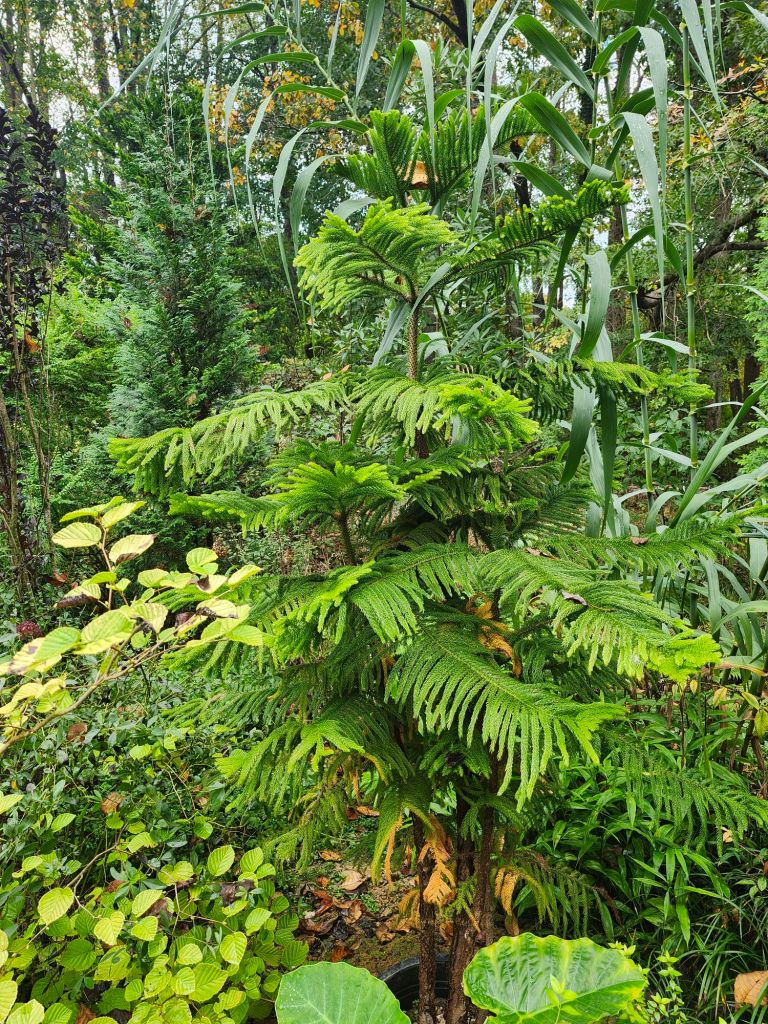
First to go indoors will be the tall Norfolk Island pine (Araucaria heterophylla, above) and two Aralia family members, Brassaiopsis hispida and Trevesia palmata (below). The Brassaiopsis fared poorly through the summer until I dug and potted it. I expect that in the spring I’ll sink the pot into the ground so I can experiment to find an ideal sun exposure.
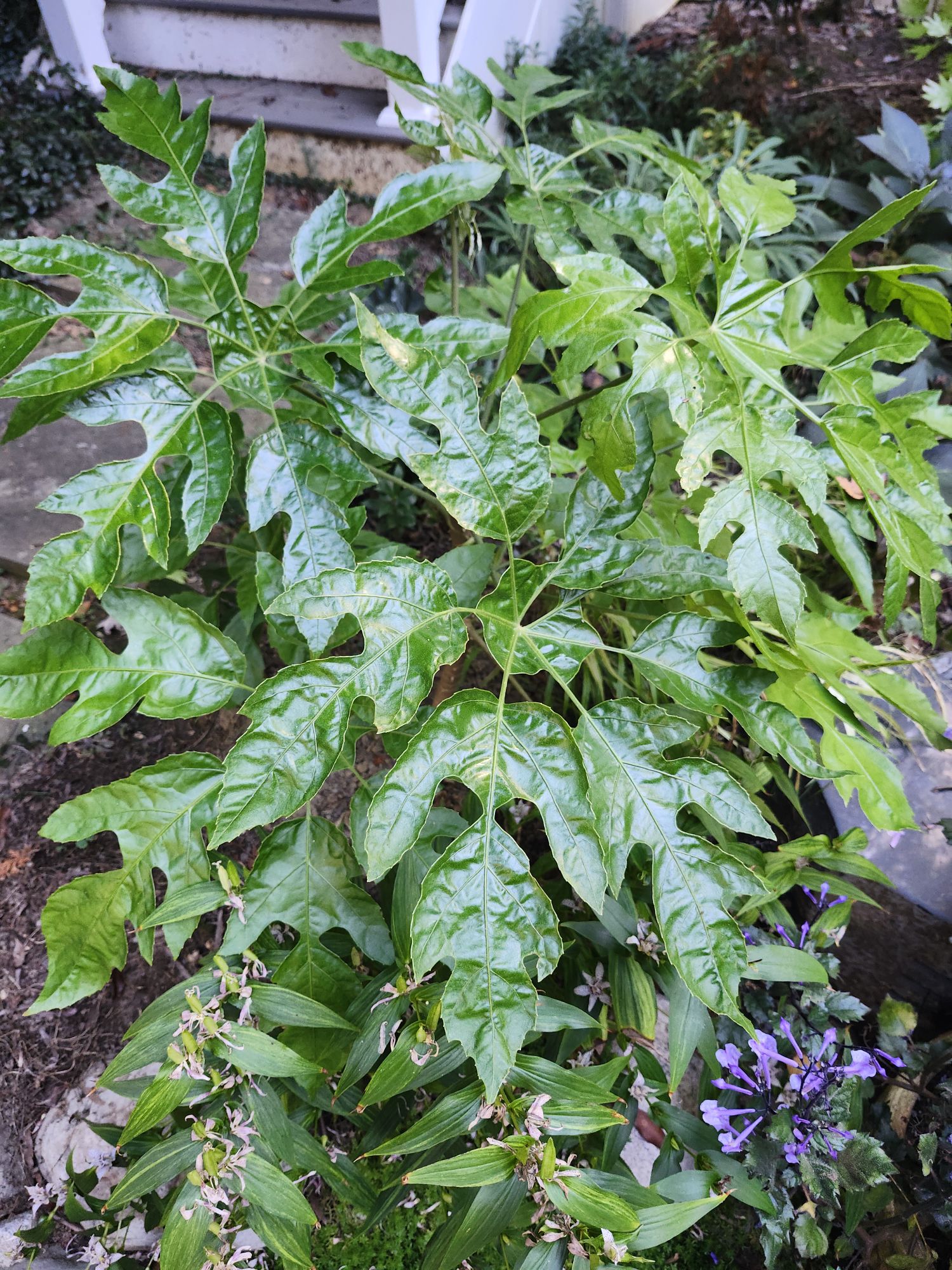
I’ve found a well suited spot for the Trevesia. It grew vigorously this year in part sun, but with another year it is likely to grow too large for this position beside a walkway. It has survived a few years of digging and potting to store indoors, but I’ll probably pot it into a container that can be sunk into the ground next spring.
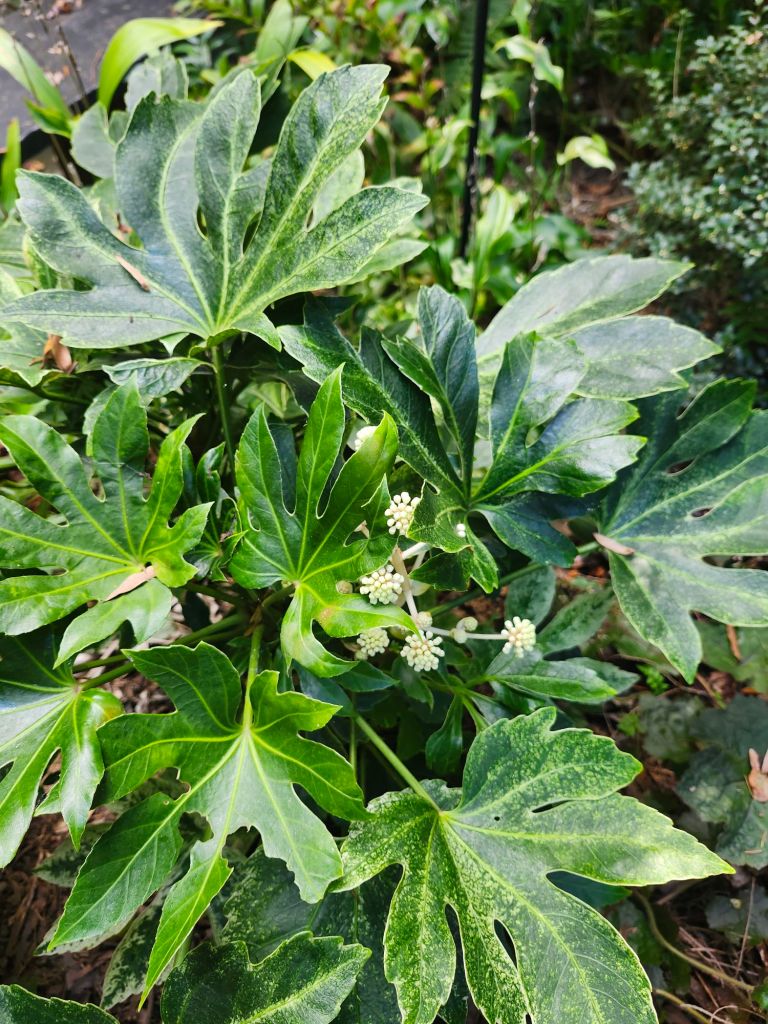
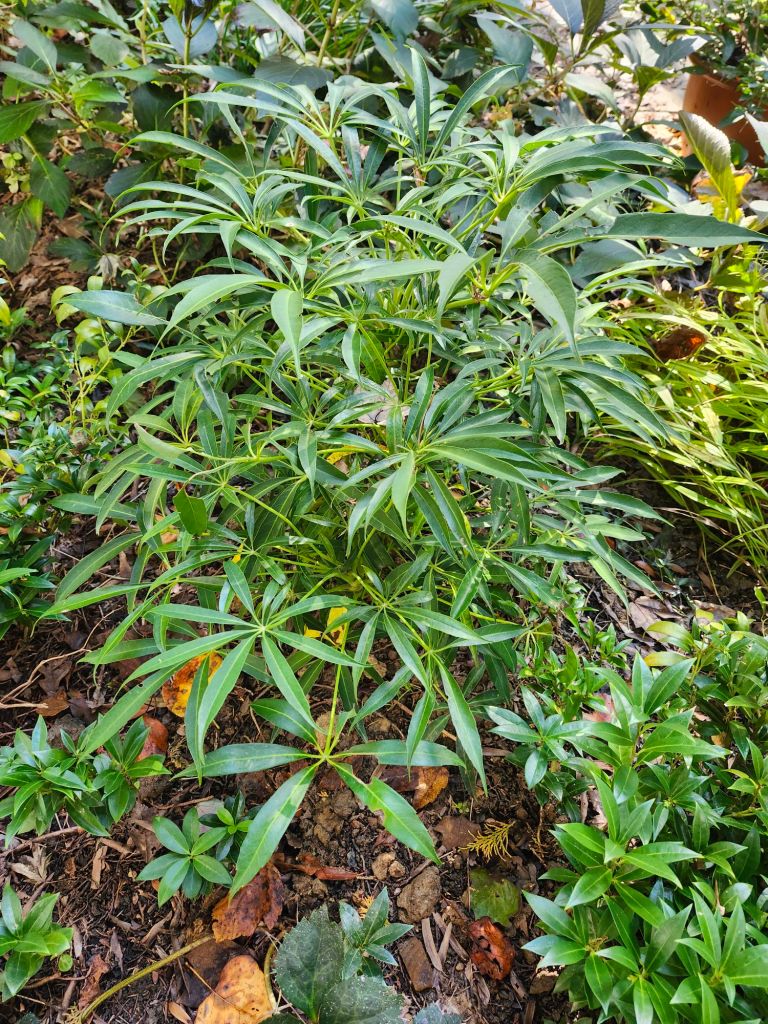
Two deeply lobbed ‘Green Fingers’ fatsias (Fatsia polycarpa ‘Green Fingers’) will soon be delivered. While several Spider’s Web (above) and a Camouflage fatsia will remain outdoors in the cold, Green Fingers’ will be brought inside to be planted in spring. Two small schefflera (Schefflera taiwaniana and S. delavayi) purchased in early autumn will also be brought indoors while a larger one (below) will remain outdoors.
 Ramblin' through Dave's Garden
(Not to perhaps sound like your wife or anything, but) when you bring in plants from outdoors into your basement, don’t you bring in all kinds of insects into your house? 😱
This sounds exactly like my wife though she now accepts this necessity. A few bugs and small frogs have come in with the plants, but I think the snakes snuck in some other way.
😂😂😂
I guess it’s a ‘girl’ thing.
Although I guess the frogs would take care of the bugs and the snakes would take care of the frogs, so there’s that.
The only way to garden!