The tall hostas have collapsed following the recent freeze while ones closer to the soil have not. The color remains in a few, even ones that are now prostrate with the exception of the many seedlings of the blue-green Hosta sieboldiana ‘Elegans’ that are now a sickly yellow. Preparing for winter’s cold, their sad appearance is excused.
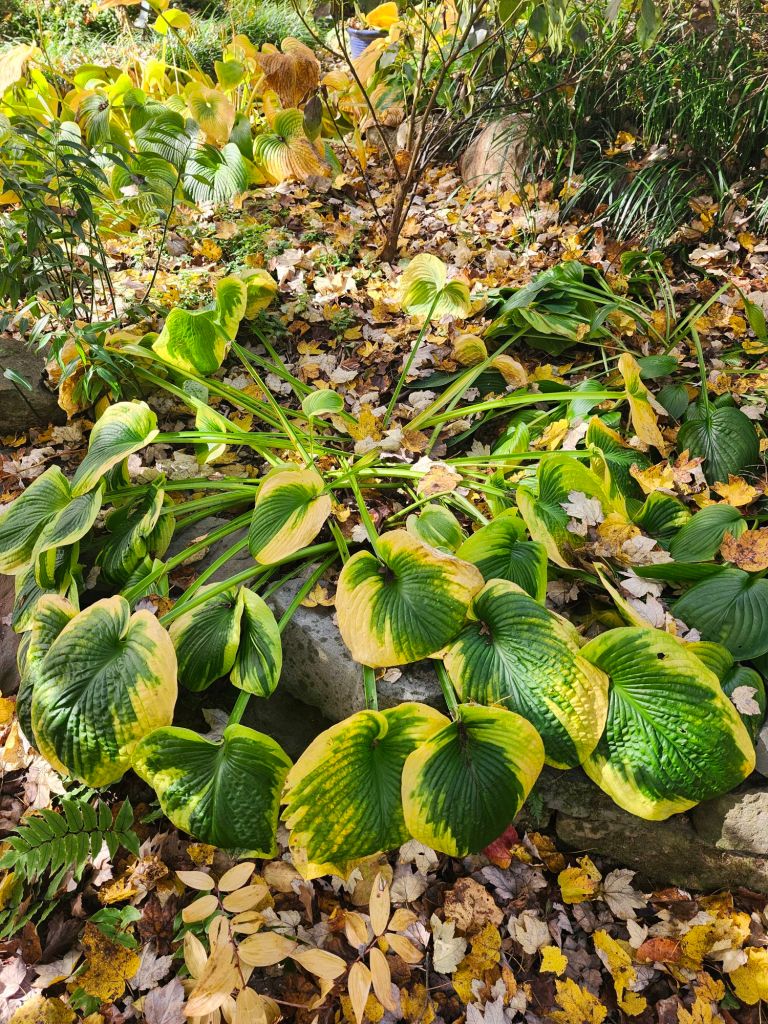
There is no need to cut the stalks of withering hostas. The leaves will disappear soon though a few will require removal of the dessicated leaves if a tidy winter garden is desired. I will occasionally snap off the flower stalks that remain after leaves are gone. My only demand is that the stalks are gone before spring growth resumes.
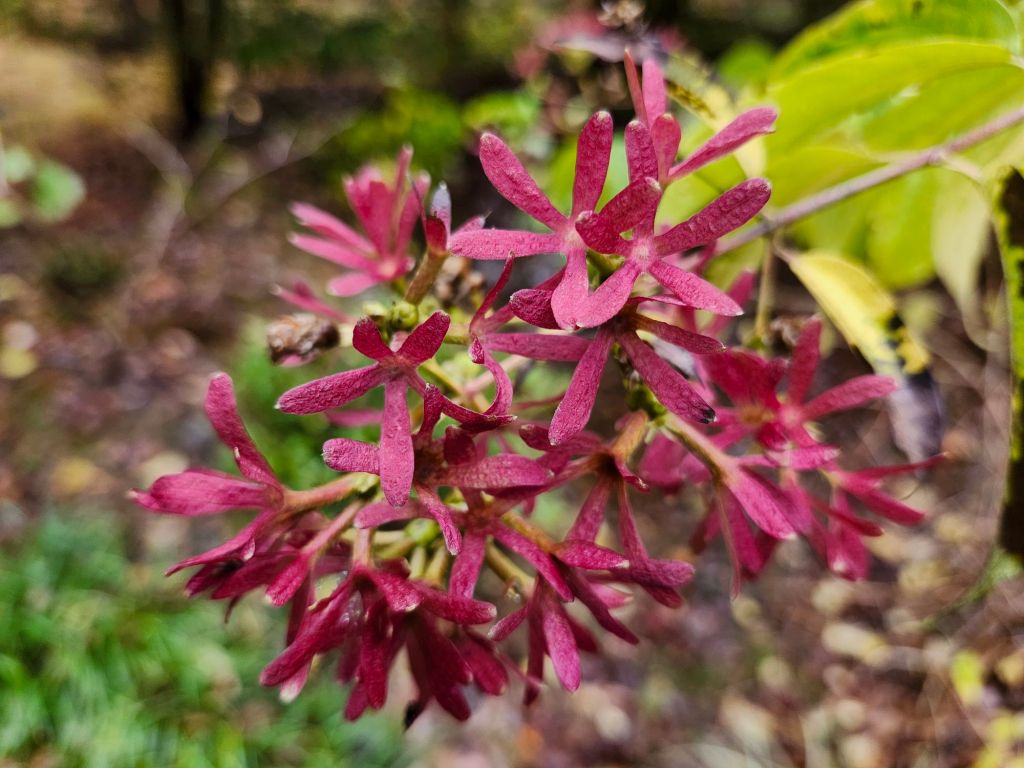
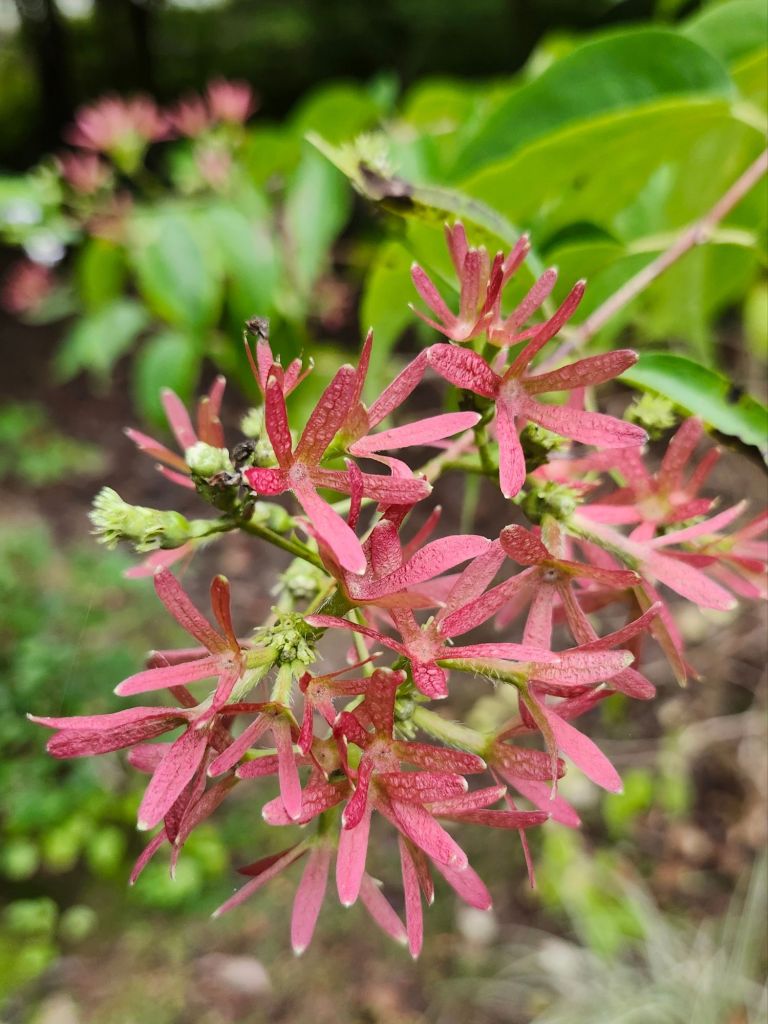
As the Seven Sons tree (Heptacodium miconioides, above) nears dormancy, the red calyces that ornament the tree after its late summer flowering are turning darker in color. Similar to other autumn color changes, this will be brief and then the tree will be bare until leaves emerge in spring. Exfoliating bark is a winter attraction of Seven Sons, but this is barely noticeable on two young trees in the garden.
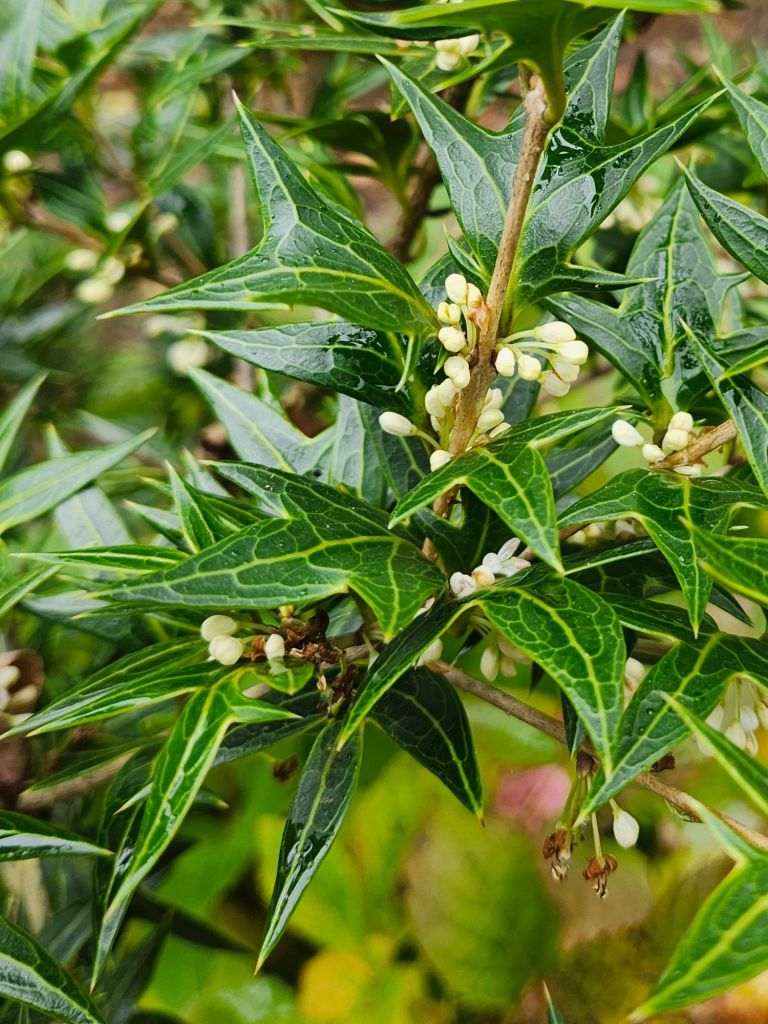
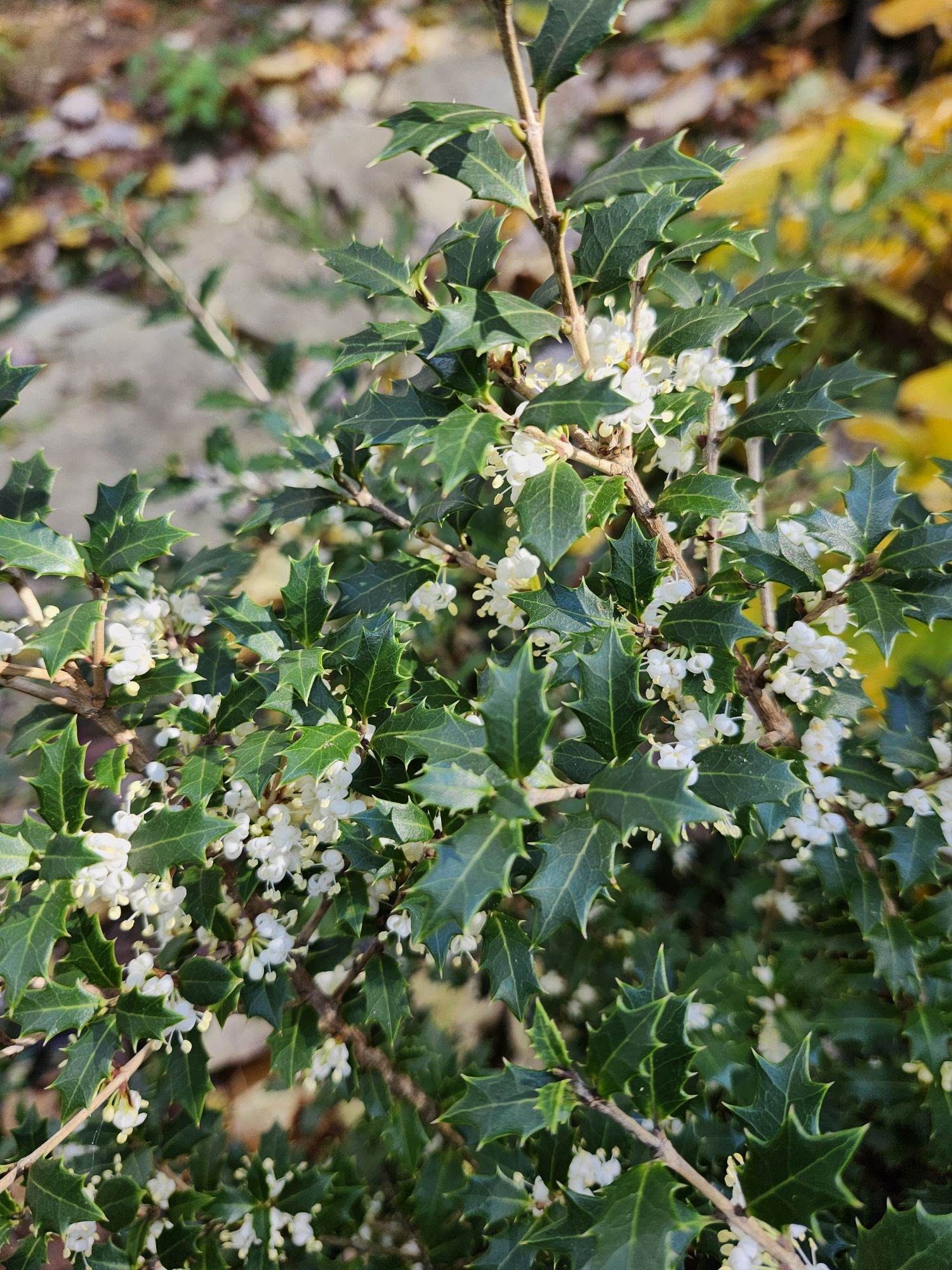
There is little hope that flowers of two Osmanthus (above and below) in the garden will be pollinated. A few bees were seen on autumn flowering camellias several days ago, but in the first week of November temperatures should only get colder. Of course, this is near the northern edge of osmanthus’ cold hardiness. No doubt, bees are more active in milder areas.
 Ramblin' through Dave's Garden
I’ve always been curious as to the name of that late-flowering tree – is it “Seven son” or “Seven sons”?
I see it both ways from arboretum and academic sources so I suspect the two are interchangeable.