The garden does not shut down for the winter though its progressing bareness can occasionally be distressing. The gardener must focus on the positives, and there are many despite the lack of leaves and fewer flowers. Still, in the fading light of early evening my thoughts drift to February, a hopeful time when the garden begins to show life again rather than November’s decline.
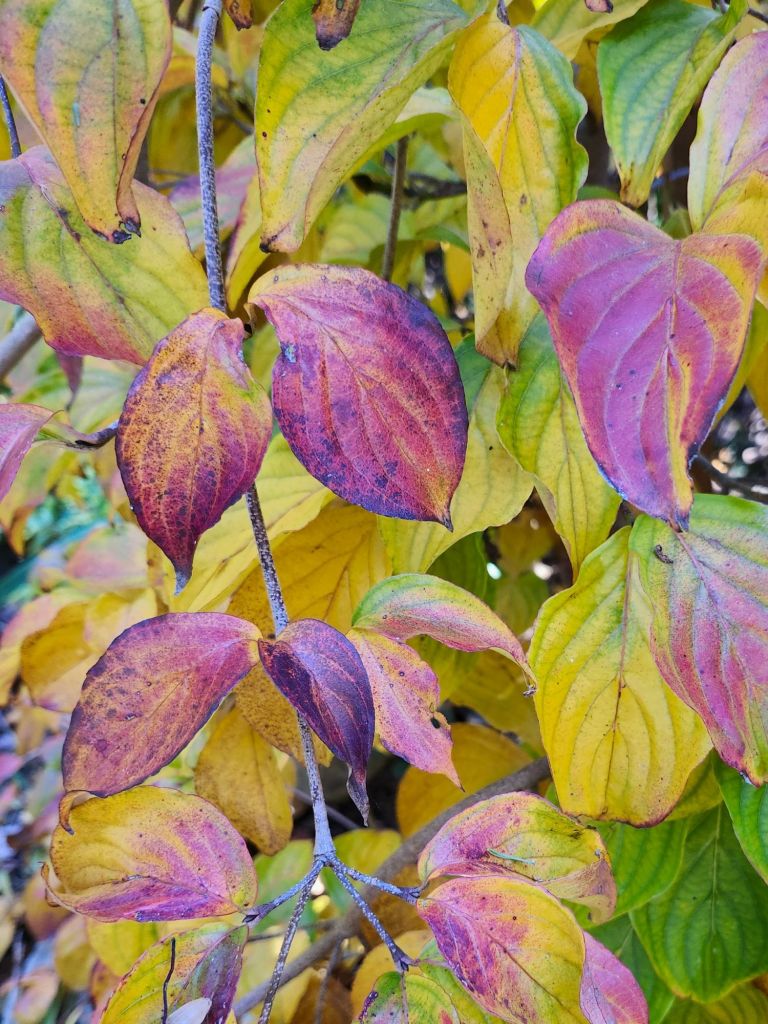
In mid-November, the garden has not fully descended into dormancy. While many trees are bare, others are at their peak autumnal display. I photographed several Japanese maples a few days earlier, and today all are significantly darker in color. Leaves of the weeping, dissected maple along the driveway, I suspect it is ‘Crimson Queen’ since that was the predominant cultivar thirty-five years ago, are shriveled and browning, the fate that will befall others in the next few weeks.
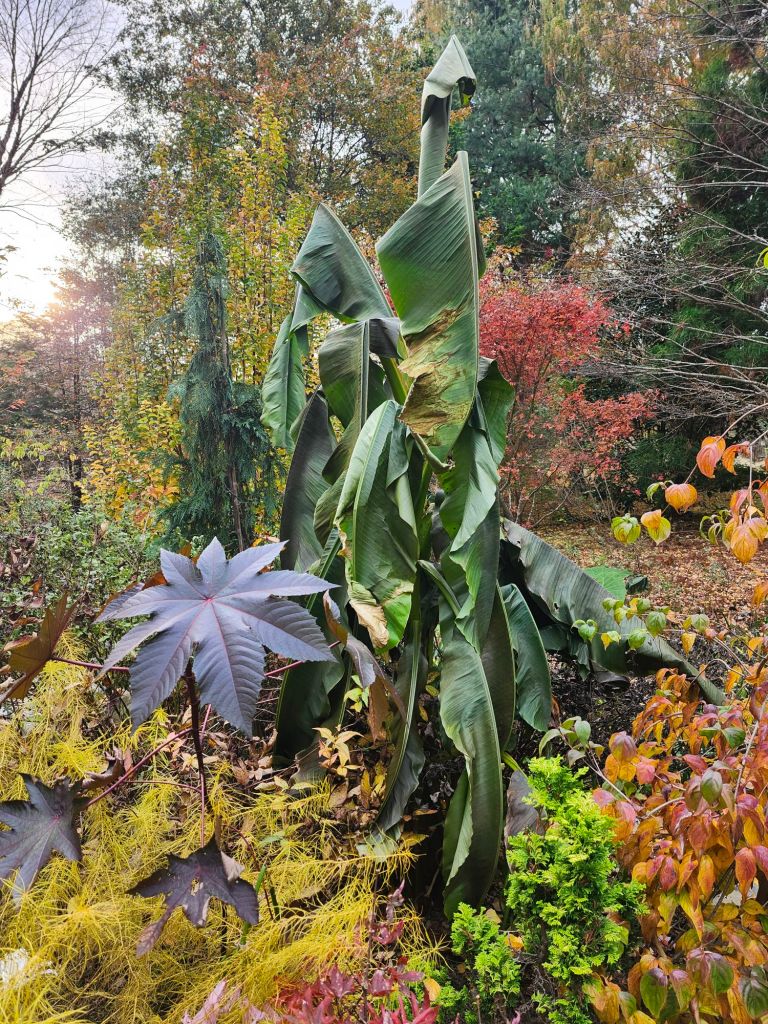
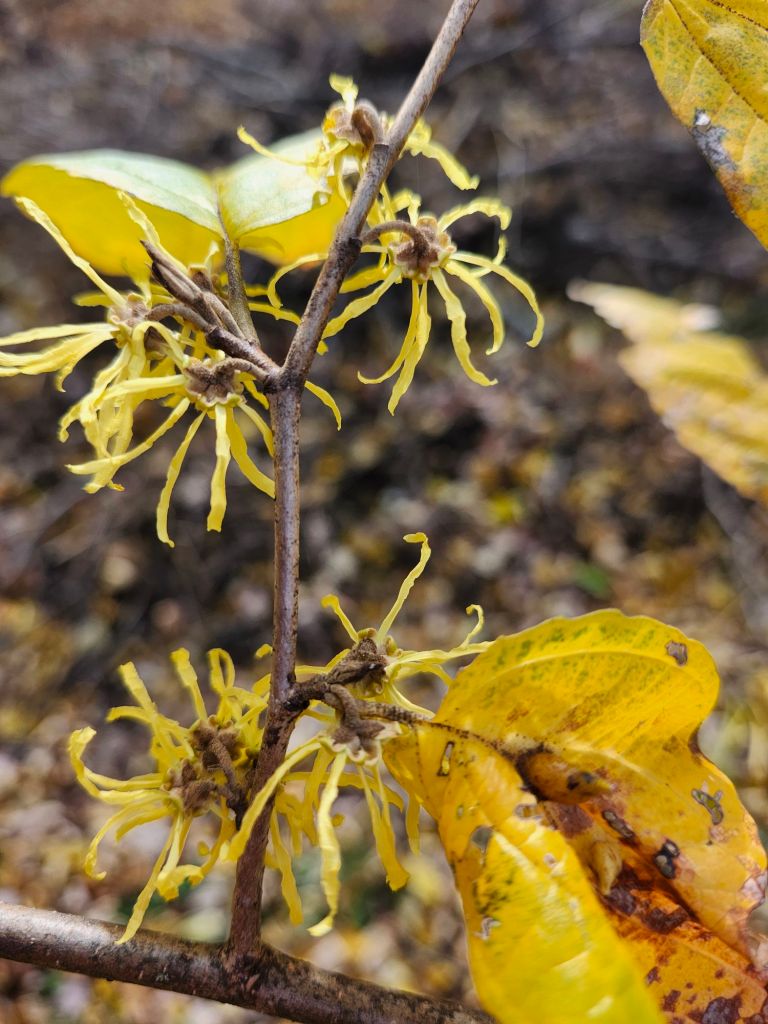
I am surprised that the heaviest flowering of several native Common witch hazels ((Hamamelis virginiana, below) is in the deepest shade. These are never heavily cloaked in their spidery blooms, but I suppose that denser flowering would result from more sunlight, not less. In any case, the three witch hazels have dropped enough foliage that the flowers are not obscured as it is some years.
The January flowers of Vernal witch hazels (Hamamelis vernalis) are rarely hidden by leaves, though on occasion browned leaves cling to branches. The winter flowers are smaller than other witch hazels, and I think, less vividly colored, but still welcomed. While vernal and Asian hybrids flower through mid and late winter, the gap between flowers of Common witch hazel ending and Vernals beginning is partially filled by bright blooms of mahonias (Mahonia x media, now Berberis x hortensis).
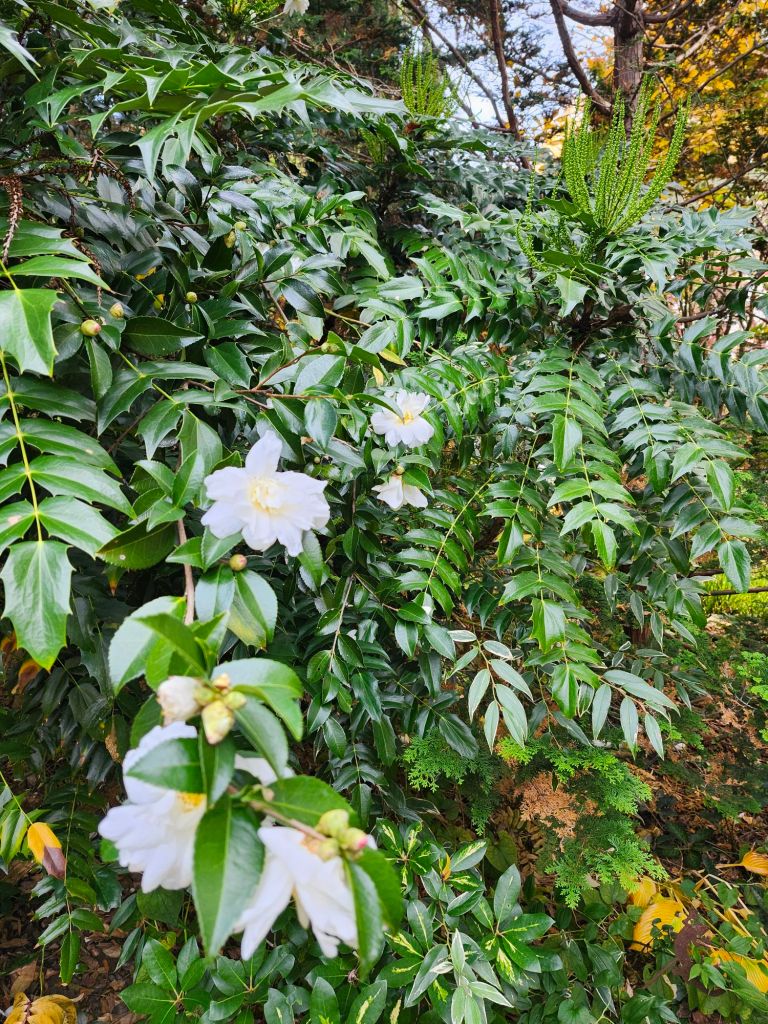
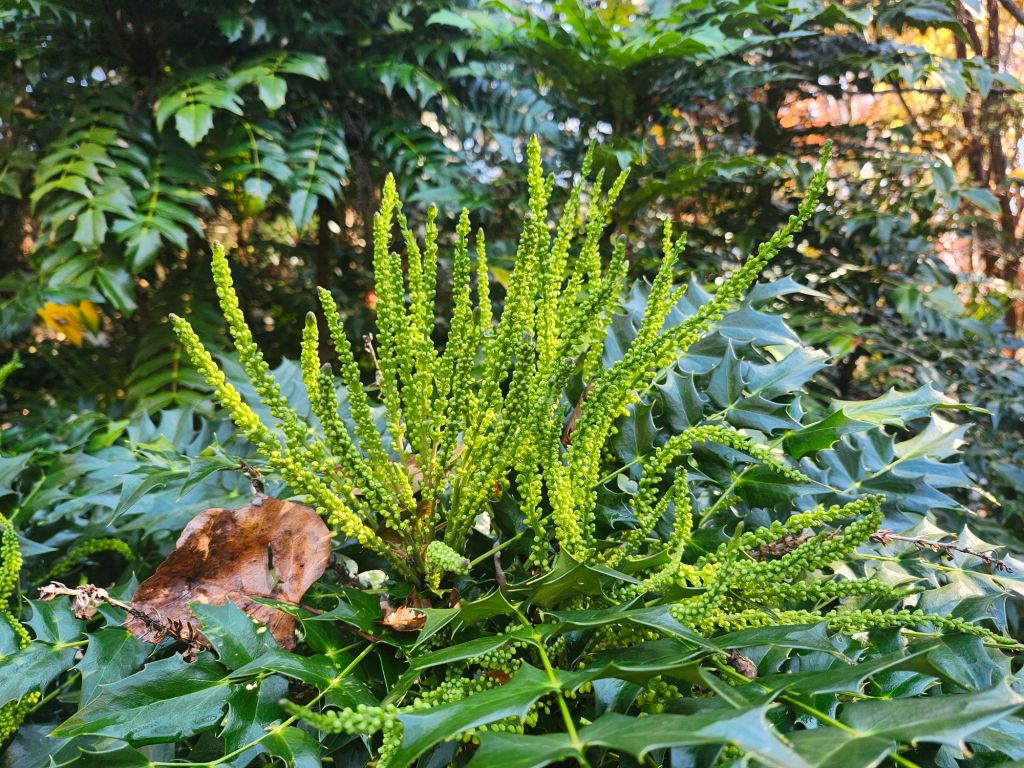
Today, the mahonias show the barest degree of color that will shine through the darkest period of winter, flowering from mid-November into January. Flowers are rarely disturbed by the harshest cold, though blooms of their neighbors in the garden, camellias, are damaged by temperatures in the mid-twenties (Fahrenheit).
 Ramblin' through Dave's Garden
Witch hazel is an unusual shrub!
I depend on the various witch hazels for flowers through much of the winter. A few of the February flowering Asian varieties also have excellent autumn foliage.
👍🏻👍🏻👍🏻
My witch hazel, unfortunately, is marcescent, so the flowers are hard to see – though they smell nice – but the autumn color is great! So I tolerate the situation.
Unfortunately, I am unable to smell any but the strongest scents. Occasionally on a still winter afternoon I can smell the Asian witch hazels. There have been years when nearly all leaves hid flowers of my common witch hazels, but today the shrubs are bare.