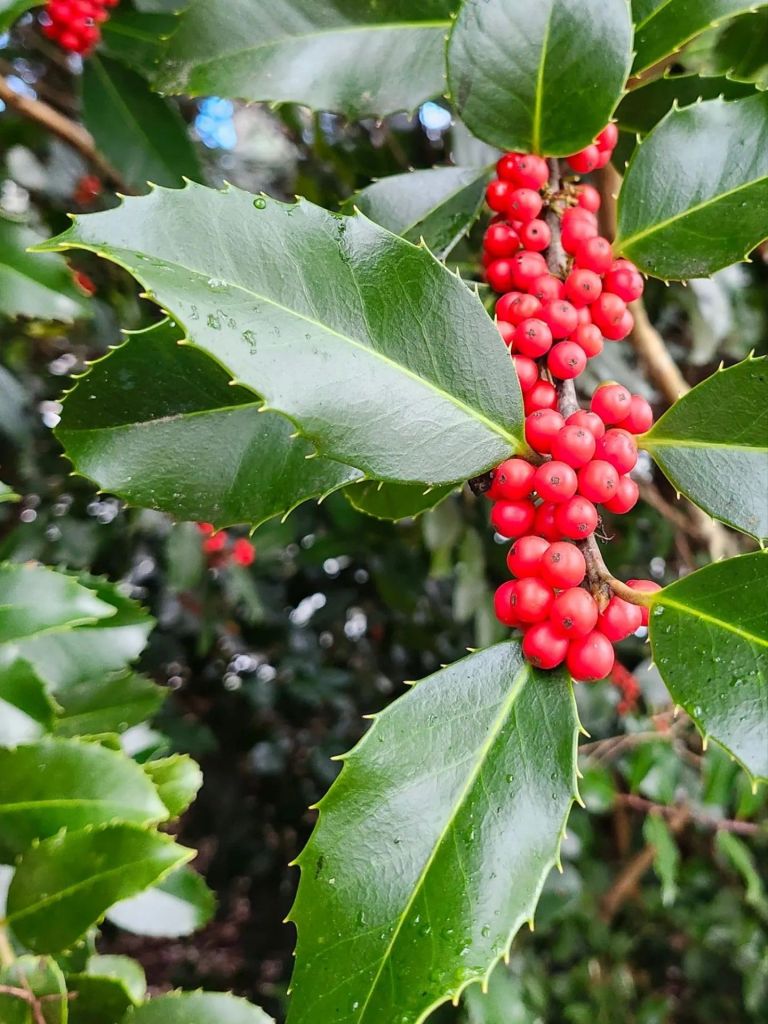
While hellebores and snowdrops are berried by the snow, berries of the Koehne holly (Ilex koehneana, below) are often a highlight of the winter garden. But not this year, when there were few and today, none in evidence. I have long viewed its berries as the most dependable of the garden’s many large hollies, so I must assume failure on the part of pollinating bees earlier in the year.
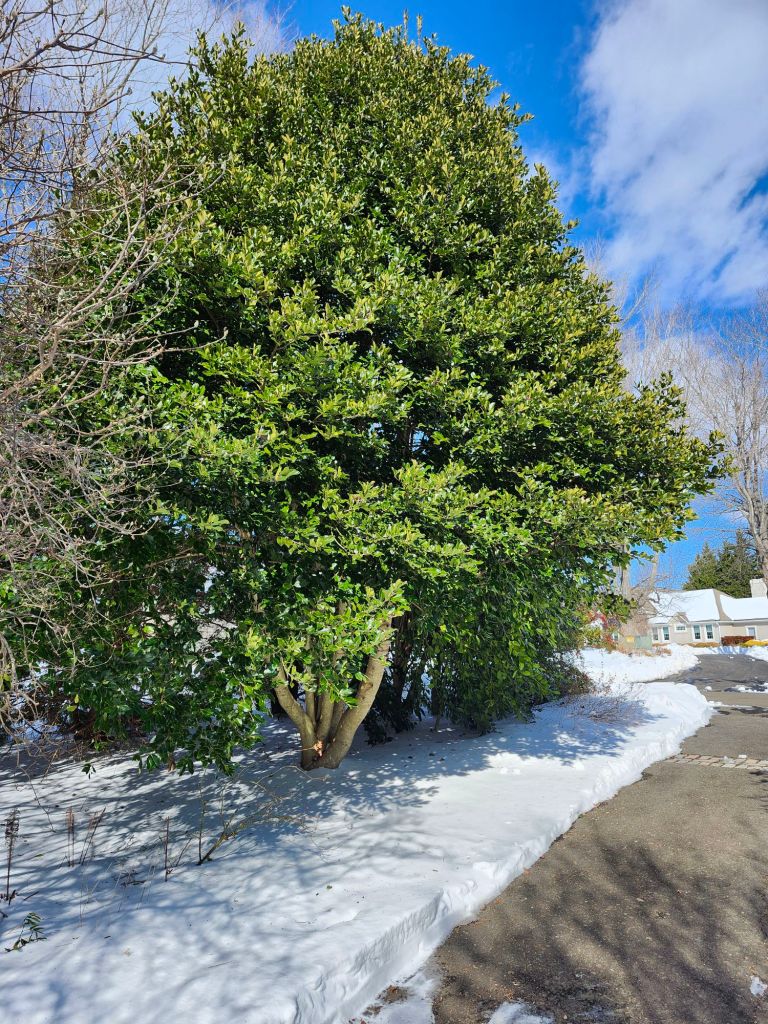
As with many of the garden’s aged plants, the Koehne holly outgrew its space along the driveway. A few years ago, I was forced to prune lower branches that were intruding onto the pavement. This exposed its attractive, thick trunk and now the driveway is open to cars though delivery trucks are warded off by branches that extend over the drive (below).
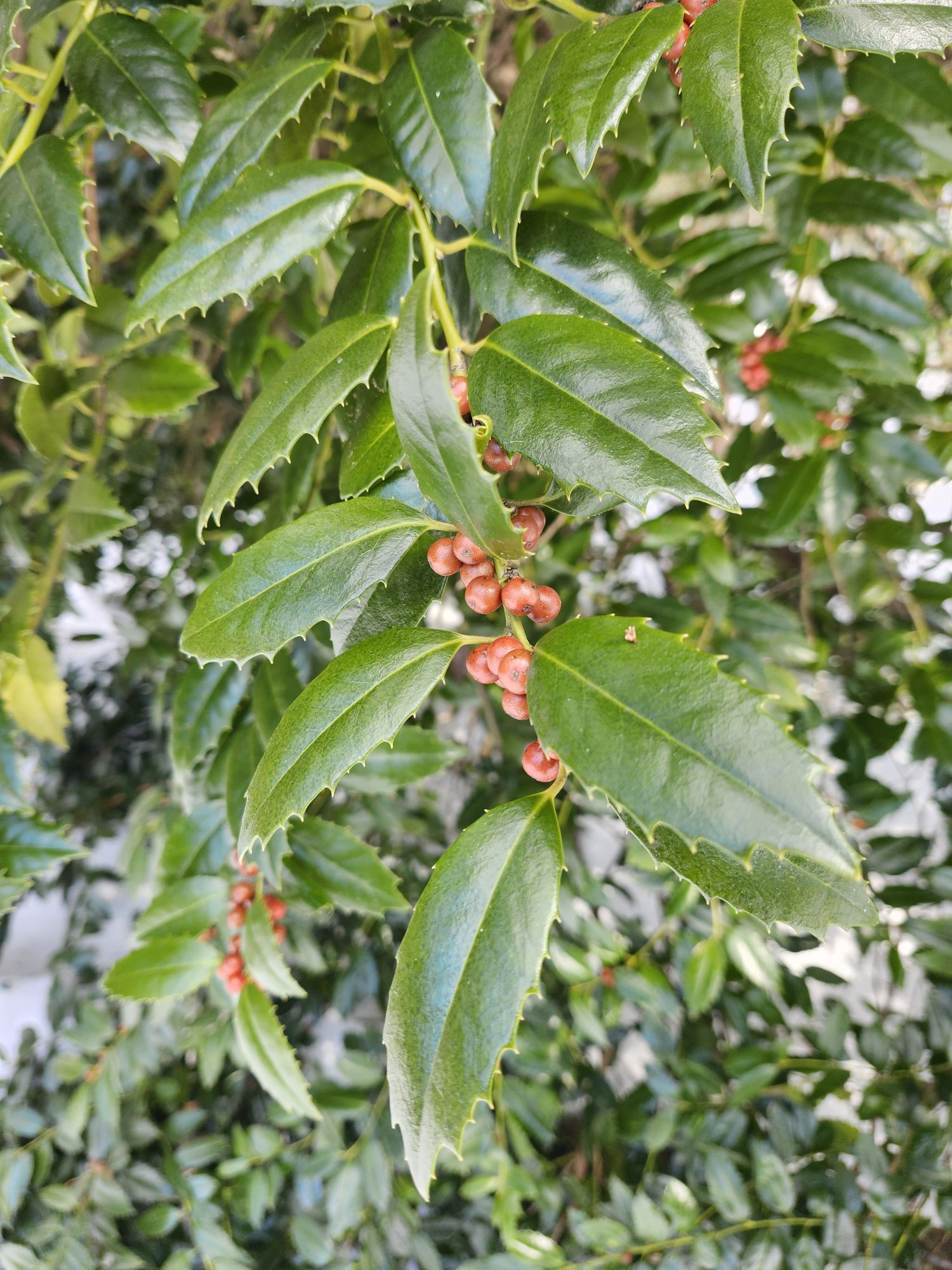
With few or no berries, the Koehne holly has ceded its dependability title to the equally large ‘Mary Nell’ holly (below) in the upper rear garden. Berries are never as plentiful on ‘Mary Nell’, and there are a scattered few on its shaded side. The berries of all the hollies are not favored by birds until late winter when robins return and strip them bare within a few days.
In most winters, the flowers of Asian hybrid mahonias (Mahonia x media ‘Winter Sun’ now Berberis x hortensis ‘Winter Sun’, below) slowly fade by mid-January. This year, flowers faded only slightly until the night when temperatures dropped to five degrees (Fahrenheit). A bit of yellow survived this freeze, but not colder nights that followed.
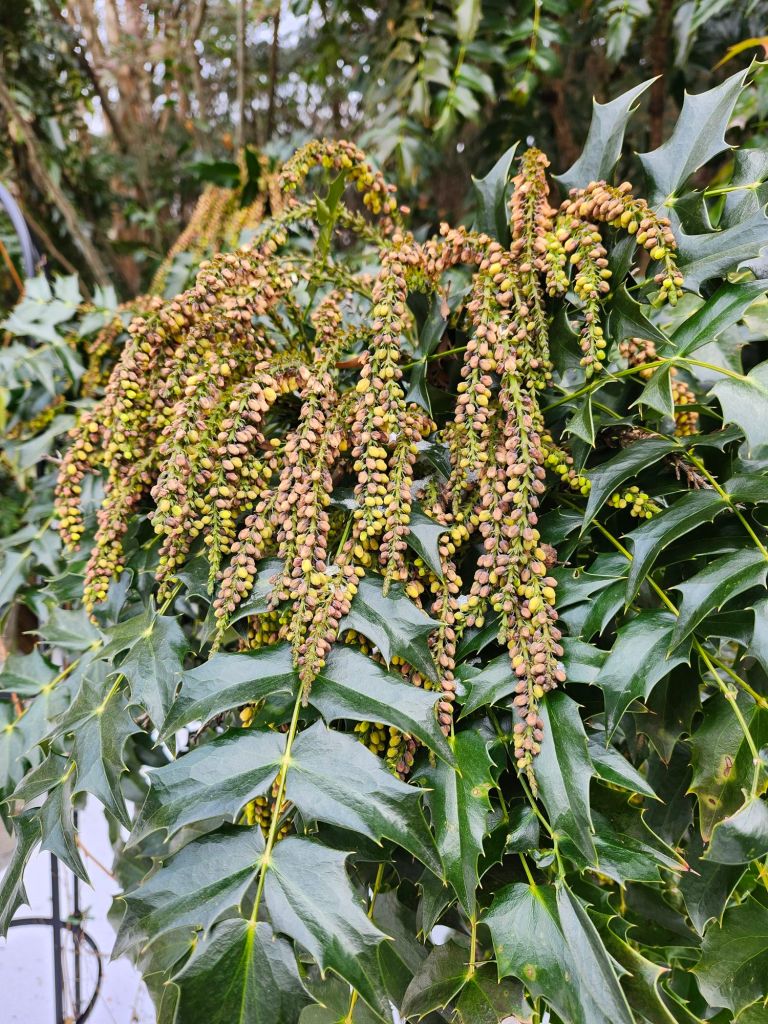
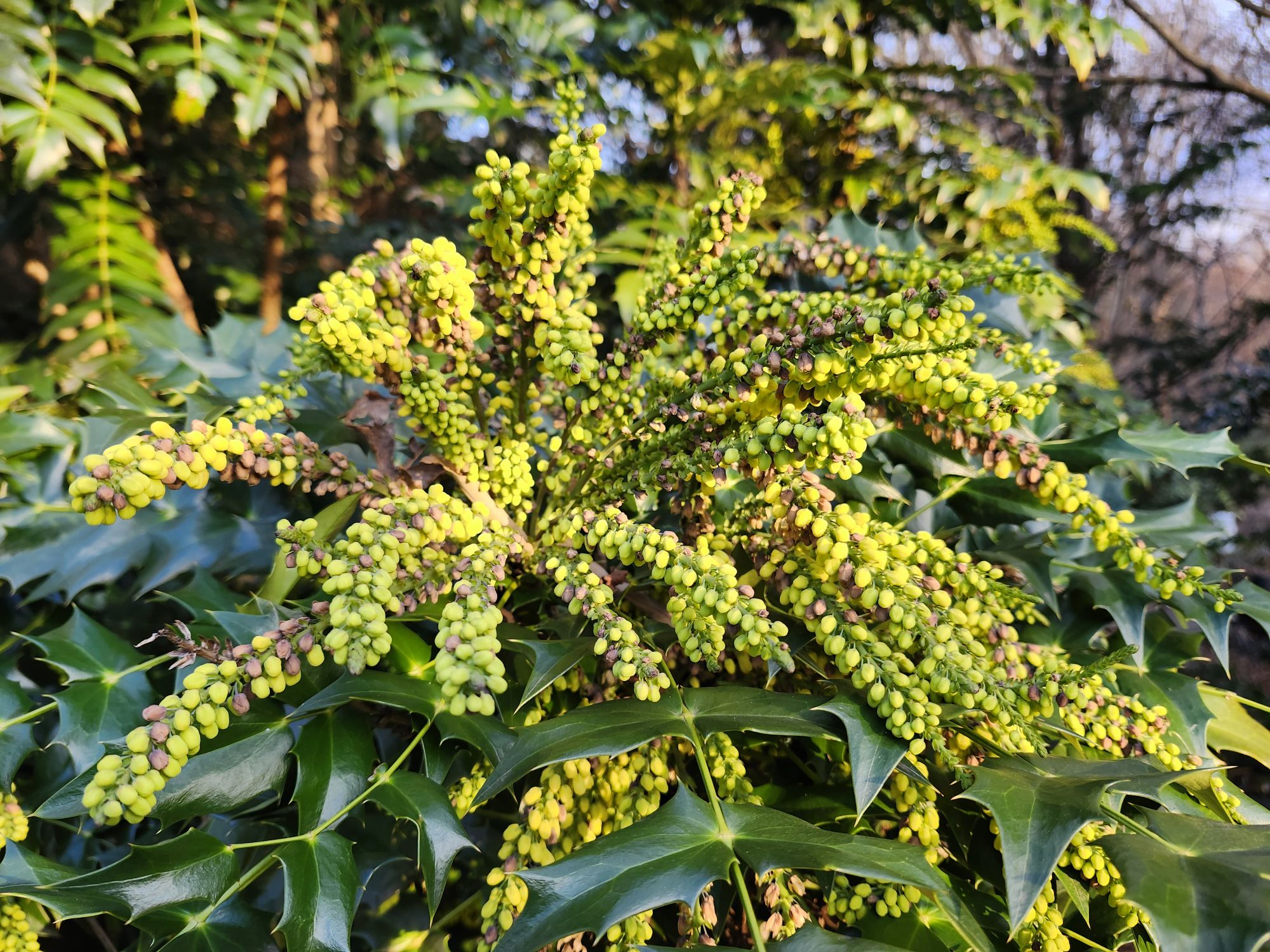
In the rare, very mild winter, flowers of ‘Winter Sun’ have intersected with the late winter flowering Leatherleaf mahonia (Mahonia bealei, now Berberis bealei, below). In early February, the coloring of flower buds is evident, but its peak flowering is weeks away.
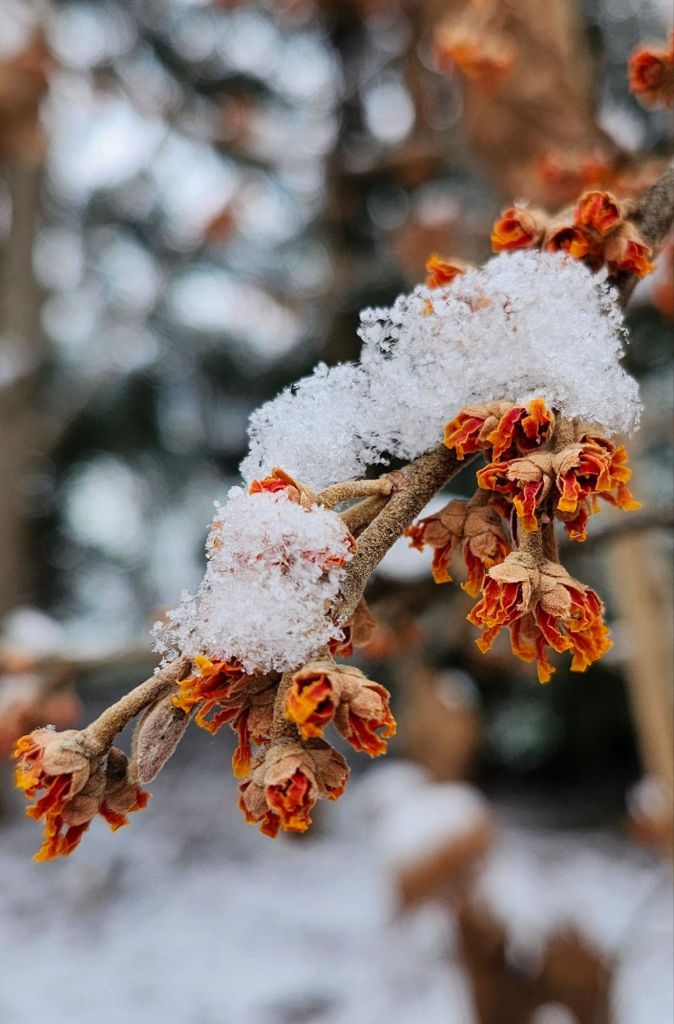
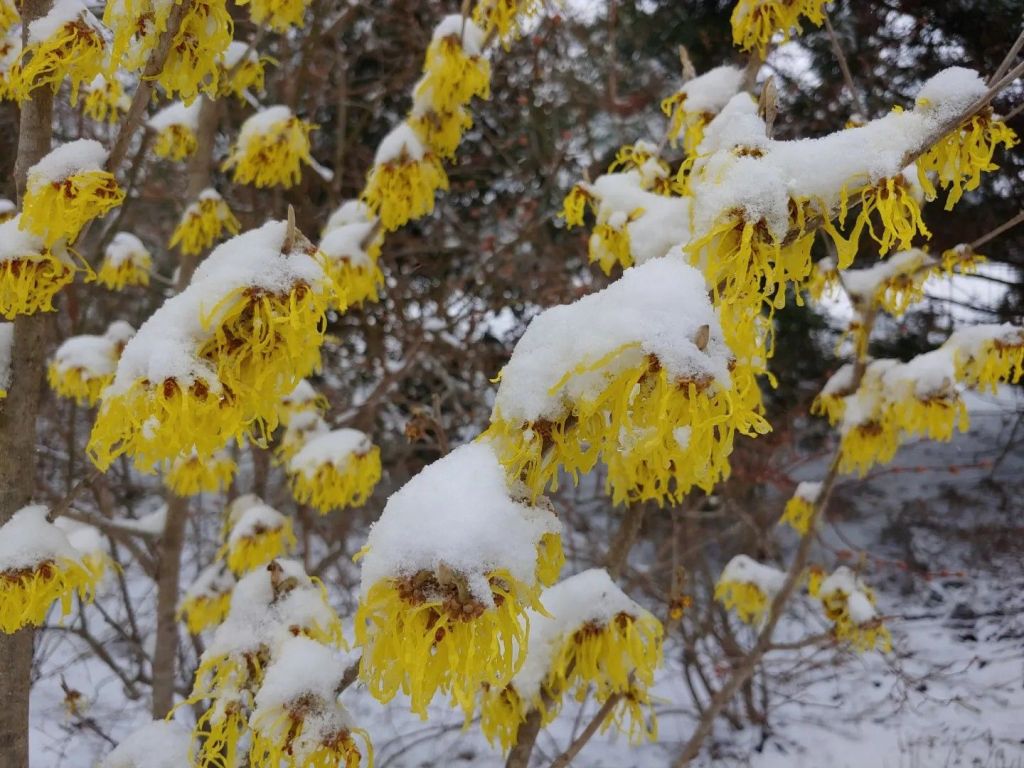
With persistent cold rarely rising above freezing in January’s later half, the Ozark witch hazels (Hamamelis vernalis, above) have been disappointing. The spidery, fragrant yellow flowers curl for cold protection, and for most of the month the flowers remained curled. I hope that conditions are better as Asian hybrid witch hazels (Hamamelis x media ‘Arnold Promise’, below) begin to show a glimpse of color.
 Ramblin' through Dave's Garden
It’s so cold in New England I bet my witch Hazel decided to hang tight for a bit longer.
I’m surprised that witch hazels don’t wait until June to flower for you. We’re not in people’s idea of the sunny South, but our cold doesn’t compare to yours.
Mine bloom in late winter oddly enough.
My Asian crosses begin flowering in another week and last into mid-March. My late winter is not the same as yours.
OK good to know.
We have a large Nellie Steven’s Holly outside our front window that is usually full of berries and teaming with birds at this time of year. Unfortunately, it has very few berries this year.
Any ideas why it berries are missing this winter?
The pollination period for hollies is short, so if the weather during this time is rainy, windy, or cold the beesmight stay sheltered. I’m far from an expert on bee behavior, but on a sunny spring afternoon there will be many bees. As soon as clouds arrive, the bees are gone.
wow!
thanks