Once the soggy ground dries a bit, I plan to retrieve a handful of small boulders that have been lost through the years in the clutter of plants. The boulders were at first set out as irregular stone borders, and three others retained soil for a witch hazel planted along a drainage swale. Unfortunately, the witch hazel became too shaded, or possibly its death was due to overly damp ground. In any case, the boulders are no longer required for this function.
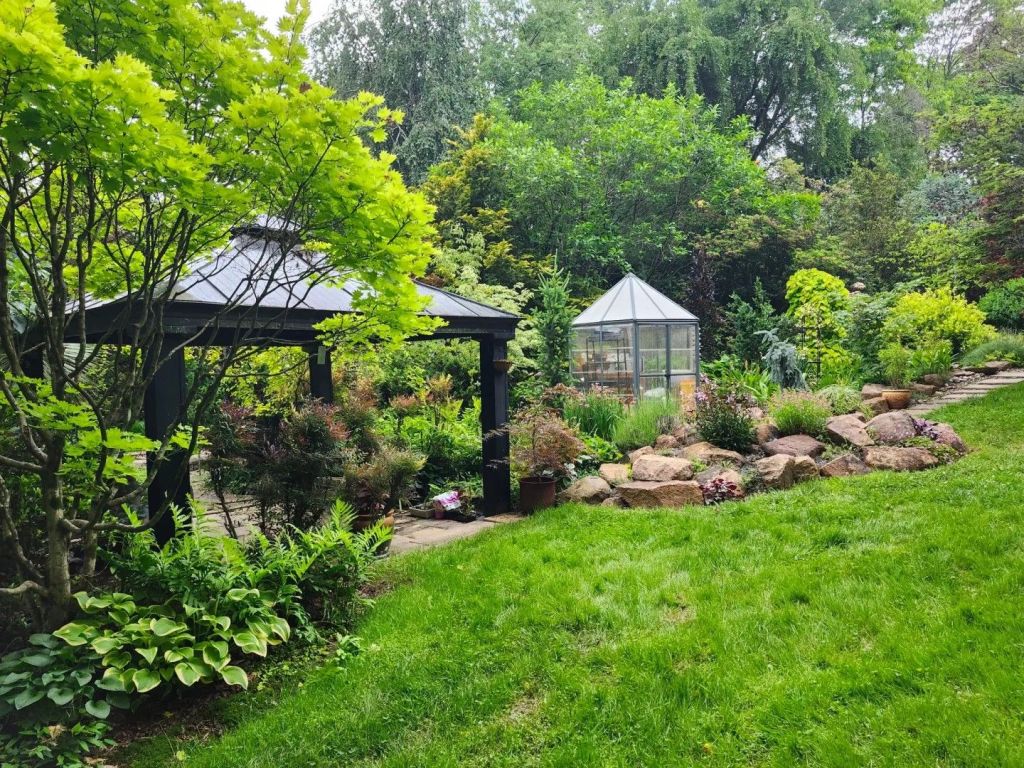
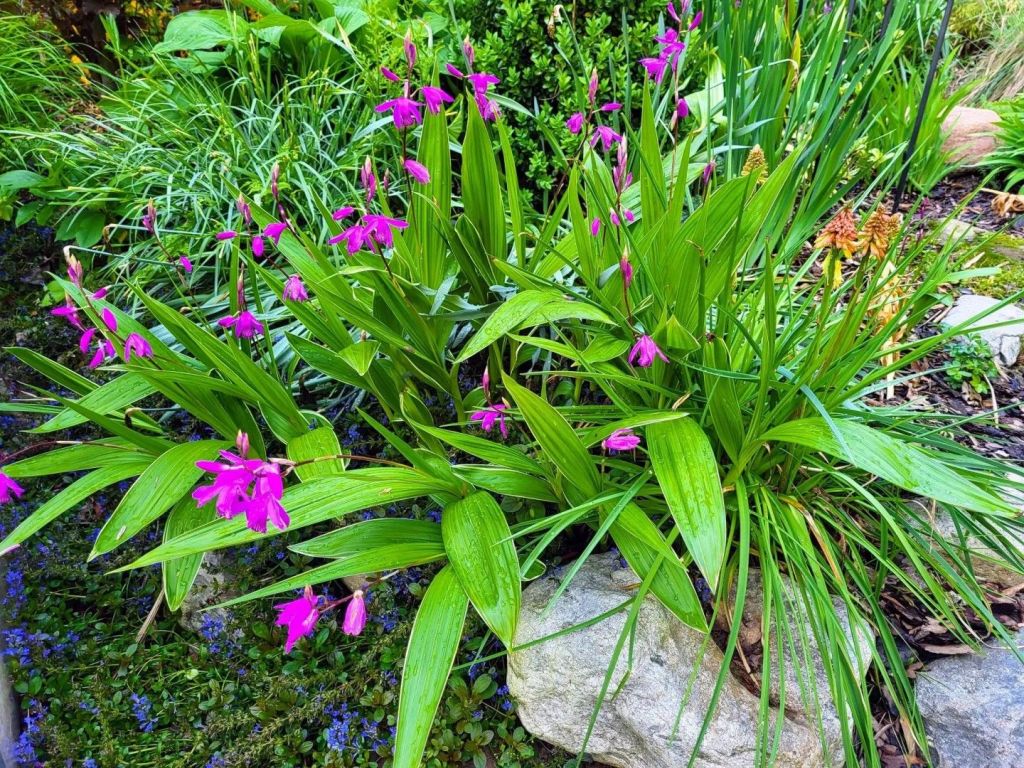
Two boulders between the summerhouse and greenhouse have become hidden by an expanding clump of terrestrial orchids (Bletilla, above) and later in summer by Sensitive fern (Onoclea sensibilis) sporelings that must be managed in many parts of the garden. The orchid clump, one of several and the least visible, is the primary source for harvesting divisions that have been shared with our two gardening sons and their wives. The boulders’ removal will allow the orchid’s further spread.
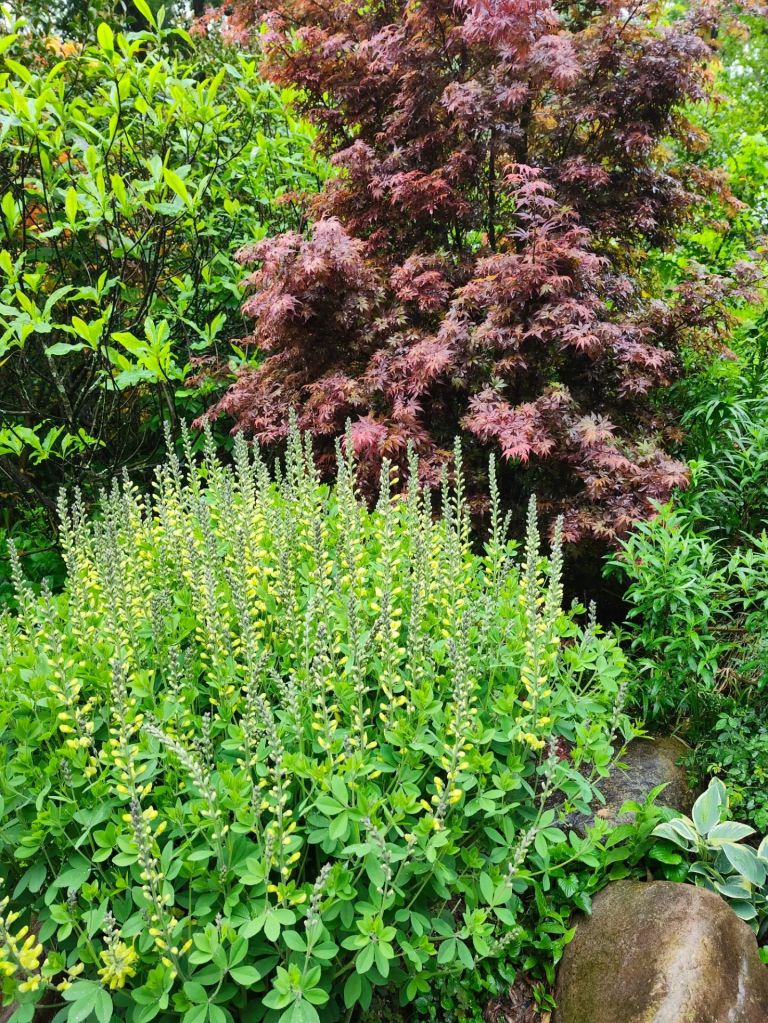
The largest of the boulders to be moved sits behind an ever expanding clump of the delightful, yellow flowered Lemon Meringue baptisia (above). Smaller boulders to the front restrict its slow spread, but to the rear the boulder is no longer seen or needed. This boulder is smooth surfaced, unlike the rough surfaced granite boulders, but it will be put to good use along with the others.
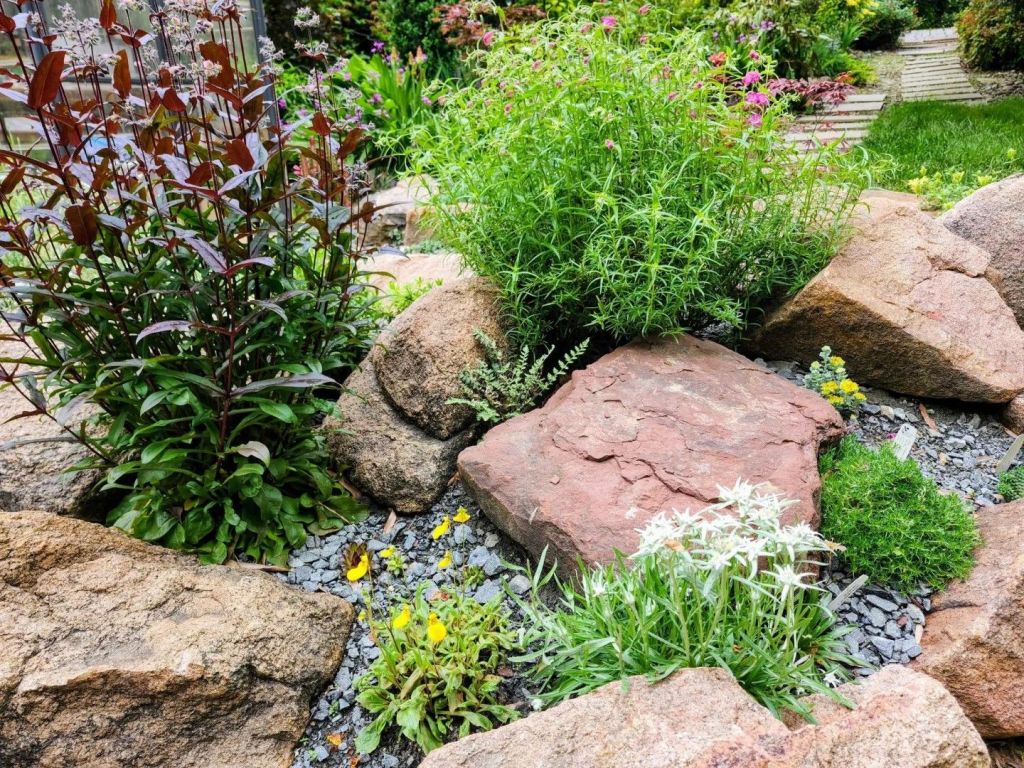
In my winter buying frenzy I have purchased several more plants best suited to the rock garden than there are available spaces. It’s clear that more free draining, gravelly niches are needed. So, I plan to add a small area to the larger of the two rock gardens (above). This should be quick and easy and it will put the boulders to better use.
The loss of the Bigleaf magnolia (Magnolia macrophylla) in a June storm created opportunities for several additions in the side garden. A soon to be delivered, white barked Ghost dogwood (Cornus wilsoniana) will be added in place of a tall common witch hazel (Hamamelis virginiana) that has flowered sparsely in recent years. The witch hazel will be moved to the edge of the garden.
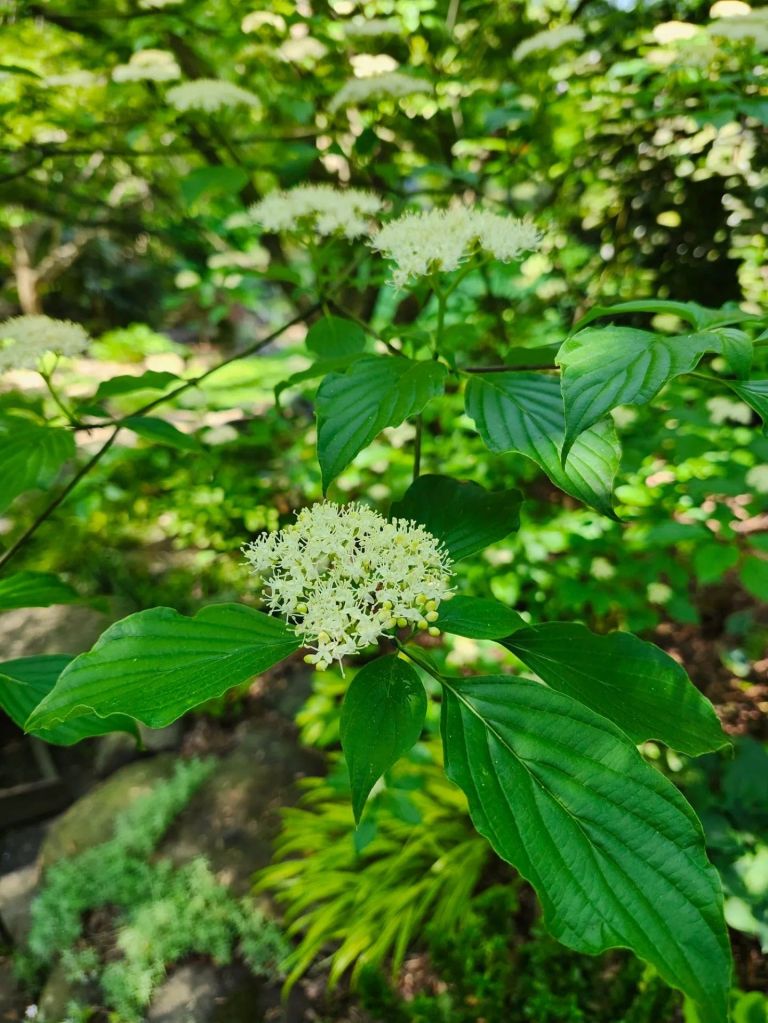
The dogwood will be planted a few feet into the opening to take advantage of the midday sun, and here it should be most visible from the nearby path. I expect that it will become a favorite. I’m pleased to add to the dogwood collection with this and the evergreen Hong Kong dogwood (Cornus hongkongensis) to be planted in the increased sunlight.
As the dogwood numbers are increased, so will mahonias (below) be added. I particularly favor the winter flowering types, but I’m certain I’ve purchased autumn and winter bloomers. Several are likely to be questionably cold hardy, so before planting I must again research their hardiness and plant tender varieties in protected areas of the front and side gardens.
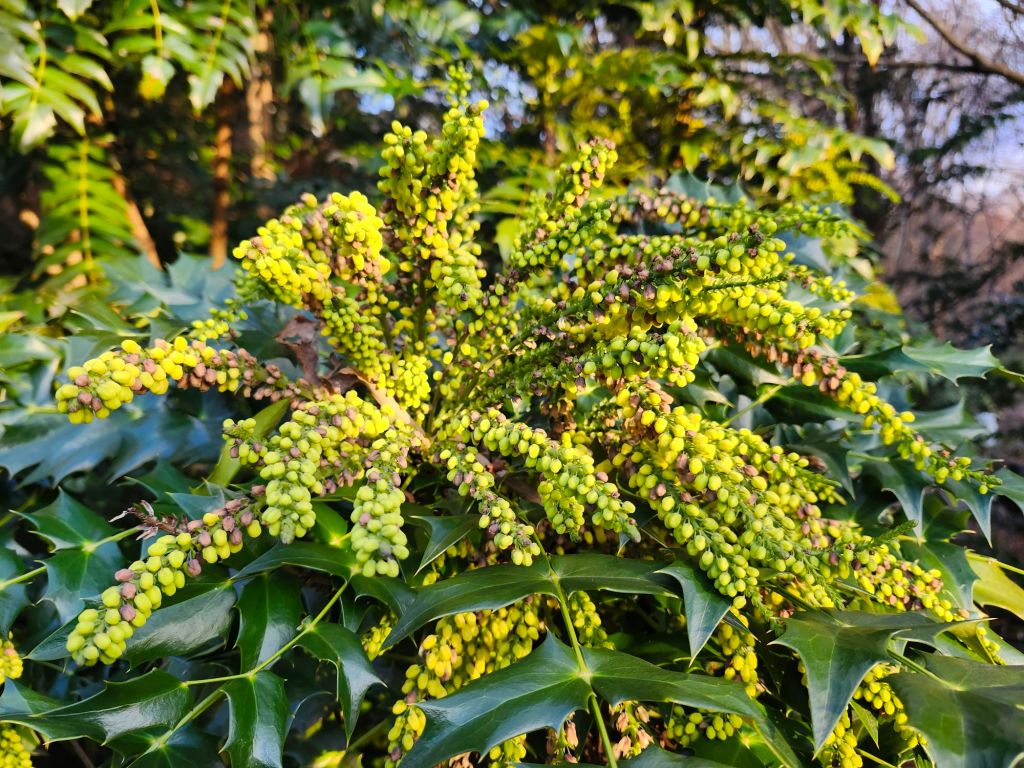
I have monitored the melting snow to better understand microclimates within the garden. There are conflicting signals due to shade and sunlight exposure, but possibly I’ve determined areas that can shelter a tender dogwood or mahonia. I can’t wait to get started.
 Ramblin' through Dave's Garden