Winter damaged, browned leaves of hollies, mahonias, and nandinas have been shed with some branches bare of foliage until spring growth covers them again in coming weeks. I have little concern over their survival since most are long established, though a few mahonias were autumn planted and there is minor concern with leaves only on lowest branches remaining green.
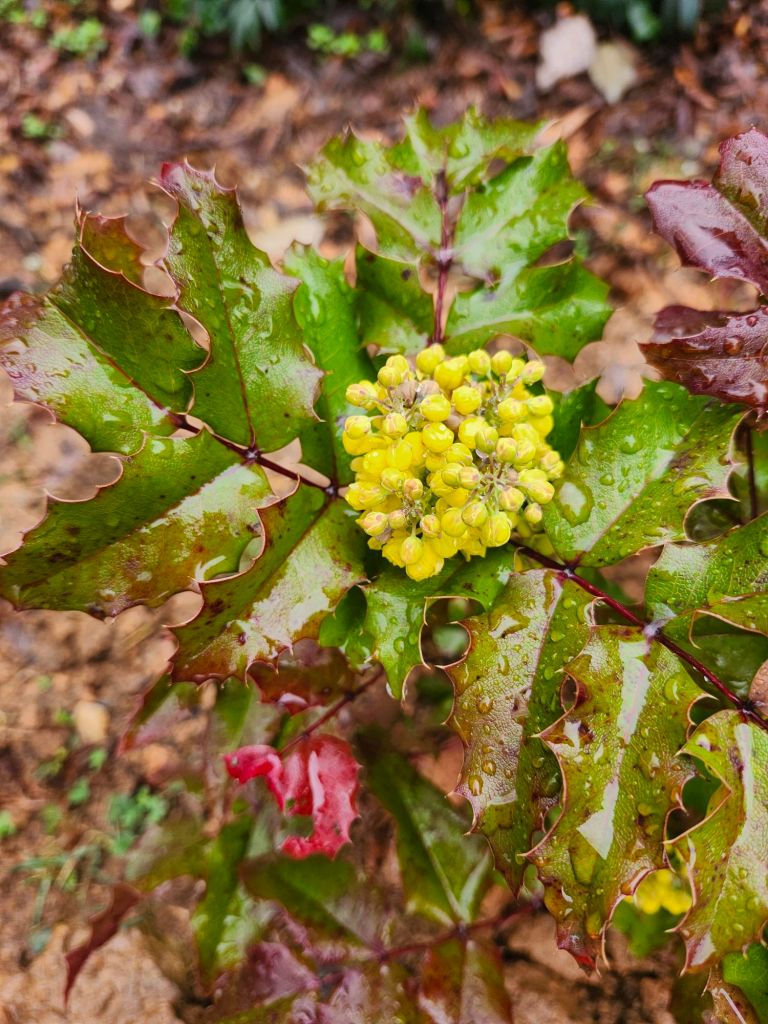
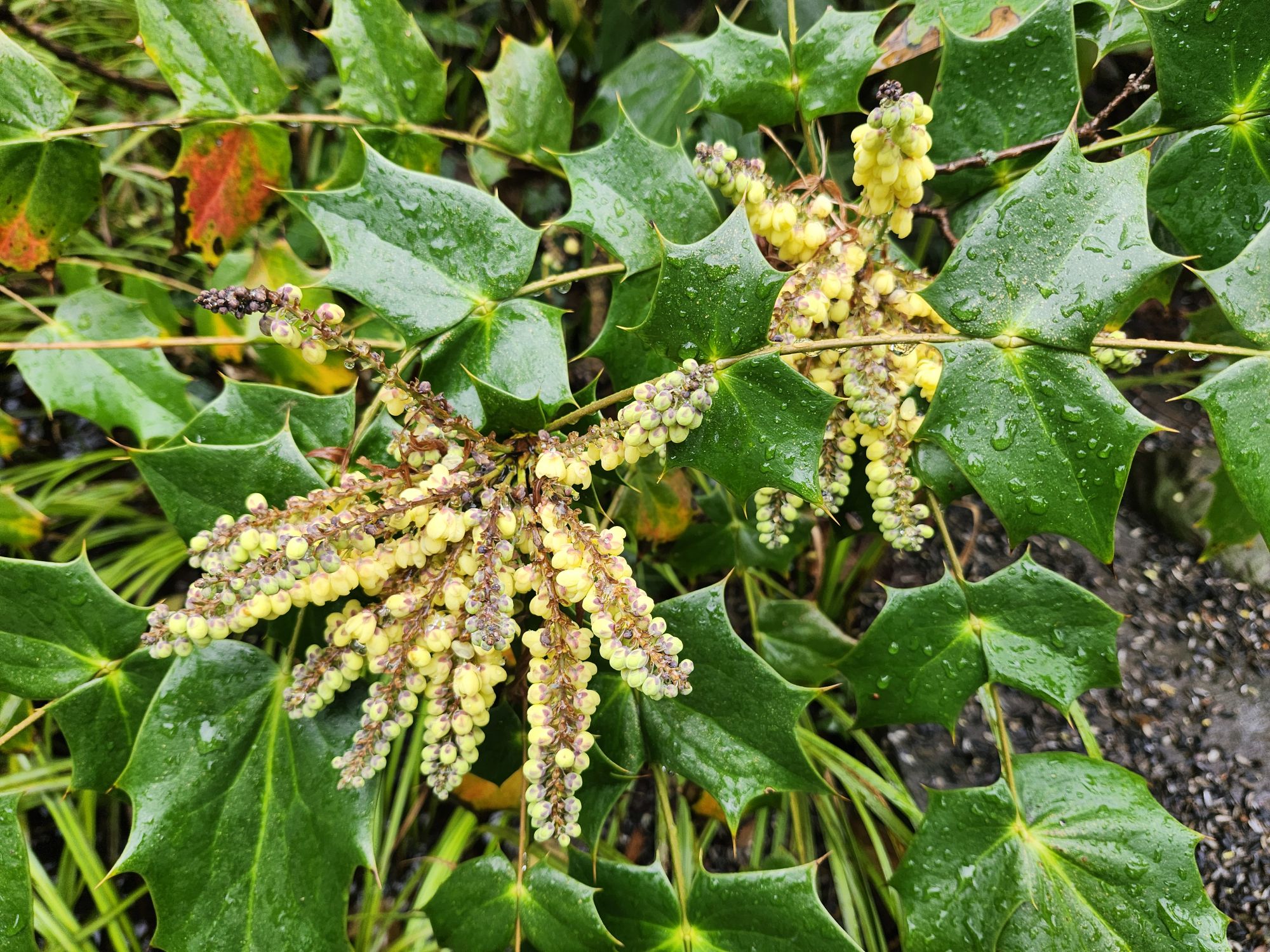
While most mahonias in the garden are autumn or winter flowering, the Oregon grape holly (Mahonia aquifolium, now Berberis aquifolium, above) flowers in March along with the Leatherleaf mahonia (M. bealei/ B. bealei, below). Leatherleaf mahonia is derided as invasive, but in three decades I have observed only a few seedlings at the edges of the garden, and in local parkland forests bordering residences I do not observe any more than solitary plants. I suspect their invasiveness is problematic elsewhere.
I am surprised that one autumn flowering camellia along the driveway has a single bloom (in poor condition) and a few buds that appear to be swelling with rising temperatures. Many freeze dried buds have been shed, accumulating in a pile on the driveway. I assumed that all buds would have been damaged by the persistent cold through January. In milder winters, this camellia flowers during spells of warmer temperatures, but there were none this year.
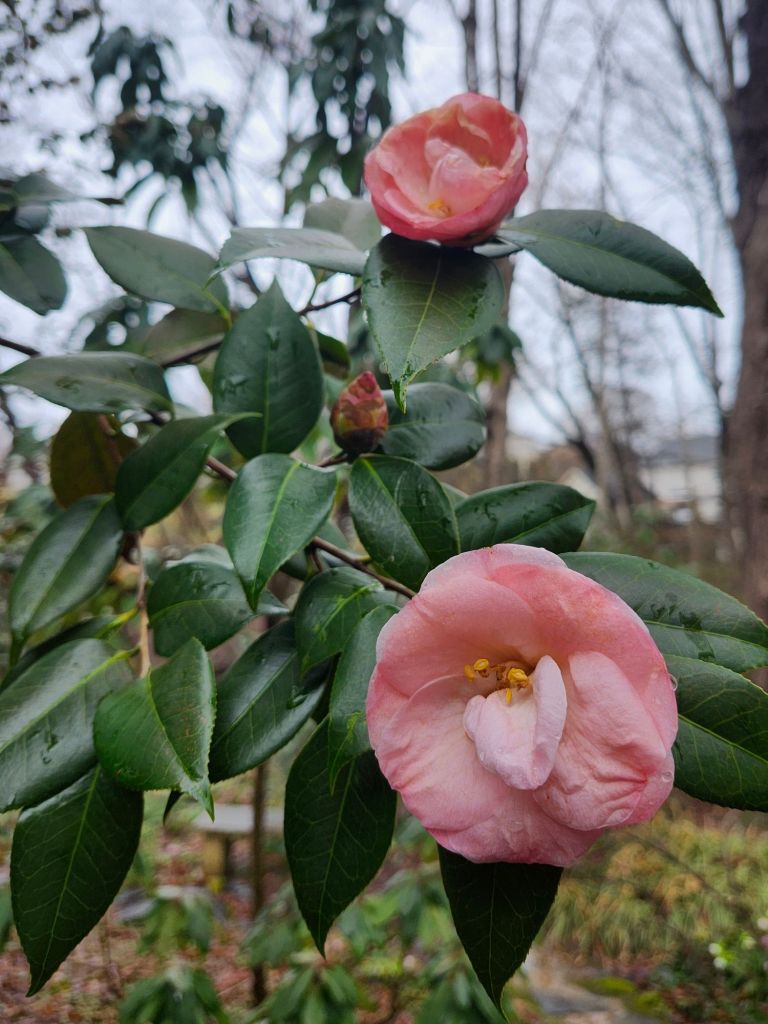
Buds of the spring flowering camellias (Camellia japonica, above) are swelling, with several flowers on uppermost branches. To our south, these flower in late winter, but rarely do I see ours flower before the beginning of March. When the camellias were newly planted, prolonged freezes typical of that time often injured all flower buds, but with longer establishment and warmer winter temperatures all are now dependable bloomers.
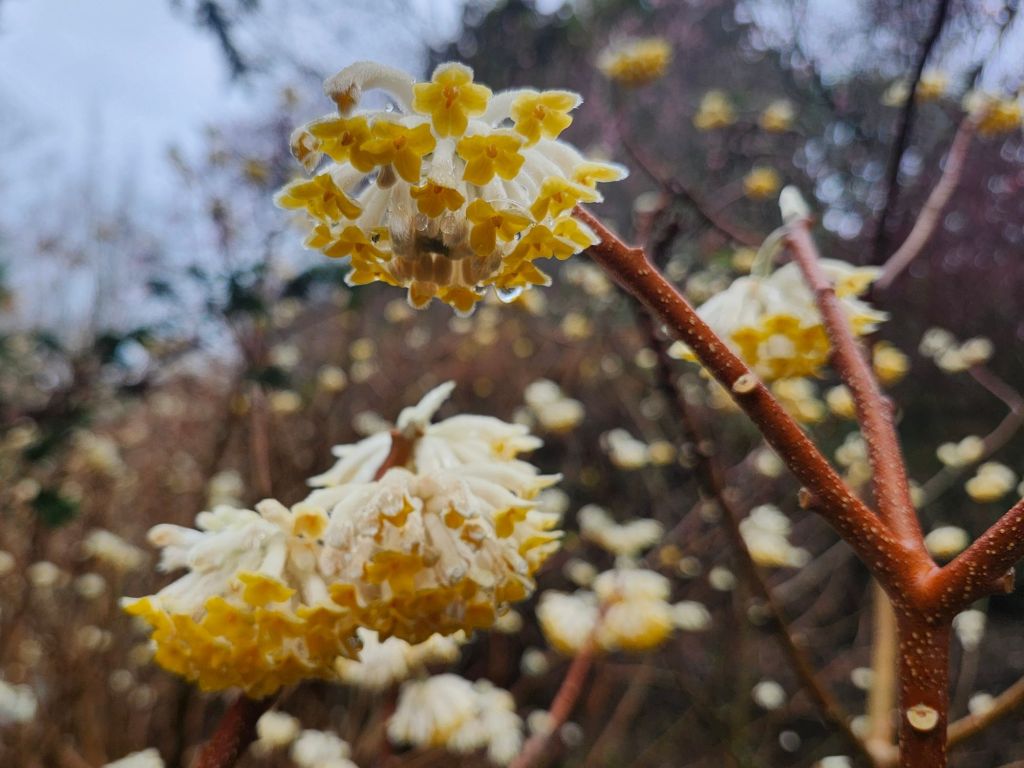
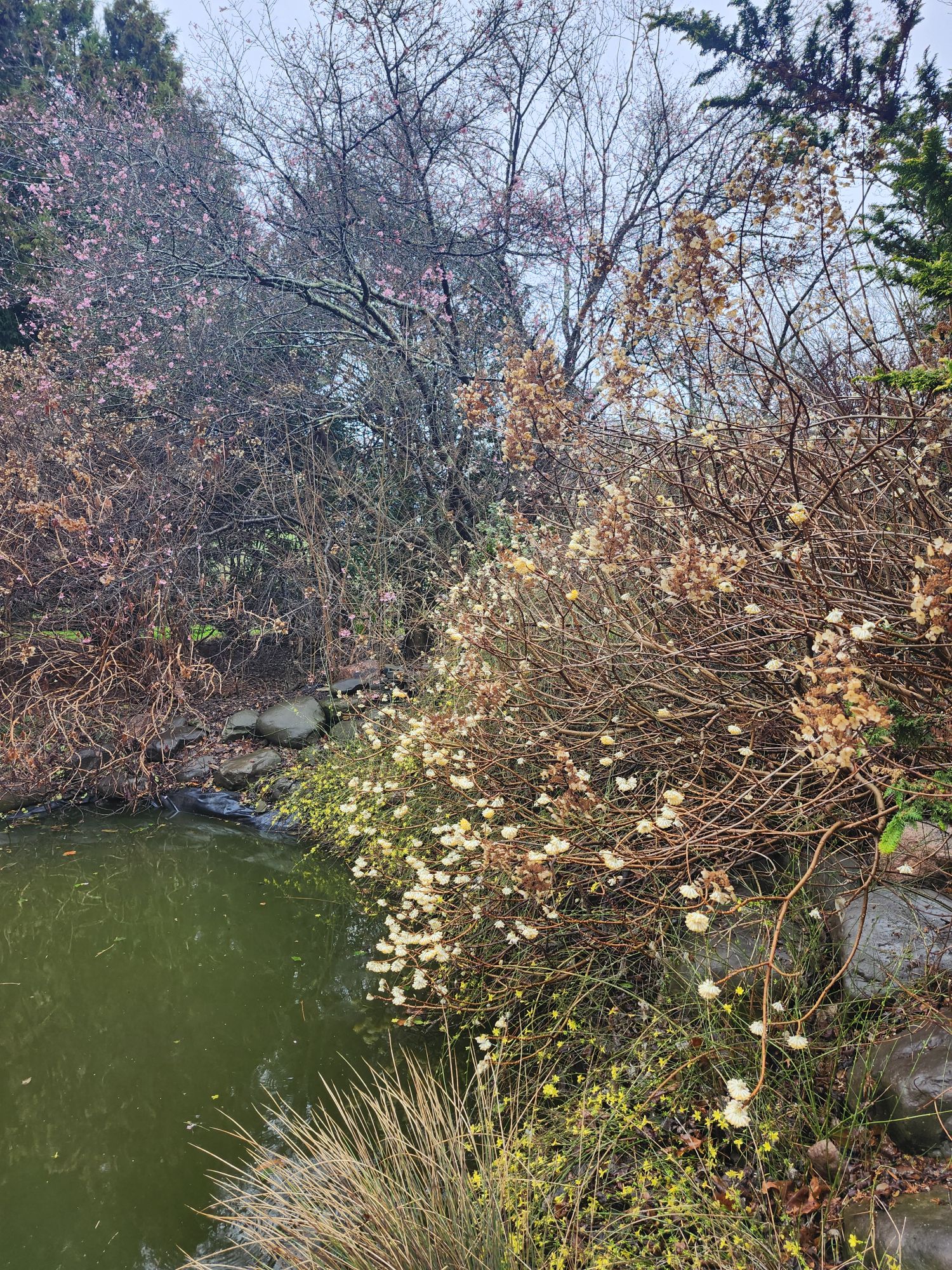
One of the paperbushes (Edgeworthia chrysantha, above) suffered damage to a portion of its flower buds while most were unharmed. I feared that there could be some stem dieback when temperatures dropped just below zero (Fahrenheit), but happily, there was none.
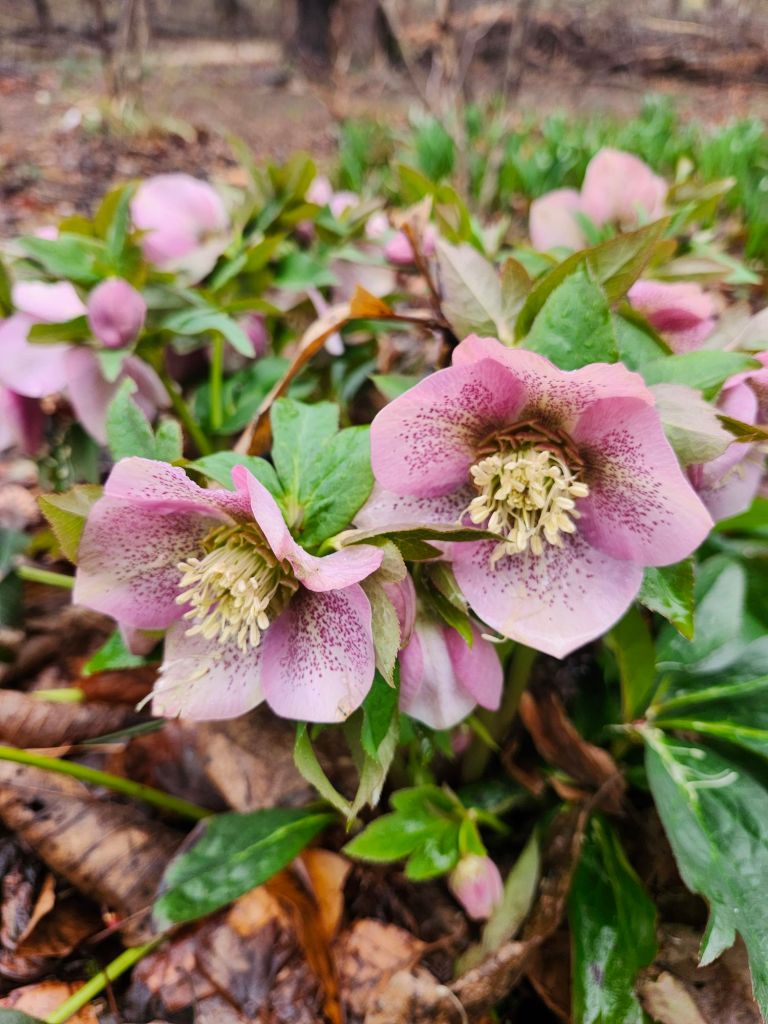
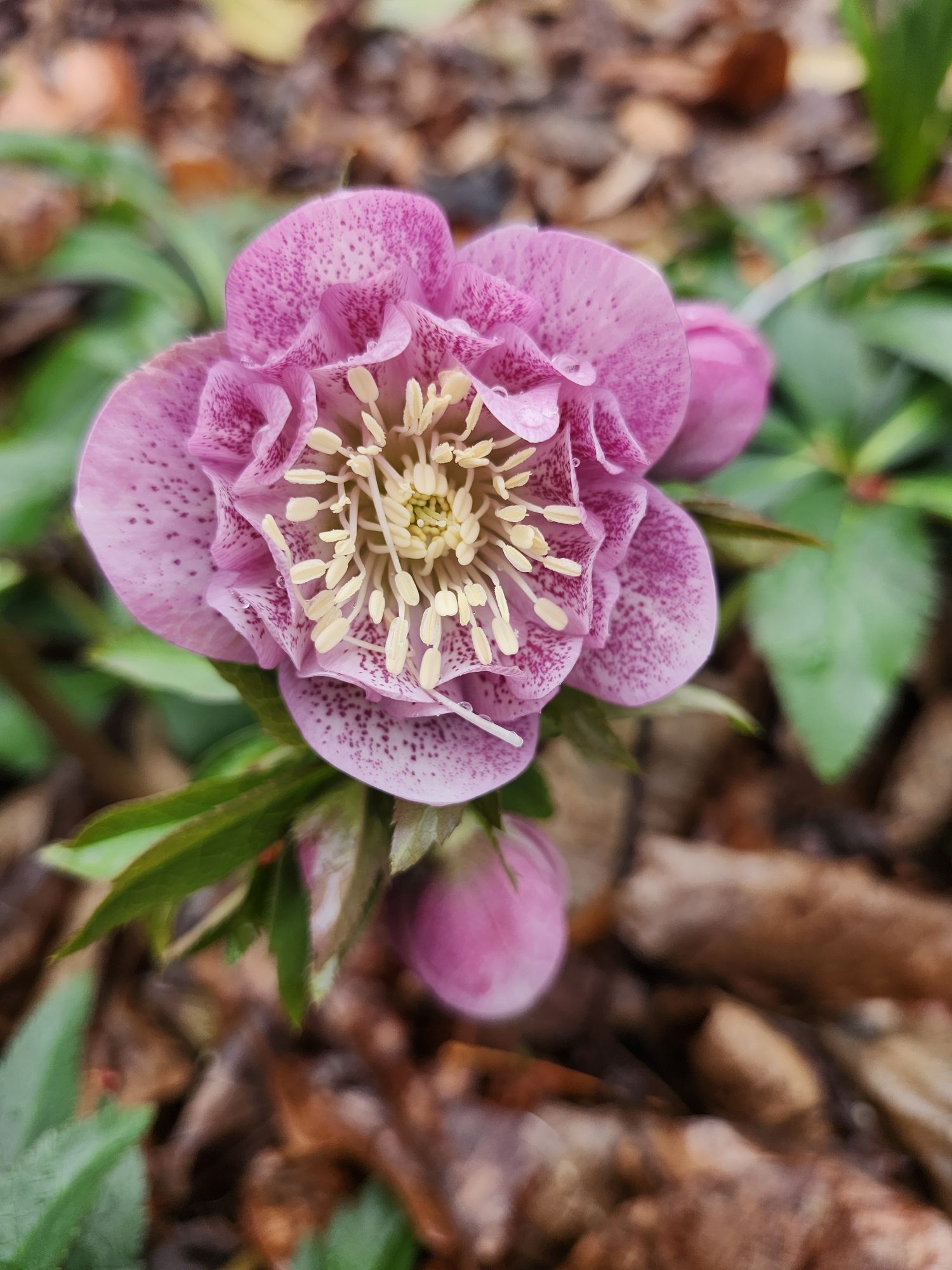
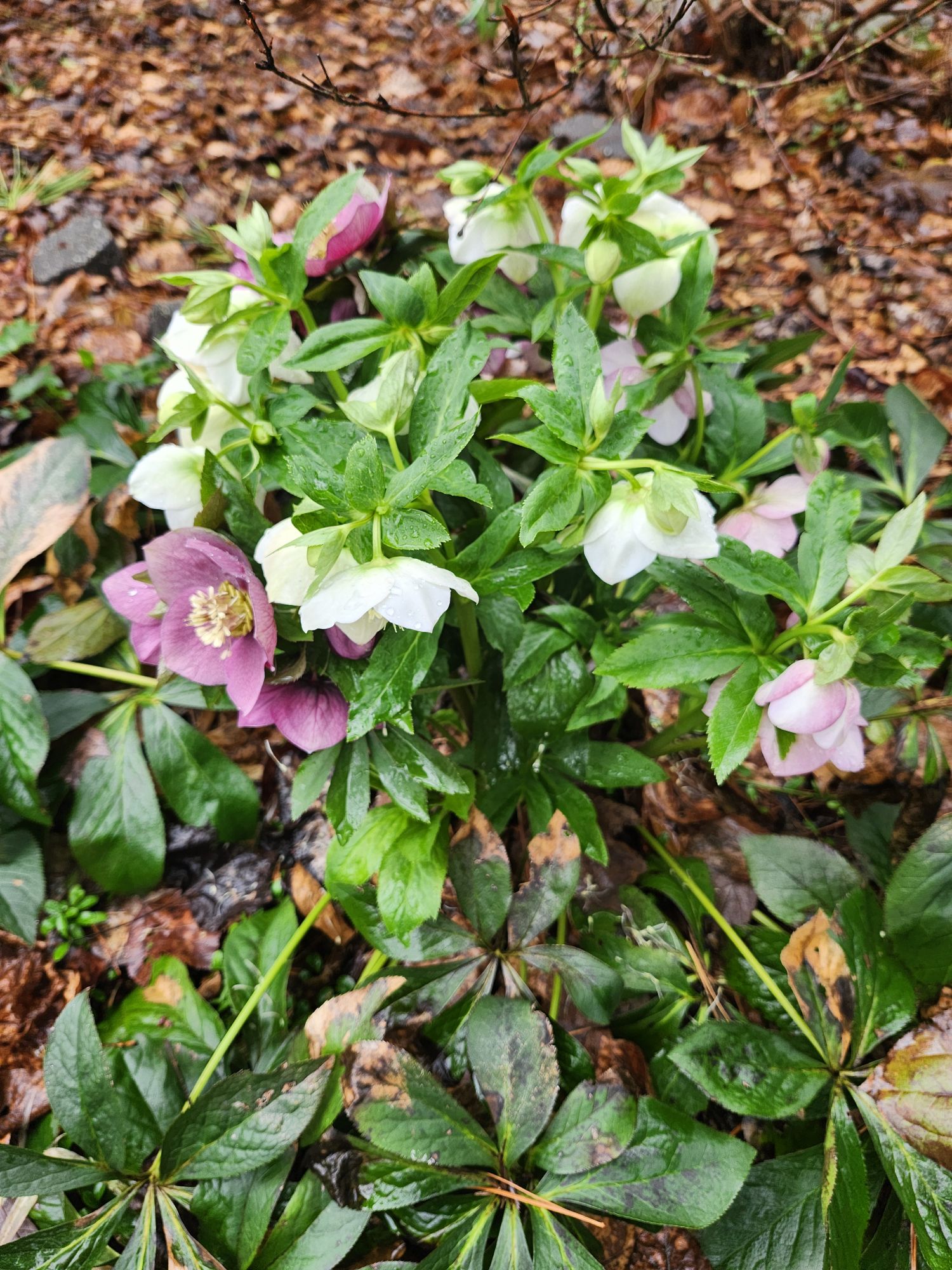
I expect that all of the garden’s hellebores are now fully in flower with several double flowered types the last to bloom. On every garden stroll interesting flowers are discovered. Since seedlings are often left undisturbed there are a number of hellebore clumps with multi colored flowers. This is not a marvel of nature but a result of variable seedlings growing in close proximity.
 Ramblin' through Dave's Garden