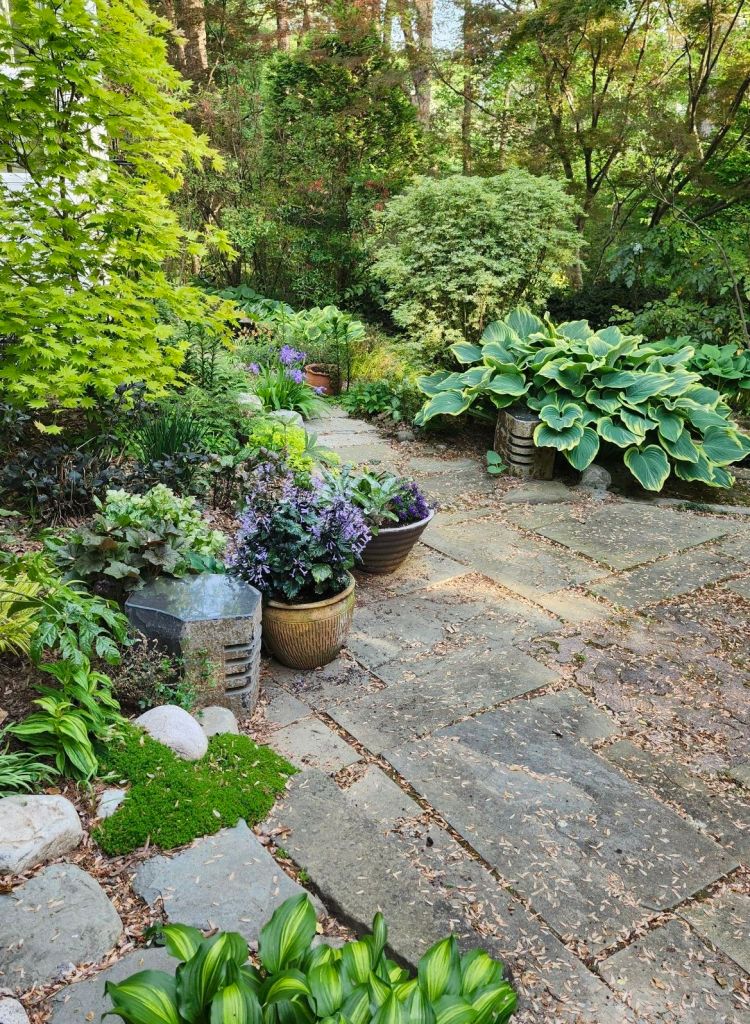
I’ve visited (and greatly enjoyed) gardens where plant collections are featured to an extreme with little care for design. I understand, but also hope that the varied collections in this garden are presented more informally. I suspect this goal is advanced by a variety of plant collections and not only Japanese maples, dogwoods, or whatever. A single plant type does not dominate the garden.
Today, the Wheel Tree (Trochodendron arailiodes) was dug out and tossed onto the brush pile. A bit of life remained as it entered the winter, but dry and frozen soil combined with unusually frigid temperatures put an end to the tree’s misery. I question why it declined, though I suspect prolonged droughty periods in consecutive years to be the culprit. If so, my error. I could have easily irrigated the small tree that is only a few feet from a hose bib.
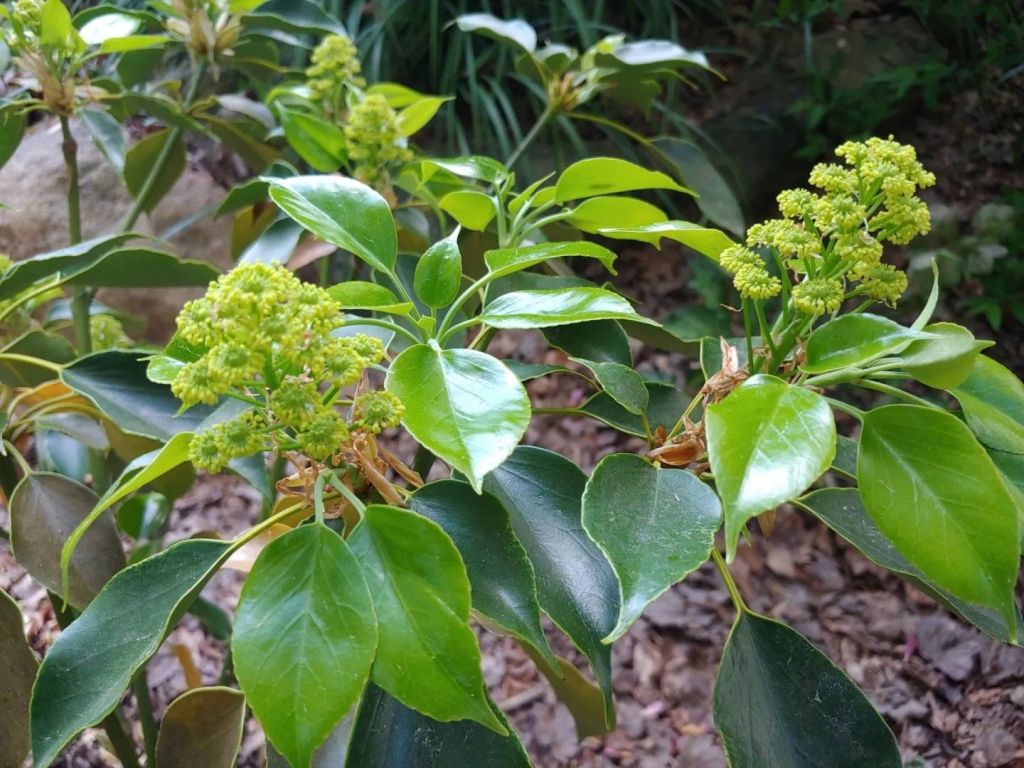
I must now suffer again the long wait for a replacement of the Wheel Tree to grow to the size that can marginally be called a small tree. A dogwood or redbud will become an acceptable tree within several years, growing a foot or more annually, but the Wheel Tree is considerably slower. Also, I must find a new home for it, figuring that a less than ideal position could have contributed to the dearly departed’s slow demise.
I suspect all or at least most gardeners are guilty on occasion, and certainly I have committed crimes of negligence and wrongful planning. I’ve killed plants unnecessarily due to lack of care, but also when rules of “right plant, right place” are ignored.
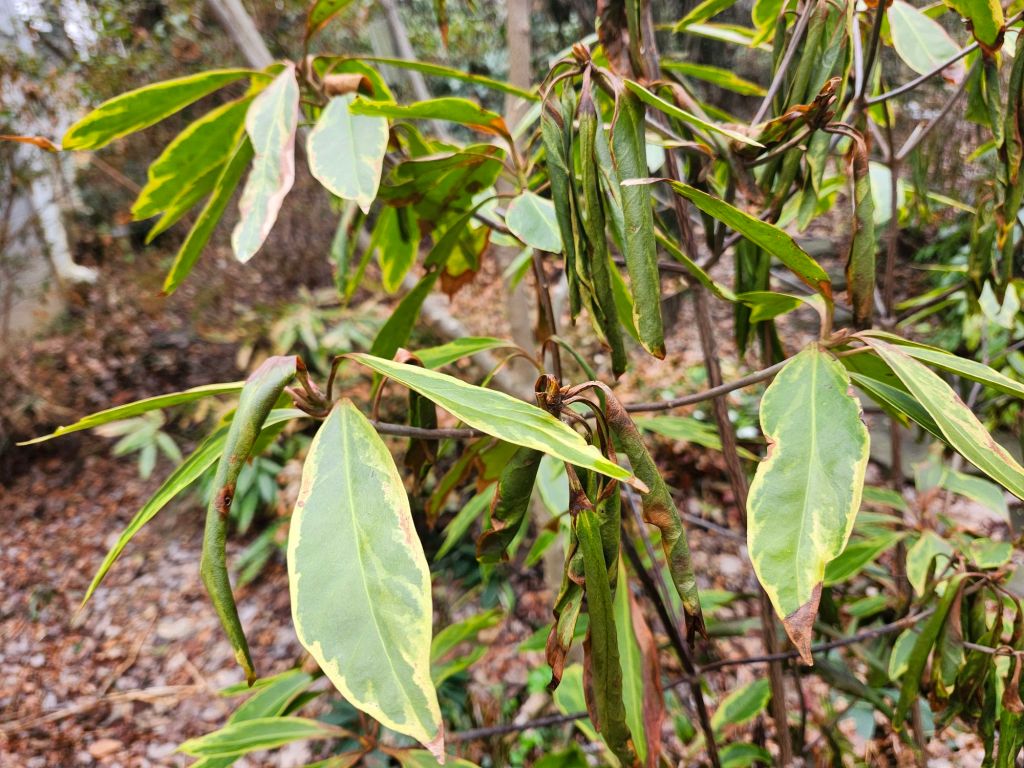
My wife tells me that our winter has been frigid, not just chilly, and who am I to disagree? There is considerable evidence that broadleaf evergreens have suffered from the cold (above), of course, just when I was confident that we might never again experience such lows. I congratulate myself for braving the cold to cover a handful of tender favorites prior to the worst of the cold and several weeks of snow cover. All have survived in fine condition.
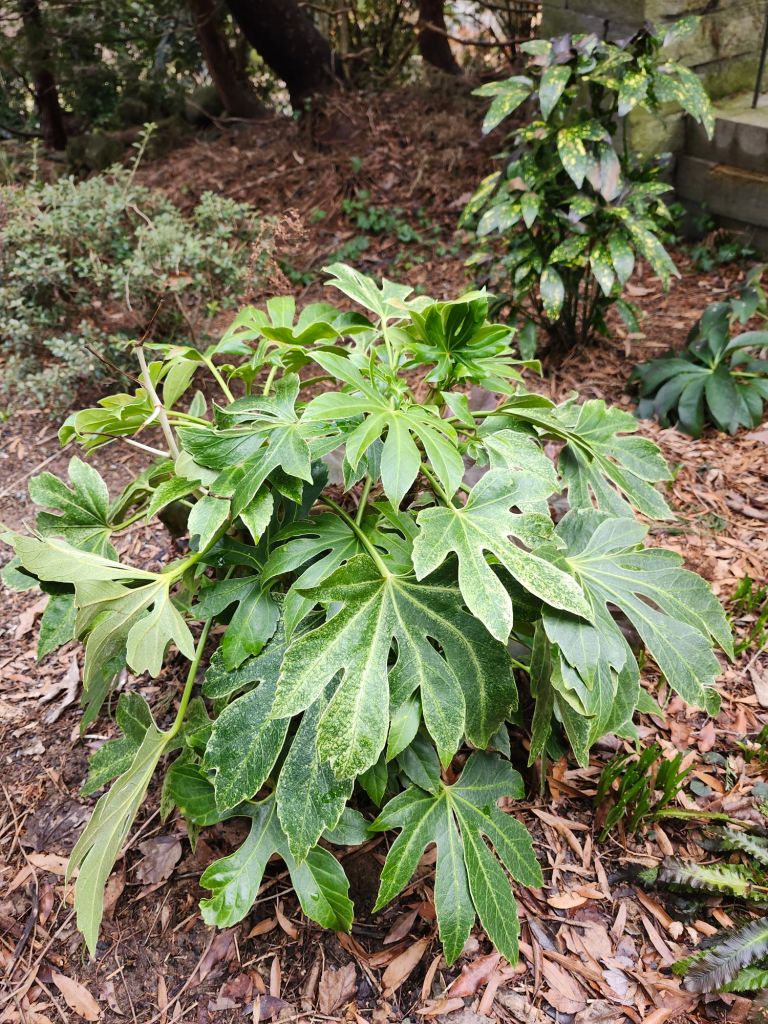
After multiple failures likely due to poorly drained clay soil, I halted my collecting of daphnes several years ago. I can’t smell them (or anything else) and they are prone to sudden, unexplained deaths. After a single night fell below zero (Fahrenheit) several weeks ago, I witnessed damage to flower buds of a daphne relative, one of a handful of paperbushes (Edgeworthia chrysantha, below) and figured that others could also suffer. Buds have been damaged in prior years with temperatures just above zero, but I am pleased to report that the injury appears to be minor. Several paperbushes flowered a week or two late, and even the one in the coldest part of the garden had many blooms and only a few damaged buds.
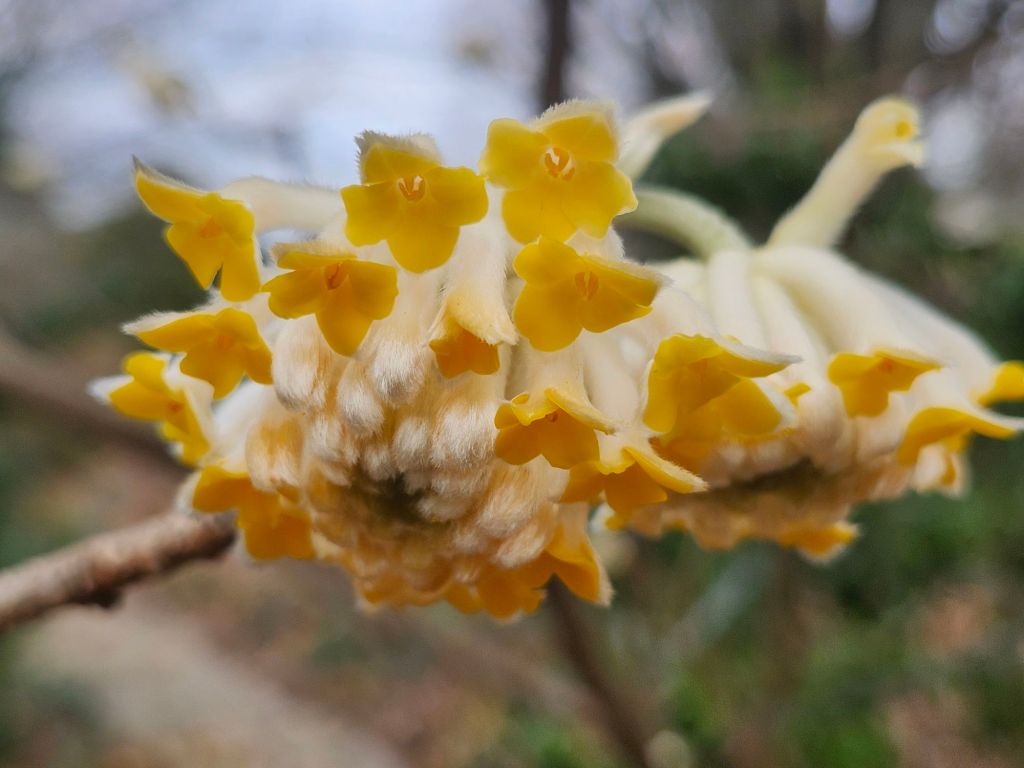
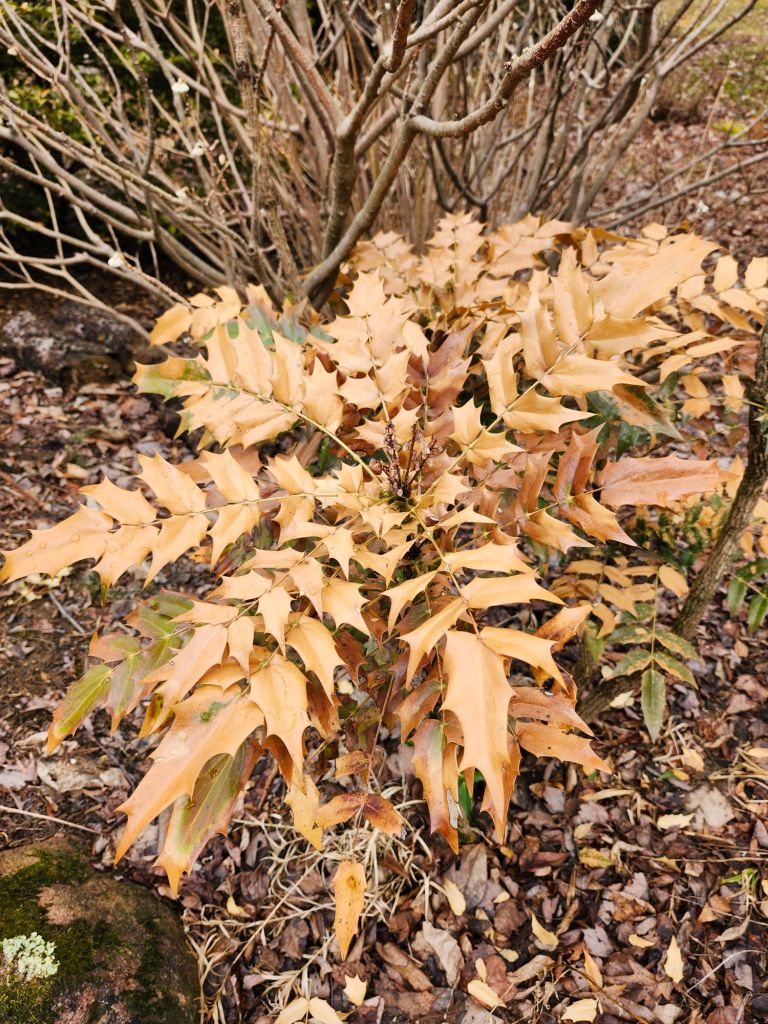
Leaves of the ‘Underway’ mahonia (Mahonia x media ‘Underway’, below) in the shadow of a tall paperbush in the lower rear garden are quite brown. This is the lowest and likely the coldest area of the garden, but I’m optimistic the mahonia will recover fully with spring’s growth. Despite cold related browning on several mahonias, I don’t regret planting several newcomers in the recent weeks as the snow melted, with a few more on the way.
After five decades of gardening, I sense that the inevitable accumulation of knowledge is of limited use in avoiding mistakes. I am now more likely to lurch forward despite evidence that encourages more caution, prepared to fail, but joyful in the successes.
 Ramblin' through Dave's Garden