Two nights in the mid and upper twenties (Fahrenheit) interrupted flowering of the two pale yellow flowered magnolias. ‘Yellowbird’ barely opened before its blooms were ruined, and buds of ‘Elizabeth’ opened for a few days before flowers faded in the freeze.
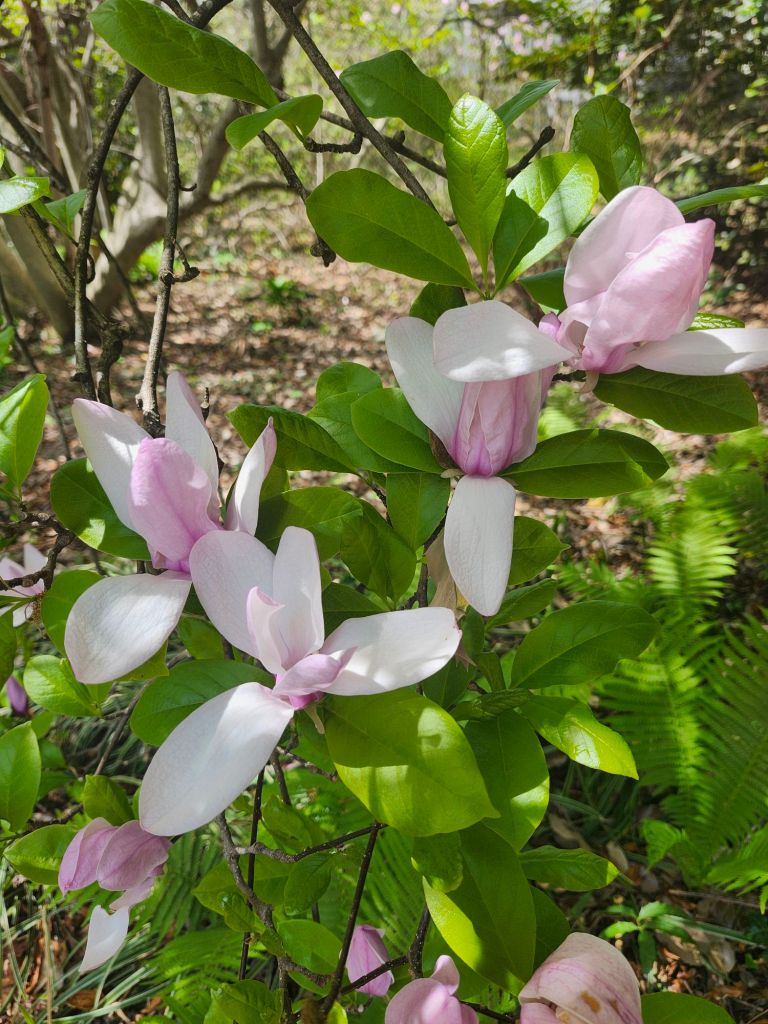
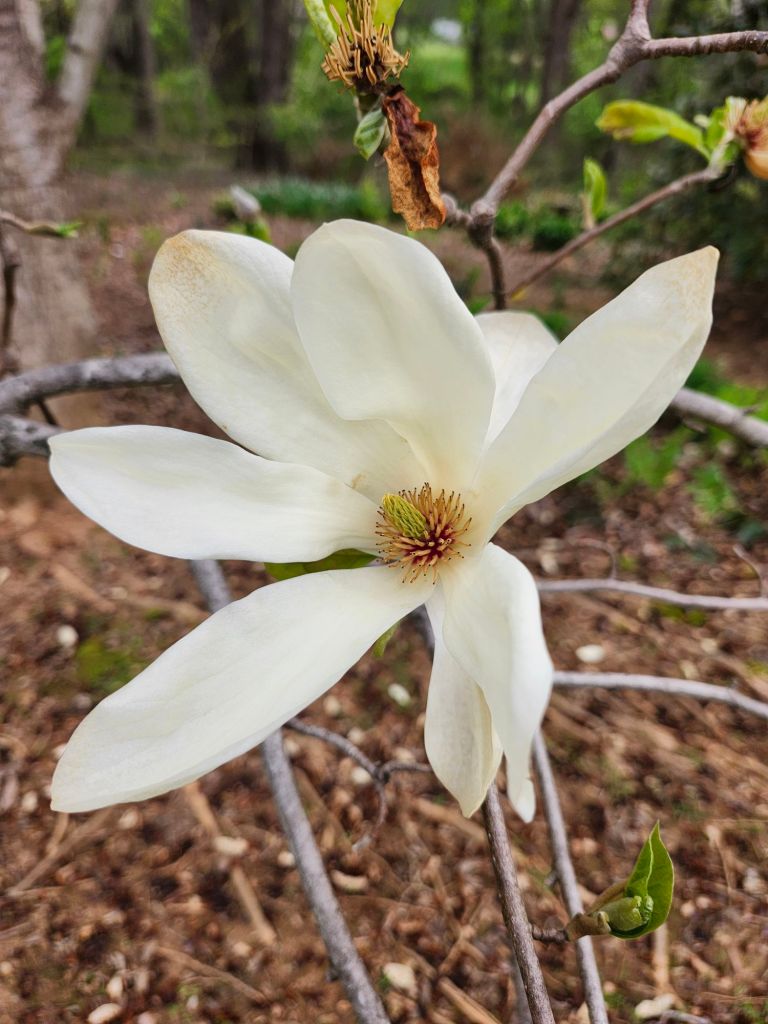
I hope for better luck next year. The early flowering magnolias (‘Jane’, ‘Merrill’, and ‘Royal Star’) were not touched by freezing temperatures, so one group was delightful and the other, not so much. Redbuds and dogwoods flowered through the freeze without a bother.
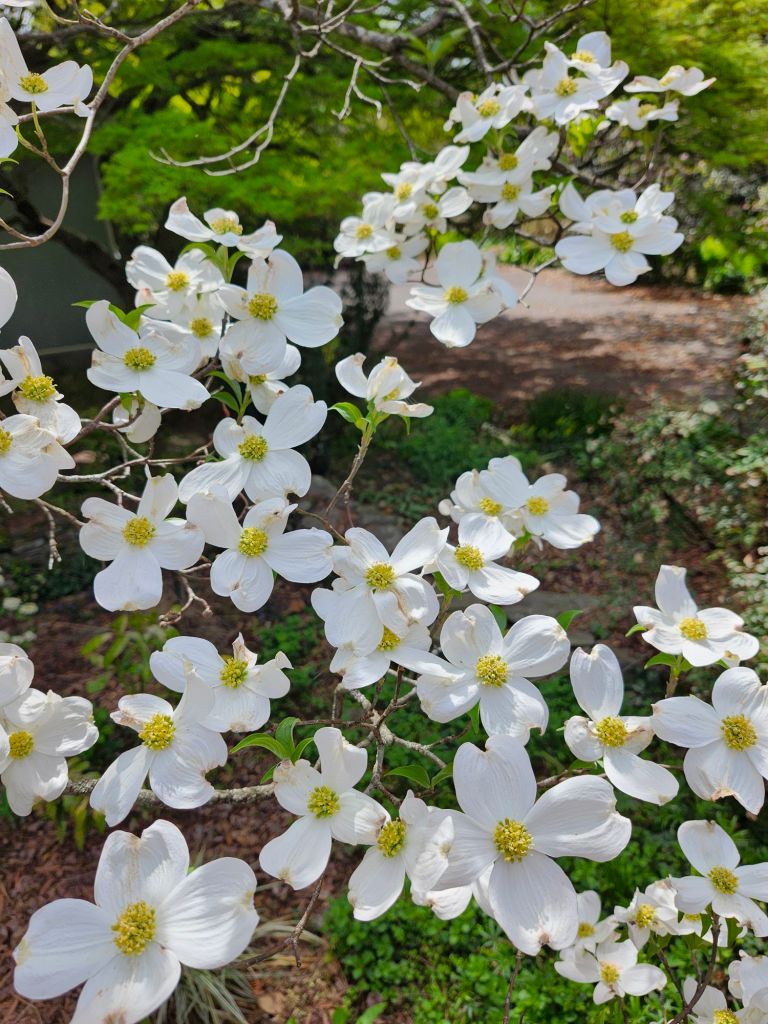
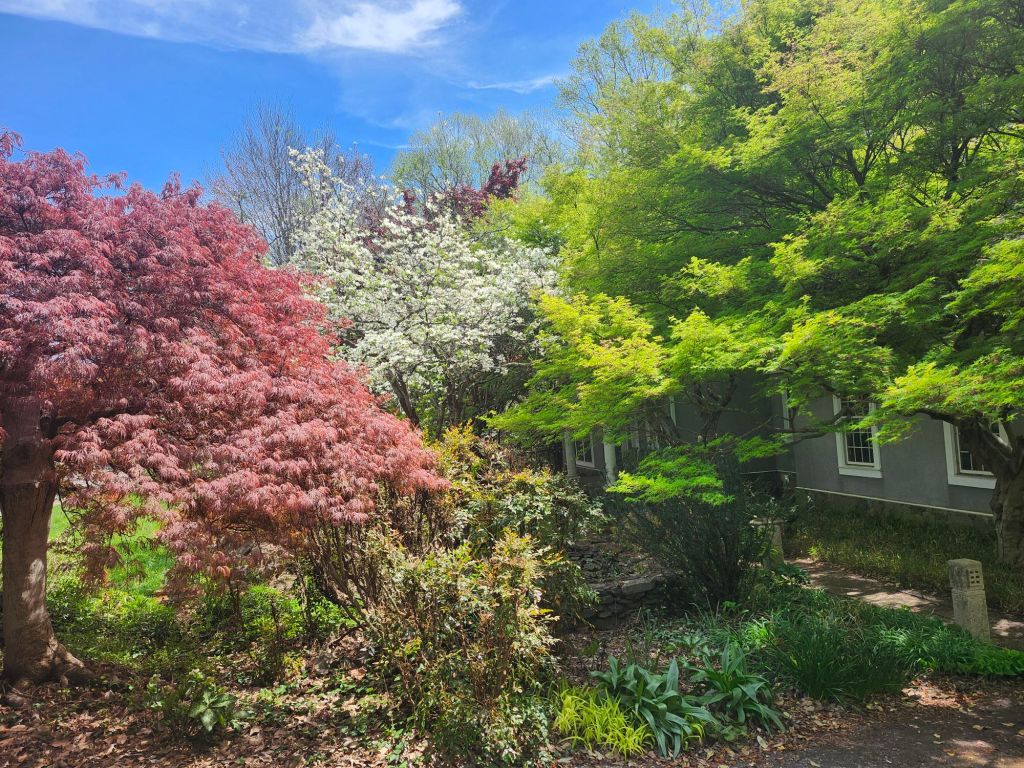
I’m reminded that a dogwood seedling has grown in the jumble by the street side mailbox. The seven foot tree stretching into the sunlight was barely noticed until I saw its flower buds in autumn. No doubt, the dogwood is in the wrong place, so it will have to go. Unfortunately, there’s too much other stuff in the way to be able to transplant the dogwood, so it’ll have to be cut down. There’s also a tall American holly (Ilex opaca) in the tangled mess that will have to be chopped out. Some day.
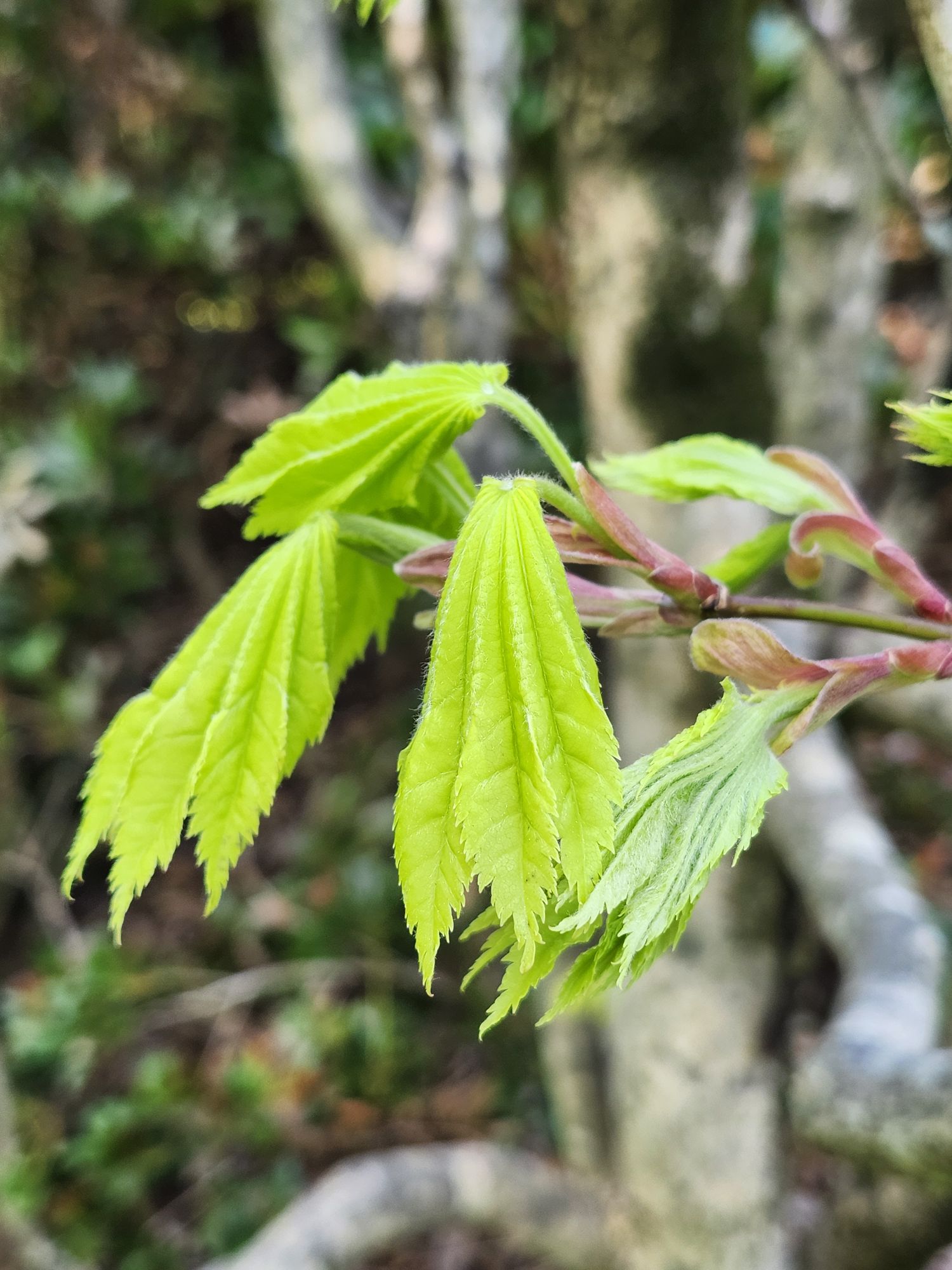
Japanese maples that are fully leafed are quite tolerant of late freezes. I was most concerned about several Japanese maples that are late to leaf out. These are long established trees, so even if every leaf was damaged by the freeze, the maples would survive, but they would be slow to look their best. Emerging leaves of the two yellow leafed maples, ‘Golden Full Moon’ and ‘Moonrise’ (Acer shirasawanum), were at their most vulnerable when the cold moved in, but both escaped (along with ‘Koto no Ito’) with no damage.
This second week of April is the time when I begin to worry when a plant isn’t showing evidence of growth. I know that several beech (Fagus) are always tardy, along with crape myrtles (Lagerstroemia), but several clethra (Clethra alnifolia) and a native beautyberry (Callicarpa americana) are showing no sign of growth. It’s hard to believe that these sturdy shrubs could perish after a winter with temperatures falling to just below zero, but I should be seeing some swelling buds, at least.
I’m pleased to report that the Sago palm (Cycas revoluta) survived the winter. Last year’s foliage turned crispy brown with our first temperatures in the mid-teens, but I covered it with frost cloth and a large nursery container for a week as colder weather moved in. It was planted in late summer, so it was questionable to make it through even a mild winter.
So, a bunch of magnola flowers were damaged, and maybe several clethra. A few perennials are late, but all else is growing happily. So, I’m happy.
 Ramblin' through Dave's Garden