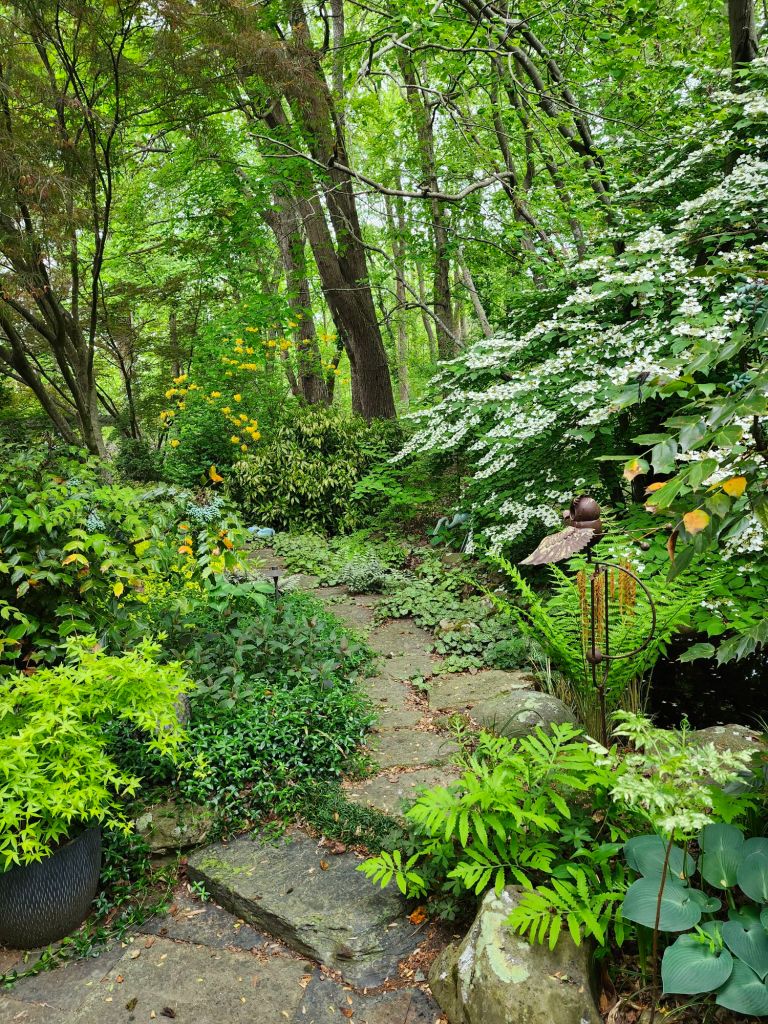
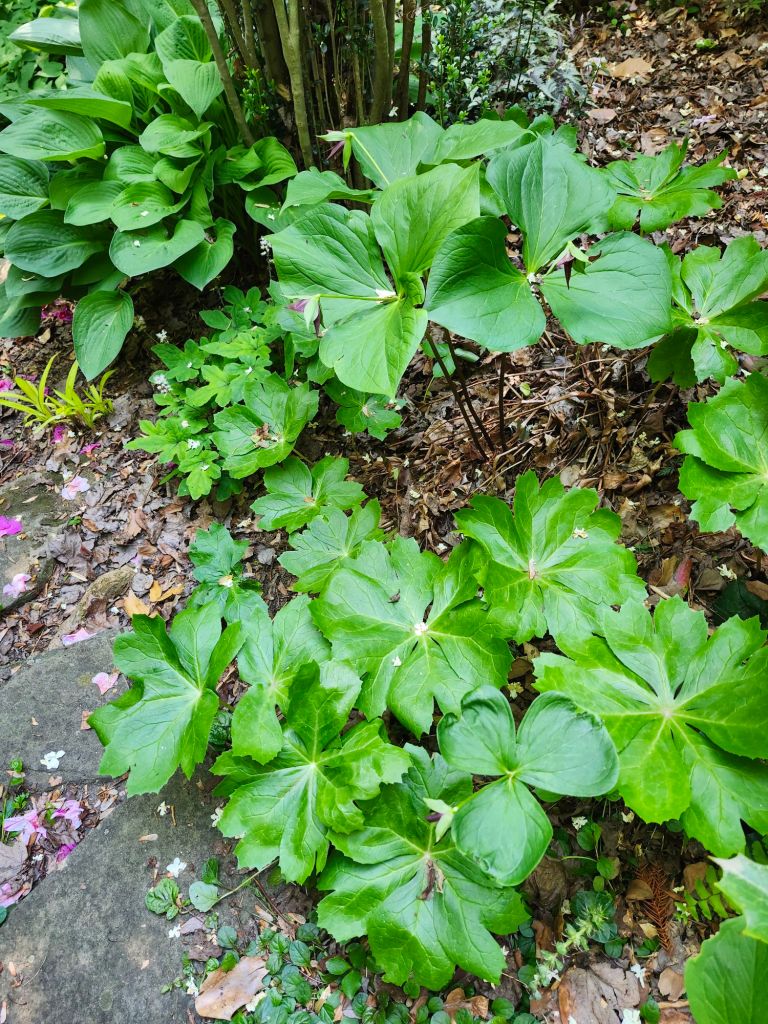
Areas of the rear and side gardens are intended to mimic woodland trails, though studded by varied gems along the paths. The various trilliums are fading, but mayapples remain. Our natives (Podophyllum peltatum) typically fade by summer, but taller Asian mayapples remain until autumn frosts.
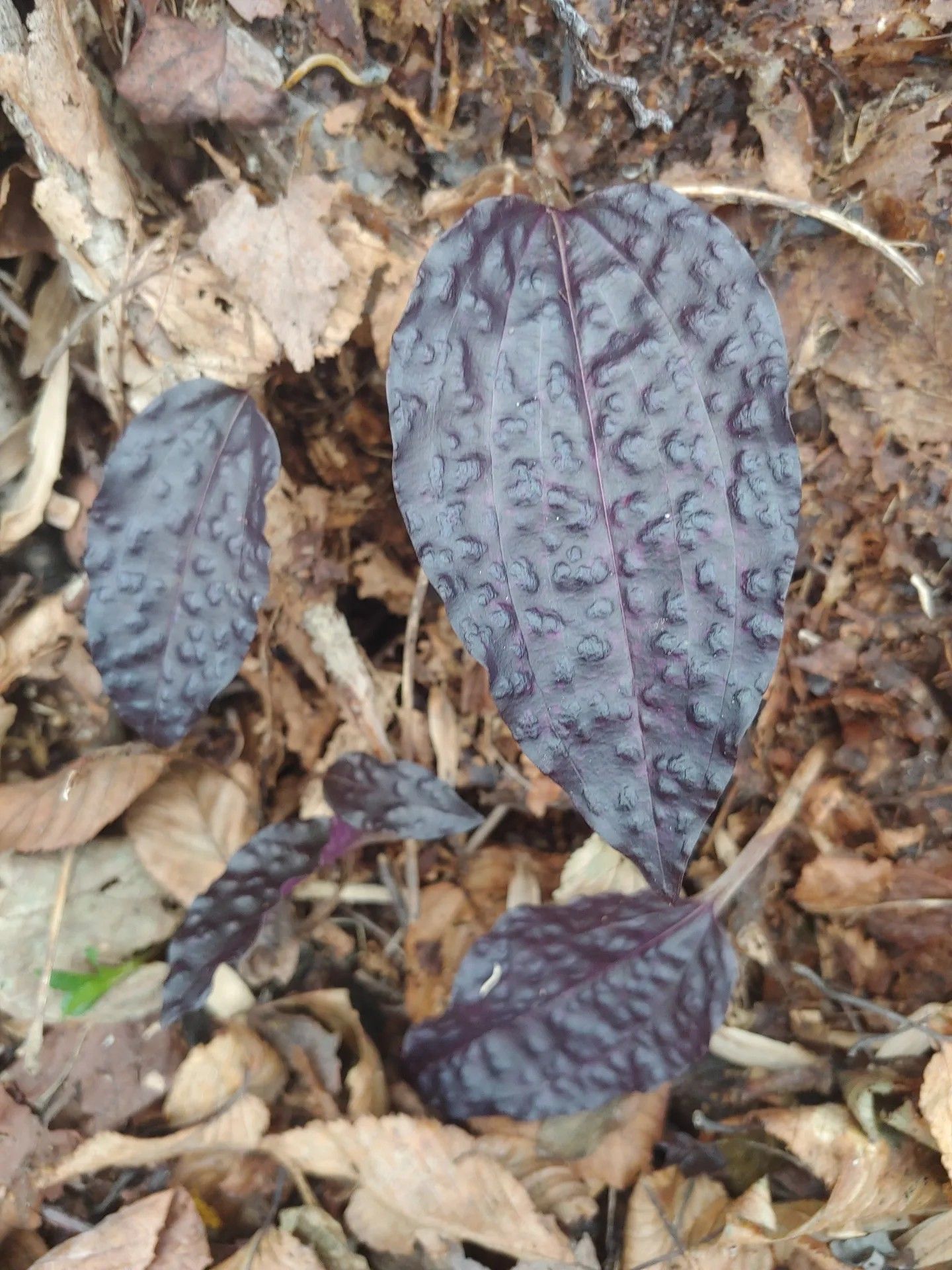
While squirrels dug every Cranefly orchid (Tipularia discolor, below) a few years ago, I was happy to discover a single purple-leafed cranefly in the side garden. The cranefly typically has a purple underside and a spotted green upper leaf, but occasionally ones with purple top and bottom are found. The new location is better than the previous site for the cranefly, and perhaps the shallow roots of the blackgum will discourage pilfering by squirrels. Putty Root orchids (Aplectrum hyemale) have not been disturbed. Perhaps they are not tasty to our furry residents.
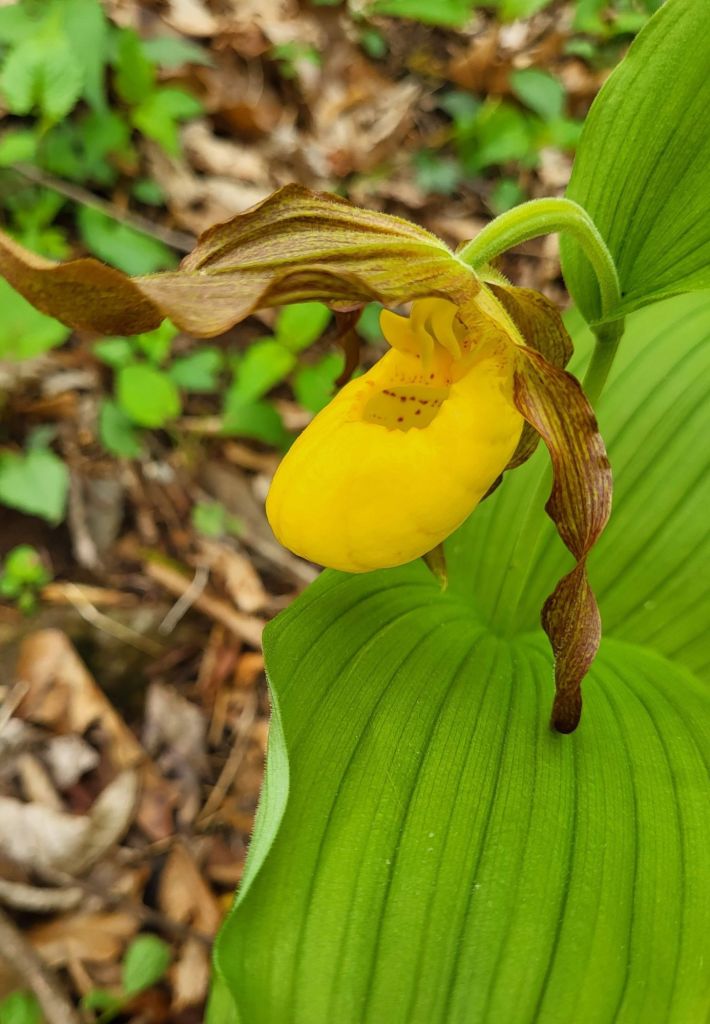
Two of three yellow Lady’s Slipper orchids (Cypripedium parviflorum, above) are nearing their peak. The third has not reached flowering size, but the small group must be visited daily. I’ve long feared that the orchids’ proximity to the path could result in damage, but here they are most visible. I am confounded that Barbara and I have seen lady’s slippers flowering in recent weeks on mountain hikes, but ours are delayed in bloom until now.
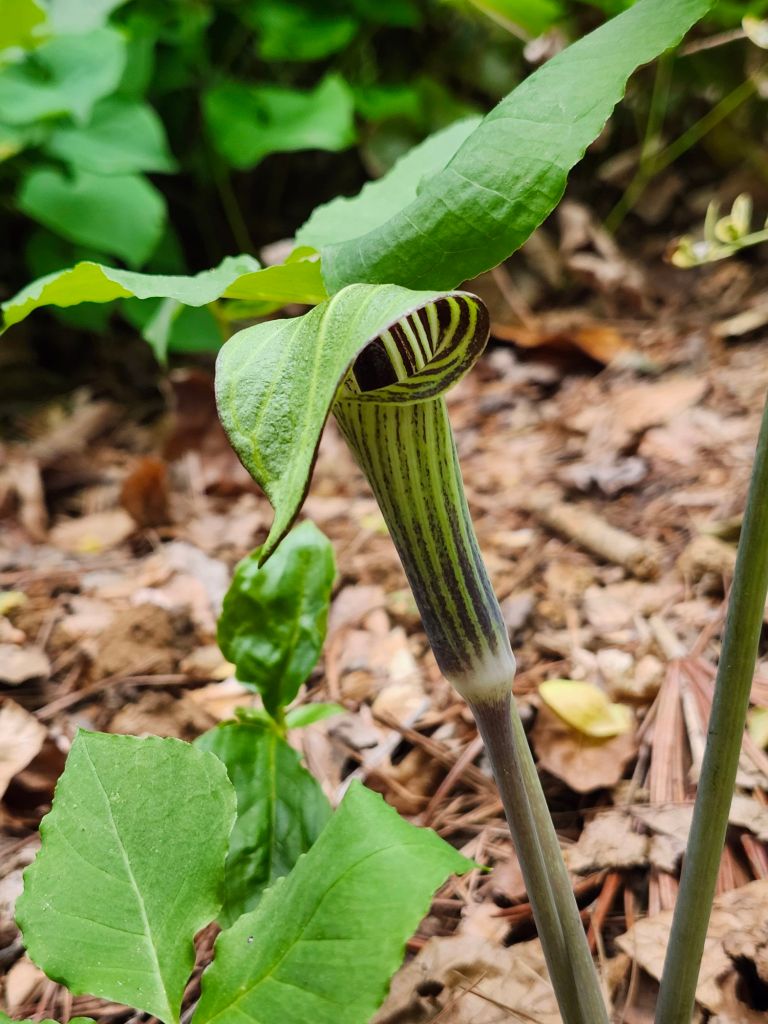
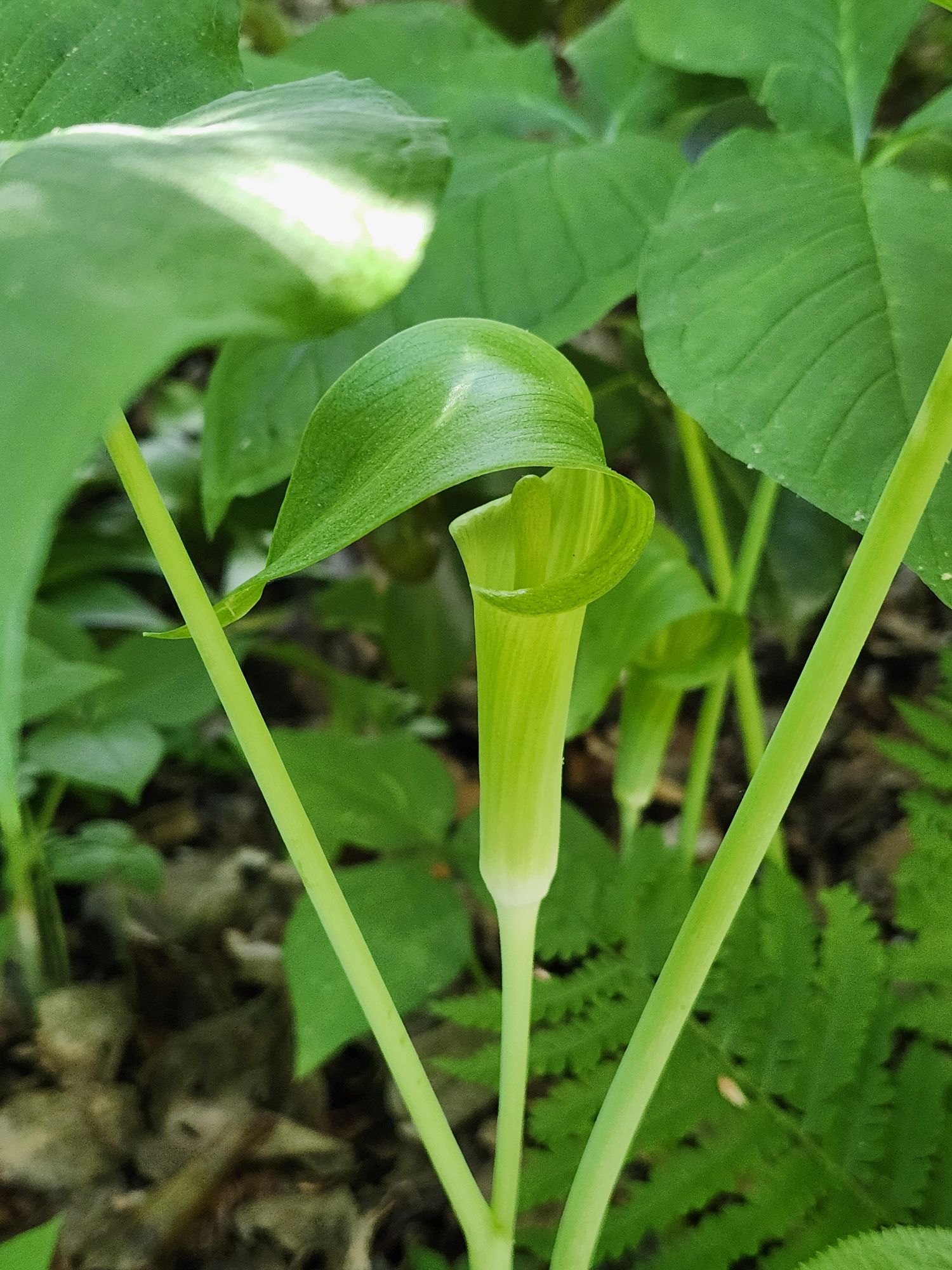
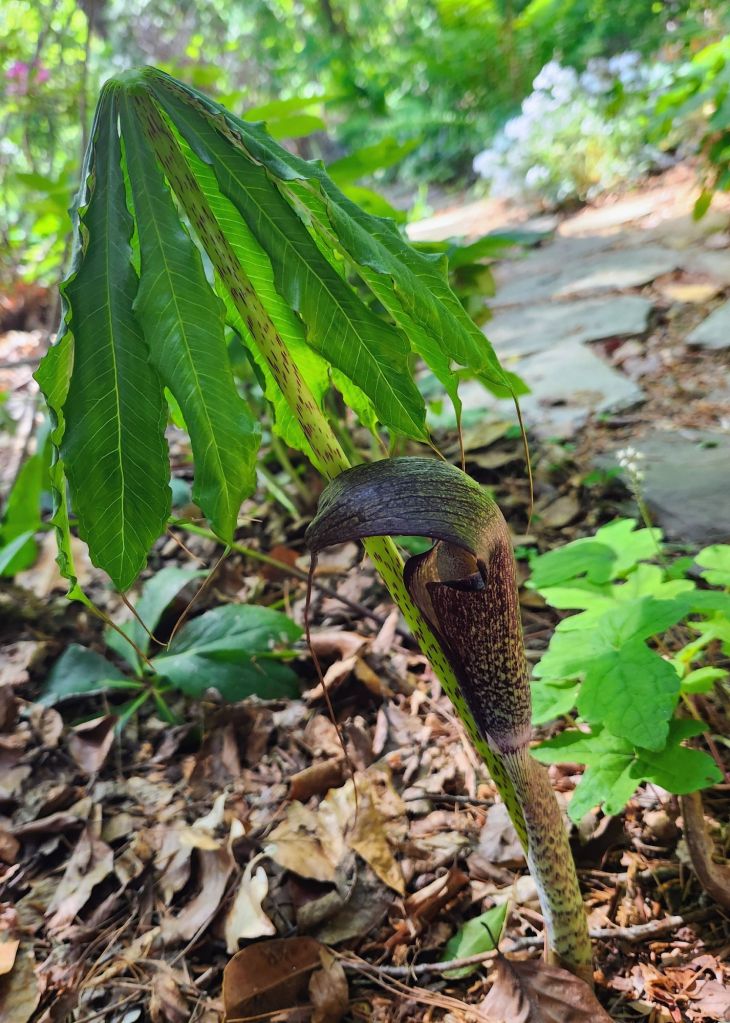
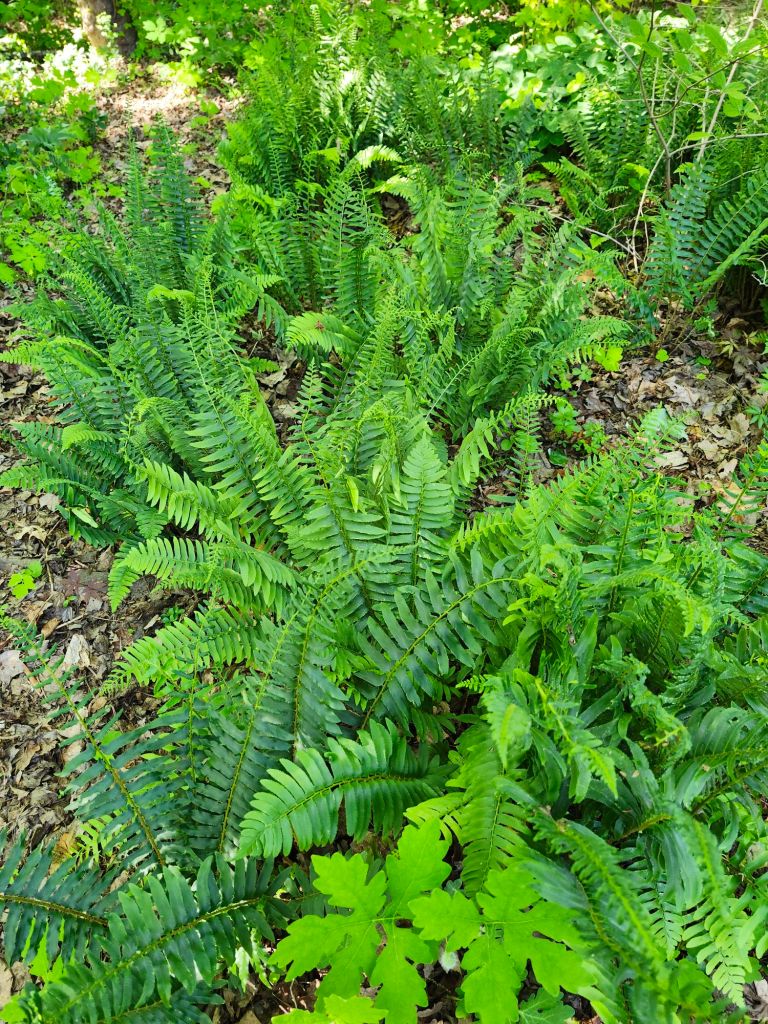
Growing alongside the lady’s slippers are dozens of seedlings of jack-in-the-pulpits (Arisaema triphyllum, above), though the parent plants have faded in this area. Dozens more and several varieties I’ve planted (below) have spread along the side garden path between Christmas (Polystichum acrostichoides) and Cinnamon ferns (Osmundastrum cinnamomeum) that have spread from a few initial plantings.


Absolutely stunning and captivating series of photos! Thank you so much for sharing, and warm greetings from Montreal, Canada.
I suppose you have experienced the unusual ups and downs of our always unpredictable spring weather. I think we’ve moved past our last freezing temperatures and hopefully frost also. May is the peak in this garden, so I hope to share many more photos.