Signs of autumn are becoming visible in the garden if I look closely. I rejoice in the recent cool temperatures and noticeably lower humidity. The decline of flowers and autumnal changes in foliage color will soon follow.
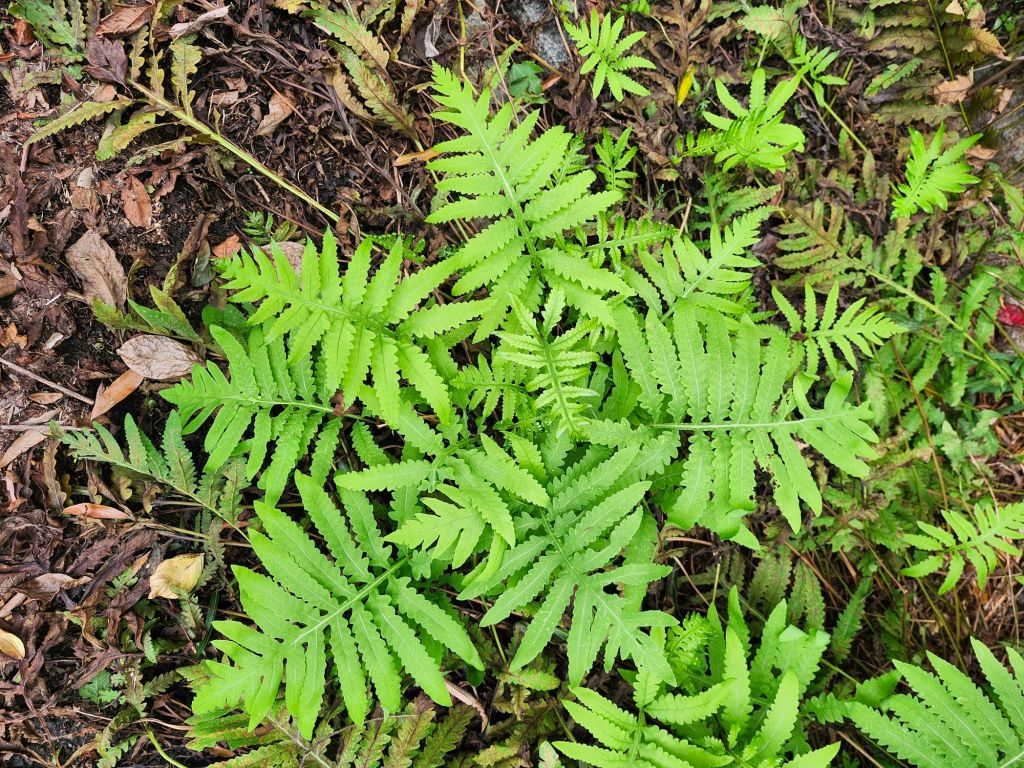
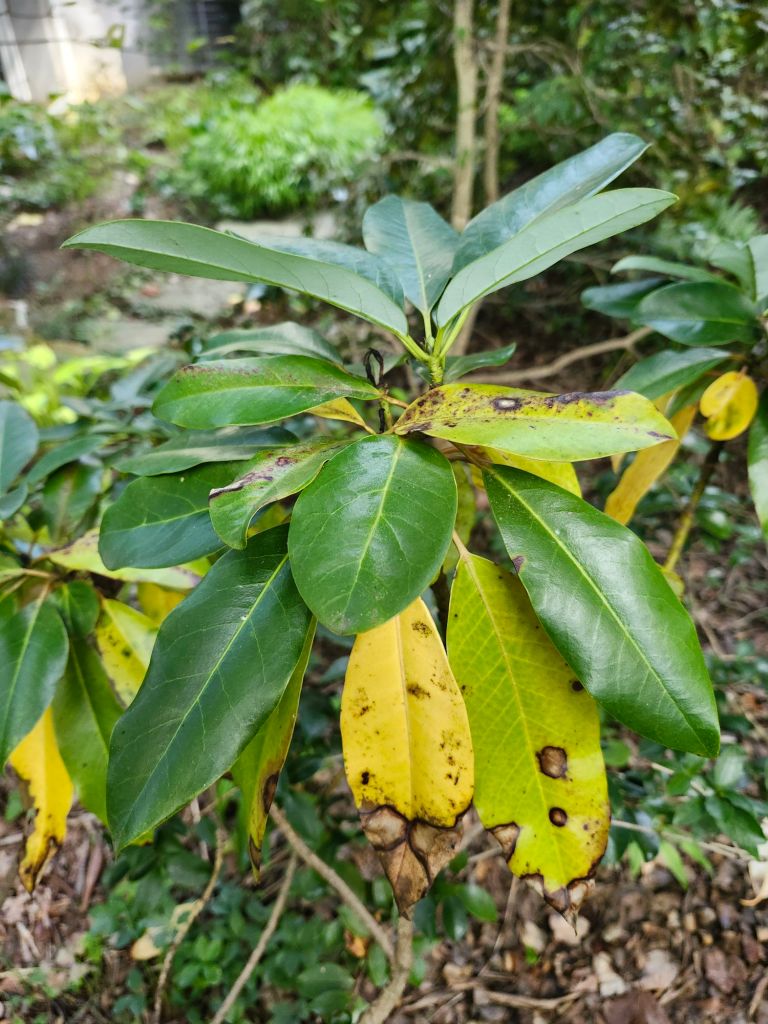
Today, the dense stands of Sensitive ferns (Onoclea sensibilis, above) are browning, in part due to the late summer heat, but a further decline as temperatures fall. Browned tips of other ferns’ fronds are related more to the rigors of summer’s heat despite regular rainfall, but most will quickly brown after frost that is not expected until late in October.
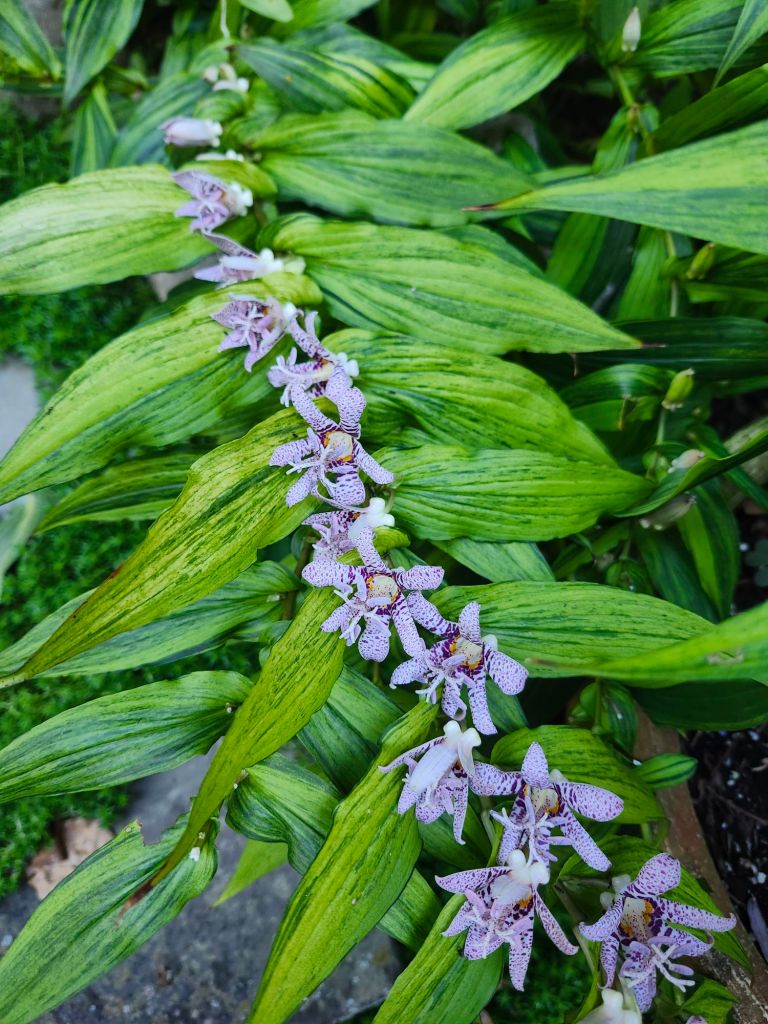
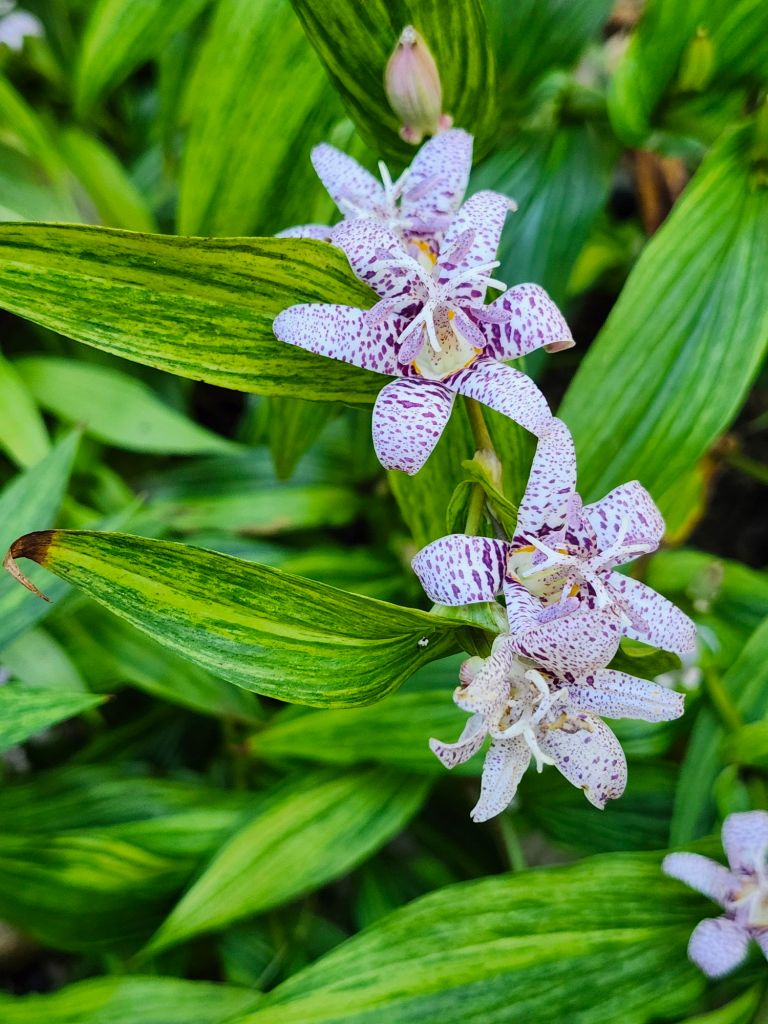
Flowers of the autumn flowering toad lilies (Tricyrtis hirta varieties) are nearing their peak while straggling flowers remain on earlier flowering varieties. All blooms will vanish abruptly with the first hard frost, but I am happy for the moment to have collected such a variety, though many flowers are similar.
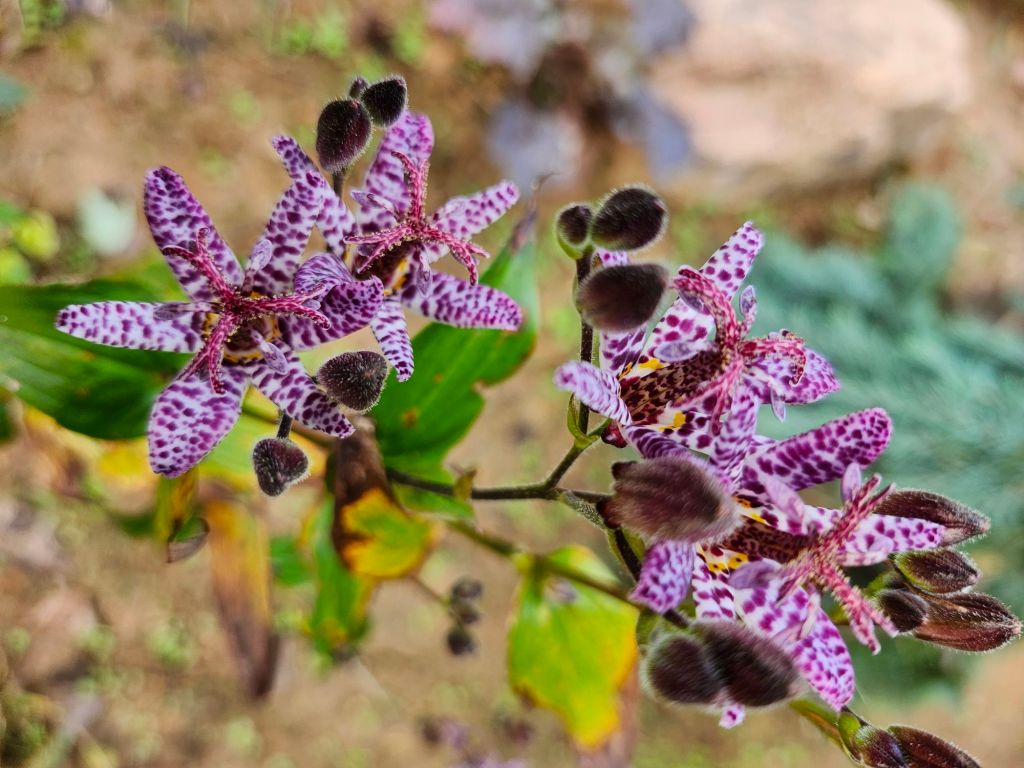
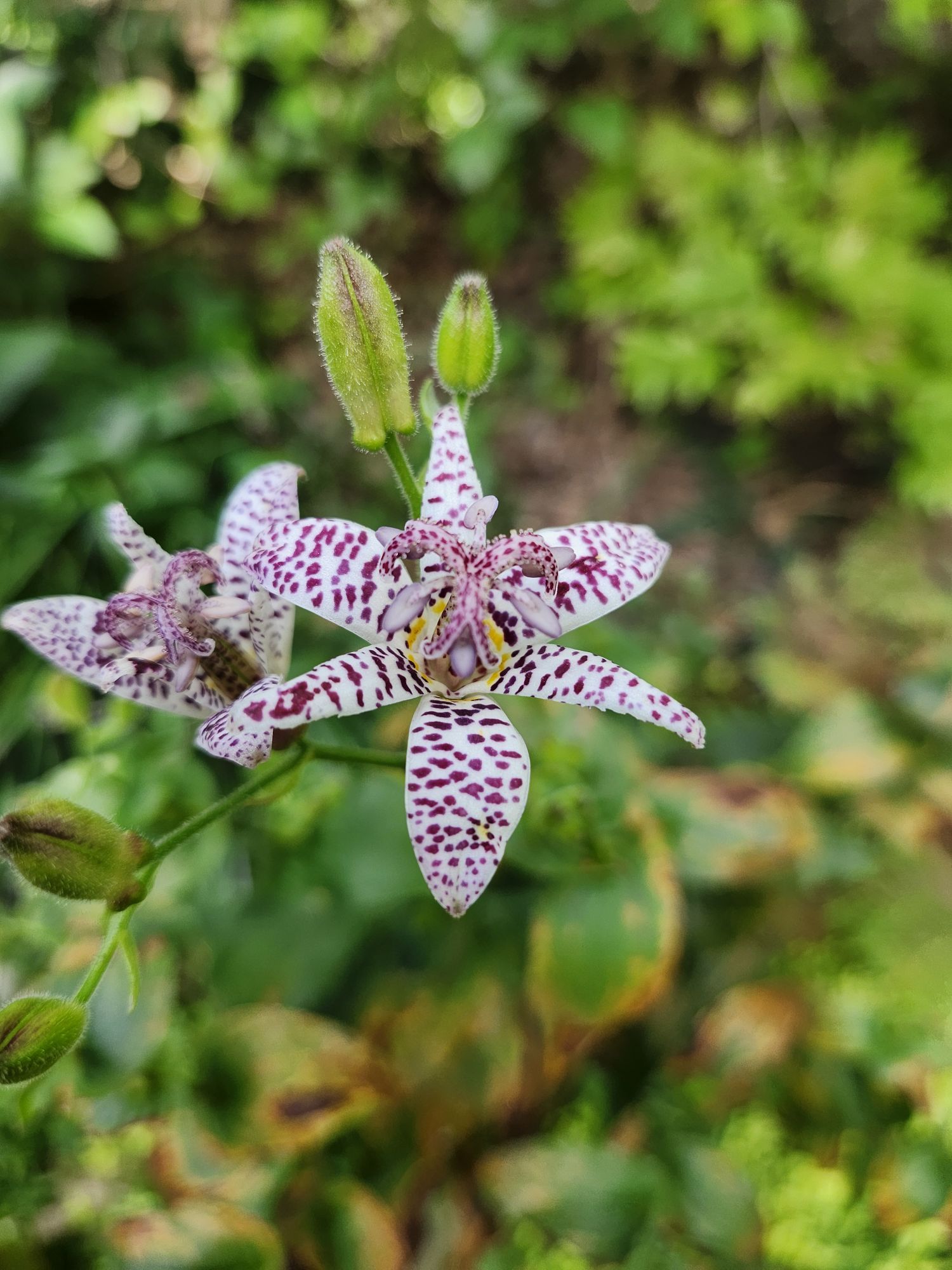
By late summer, when regular rainfall encouraged tinkering, I transplanted several and potted many seedlings for gifts including a few with variegated foliage that are most likely to be relocated within the garden until clumps are thick enough to divide.
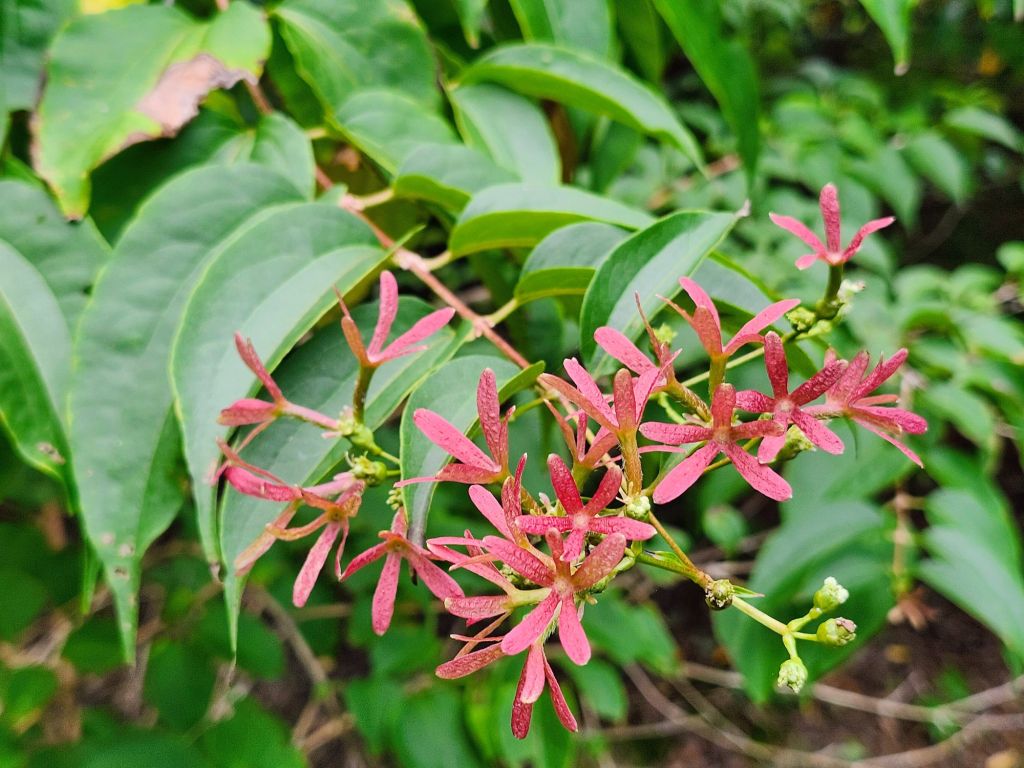
Pink-red calyces have replaced clusters of small white flowers of the Seven Son trees (Heptacodium miconioides, above). These are likely to persist until frost. Several feet of the Seven Son in the upper rear garden will be cut back before spring to encourage lower branching so that flowers and calyces are visible. I was aware that it was planted into a narrow opening that was likely to be too shaded. I was correct, but now I’ll make the best of it, even if it becomes a tree with only foliage and few flowers.
While the fading of Sensitive ferns is a minor disappointment, I am dismayed that deer discovered the ineffectiveness of a repellent that I switched to with a promise of spraying every six months rather than once each month. In recent years, I’ve stopped treating hostas in October to allow deer to feast just before frost kills the foliage.
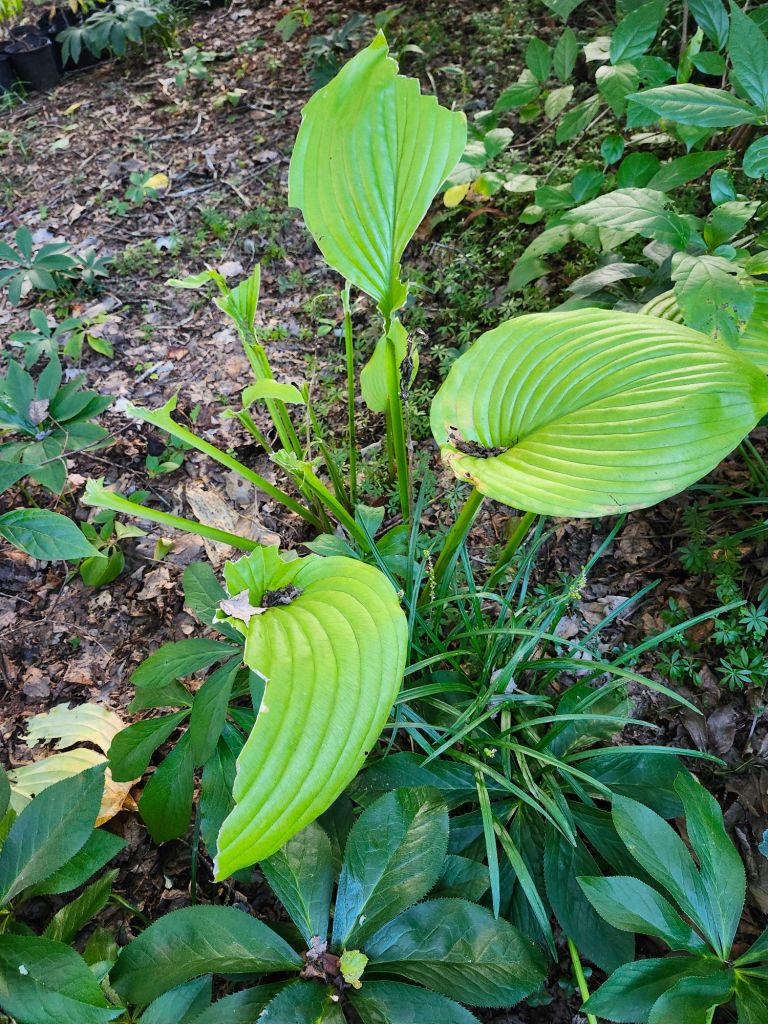
Somehow, the ineffective repellent attracted deer to munch large leafed hostas that are rarely bothered. Perhaps the prematurely naked stalks are not bothersome to others, but I planned to open the deer buffet days before our first frost, not weeks.

