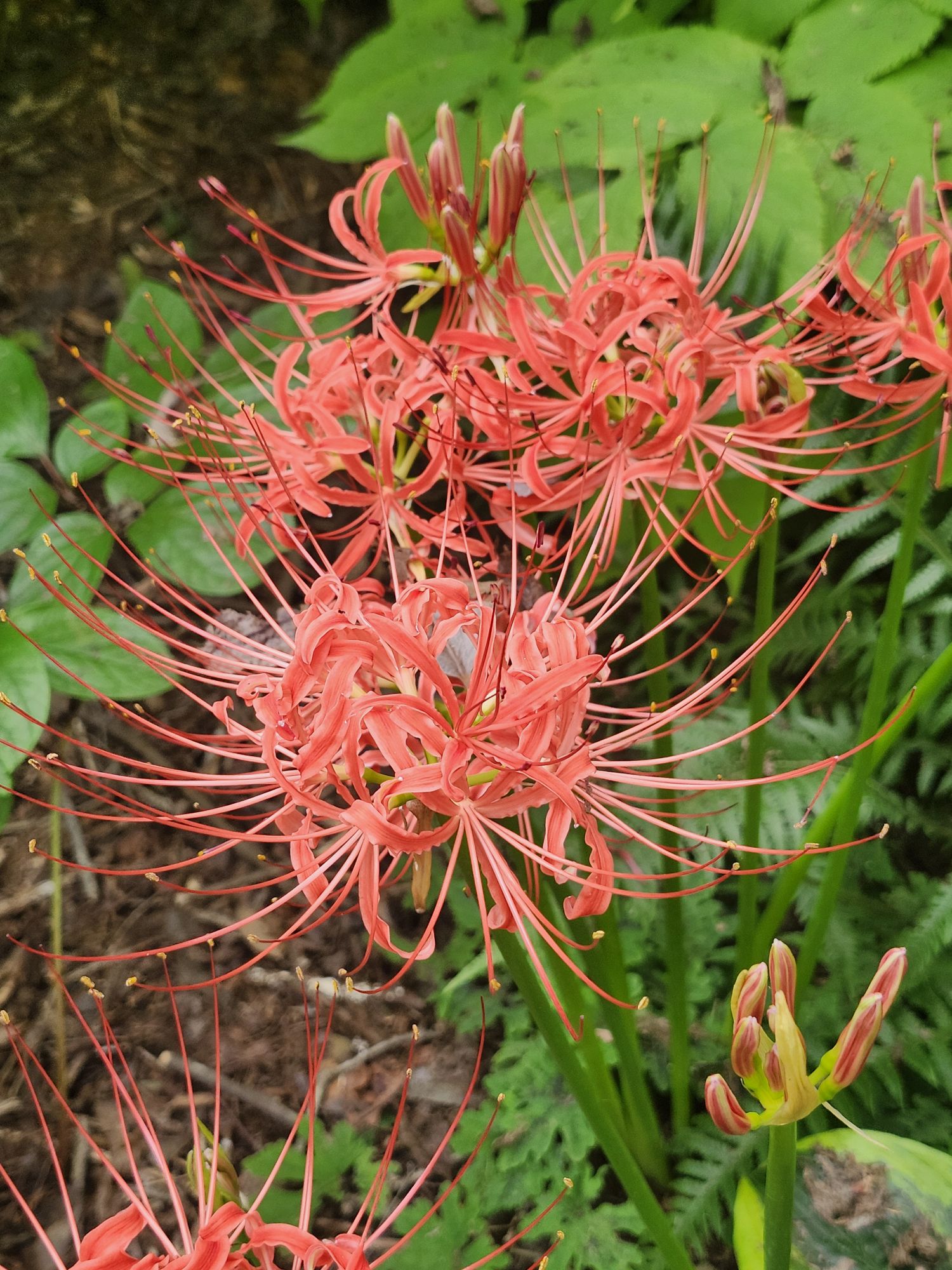
In this first week of October, temperatures remain mild enough that bothersome Asian Tiger mosquitoes are still on the prowl. Not for long, as forties and a few upper thirties (Fahrenheit) slip into overnight forecasts. I don’t expect that our first frost is imminent, but we’ve experienced frost as early as late September though early November is more likely in recent years.
I’ve begun to consider how to manage the number of tropicals in containers that must be moved indoors for the winter months. As always, there are a few more than the previous year and a few that are considerably larger.
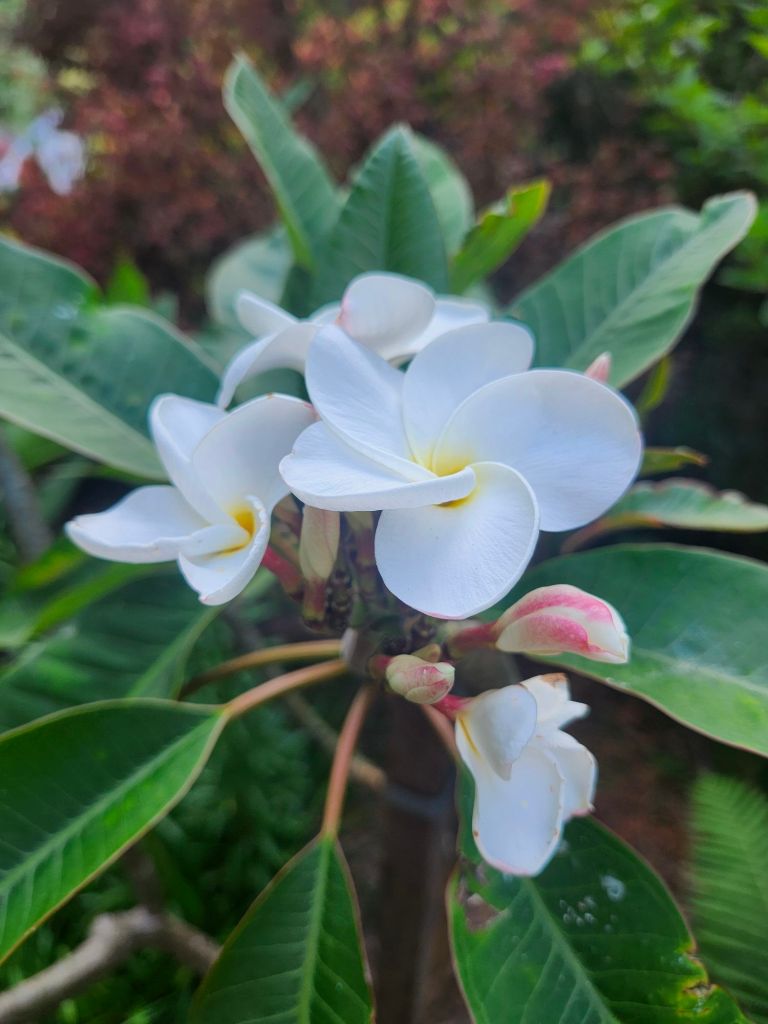
Two large plumerias (above and below) were added this year. One is planted, where it has flourished through spring and summer, adding tropical foliage and splendid clusters of white blooms. It must be dug, which should be quite simple, so that it is not lost to early freezes. I’ll pot it into a bark soil mix and haul it into the basement. I considered, at least for a moment, giving up on one or both since they’ll consume a large area of the small tiled area of the basement, but I’ve taken a liking to the plumerias through the summer.
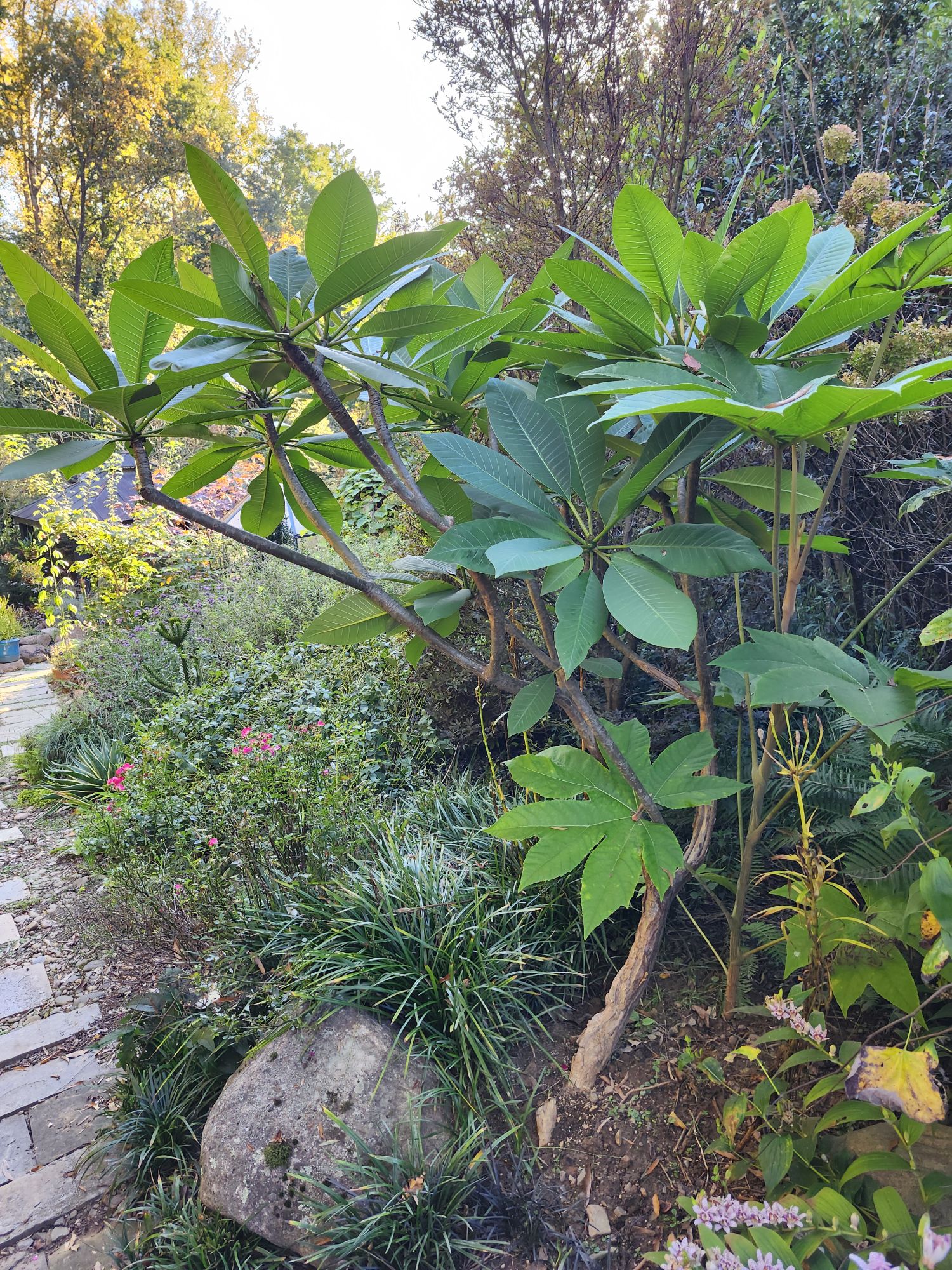
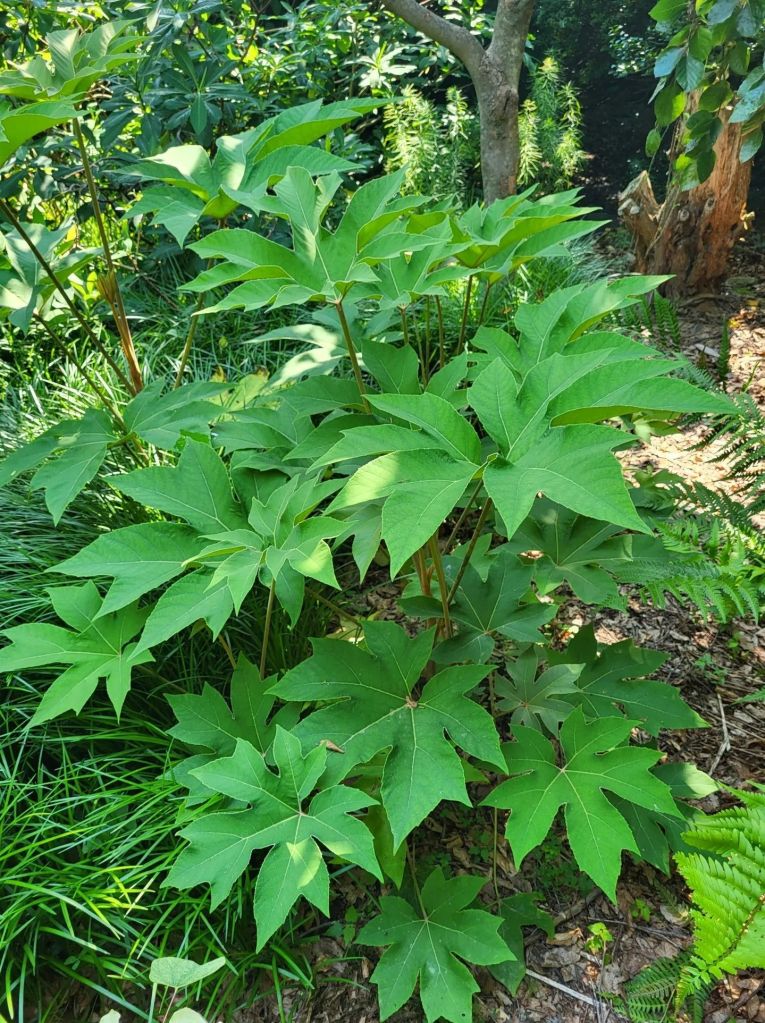
Figuring that the plumeria was a short term addition, I transplanted a Rice Paper plant (Tetrapanax papyifera, below) division beside it, planning for the plumeria to go and the cold hardy Rice Paper plant to stay. It has grown surprisingly since the transplant, so I think I’ll stick with the plan, but in the spring I’ll have to find a spot nearby for the plumeria.
So, I start from there, along with the tall Norfolk Island pine. It was not overly happy in the cool sunroom a year ago, but I’ll give it another try. The tallest of its multi trunks hit the ceiling last winter, and it fared poorly when I first moved it outdoors. The eight foot trunk was pruned out as it began to turn brown, so the three four to five footers should be easier to fit indoors. I should be able to give the pine a sunnier position for its winter storage.
I’ve begun gathering fallen leaves and Umbrella pine needles (Sciadopitys verticillata) to spread on the bare soil of the expanded space in the front garden that has been recently planted. Leaves of the dogwood that overhangs the area should soon fall to cover the area, but copious numbers of weeds have germinated. I depend on fallen leaves and spreading plants rather than adding mulch, but the ground covering plants will not spread adequately until next year.
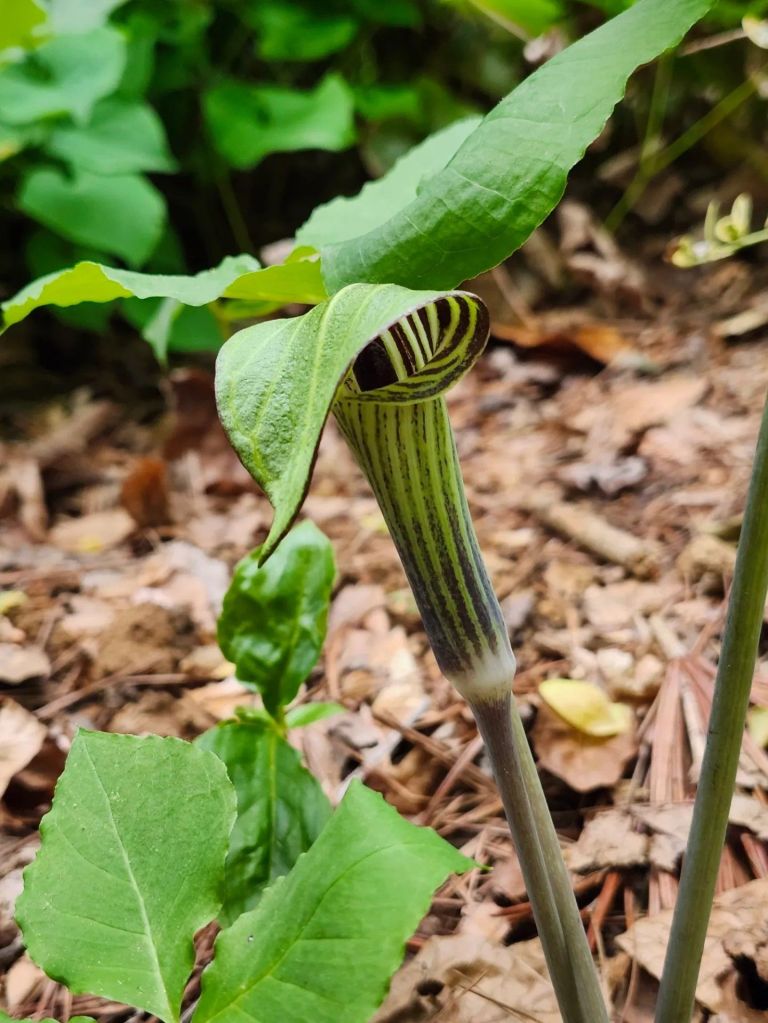
The last mailorder perennials should arrive this week, so I’ll have to figure places for all. I don’t expect this to be a problem. Jack-in-the-pulpits (Arisaema spp., above) and False Solomon’s Seals (Disporum spp.) rise through small gaps. Deliveries of spring flowering bulbs and Surprise lilies (Lycoris spp., below) are also on the way. There’s never a problem finding homes for all, and of course, there can never be too many.