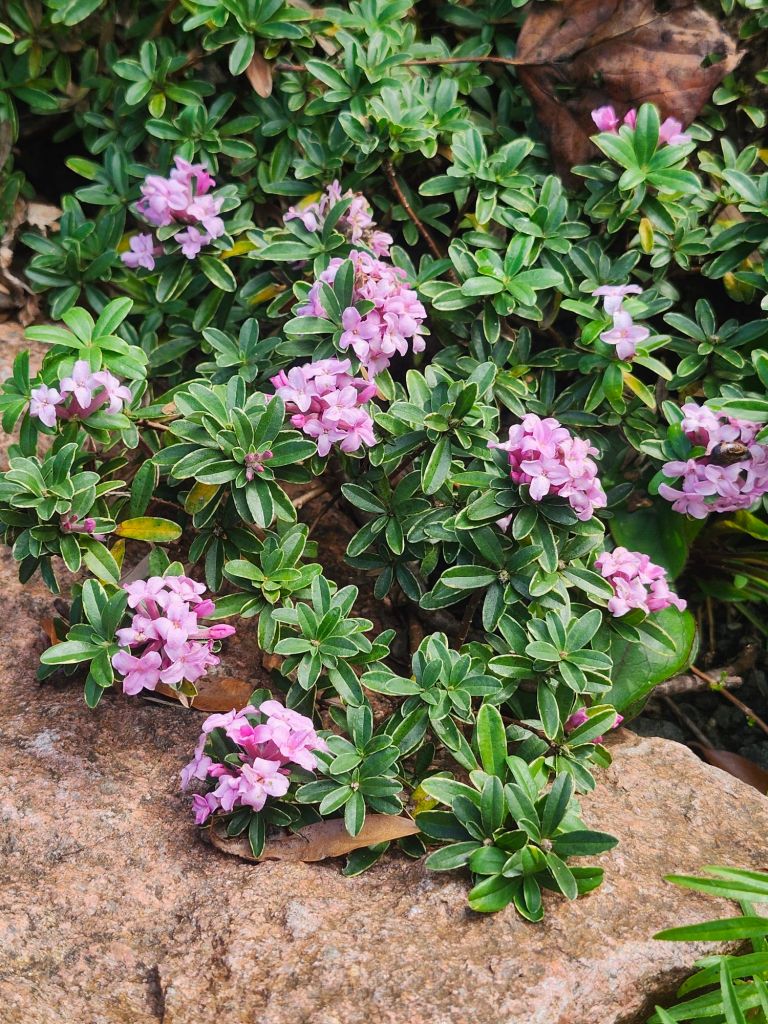
The creeping daphne (Daphne x napolitana ‘Stasek’) in the rock garden is back to flowering after a summer pause. As the number of daphnes in the garden has dwindled, I think that this one planted in gravel has the best chance for long term survival. Death of a daphne is typically sudden and mostly unexplained except that they are noted for their persnickety nature and I expect their shortened lifespan in clay soils. I assume that the flowers are fragrant, though unfortunately, I smell nothing.
A handful of Pacific Northwest and Asian native mahonias (Berberis spp.) were added to the garden earlier in the spring. All are growing happily, but the challenge of winter looms. Several narrow-leafed Chinese mahonia (Mahonia eurybracteata) varieties have failed in prior harsh winters, so the new plants were carefully placed to the best of my limited ability in protected locations. I must try again until there is no hope.
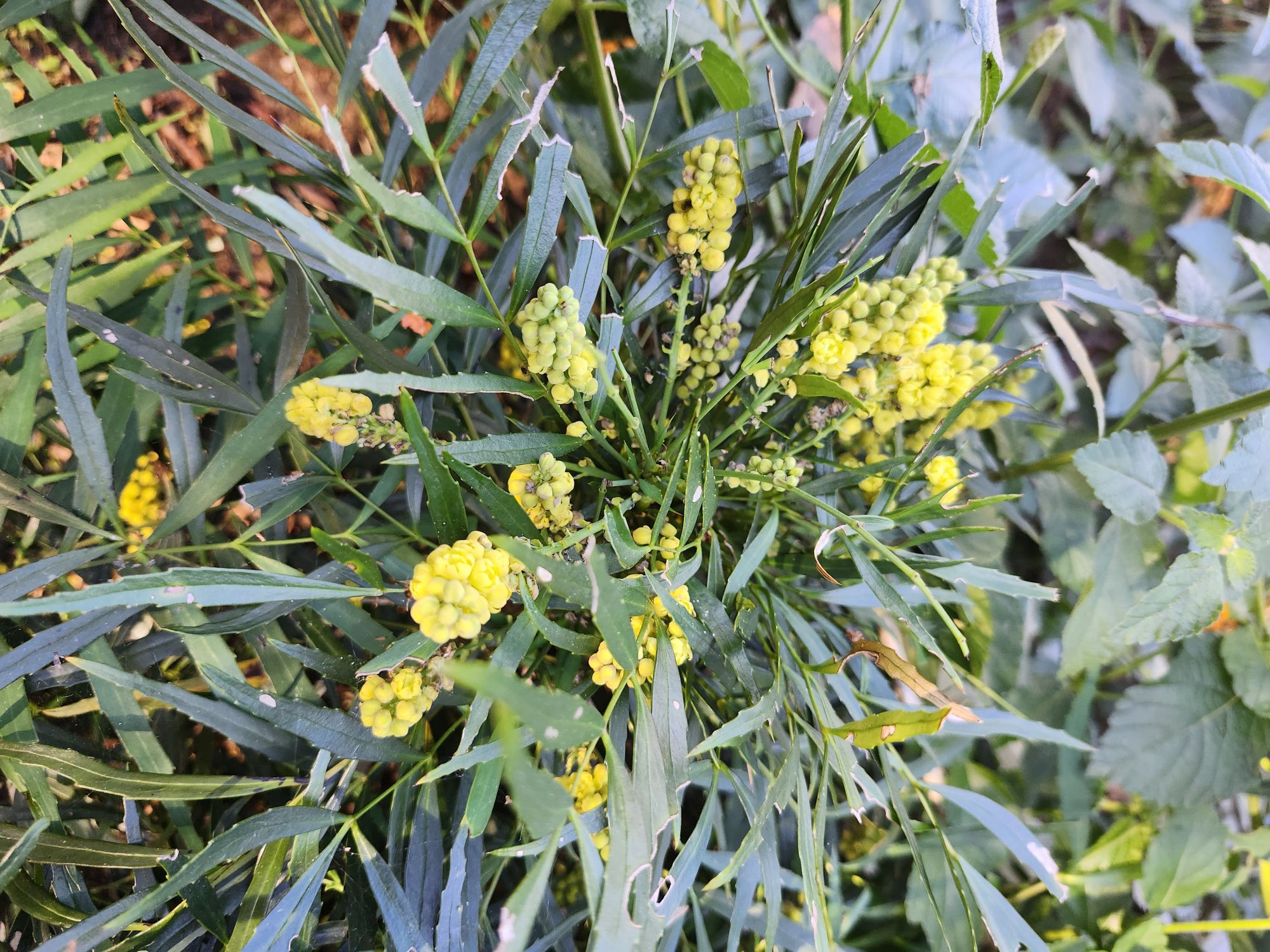
I expect that one or more will fail unless the El Nino influenced winter temperatures are as mild as predicted. If all survive, their hardiness will increase to survive harsher winters in the future.
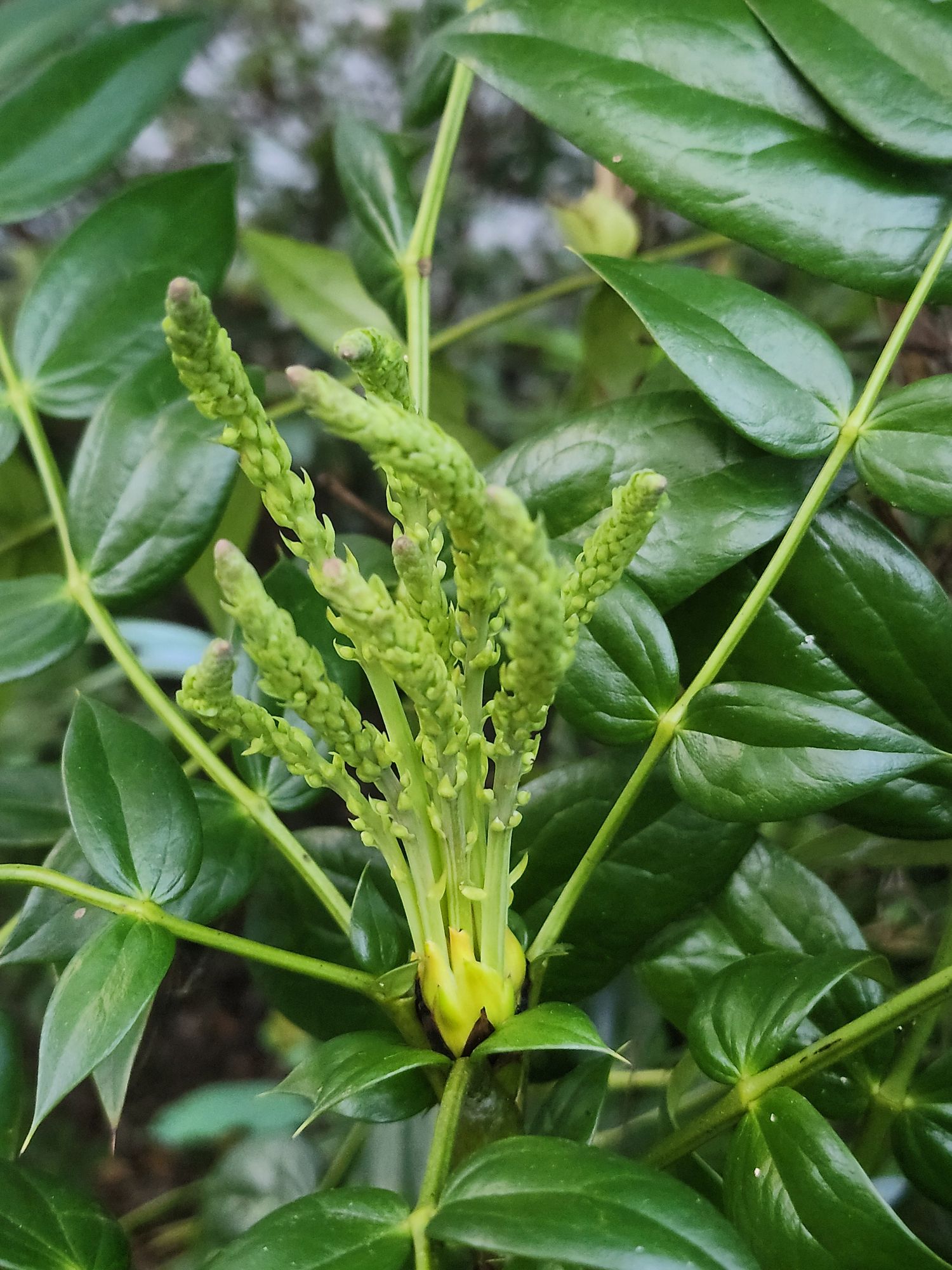
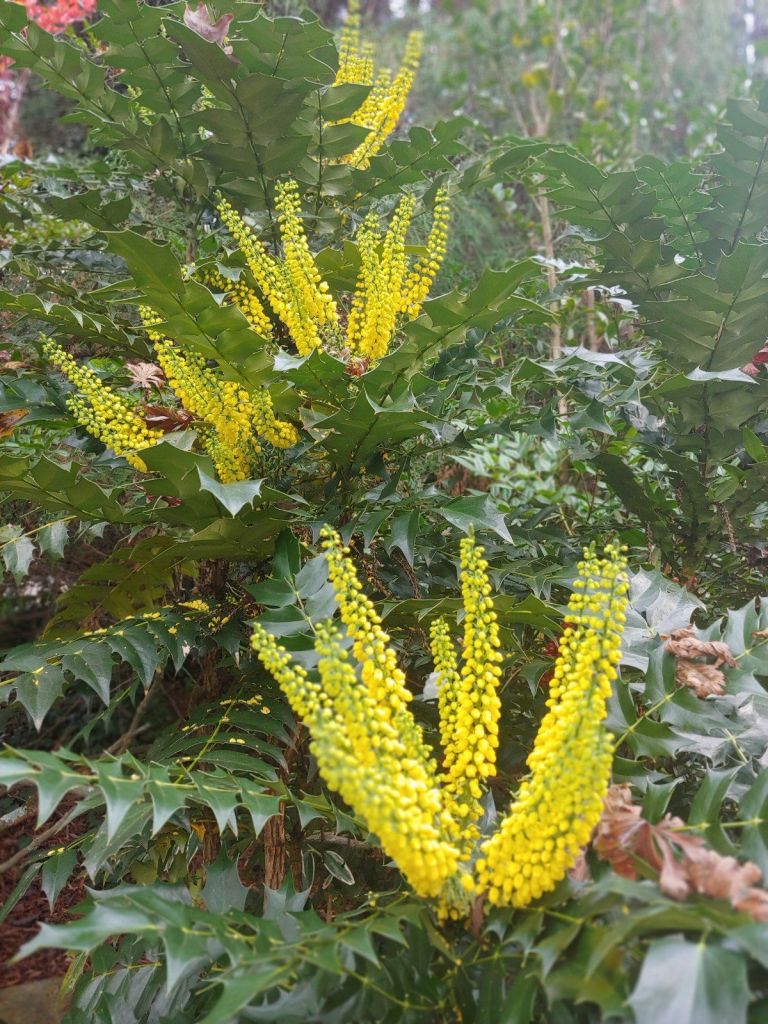
The Chinese mahonias are now flowering with more cold hardy. broader leafed Asian hybrids (Mahonia x media, now Berberis x hortensis) developing racemes that will flower from mid-November into January. The typical shedding of spent flowers was interrupted by an early May freeze that damaged new leaf growth. Some browned growth and flowers remain where the mahonias have grown beyond my reach, and the removal is complicated by the prickly leaves.
Flowering of camellias has increased through this spell of mild afternoons and near freezing overnights. This will continue for weeks until low temperatures regularly fall into the mid-twenties (Fahrenheit), when flowers and partially opened buds are damaged.
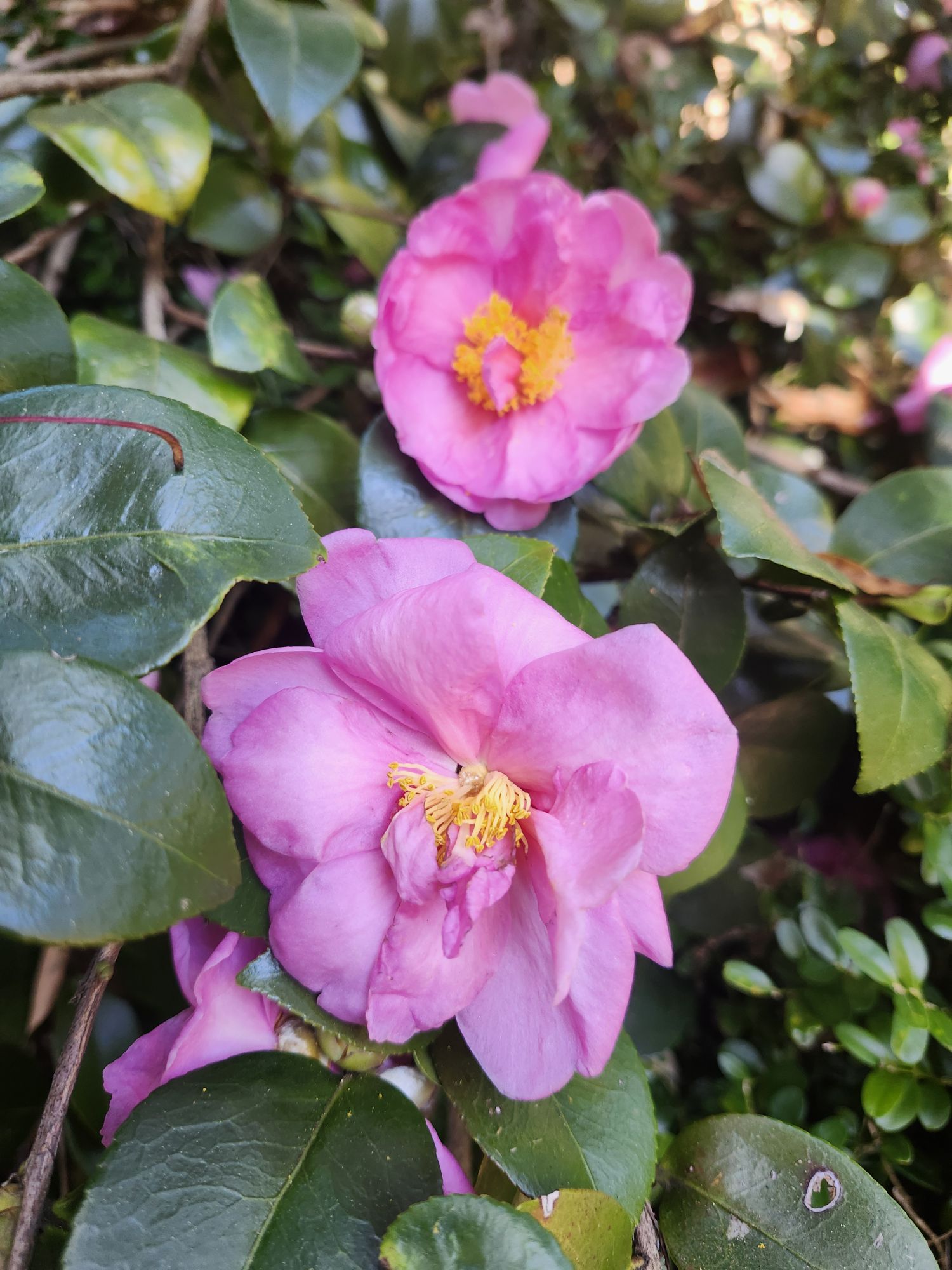
The first camellias planted in the slightly sunny, driveway garden were all National Arboretum introductions bred for cold hardiness. These have grown taller than ten feet, and all flower dependably beginning in mid-October. In the more shaded side garden on the opposite side of house are spring flowering camellias (Camellia japonica) that have less cold hardiness, but were planted in more recent decades after sub zero temperatures were less frequent.
Several of the shaded camellias have skimpy branching with bare lower branches. At least one has lost enough lower branches that its appearance is awkward. Something must be done, some day, but today I enjoy blooms along the driveway.


That describes it perfectly. The death of a Daphne is typically sudden and mostly unexplained. It is difficult to know what offends them. Ours are in rich, but not particularly well drained soil, but are somehow performing well. The only Daphne that I have ever seen here is Daphne odora ‘Variegata’.
I’ve planted a number of daphne species that all appeared in perfect health until their sudden demise. Now, there are two overly shaded daphnes in addition to the one in the rock garden.