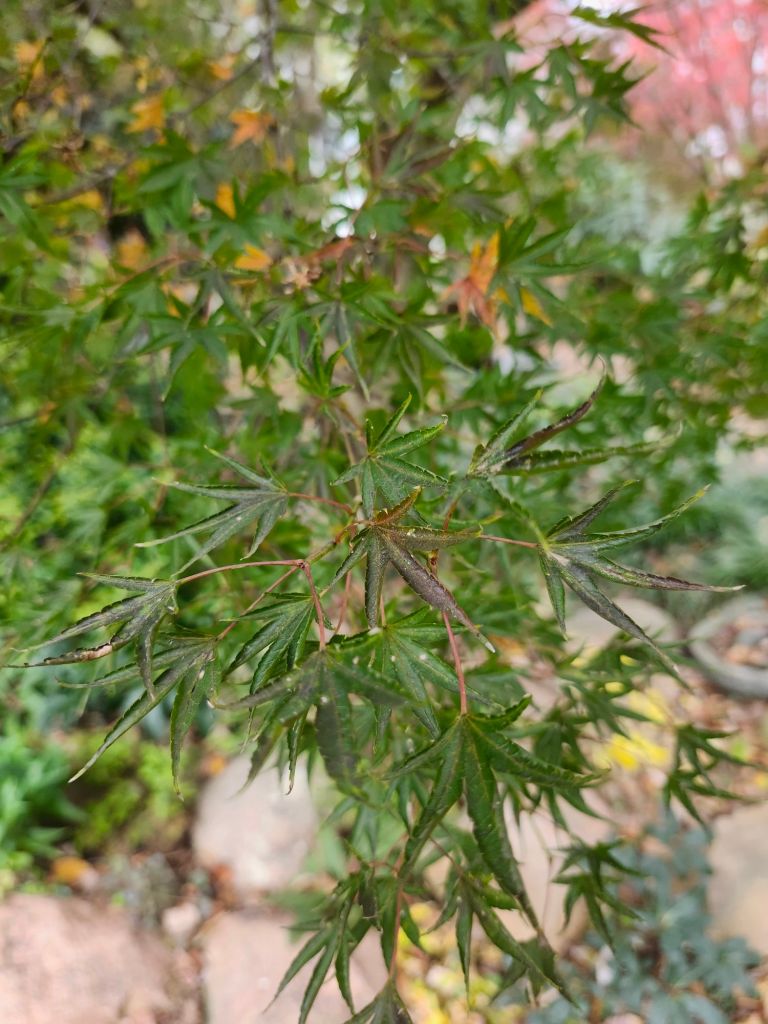
A large side branch of the Coral Bark Japanese maple (Acer palmatum ‘Sango kaku’, below) has been broken, presumably by deer, second only to the gardener as culprits for much that goes wrong in the garden. Fortunately, the coral bark is not prominently placed, and the pruning saw will easily remove the remaining stub so that no damage is likely to be evident within a few years.
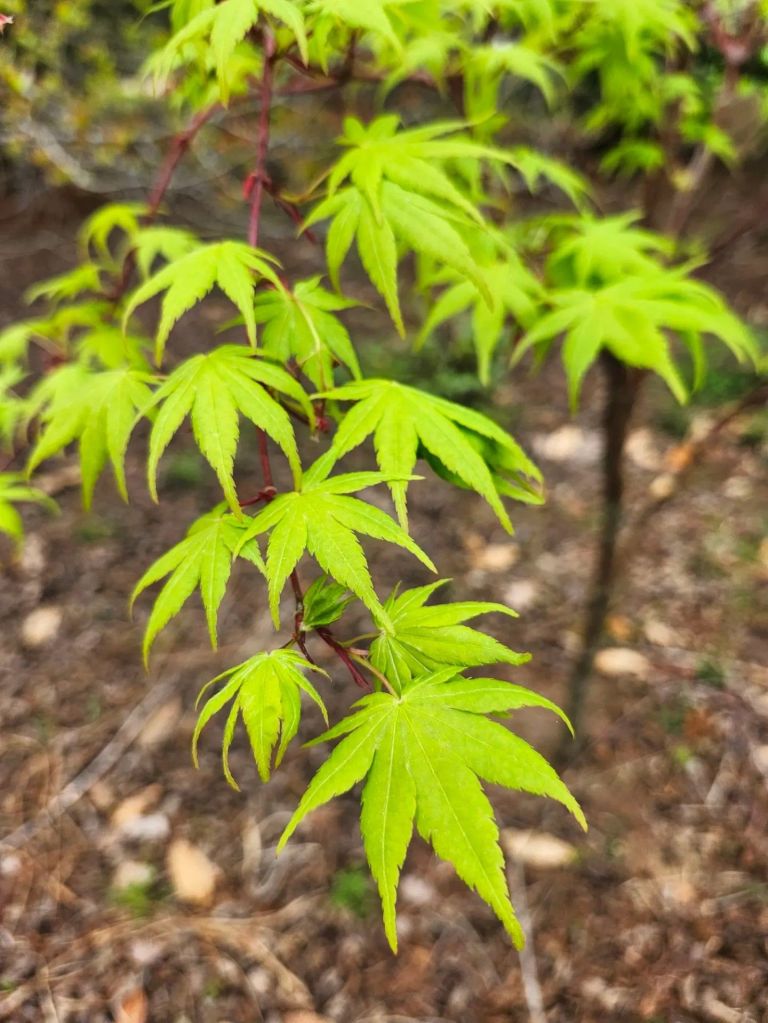
In any case, the maple is an afterthought when considering the garden’s modest collection. The red colored stems do not stand out, in particular to my colorblind eyes, and the autumn foliage turns from green to a drab yellow. Other Japanese maples are superior in all aspects, though I am not even slightly tempted to discard the tree.
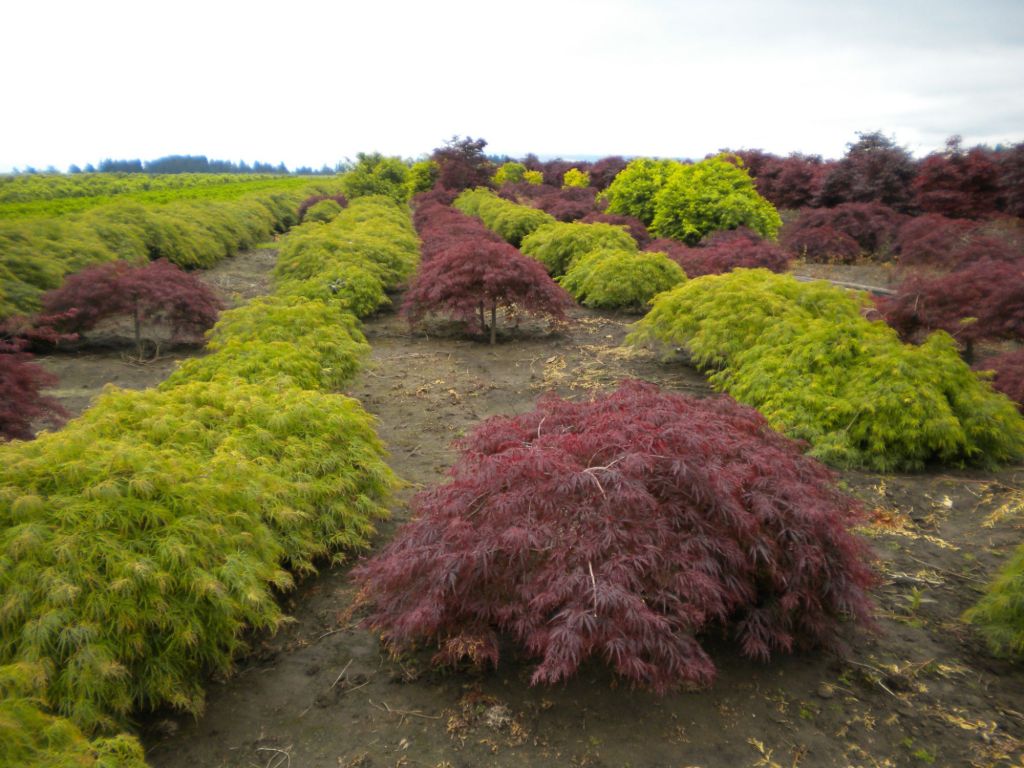
Guessing, there are about thirty Japanese maples planted and another five or six in containers waiting for an open spot. Also, there are several young grafts in smaller containers that were purchased only due to a grower’s overstock. A few have been given to our sons, the rest are likely to be given away at some point, but certainly not planted as they are duplicates of ones already in the garden.
This number of Japanese maples is a trifle compared to gardens I’ve visited, and of gardens I see online with many dozens residing in containers. With maples that have been in the ground for thirty years and longer, I can’t imagine the care of watering and repotting such collections as they grow larger, while in the ground they demand hardly a moment’s care.
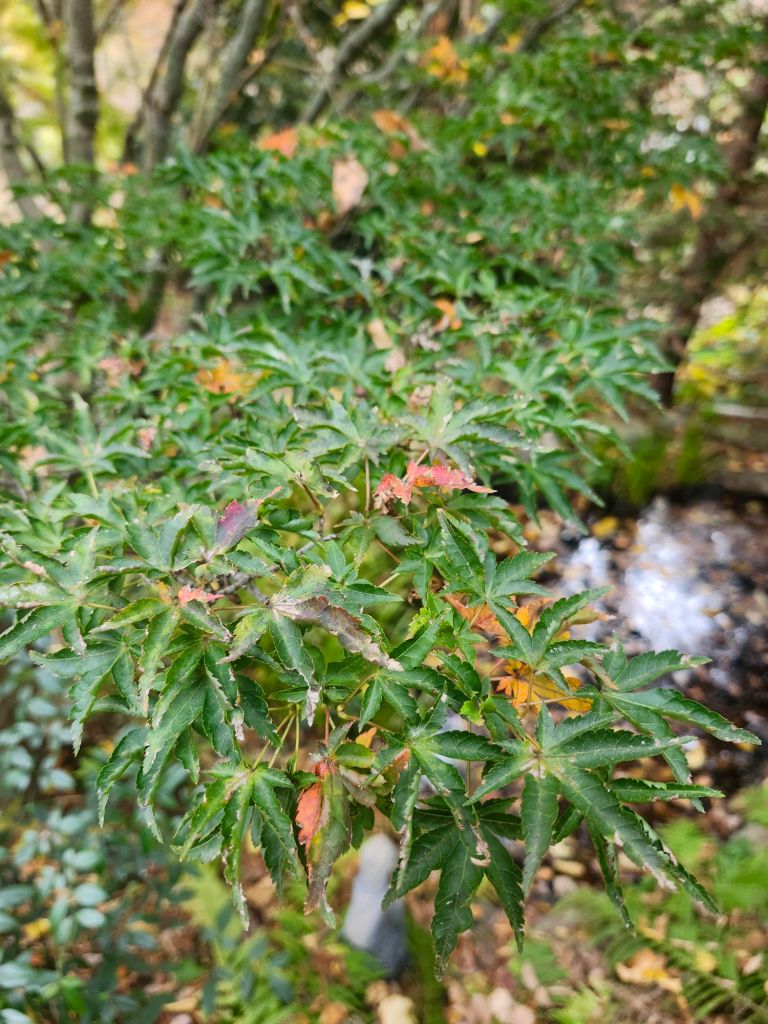
Most of the Japanese maples are bare of leaves by early November, but several favorites delay their coloring until this late date. An old favorite, the Lion’s Head maple (Acer palmatum ‘Shishigashira’, above) stands out in my view from the sunroom though it is less colorful than others. It slowly turns as others display their brilliant colored leaves, then holds its foliage until all other trees are bare.
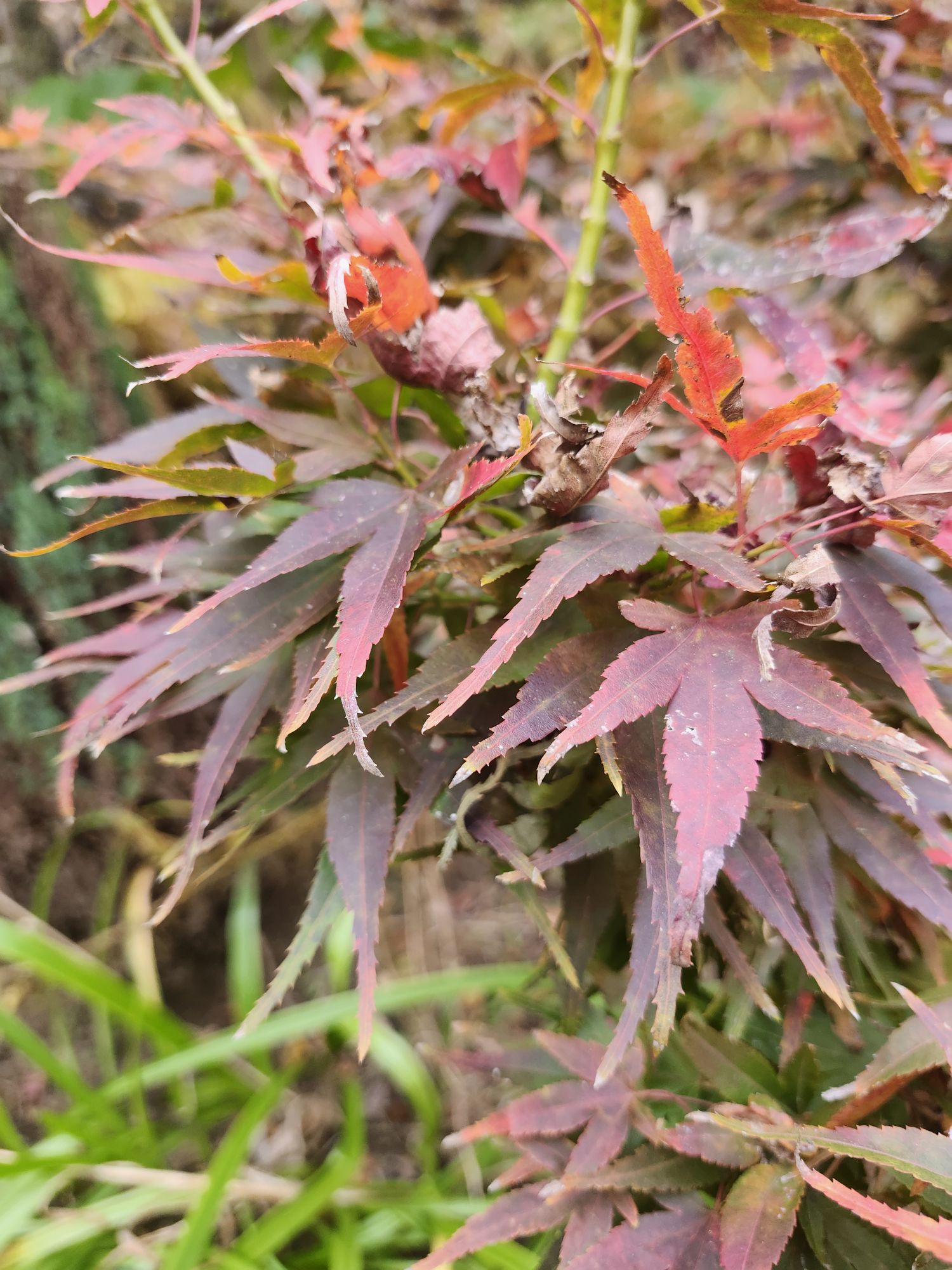
While the long established Lion’s Head is quite large, I’m pleased by the growth of a much younger ‘Mikawa yatsubusa’ (above). Despite damage from an early May freeze, it recovered to add significant growth that covered all signs of the injured foliage. I think that with the upcoming spring’s growth ‘Mikawa’ will become the focal point of the lower rear garden, as intended. Its foliage has turned in recent days, later than anticipated.
Many Japanese maple enthusiasts prefer the autumn coloring of foliage, and while I prefer spring, I’ve been disappointed that several maples dropped their leaves prematurely. A few colored, but partially damaged leaves did not show at their best. I expect all maples will be at their best again in the spring.

