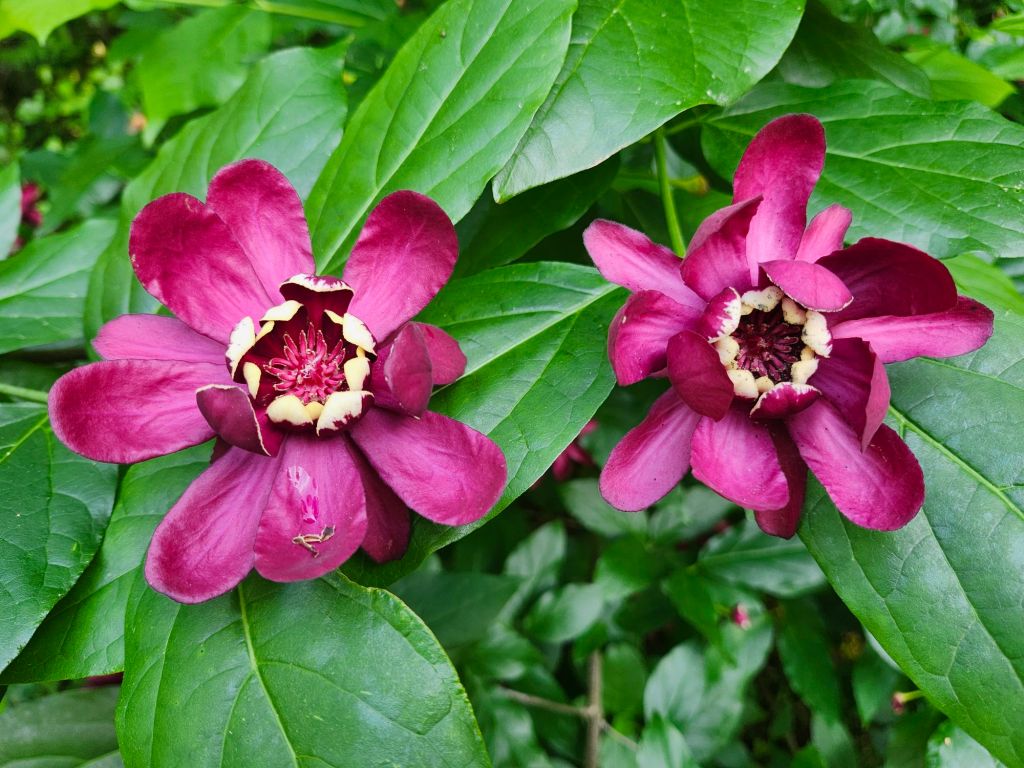
While two ‘Aphrodite’ sweetshrubs (Calycanthus ‘Aphrodite’, below) grow at a moderate pace in a dry shaded location, a third in brighter shade at the forest’s edge but with little direct sunlight grows with remarkable vigor. Also, the brighter aspect encourages increased flowering. All three flower several weeks after blooms of other sweetshrubs in similar shade have faded.
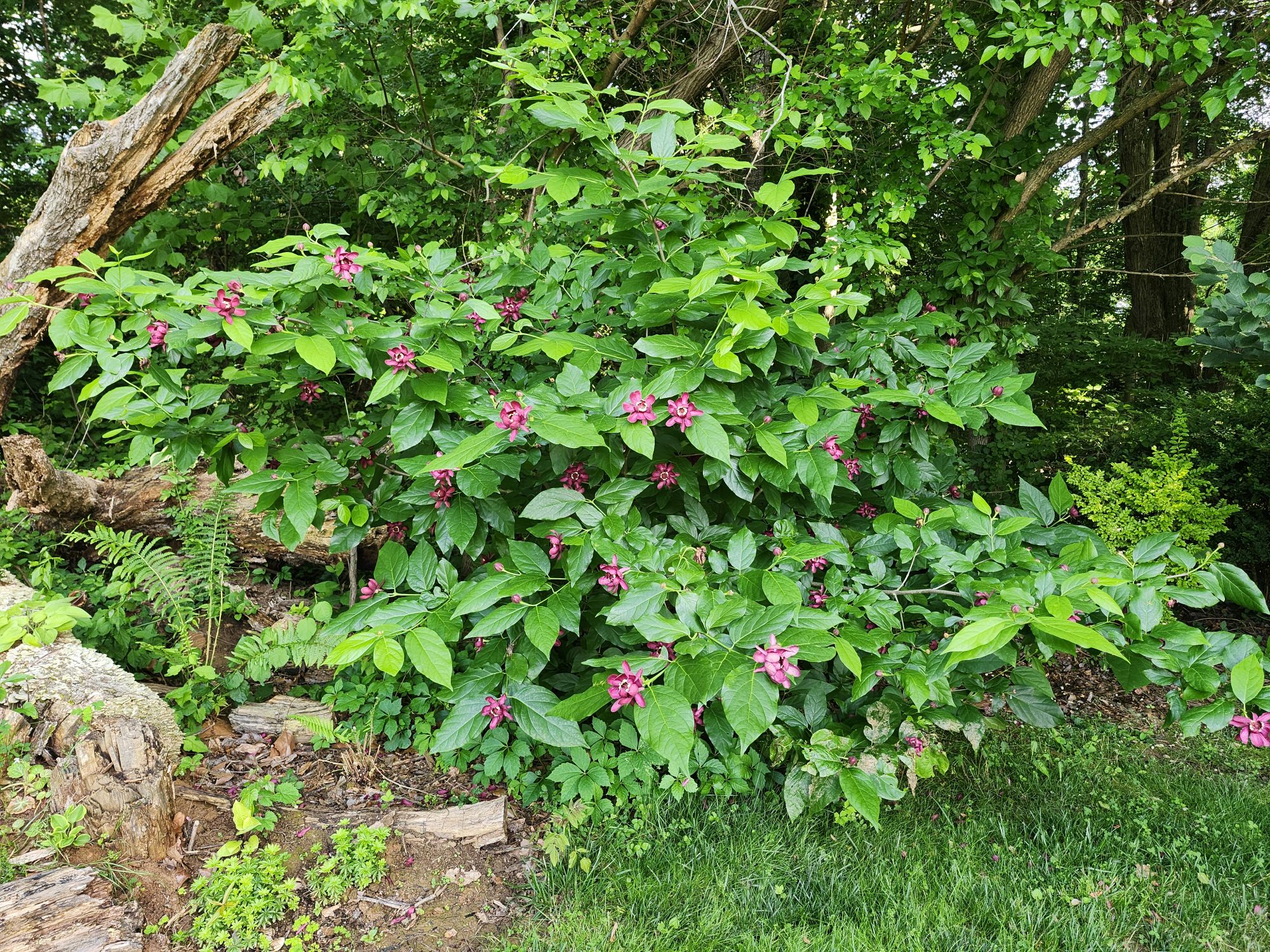
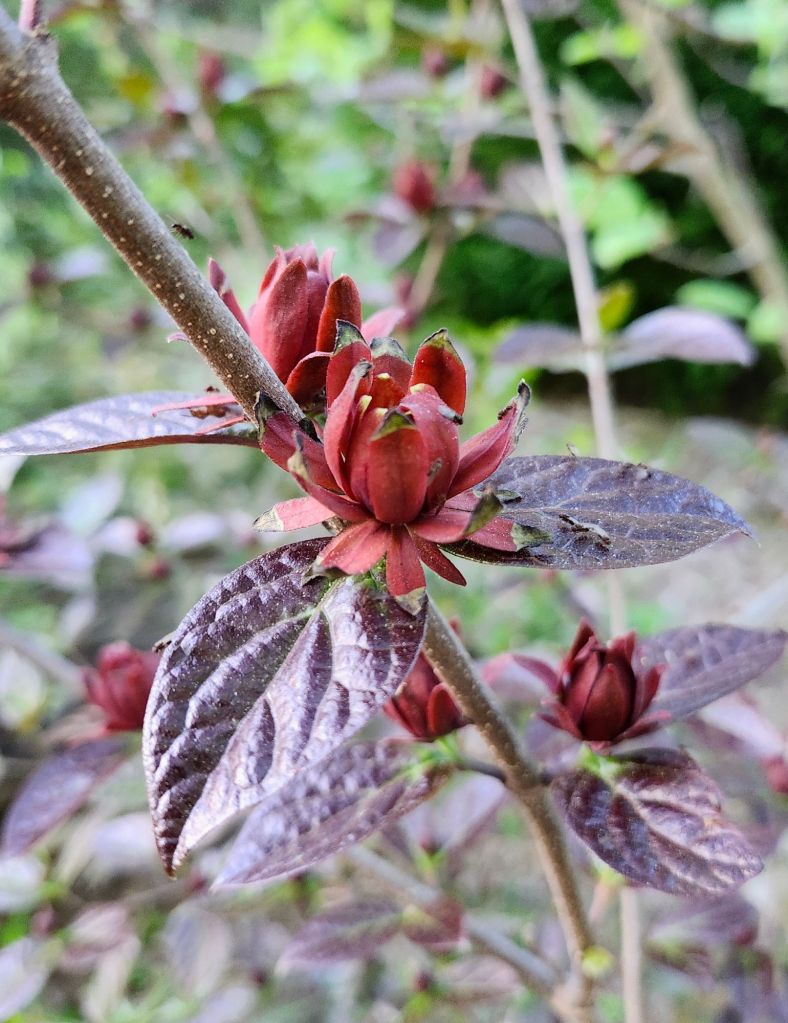
I was aware that when ‘Aphrodite’ and the small collection of sweetshrub varieties were planted, flowering would be diminished, but this less than ideal spot was the best bet to find a space for the group. The dark leafed ‘Burgundy Spice’ (Calycanthus floridus ‘Burgundy Spice’, below) has the sunniest position in the rear garden, at least until a magnolia that is proving to be inordinately vigorous interferes to shade it in a few years.
In any case, ‘Aphrodite’ is placed close enough to the street that gardening friends noticed it while driving to visit. With blooms scattered on the shrub, I would not consider that any sweetshrub stands out in the garden, but flowers of ‘Aphrodite’ are considerably larger than ones of other sweetshrubs (even larger than ‘Hartlage Wine’). I’m told that ‘Aphrodite’ has a light fragrance, though I can not confirm this since I rarely am able to smell a thing. (Note – friends also noticed ‘Burgundy Spice’ while all others now past flowering were overlooked.)
Since I do not expect visitors to notice sweetshrubs, even while flowering, none were given prominence, though all were planted in convenient spots so that I would pass by on my daily strolls.
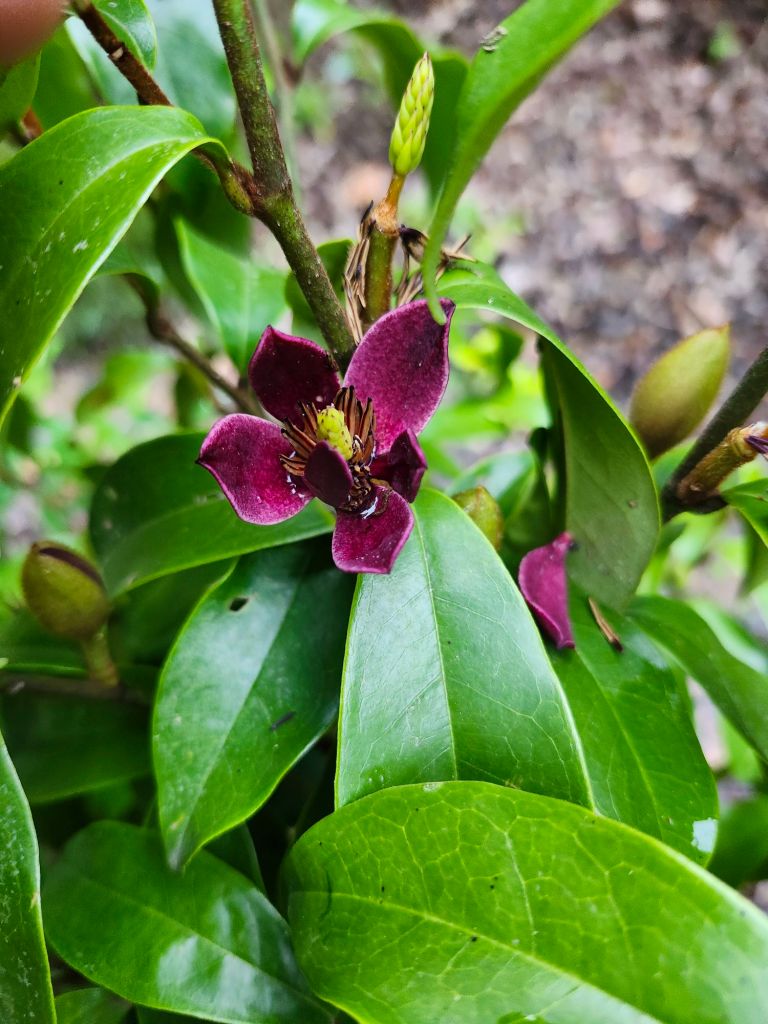
A shrubby, Figo magnolia (Magnolia figo ‘Stellar Ruby’, above) was relegated to the back corner of the rear garden a year ago when it reached the size that I could determine that its flowers would not stand out to warrant its previous placement. If the flowers were more prominently carried at branch tips, the small blooms would stand out, but I’m now pleased to have one and happier that it’s stashed at the back where it will someday obstruct the terminal point of the garden’s stone path as it transitions to a swampy meadow.
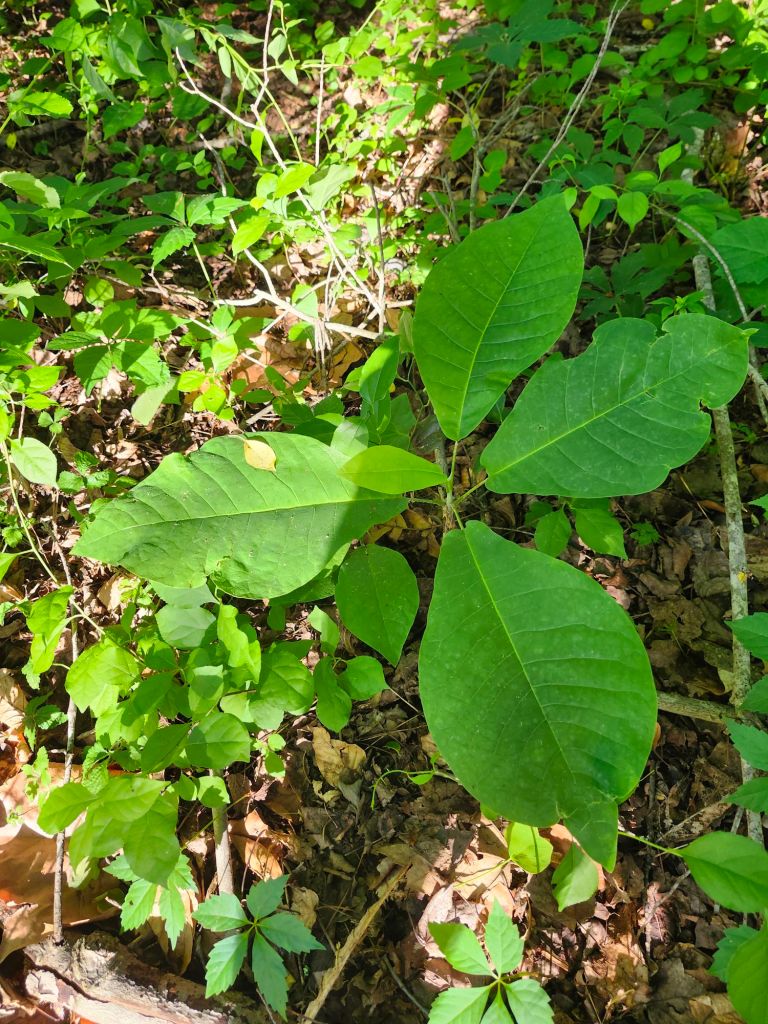
And, before leaving for the day, I happily report the discovery of a Bigleaf magnolia seedling (Magnolia macrophylla, above). Not all seedlings are welcomed, but in a pile of brush left for wildlife at the forest’s edge, the magnolia was found several feet beyond the property line. Of course, this will one day extend the appearance of the garden while I can honestly state that I didn’t plant beyond the property.
 Ramblin' through Dave's Garden
Interesting observation about the figo magnolia; I too was disappointed by the flowers and am looking for a less prominent spot for it! And I don’t like that the buds are brown either. For me it’s just going to be an evergreen screen somewhere. Also, my Aphrodite is now huge (around 8 x 7) and flowers well in an area with morning sun. Best calycanthus ever!
As a slightly obsessive collector, I second guess the figo every time I see another magnolia. But, it’s a small grower, and most are much larger, so it’s likely to stay. Aphrodite is a keeper, even in shade.