Today, there are plentiful reasons to be displeased with the garden. The favorite Fernleaf Japanese maple (Acer japonicum ‘Aconitifolium’) is possibly nearing its demise. It has been temporarily chopped back, and perhaps this will suffice to get through the year. The maple is now half the size, but growth is rapidly covering the substantial cuts so that it doesn’t appear overly awkward.
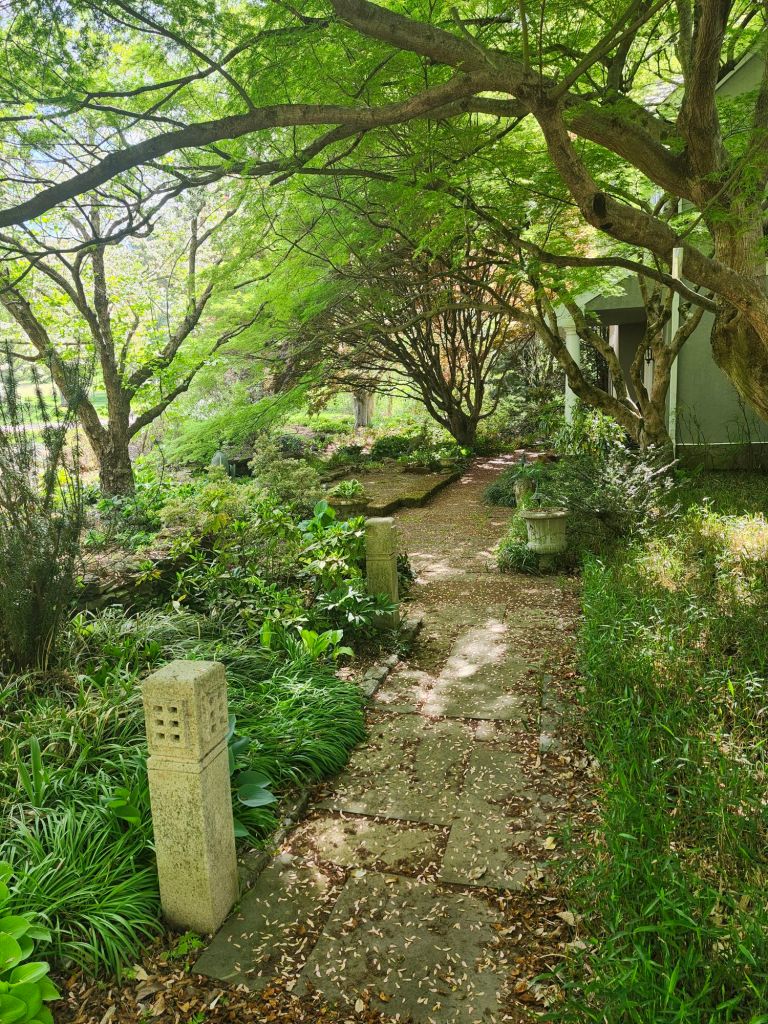
The stone paths are a wretched mess (above), stones wobbling and irregularly spaced, demanding a warning before any visitor takes a step. The ponds are littered with leaves. Sooner, possibly later, I will get around to scooping them out. I hired this out in the past, but in retirement I should have so many hours available to tend to such chores.
There are so many reasons for dissatisfaction. Why then, am I so happy and dismissive of obvious problems?
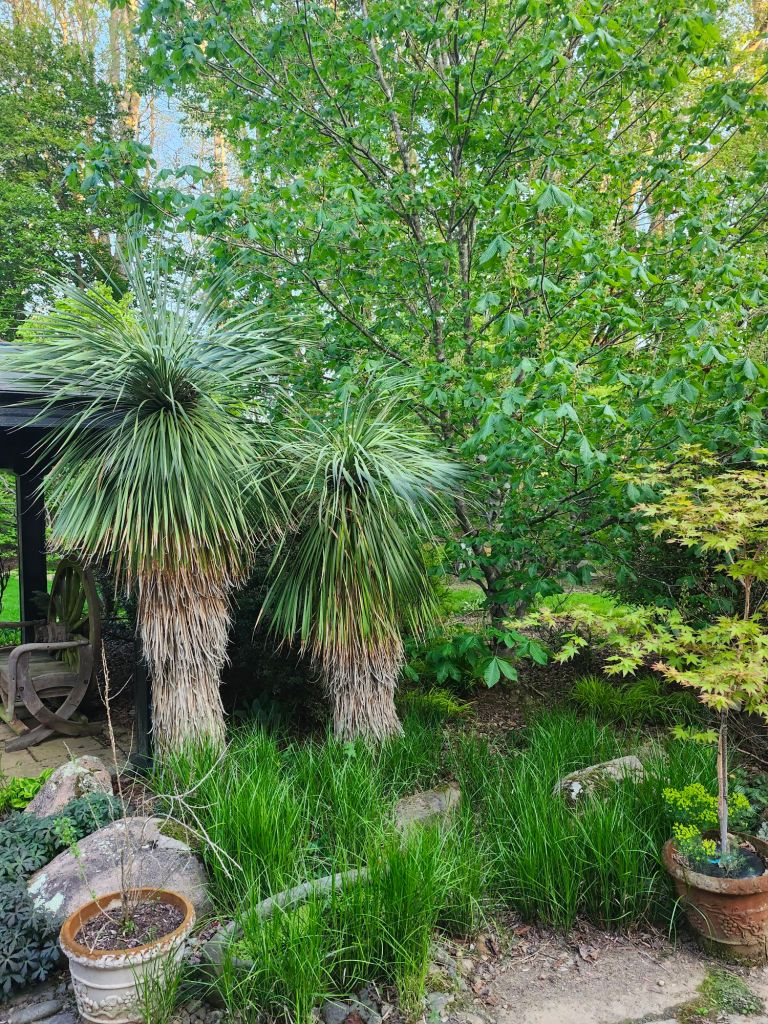
A few weeks ago, the family visited, and a few browsed the still very naked garden. Trees were beginning to show signs of life, though there were hellebores flowering in the upper half of the garden and paperbushes in the lower end. The look was very bare. Now, it’s not.
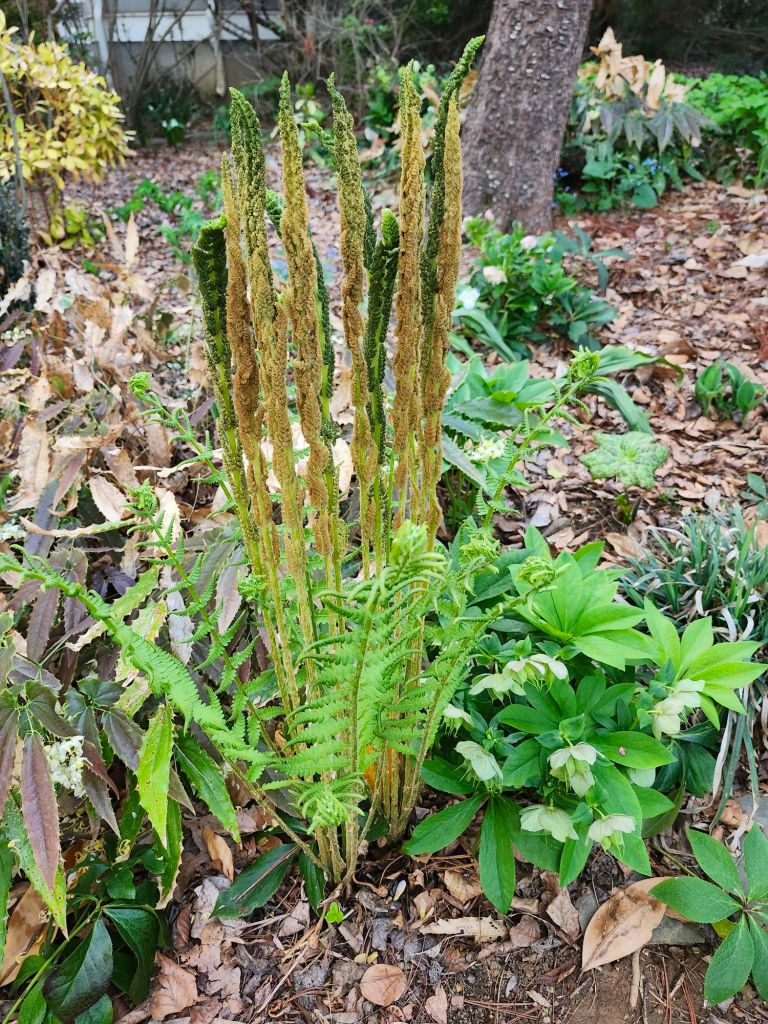
Things are flowering that I don’t recall planting (of course, I did), and what-is-its are popping up by the hour. Yesterday, ferns in the front garden showed no signs of life. This afternoon, fiddleheads stand a foot and taller.
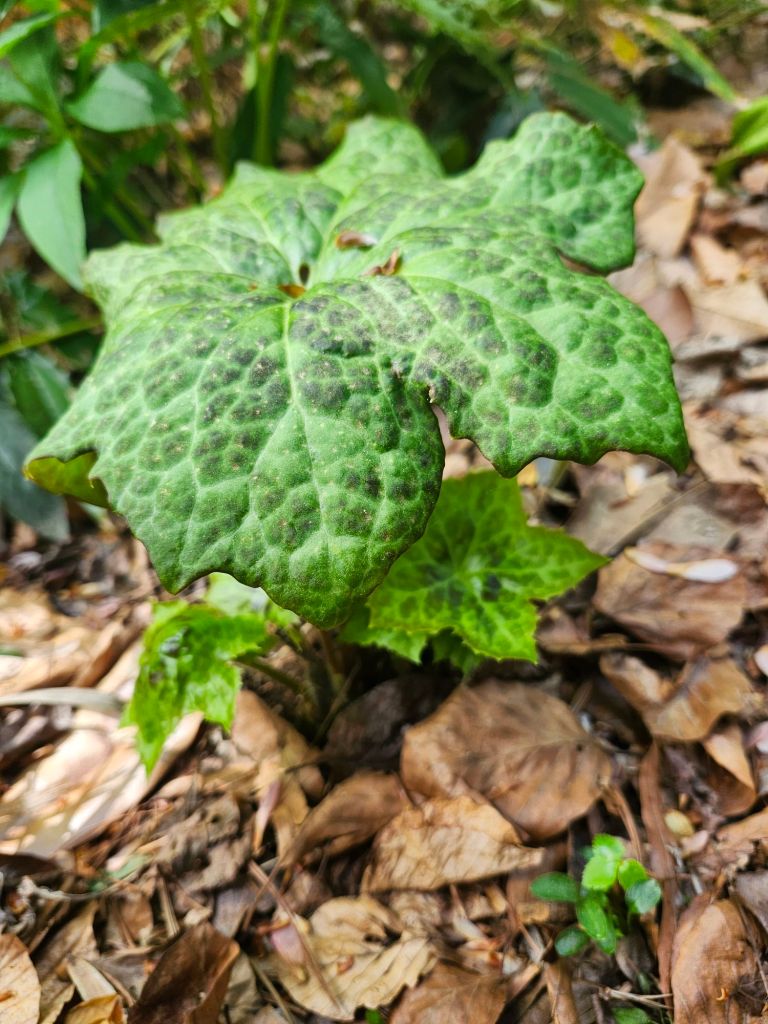
The first leaf of the costly ‘Spotty Dotty’ mayapple (Podophyllum ‘Spotty Dotty’, above) planted in autumn was ruined by freezes on consecutive nights. I nearly cried, but today there are three more, and maybe a few more poking through the leaf litter.
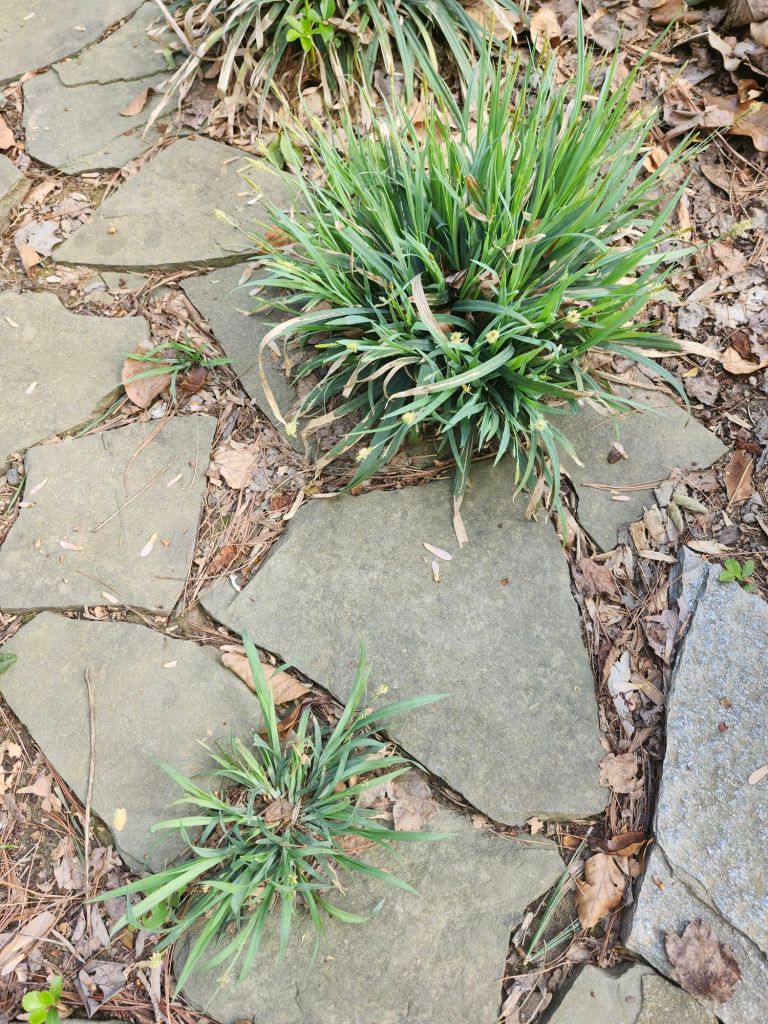
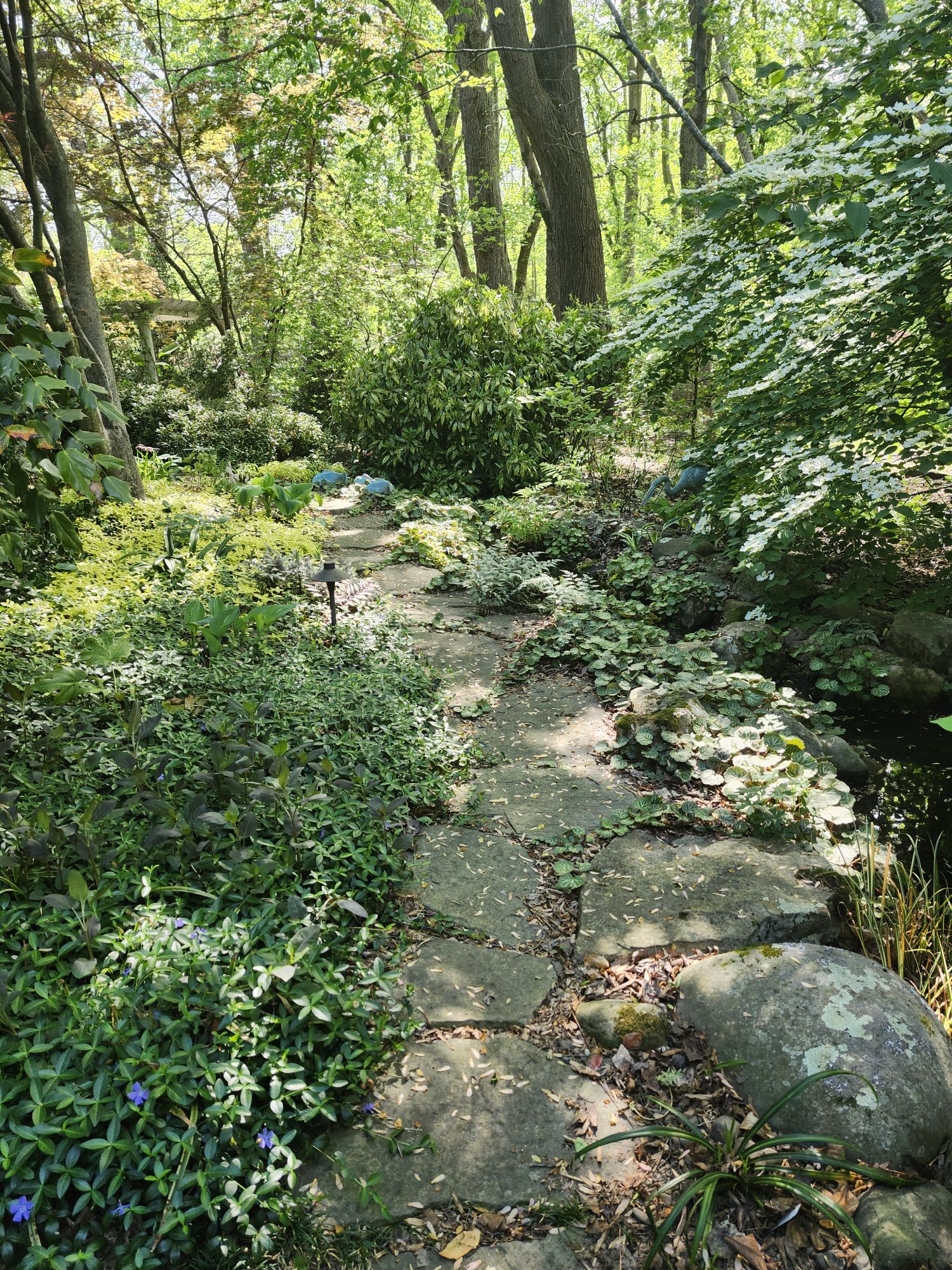
Seedlings of a blue-green leafed, native sedge (Carex laxiculmis) are popping up in gaps between path stones (above) in the side garden, but also in gaps between hellebores where no plant was needed. The clumps gain size quickly, and possibly ones in the path will need to be dug out. But, I bought the first few and now there are numerous freebies. How good is that?
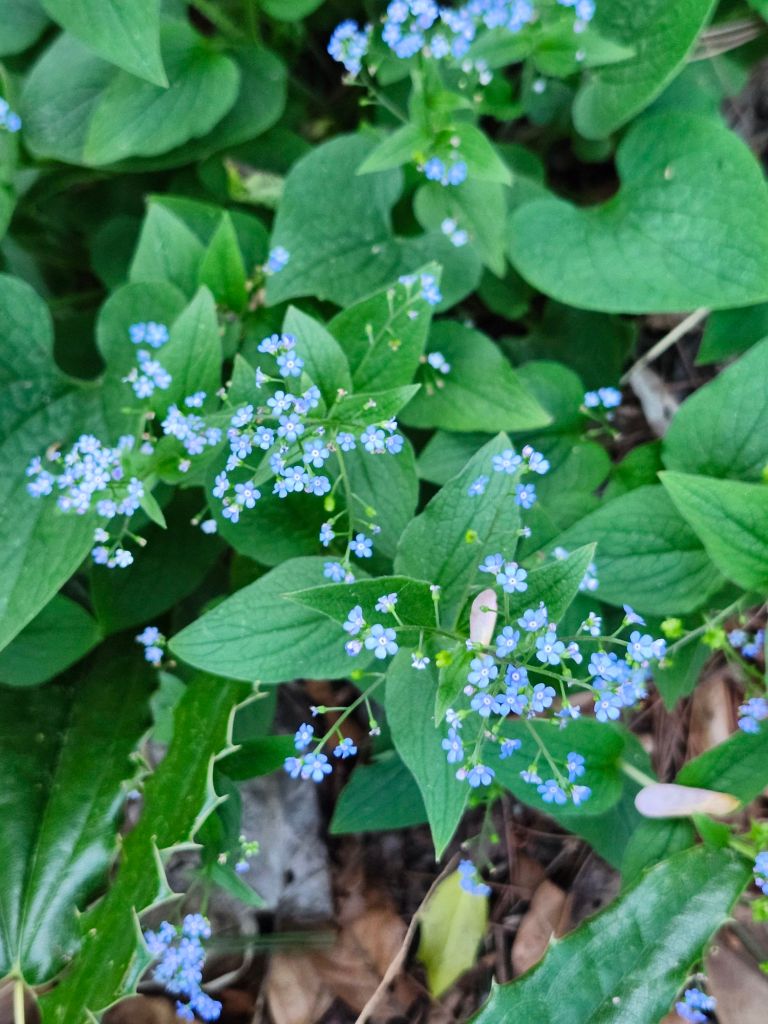
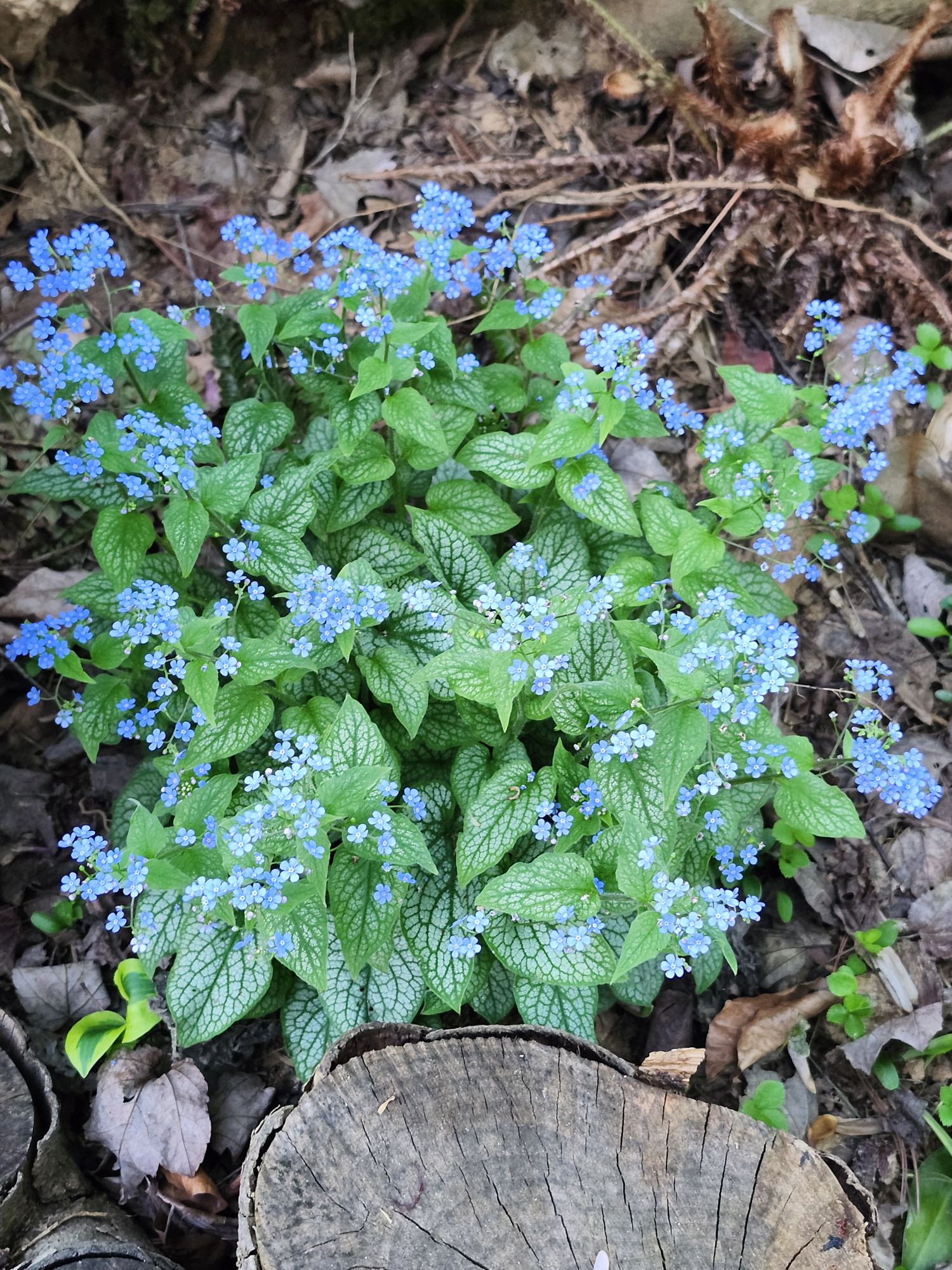
A few neglected silver-leafed brunneras (Brunnera macrophylla ‘Jack Frost’) have reverted to green (above), but look at it. How could I be unhappy with its cheerfulness. A third retained its variegated foliage (below). It was transplanted in early autumn to the new stumpery that is far over planted, but that will be easily rectified. Here, the brunnera stands out, but with ferns, hostas, and heucheras just getting started. Certainly, too much, but for now joyfully overfilled.