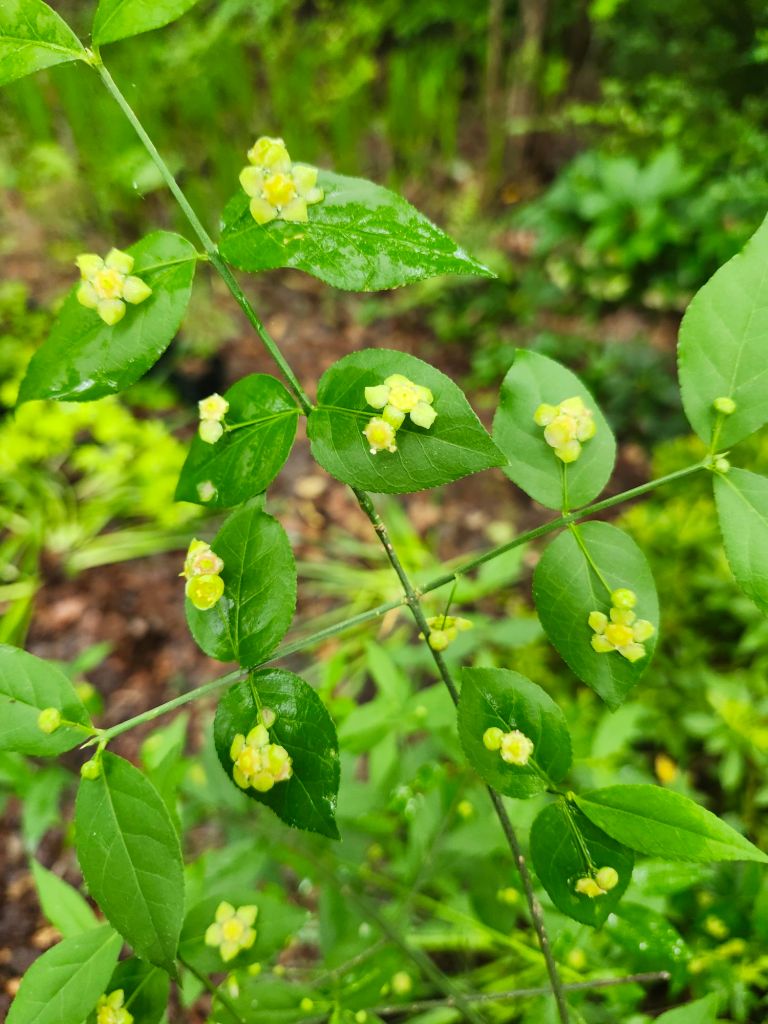
Flowers of the Strawberry bush (Euonymus americanus, below) are of moderate interest. Though not showy, curiously, the blooms appear to be growing from the mid-rib of the leaf (they do not). This still young shrub has not yet produced the more ornamental fruit and seed. Perhaps in autumn this year.
Of course, its cousin the Winged euonymus, or Burning bush (Euonymus alatus), is scattered through the narrow area of forest that borders the garden, and many forests that are close to communities where the once popular shrub is planted. It seems unlikely that the understated Strawberry bush will replace Burning bush, with its remarkable autumn foliage color, in the marketplace.
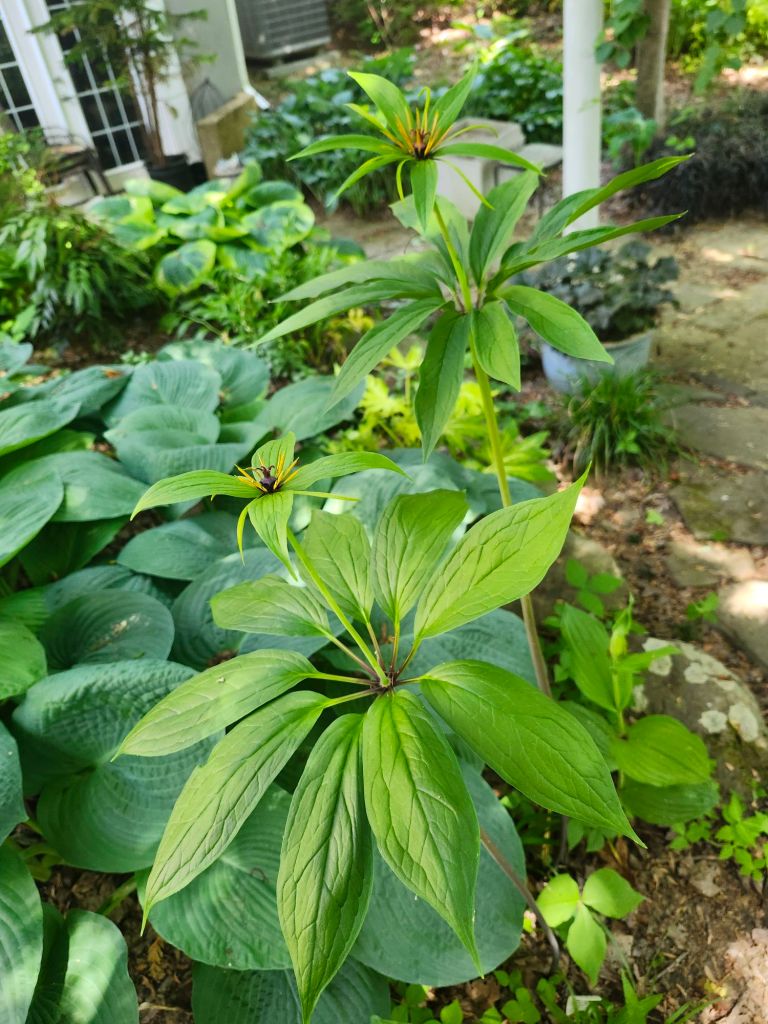
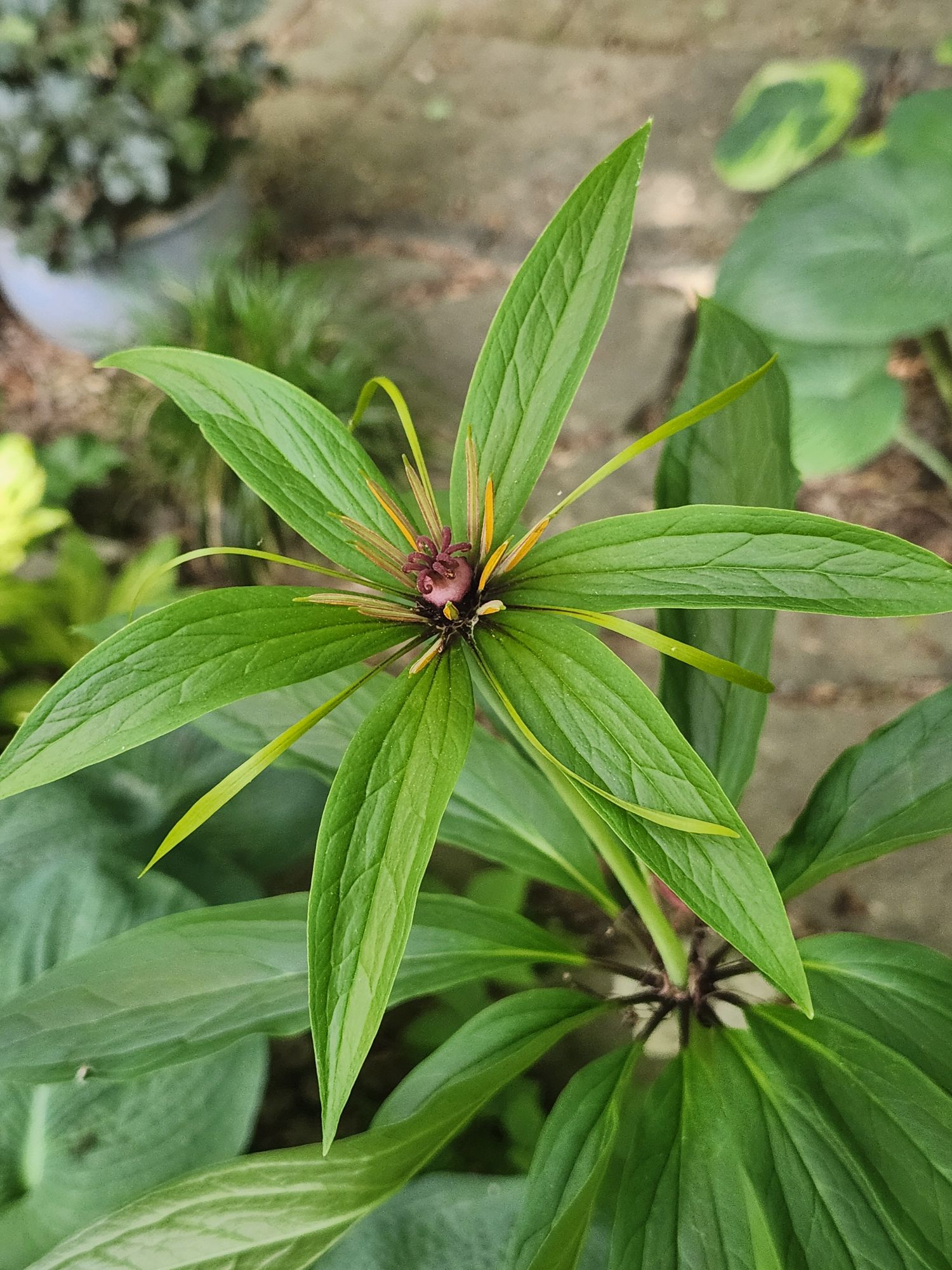
Of greater interest (to me), is the unusual flower of Paris (Paris polyphylla, above), a trillium relative. I don’t quite understand my attraction, but I’m pleased that single plants have multiplied to spread through the shaded side garden. Two clumps stand somewhat awkwardly above surrounding hostas close to paths so the flowers can be enjoyed.
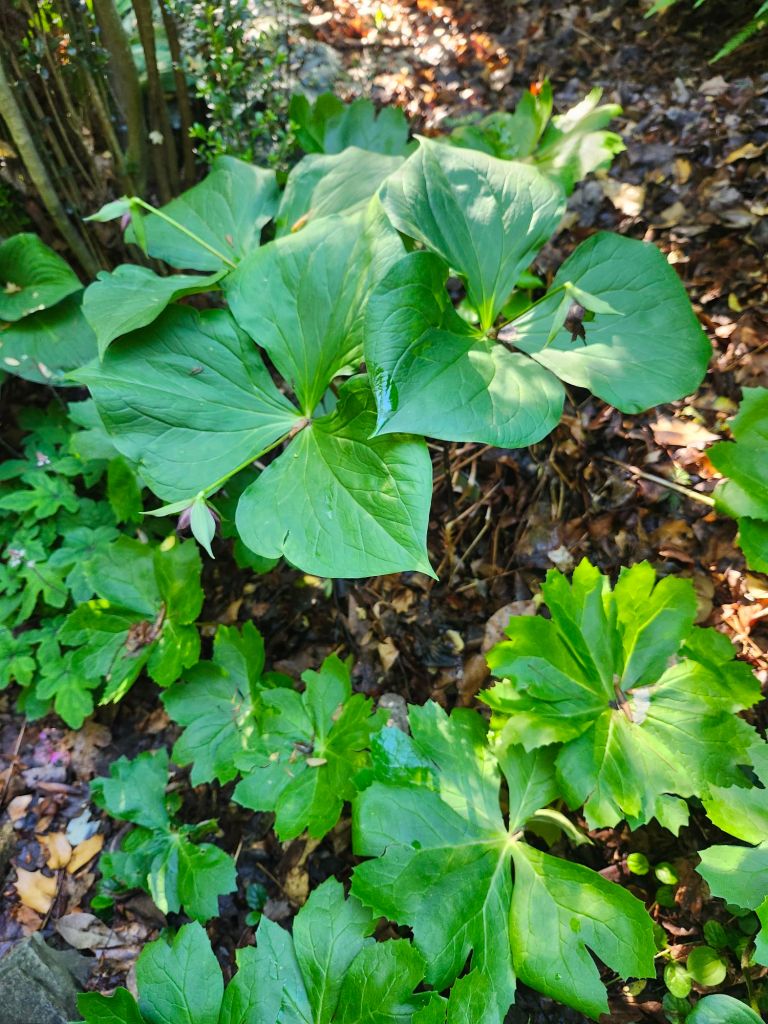
Of the handful of beloved trillium species in the garden, I find the greatest joy in Trillium erectum (above), I suppose because it is taller with larger foliage than the others. The red flower is small, and with summer’s heat the ephemerals will fade, but I’m thrilled each year as clumps slowly increase.
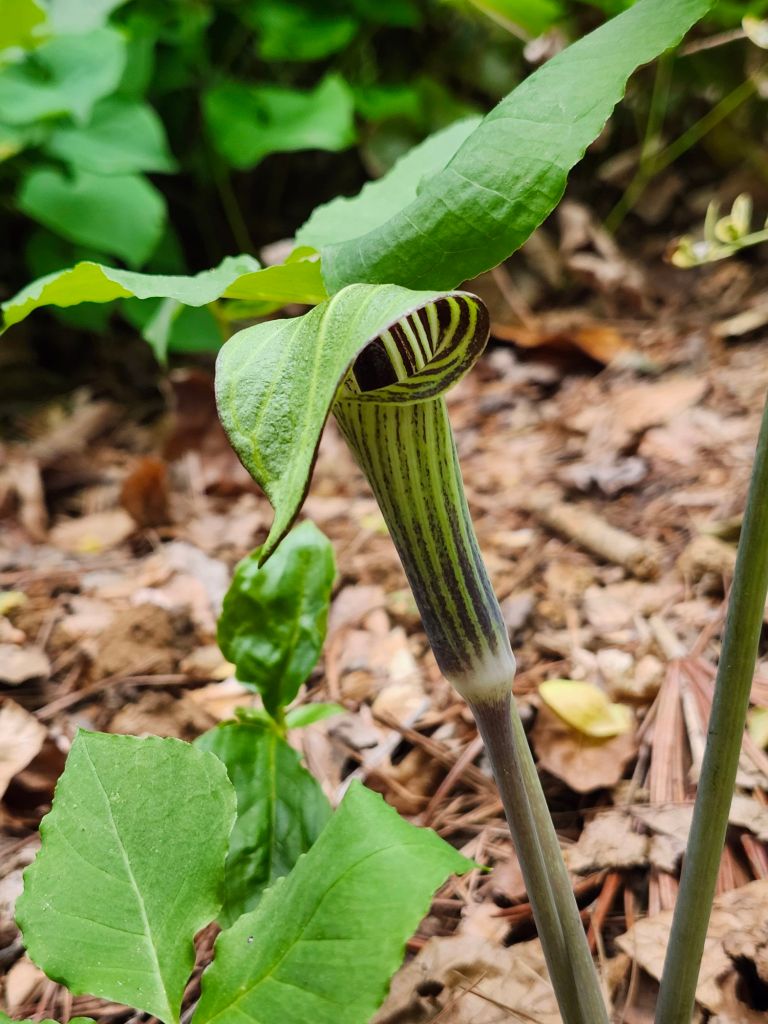
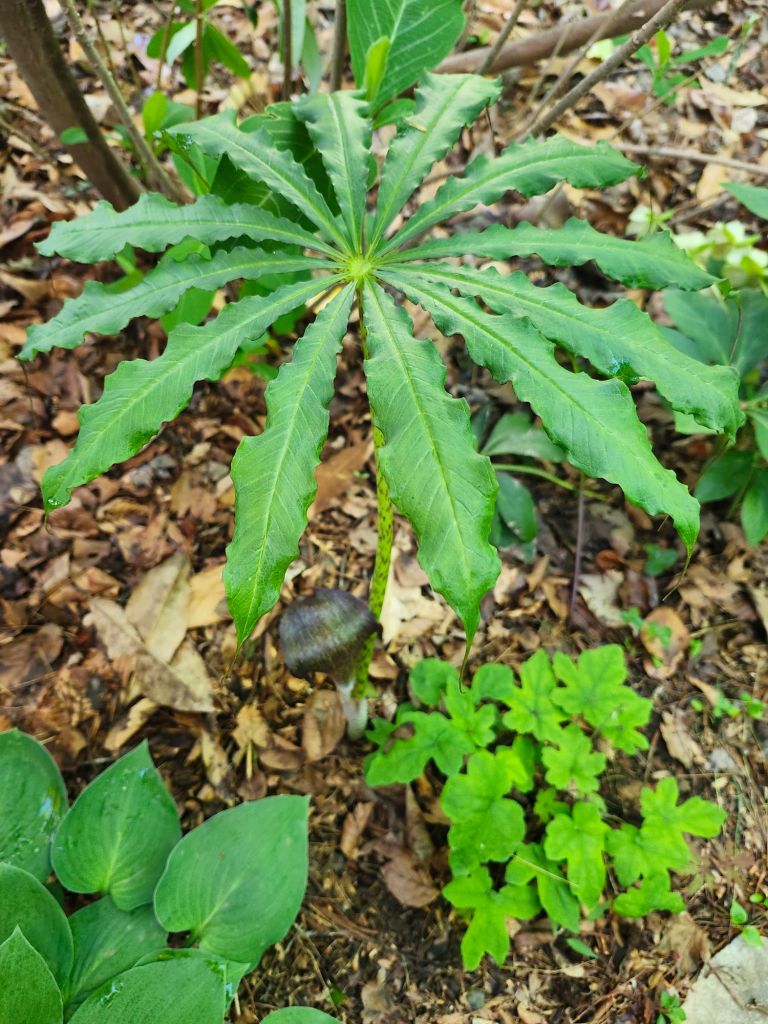
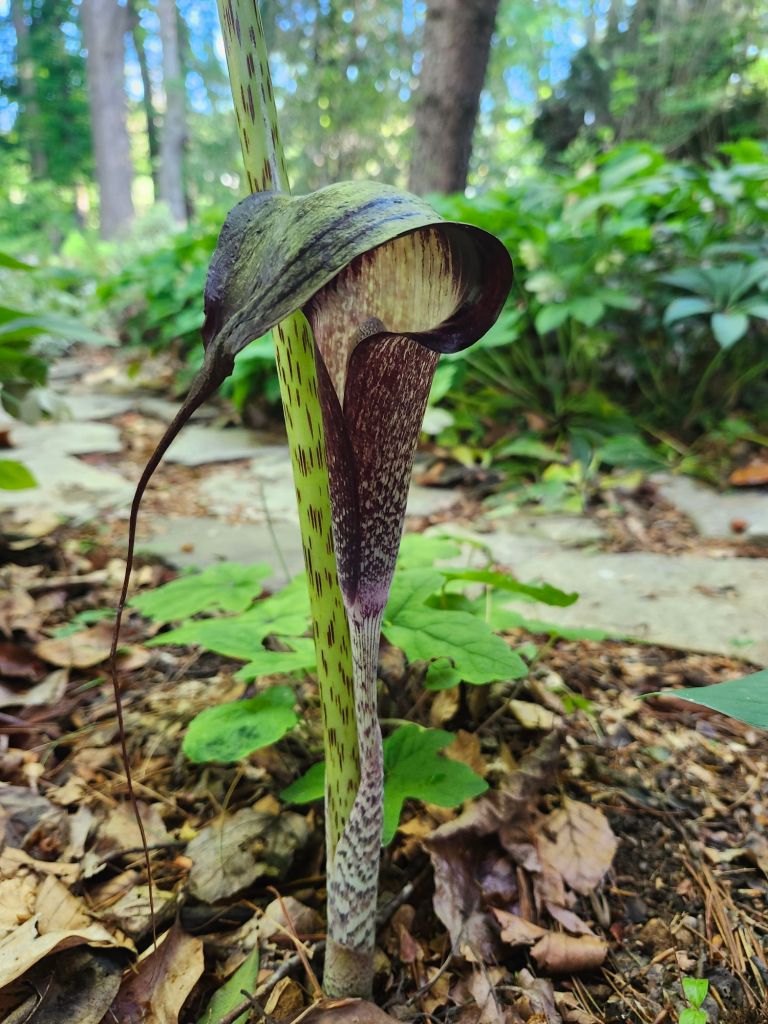
Years ago, I transplanted several jack-in-the-pulpits (Arisaema triphyllum, above) from the damp woodland at the edge of the lower rear garden. These have performed splendidly and seeded liberally in the shaded, but drier side garden. But, I’ve long been intrigued by taller growing Asian varieties (below) with deeply cut foliage and larger flowers. One is now flowering with others a year or two behind.
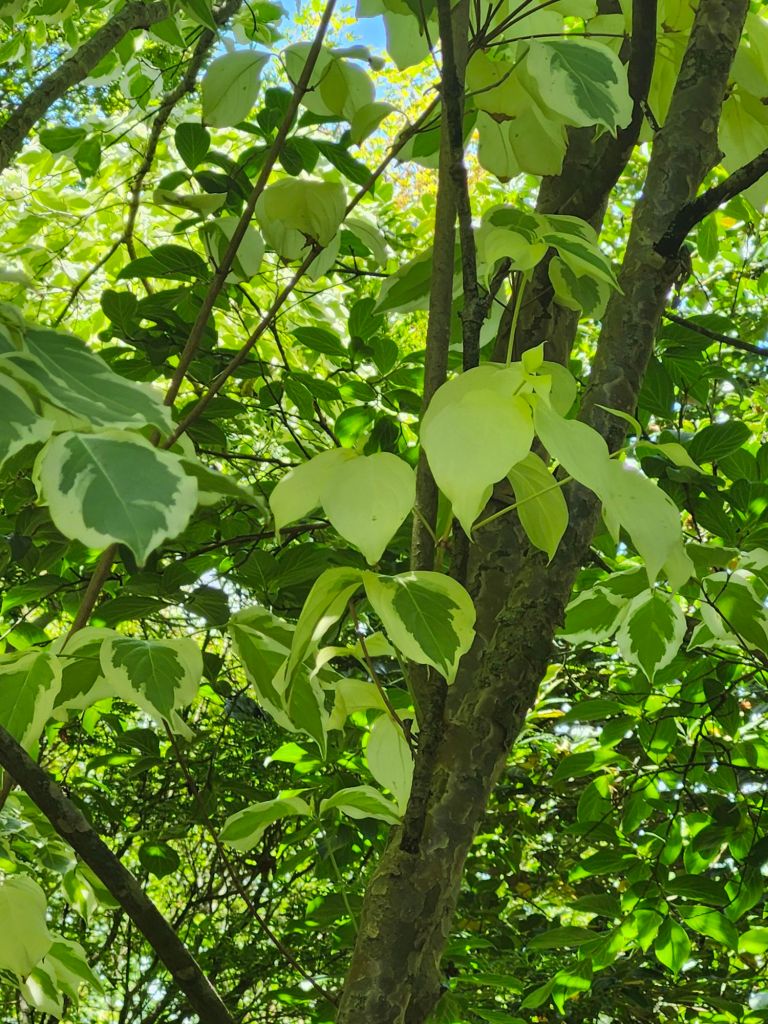
There is no mystery why the variegated ‘Samaritan’ dogwood (Cornus kousa ‘Samaritan’, below) has some leaves that are completely white. The white margins on the typically green leaves are a lack of chlorophyll. The further mutation to all white prevents photosynthesis. There are scattered areas of the white leaves, but most have some green. This dogwood flowers inconsistently, but the variegated leaves are colorful for months, and the white leaves are a curious addition to the garden.
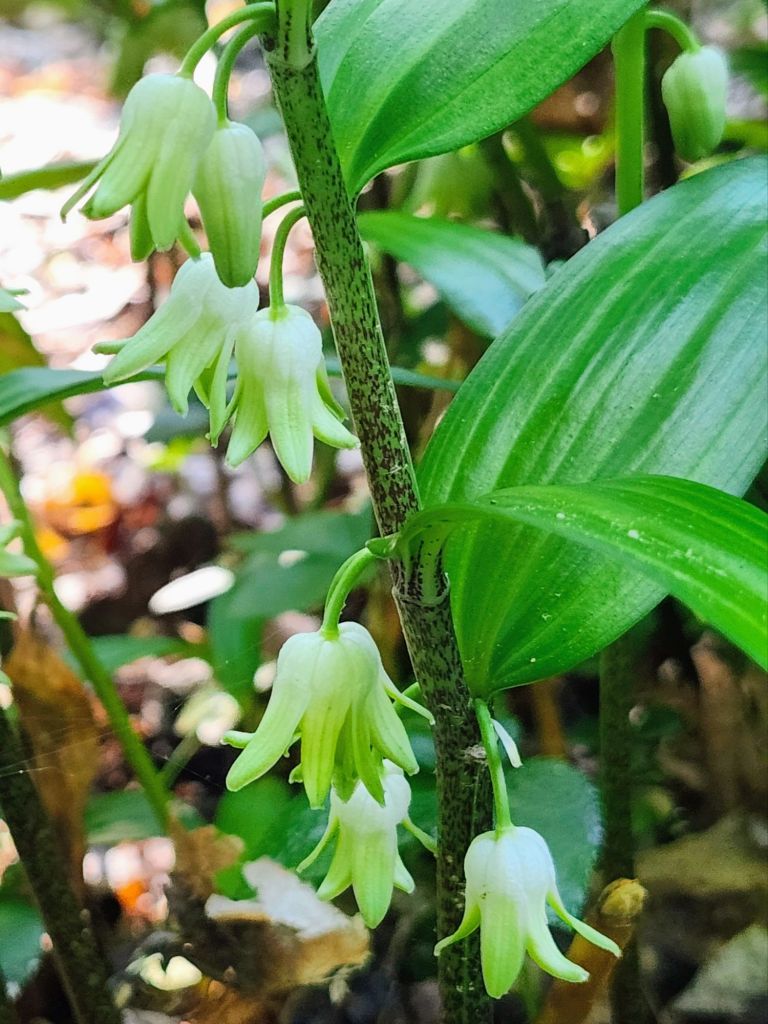
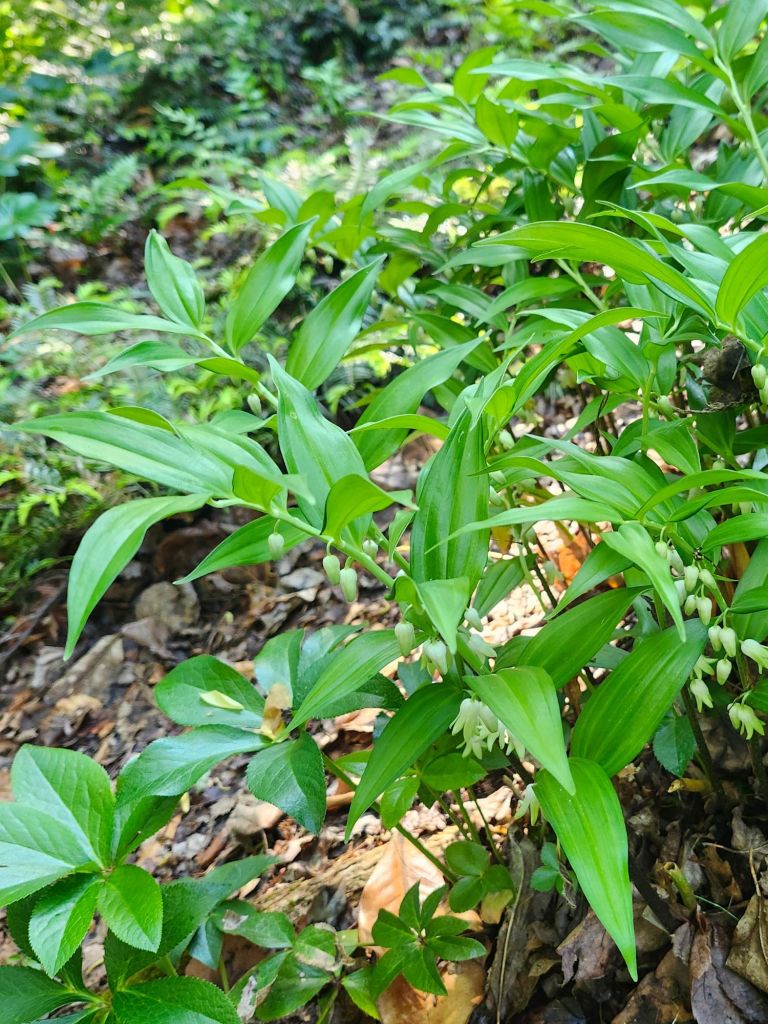
Along with other spring ephemerals, Barbara and I enjoy the False Solomon’s Seals (Maianthemum racemosum) and the occasional Solomon’s Seal (Polygonatum biflorum) in local woodlands. I’ve planted many or a few of most of the available varieties, but also the evergreen Solomon’s Seal, Disporopsis pernyi (below) and the smaller Disporopsus jinfushanensis. The white bell-like flowers are quite nice, but I’m most pleased to continue to fulfill a curiosity begun on woodland hikes.