Luckily, I do not carry my pruners as I stroll the garden. If I did, I could have prematurely butchered the large Chaste tree (really a bush, Vitex agnus- castus) beside the garden’s shed that appeared mostly dead after a chilly winter. The few parts that appeared alive, near the base, were damaged in a late freeze. Only a few sprouts of green remained, confirming from a distance that the only remedy was to hack back the dead branches.
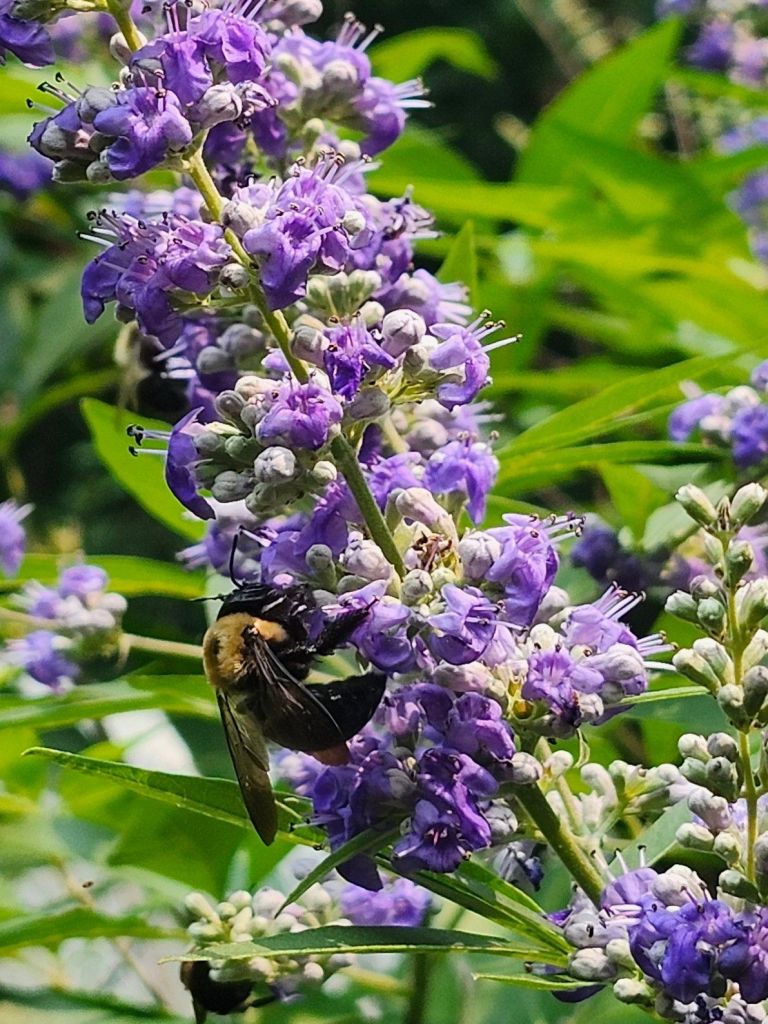
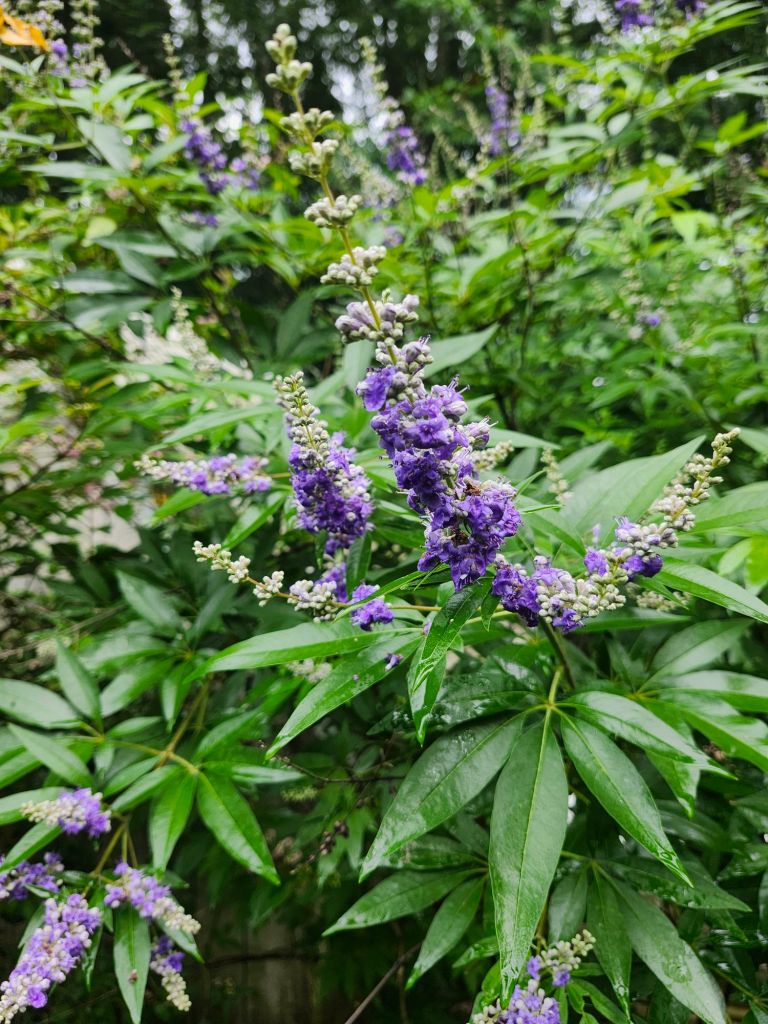
So, it appeared the large shrub would have to start over, a foot from the ground. But, as is often the case, I didn’t get around to the task. Several times, I was on the way but a few or several distractions led me astray. Of course, there was no hurry. It was dead, or mostly dead, but as we know, mostly dead is also slightly alive.
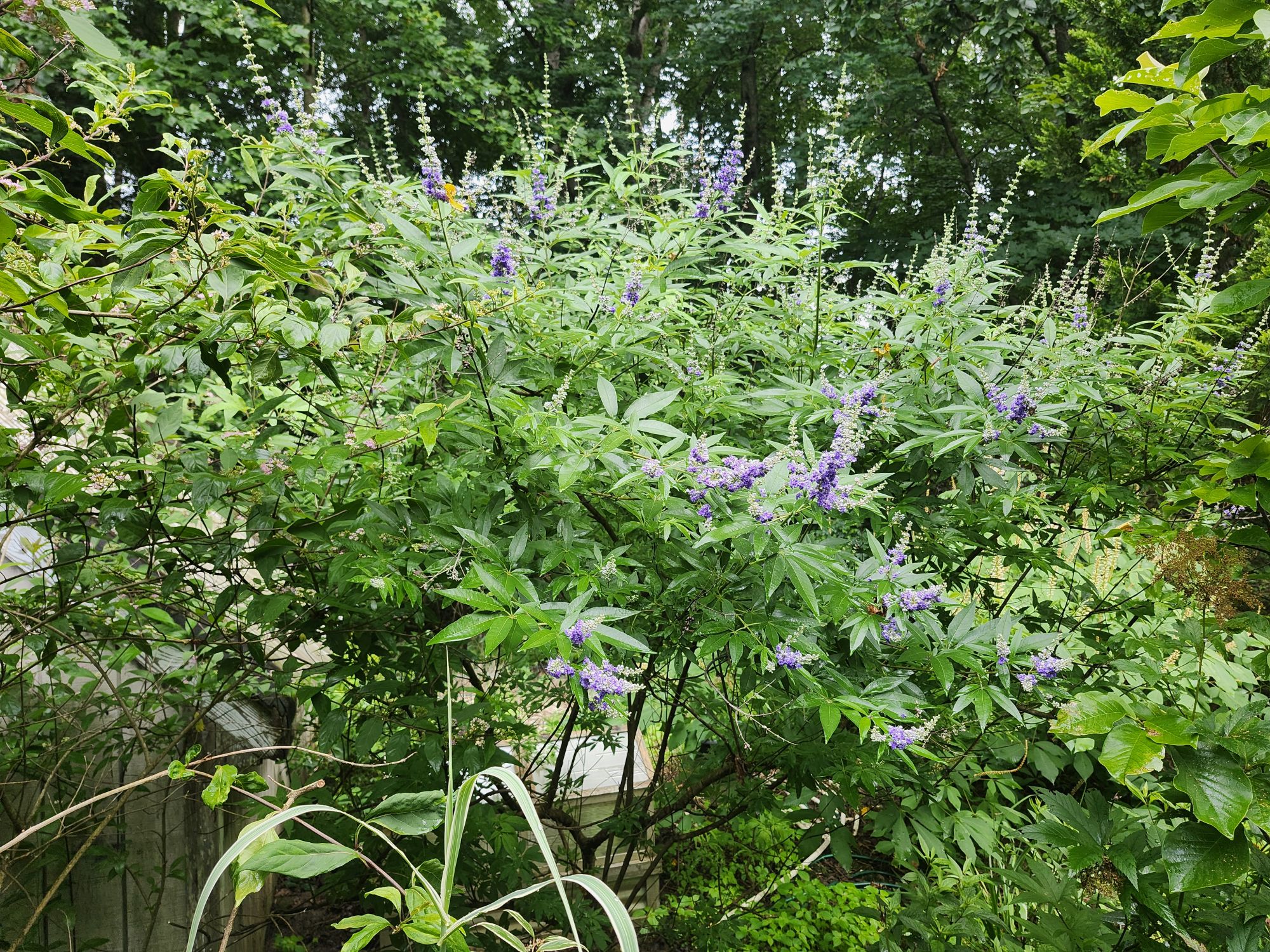
And so, my eye began to ignore the seemingly dead shrub. A group toured the garden and I didn’t give a thought about getting rid of the unsightly Chaste tree that is only partially obscured by a beautyberry. But then, miraculously it began to leaf out. I supposed that dead branch tips would still need to be pruned, but then those disappeared under leafy growth. Today, it is fully in bud and beginning to flower. I did nothing.
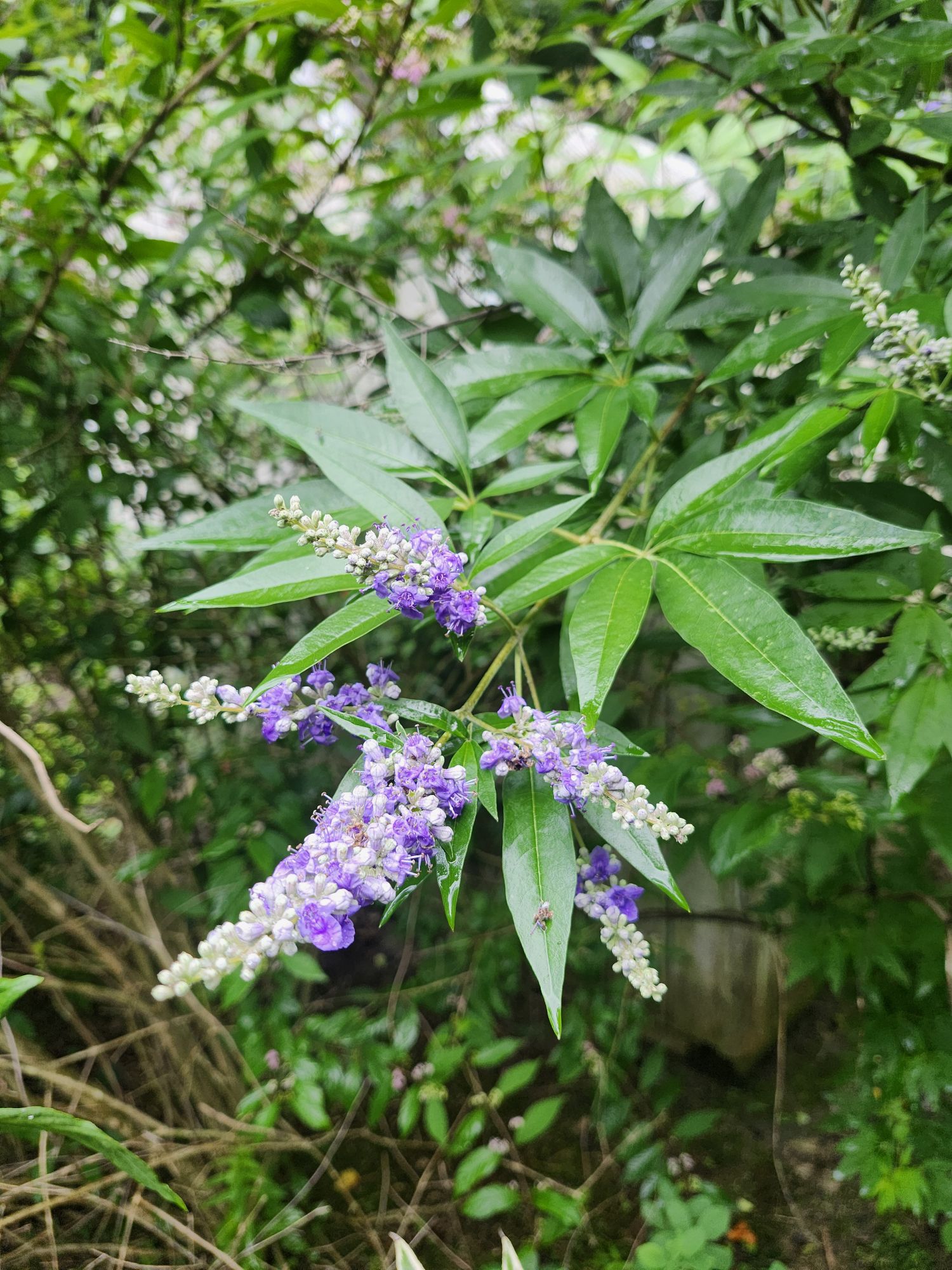
Admittedly, it’s likely I would have scratched the bark before chopping, but how far wrong could I be? There is no need, of course, to mention my lengthy history of mistakes and near misses. Every gardener must make a few, and me? More than a few.
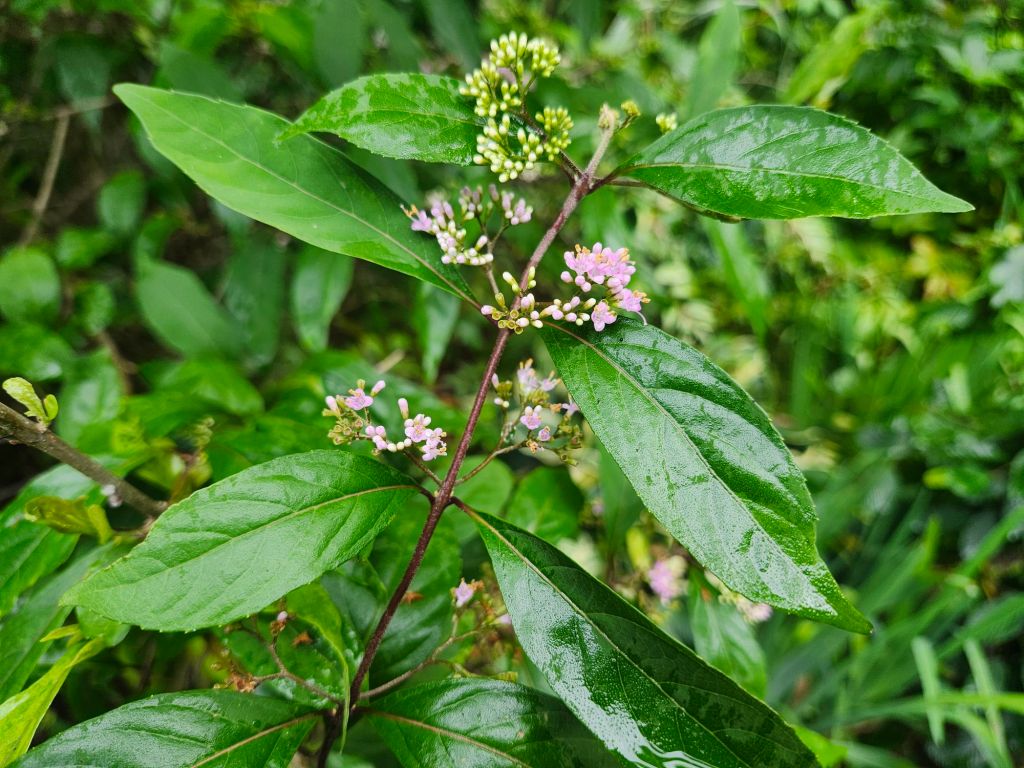
The neighboring Beautyberry (Callicarpa Purple Pearls) suffered similar dieback, but this is typical of beautyberries that require annual pruning of dead branch tips (that I also failed to do). I am reminded that the large shrub is past due to be reduced in size as it begins to obstruct the narrow path to the lower rear garden. This is a quick project to be done in early spring, and instead of only removing dead tips, branches will be cut by a foot or more. If I get around to it.


Chaste tree is one that I have never seen before. I do not know why it is not popular here. I think that it likes warm climates.
We are nearing the northern limit of its cold hardiness. With flowers in midsummer, it does not attract much attention in local garden centers, so chaste tree is unusual though not rare.
I have a chaste tree and have learned it leafs out VERY late. But this year was later than usual to show signs of life, and then only in a few spots. I was fooled too – after not-getting-a-round-tuit, due to more crazy weather, it eventually surprised me by carrying on as usual! If only my figs had deen the same; they were killed to the ground once again, no figs this year!
Yes, the chaste tree is late to leaf out, but then it began to leaf and the new growth was killed by a freeze. Then, a few more weeks passed before I gave up on it, forgot about it, then was surprised as it looked like there had never been a problem. No figs for me. I can remember fifty years ago seeing people’s figs dying to the ground almost annually with winter temperatures that regularly fell below zero.
Dave, what West Coast sources do you use for mayapples and jack-in-the-pulpits?
I purchase regularly from Far Reaches, Secret Garden Growers and from Rhododendron Species Botanical Garden.