A hummingbird zips past as I admire flowers of the Purpletop verbena (Verbena bonariensis) that gently sway in the late morning breeze. The shy hummingbird stays for only a moment while a few bees and numerous moths are hardly bothered by my presence. There are many choices here for pollinators, so why feast where a large (but harmless) human intrudes?
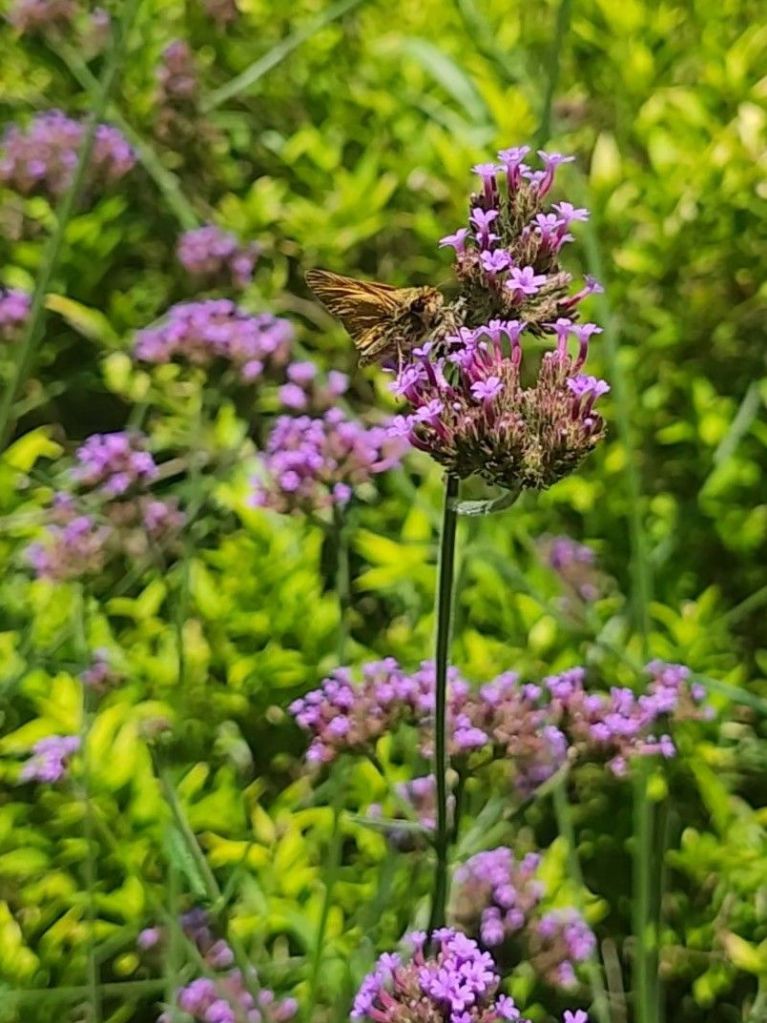
The verbena has been flowering for weeks and will continue for many more as it towers above irises and orchids that are long past bloom. The verbena’s sparse foliage does not obscure the view of any neighbors, though I pluck some out as seedlings appear too close to the path.
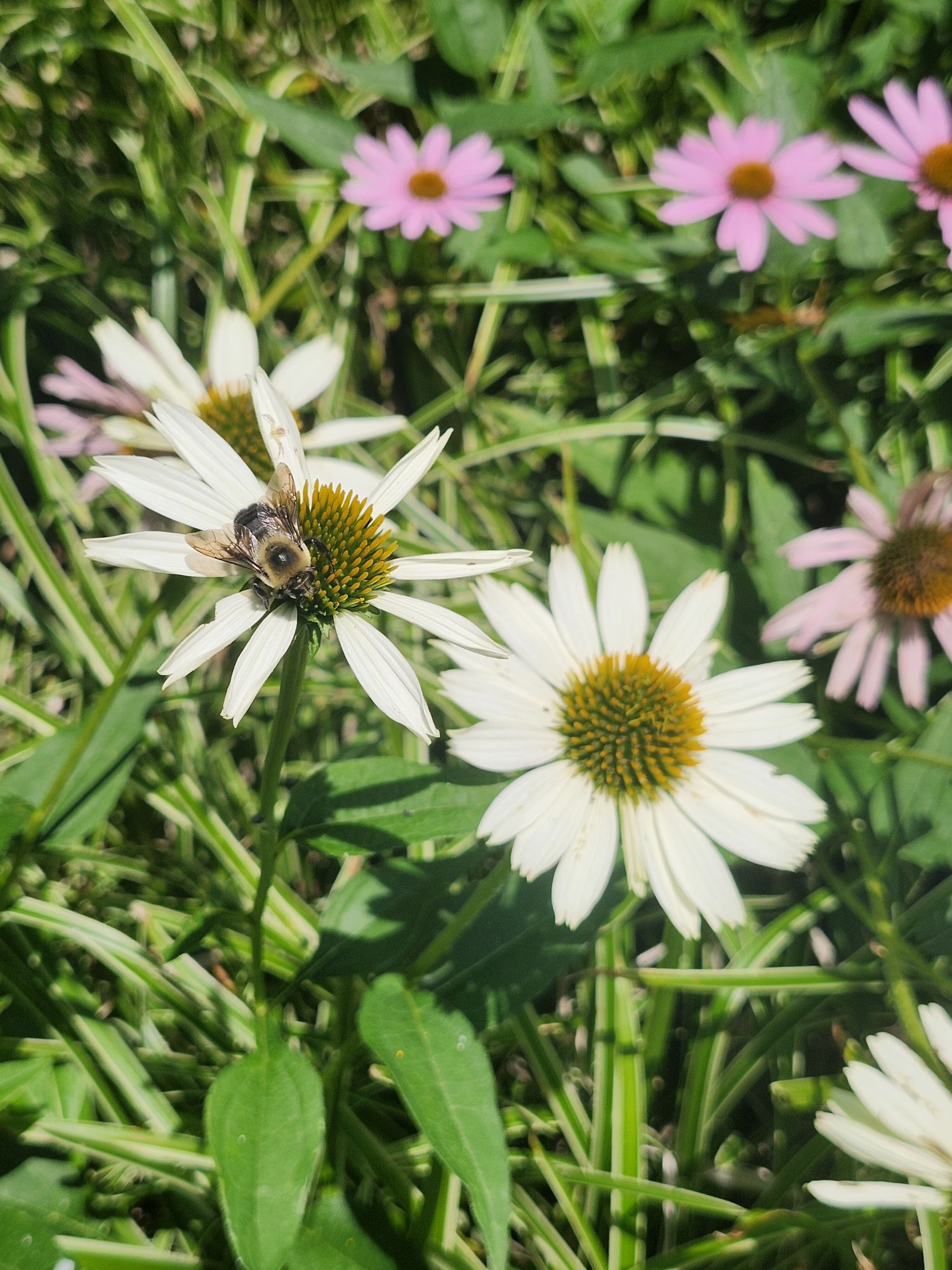
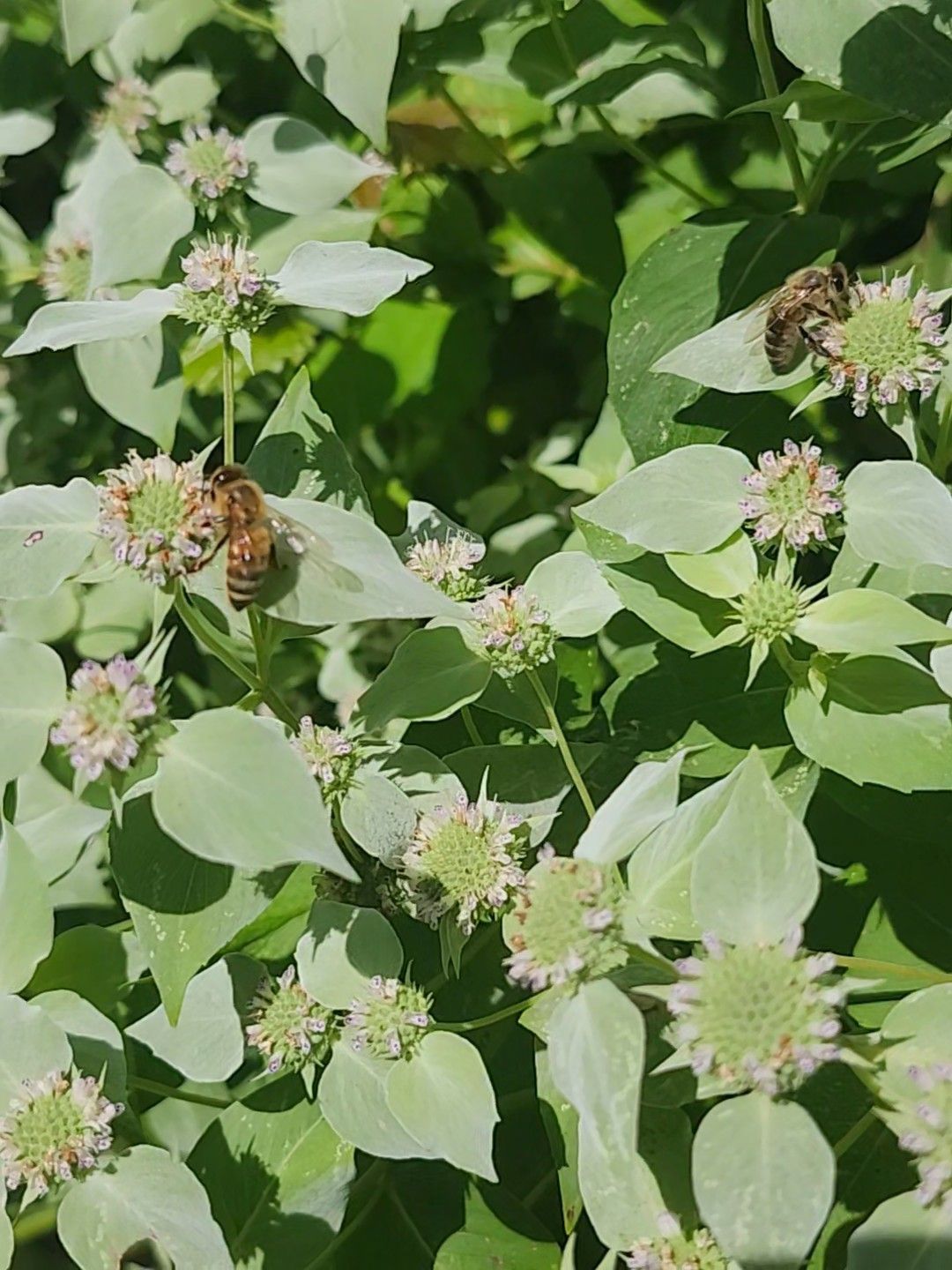
By mid-July, there is no question why there are fewer bees visiting flowers of coneflowers (Echinacea purpurea, above) that have spread along the driveway. This morning, there are abundant bees but few of the wasps and hoverflies that will populate the large clump of Blunt Mountain mint (Pycnanthemum muticum, below) as the sun rises to peek into the lower rear garden.
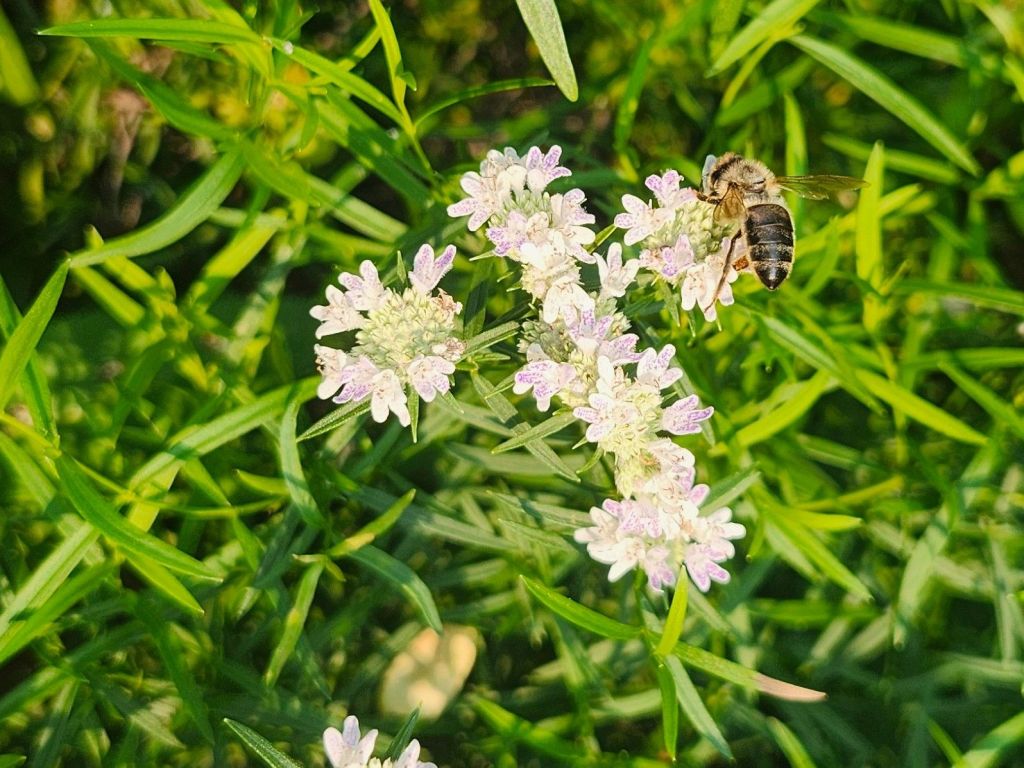
A smaller clump of the local native, narrow-leafed Virginia Mountain mint (Pycnanthemum virginianum, above) attracts only a few bees as its neighbor nears its peak bloom. The younger Mountain mint is constrained by neighboring shrubs while its broader leafed cousin has spread to its limits along the path. By late summer, a bit that leans into the path after rain will be pulled, but two Japanese maples discourage further spread.
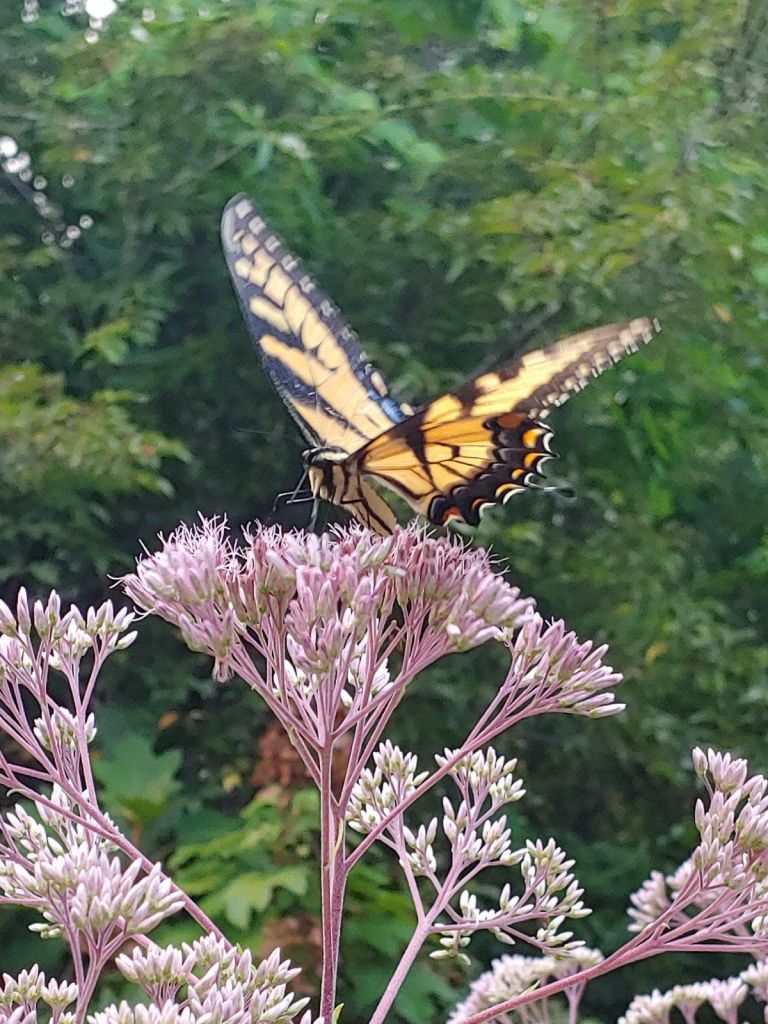
Swallowtail butterflies avoid the busy Mountain mints. I see the swallowtails scattered through the garden, but Joe Pye Weeds (Eutrochium spp.) are just beginning to show the first glimpse of color. Soon, the butterflies will congregate on Joe Pye seedlings scattered about in the damper soils of the lower rear garden.
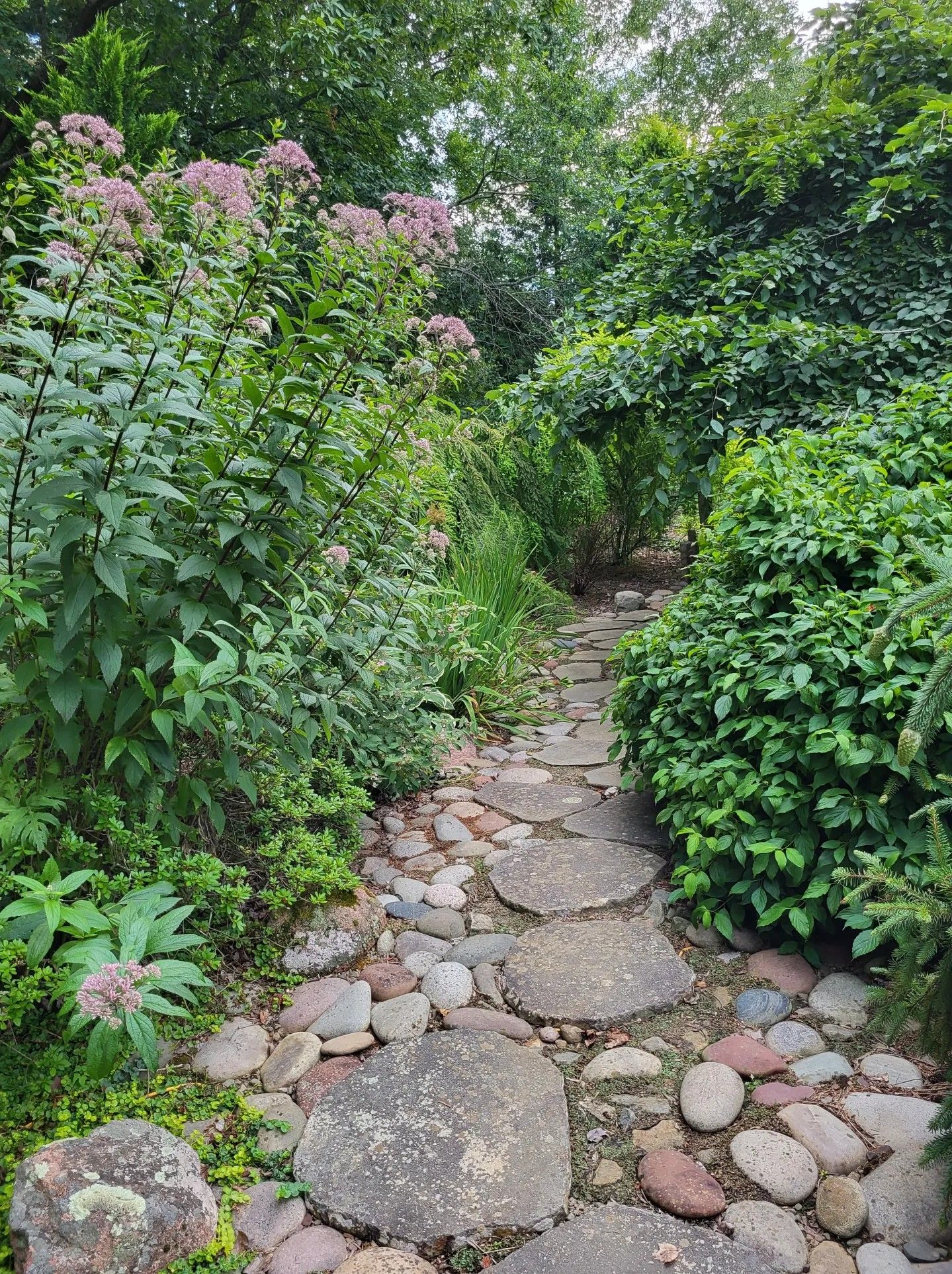
The whereabouts of bees and butterflies are uncertain through the spring and early summer, but there’s little question where they can be found by mid-July.

