Before retiring a few years ago, I traveled for business, touring plant growing nurseries throughout the Southeast for two weeks every July (for forty-five years). Of course, a perfect time to experience the heat and humidity of the southern states, though it was occasionally hotter at home in Virginia, and nearly every hour of the three thousand mile tour was spent in the air conditioning of a vehicle or hotel room.
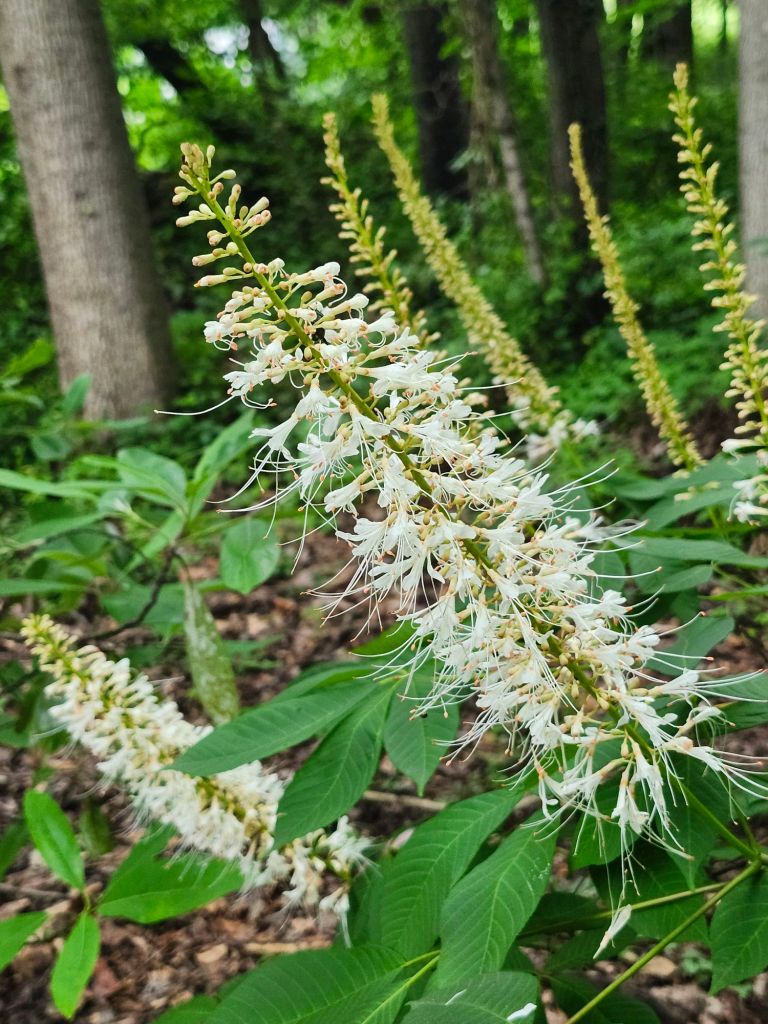
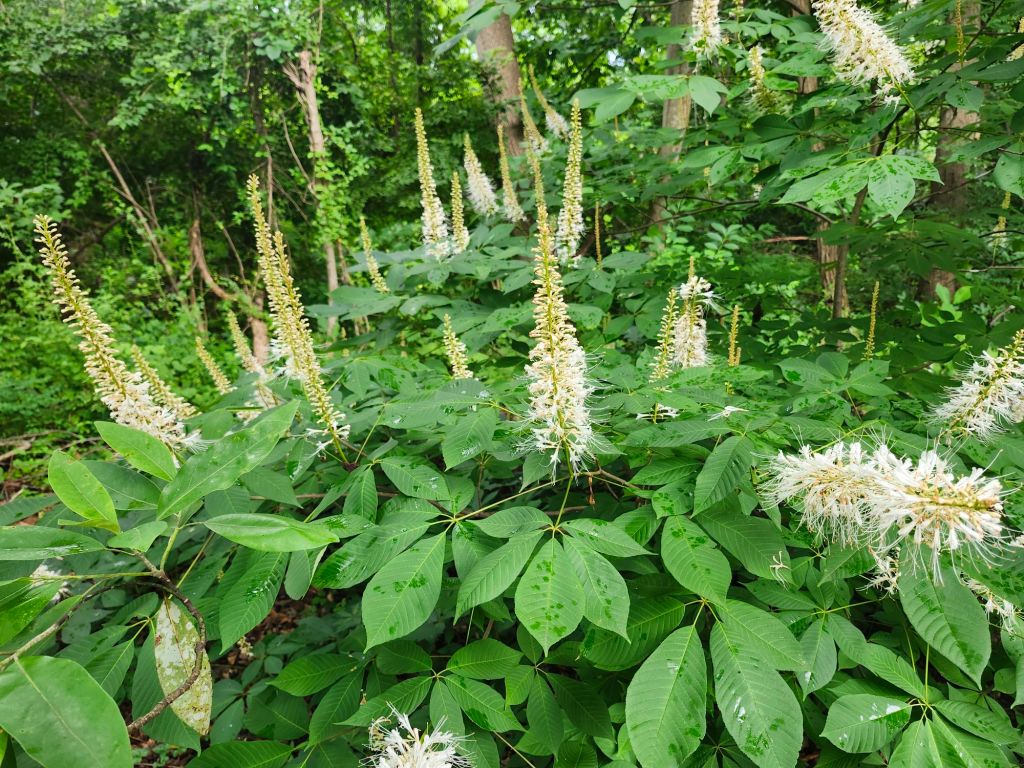
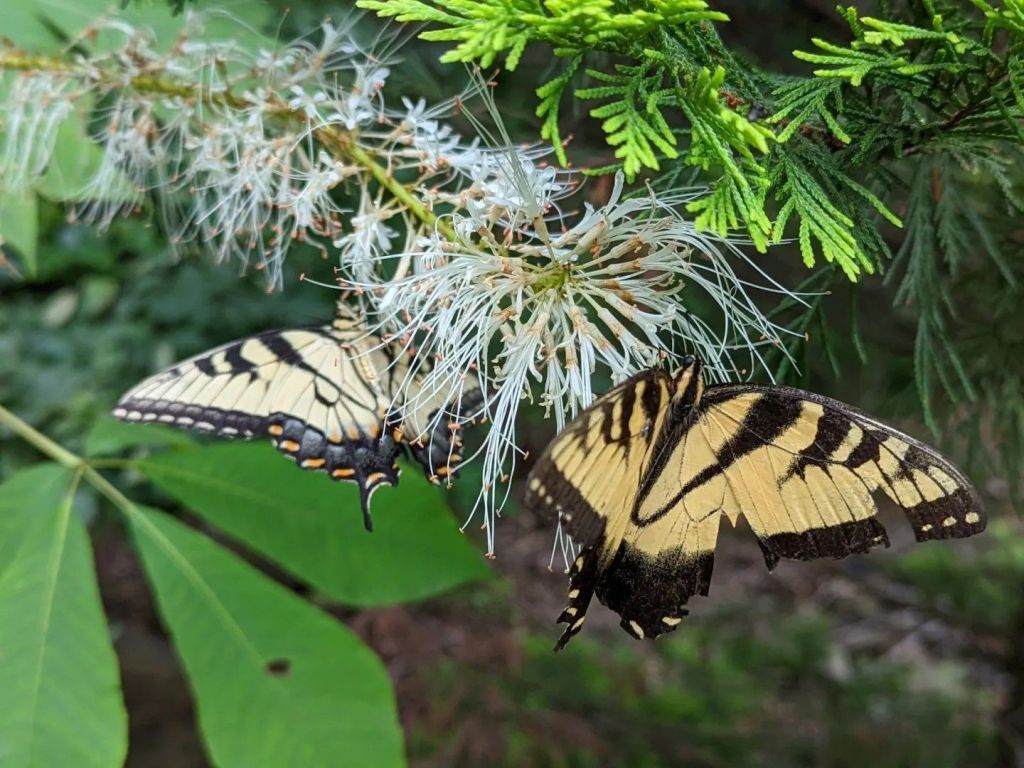
There wasn’t a lot happening in the garden while I was away, but every year I’d return to the fading flowers of Bottlebrush buckeyes (Aesculus parviflora, above and below). A swallowtail or two might be visiting the remaining blooms (below), but I missed the best of its flowering. In retirement, I don’t miss a day enjoying the white bottlebrush flowers.
While earlier flowering cousins (Red buckeye and Red Horse-chestnut) are small and medium sized trees, bottlebrush buckeye is a wide spreading shrub. In the side garden, one has spread fifteen feet with lower branches rooting into the leafy debris at the forest’s edge. I occasionally pot one as a giveaway. The buckeye was heavy shaded until the Bigleaf magnolia blew over in a storm a year ago. Today, with a few hours of partial sun I think there are a few more flowers.
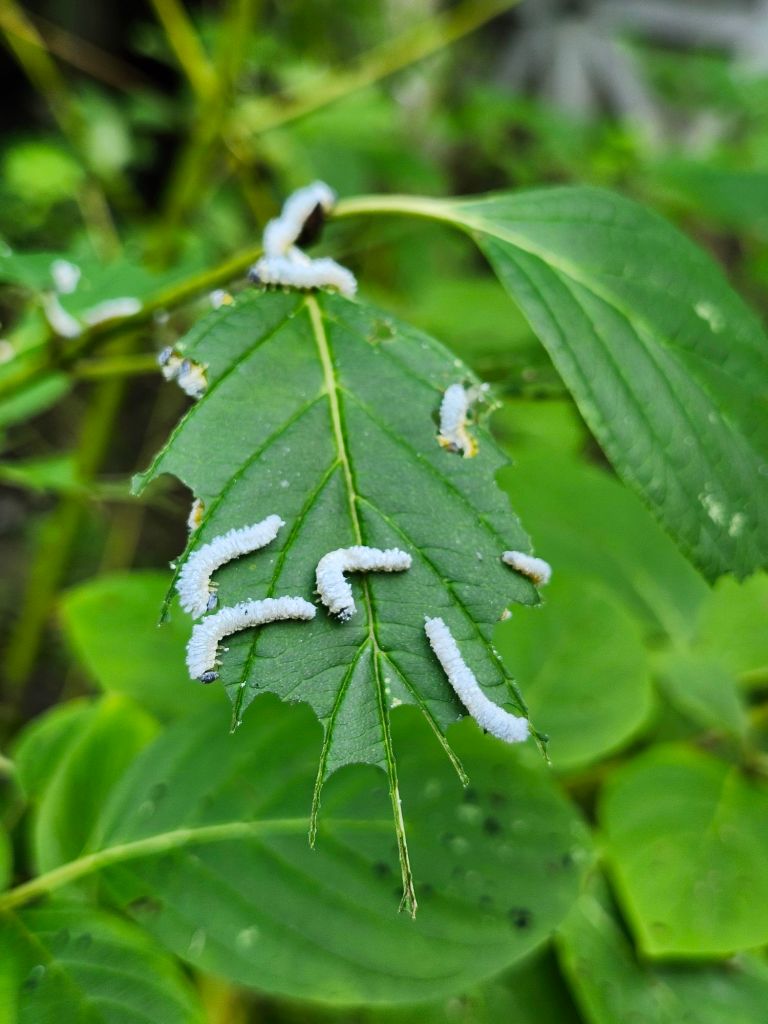
Caterpillars (above and below) are quickly devouring leaves of two large red and yellow twigged dogwoods. I’m sure they could easily be eradicated if I cared to do so, but the vigorous shrubs recover to regrow leaves after the caterpillars have moved on to their next phase (as treasured moths and butterflies).
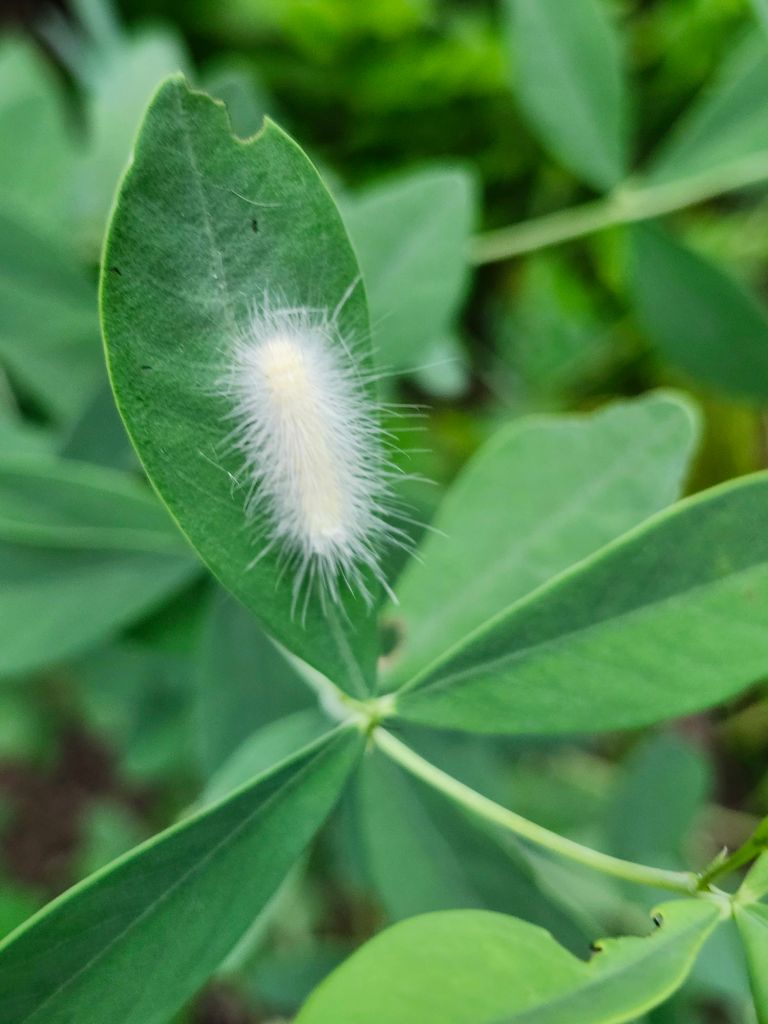
I’ve lost track of the time line for Japanese beetles since they rarely make more than a token appearance in the garden. There was a time in the garden’s early years that beetles and caterpillars were a concern, but today nature (birds, I suppose) manages such matters.
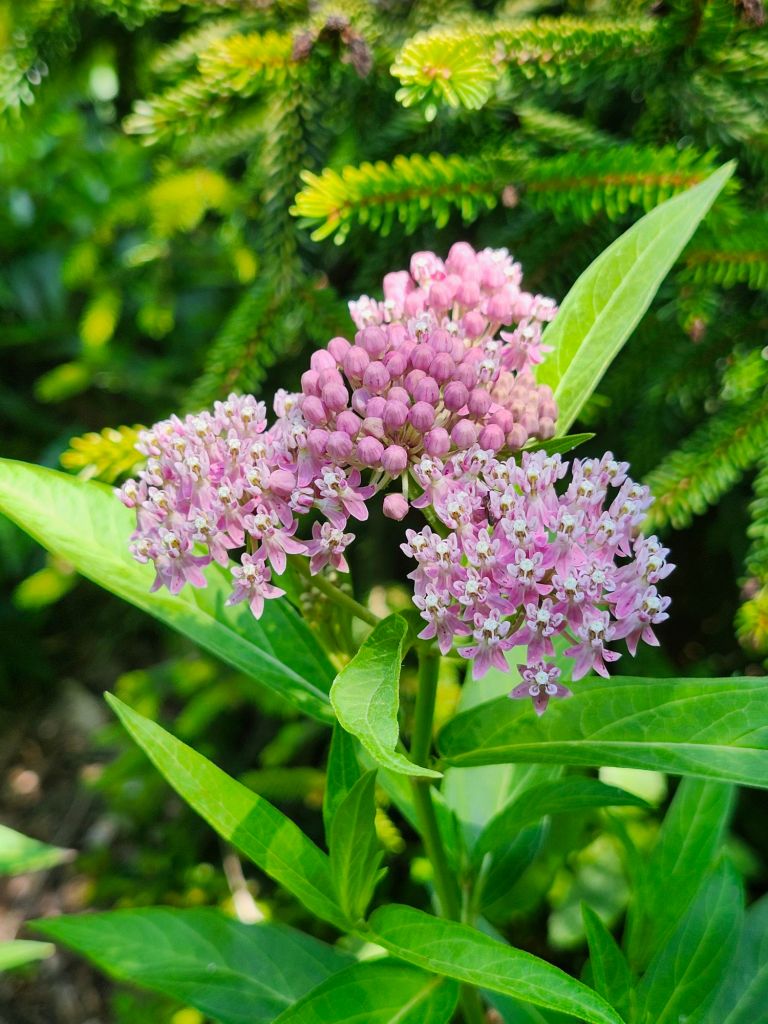
I hesitate to even think about it, but I’m ready for a break in the every day rainfall we’re getting. I know, I begged for rain. Puddles remain in the drainage depression dug several years ago in the lower rear garden. Irises and the variety of moisture tolerant plants in the shallow ditch are loving it, and while a few weeds creep between the stepping stones, the larger area that was weed covered until a year ago is well under control.
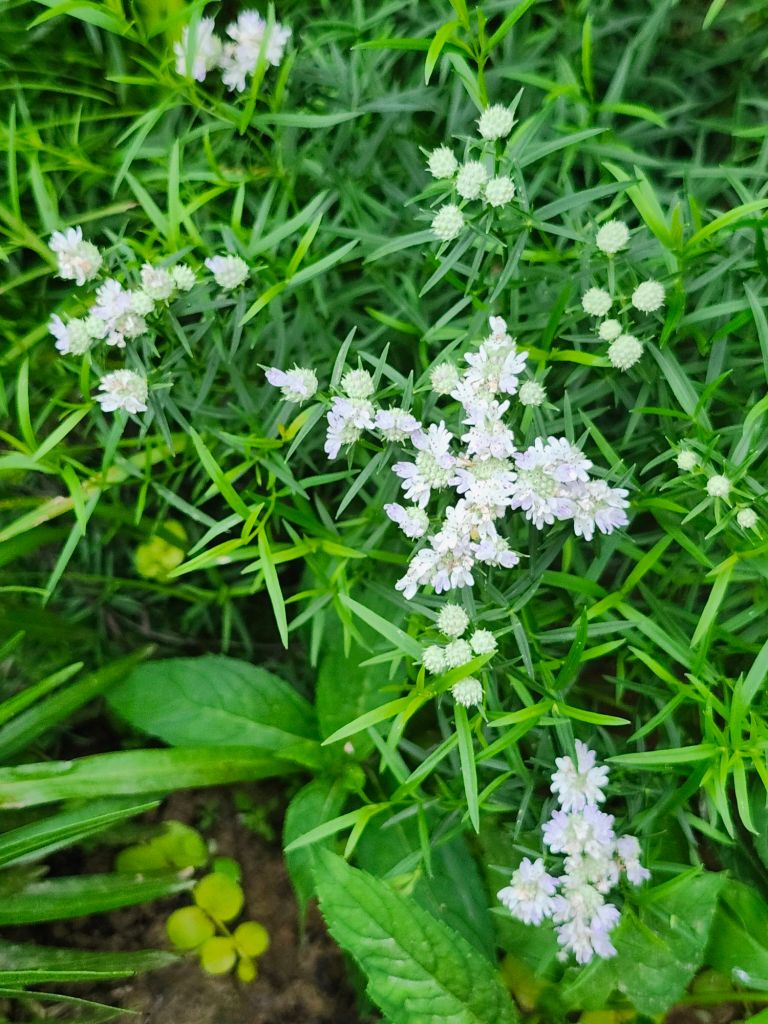
How much rain is too much? We’re not even close, but I’m happier with an occasional glimpse of the sun.


I thought pink flowers were on Joe Pye weed. How can I tell the difference between Milkweed and JPW or are they the same??
Joe Pye weed looks more like ironweed only with different colored flowers.
There are varied colors of milkweed, but the infloresence of Joe Pye is much larger. Individual flowers are somewhat frilled.
Ah. Thank you for that information. And I’ve also read conflicting info on which is perennial. Is either one?
There are non cold hardy, tropical milkweeds, though most are cold hardy in Virginia. All species of Joe Pye Weed are cold hardy perennials in Virginia.
The sun is playing hide and seek here this morning in West Virginia. I’ve had enough rain for a while too!
Blue skies and sunny here, but it’s not likely to last.
🌧️🌧️
Is bottlebrush buckeye fragrant?
No fragrance.
It looks like California buckeye, which is mildly fragrant.