I see many photos of gardens and wonder, “where is the room to grow?” Just like this garden, I suppose, though I have the excuse of thirty-seven years of growth. I should not be judged harshly over my failure to anticipate the current clutter, though think what you must that I continually add to it.
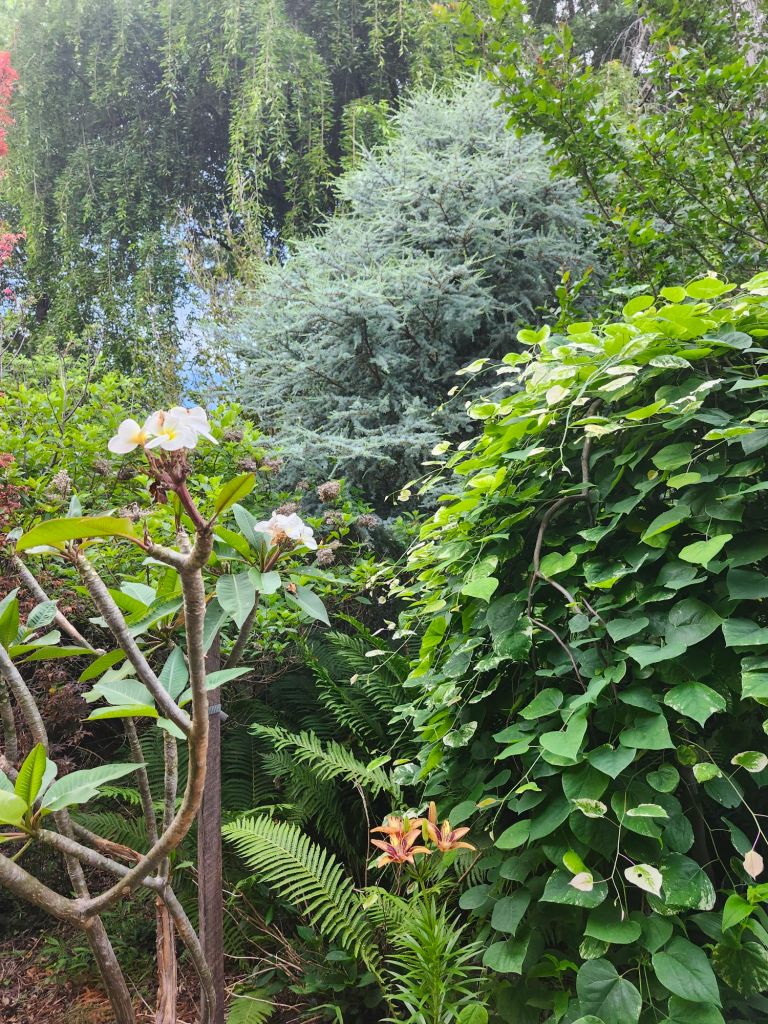
Strolling the garden in the winter months, I still fret over its bareness. There are dozens of hollies, cypresses and other evergreens, and scattered flowers of witch hazels and hellebores (then snowdrops, daffodils, crocuses, winter aconites …), but with dormant perennials and leafless trees and shrubs I feel the need for more, despite knowing that the garden overflows by mid-spring. Of course, the seasonal bareness leads to a number of winter plant purchases for early spring delivery, which is followed in late March by “where in the heck do I plant this?”
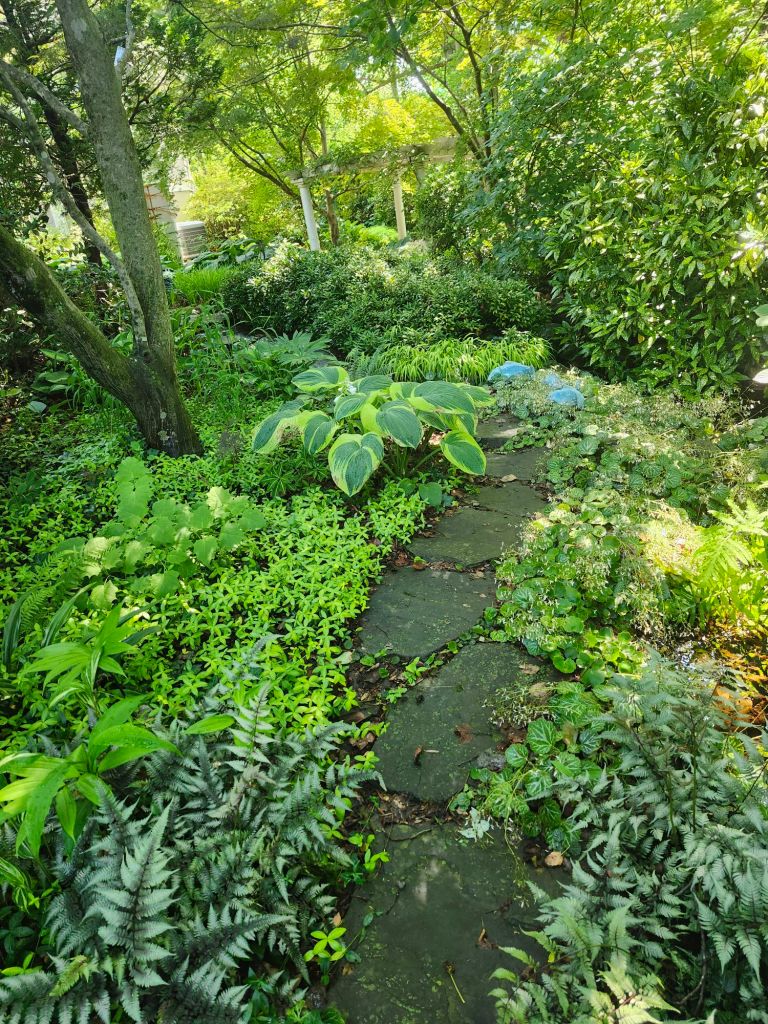
But, every plant finds its place, often elbowing into its neighbor. More is better is not always true, but today, I don’t regret a single addition to the garden. In another year, it’ll be that much better, but I must moderate my acquisitions as the garden becomes more crowded. Of course, I say this every year.
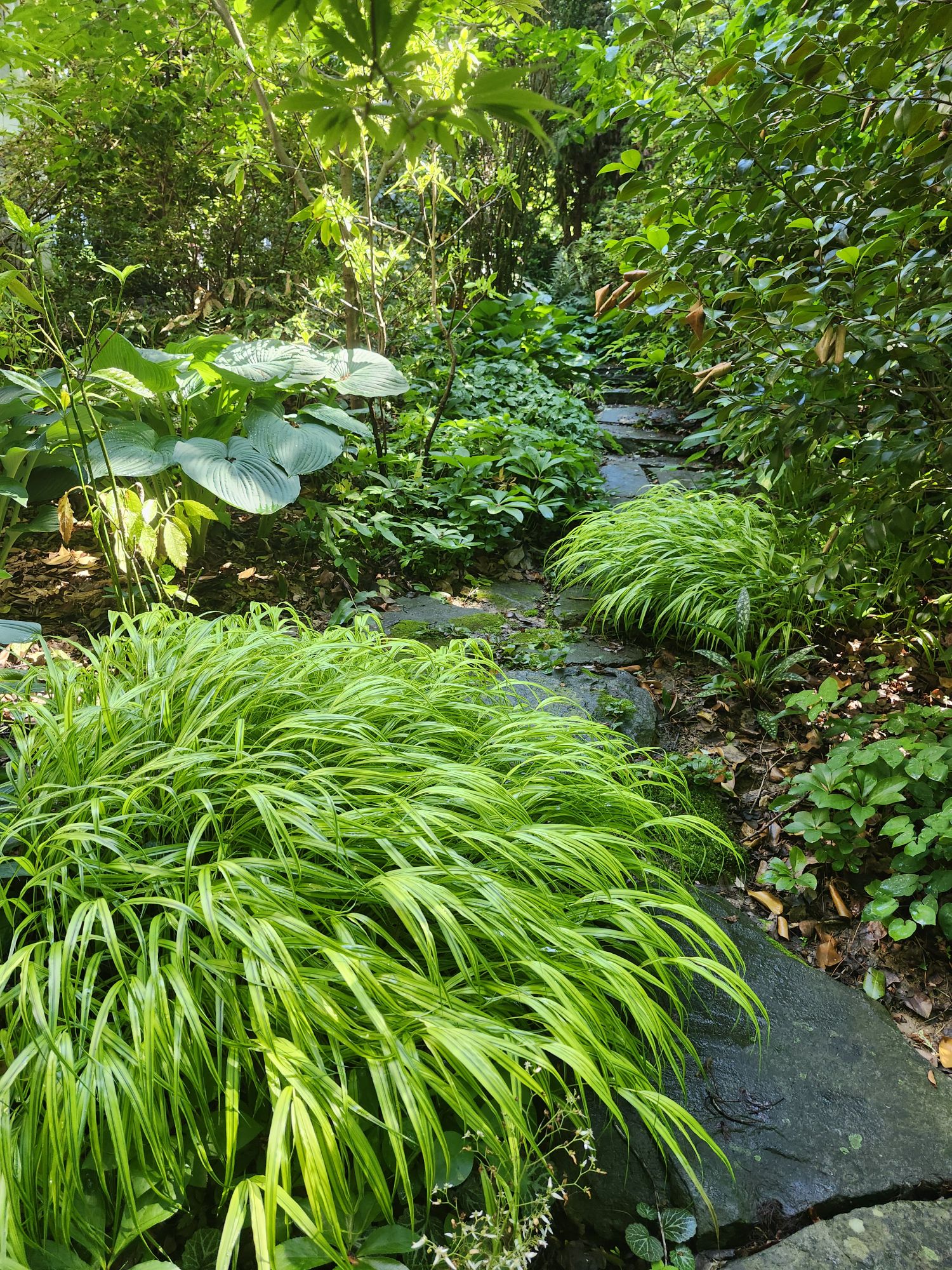
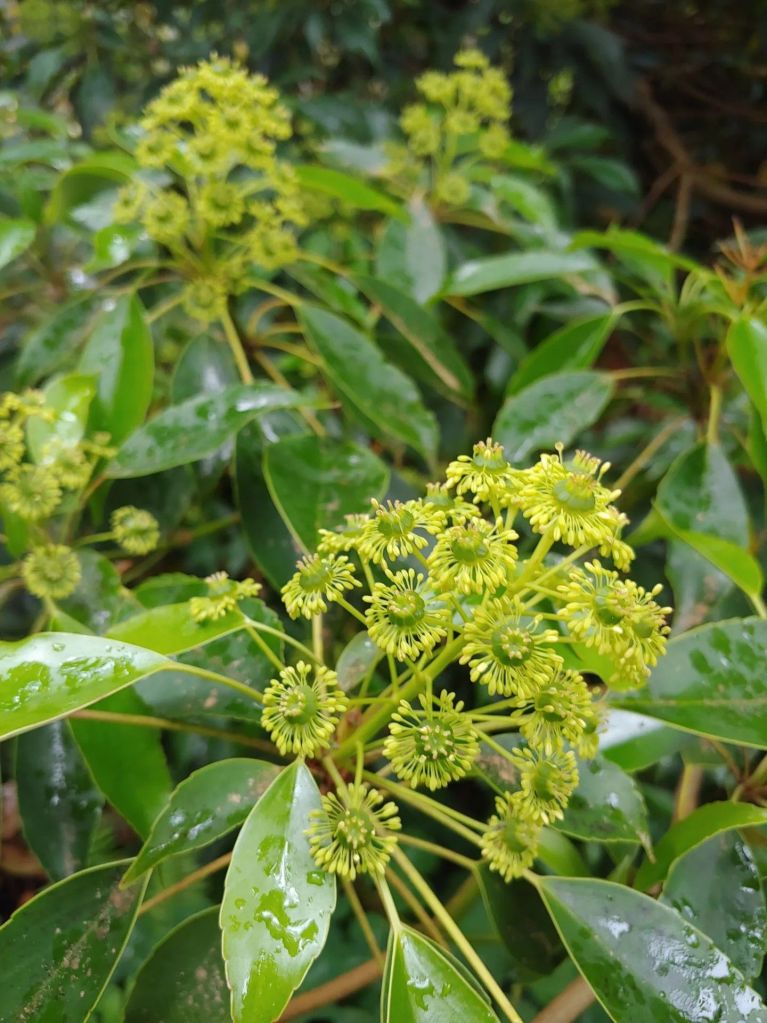
The best of this year’s additions is, no doubt, the Wheel Tree (Trochodendron arailiodes, below), with the gifted Monkey Puzzle a close second. I neglected and eventually killed a Wheel Tree in last year’s extended drought, which was replaced in autumn by an addition to the mahonia collection, so I didn’t think there was space for another. But, a two gallon was available from a trusted mailorder source that I presumed would be a bit larger than the standard one gallon. So I was convinced, and when a four footer was pulled out of the box I knew that I had to find a prominent spot for it.
Recently, I caused a scene as I hauled two six foot, tropical plumerias (below) home that were headed to the trash bin at the local high school where I volunteer in the horticulture department. Both stood far above the roof in the front of my two seat convertible. Who needs a pickup truck? The larger of the two has an oddly curved trunk that now begins to arch over the path to the rear garden. I planted it even though it’s not cold hardy, and I’ll figure what to do with it in autumn as cold weather approaches. But that’s a long way off.
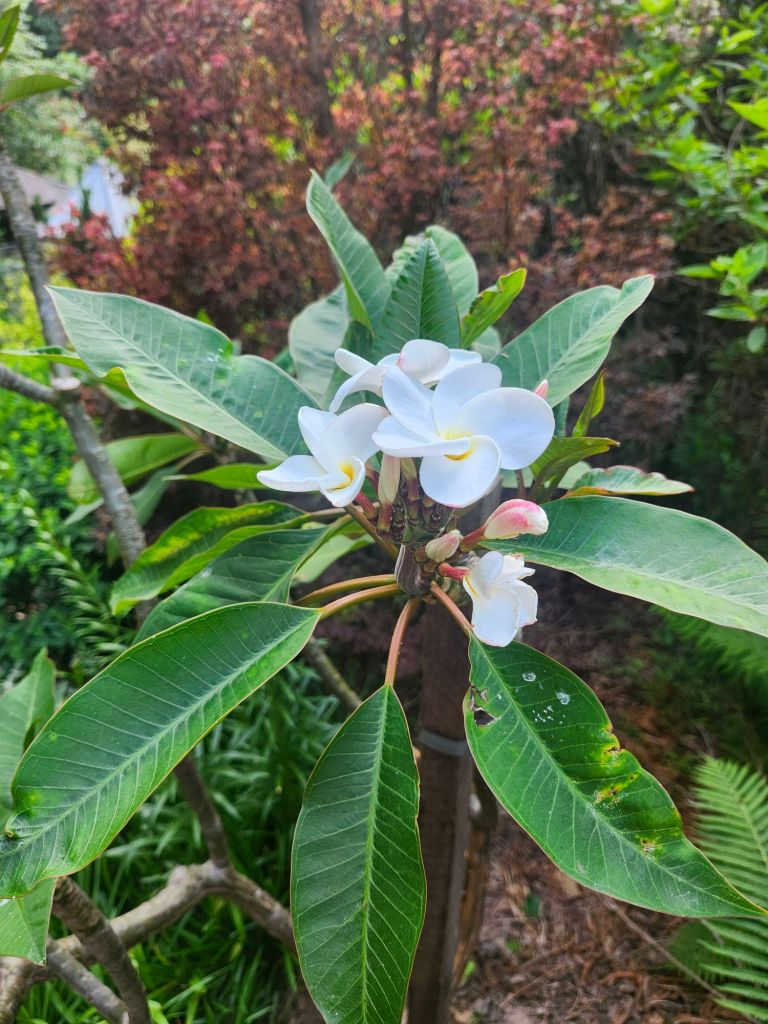
The plumeria is planted where a variegated honeysuckle climbed an obelisk, but the vine was a bit unruly, even for me. The honeysuckle was wandering into the neighboring ‘Whitewater’ redbud, and I knew the maintenance to keep the two apart would never get easier. The small gap following the honeysuckle’s removal didn’t need to be filled, but of course, I had to. The variegated, weeping redbud will fill the space, maybe this year, so this tropical treasure is a perfect temporary filler. I look forward to a summer of the plumeria’s blooms, but not to the time when I must figure what to do before winter’s cold. The basement storage area is already over filled with regulars.
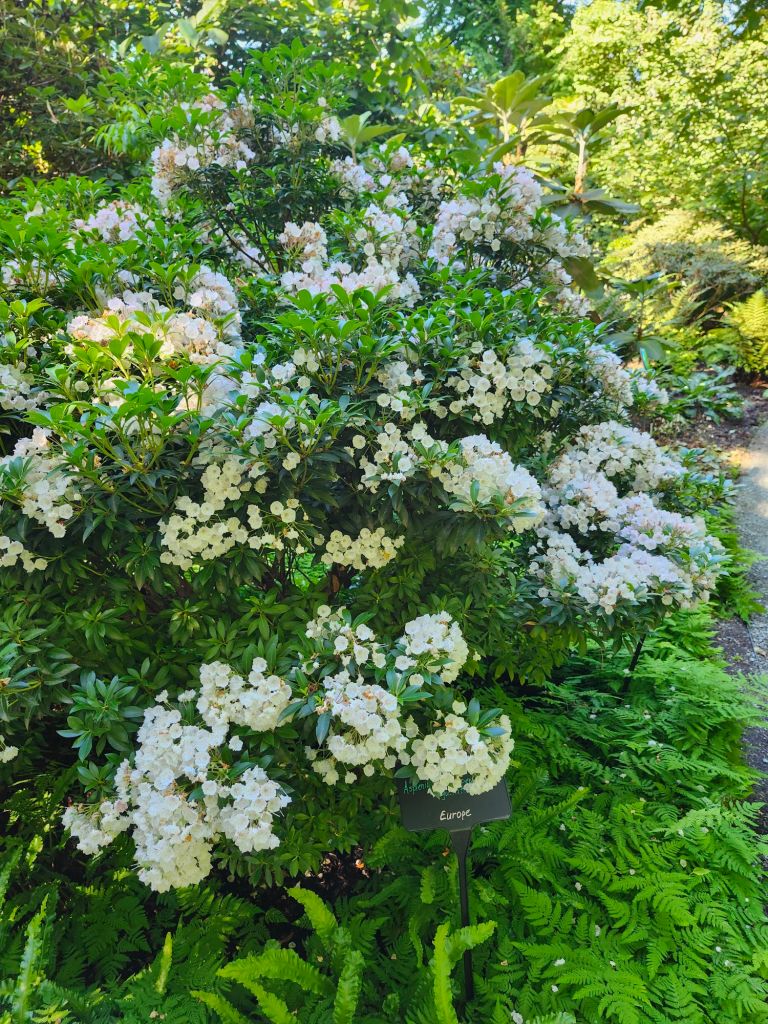
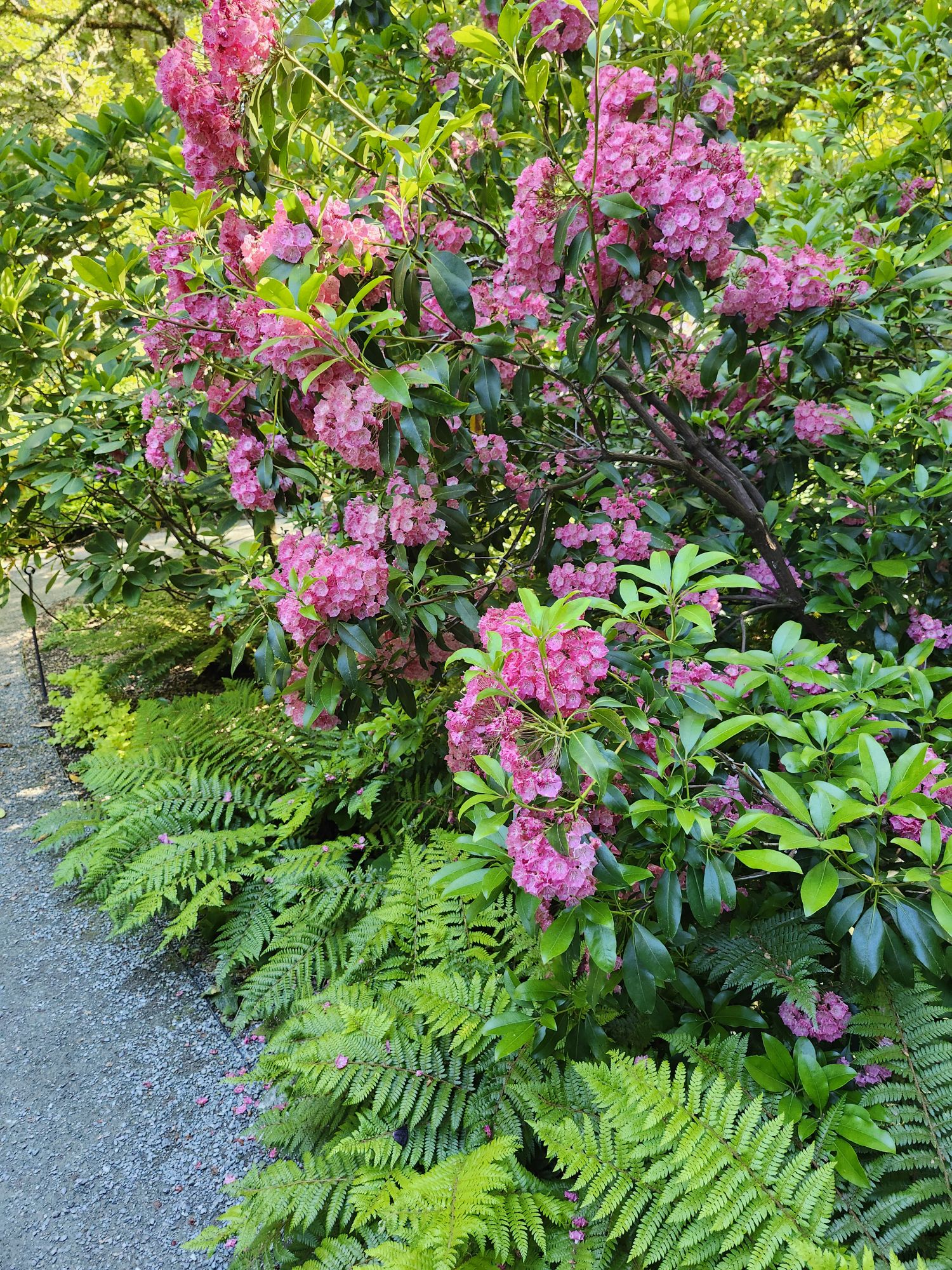
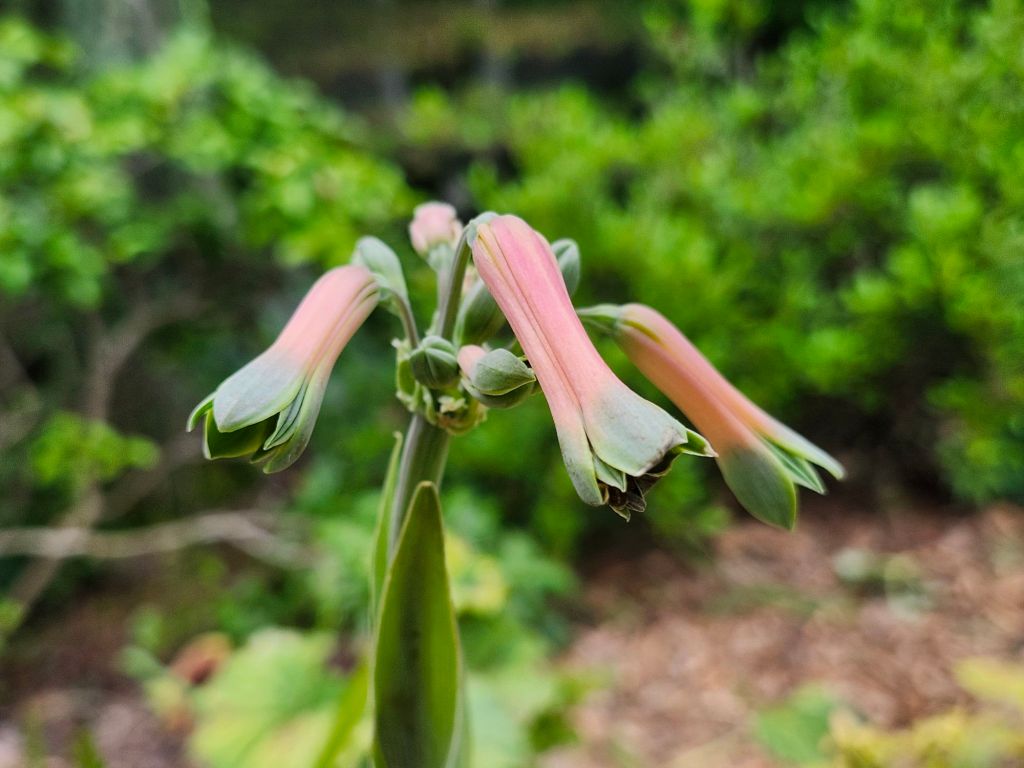
Idiot that I am, I was inspired by recent visits to Seattle area gardens to plant several Mountain laurels (Kalmia latifolia) in the shaded side garden. Never mind that it was late June and hundred degree temperatures were forecast. Rain was expected that evening, so in the ground they went. I could not trust that they’d still be available for late summer planting, and of course, I also planted two creeping dogwoods (Cornus wardiana) and a Peruvian lily (Alstromeria isabellana, below) that were purchased and hauled cross country in my backpack carryon. All have survived the spell of heat with the help of another round of thunderstorms.
So, I’m sure that you see what’s happening here. No doubt, there are gardeners not compelled to keep adding and adding, but that’s not me. I can’t stand an inch of open ground, though I give some consideration to a plant’s eventual growth. Sometimes, maybe most of the time, this is successful.


Good morning,Your Wheel Tree looks fun, I have never heard or seen one before.Can you share the seller? I’m
I purchased the 2 gallon Wheel Tree from Gossler Farms in Oregon. They grow more woody plants than most mailorder sources, and I’ve found that their plants are above average in size.
Thank-you very much! ~ KimOn Jul 8, 2026,