Yesterday, storms dispersed as they neared the garden. Today, a heavier storm could not miss us. The rain is not necessary, as we’ve had substantial amounts in recent days, but it’s rare to have too much in the heat of summer.
I delayed going out in the heat of the day, but managed to stir as the sun dipped behind dark clouds. Predictably, the stroll through the garden quickly became a trot as the winds picked up and the rumble of thunder moved closer. Barbara and I were caught in a severe storm a few days ago with two and a half miles to go on a hike along the Appalachian Trail. I recalled the deafening lightning strikes and rivers of rain as I scurried to safety.
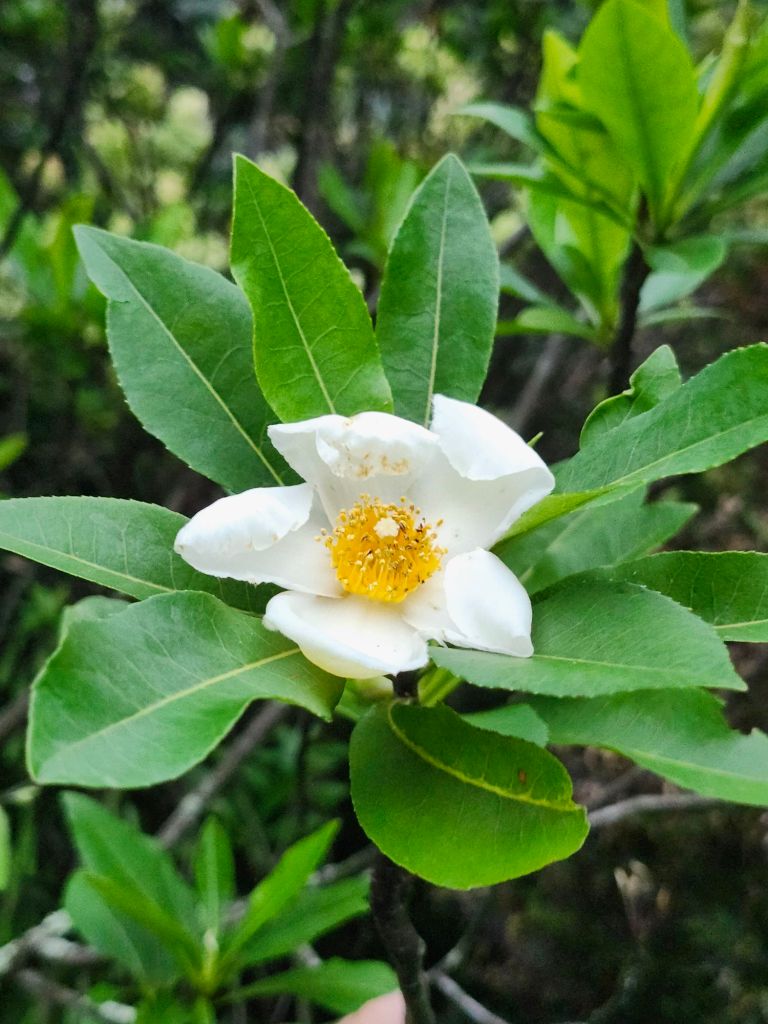
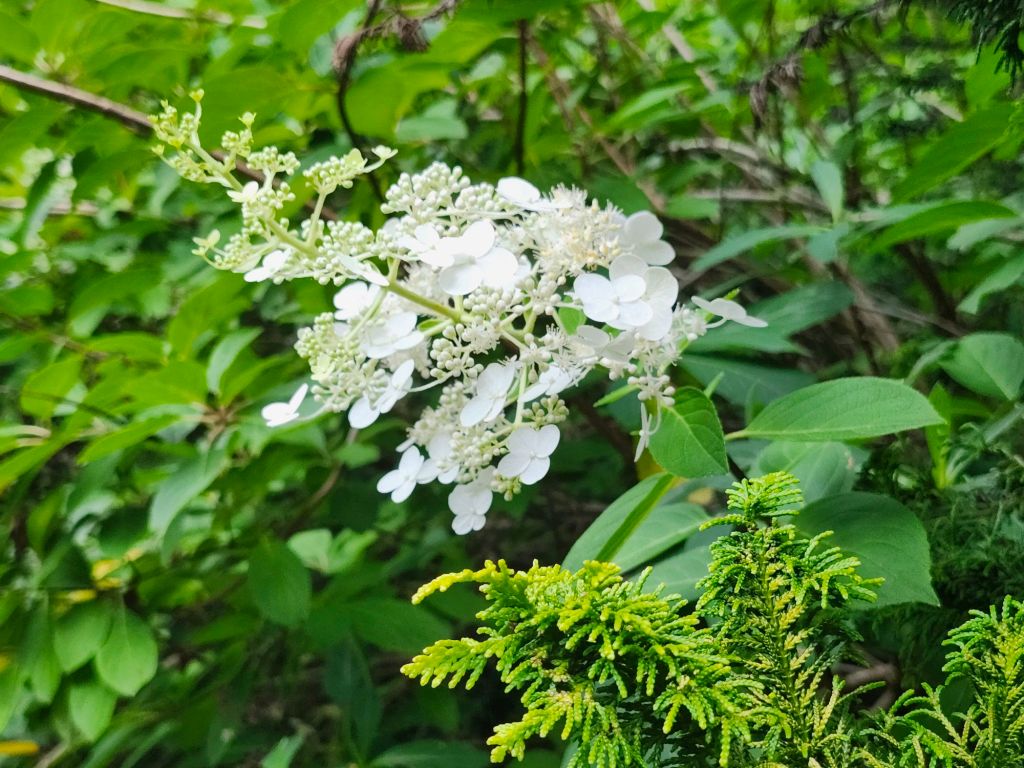
I was encouraged to see the first flower of the shrubby Gordlinia (x Gordlinia grandiflora, above) and a number of swelling buds. The small tree suffered in an extended period of cold in January, but more so when a spring freeze damaged its first growth. There are a few dead branches that will need to be removed, but the Gordlinia is squeezed between equally large shrubs so that the damage is not readily evident. HA, another good reason for planting too closely, though the ‘Little Lime’ hydrangea (Hydrangea paniculata ‘Little Lime’, below) deserves more prominent positioning.
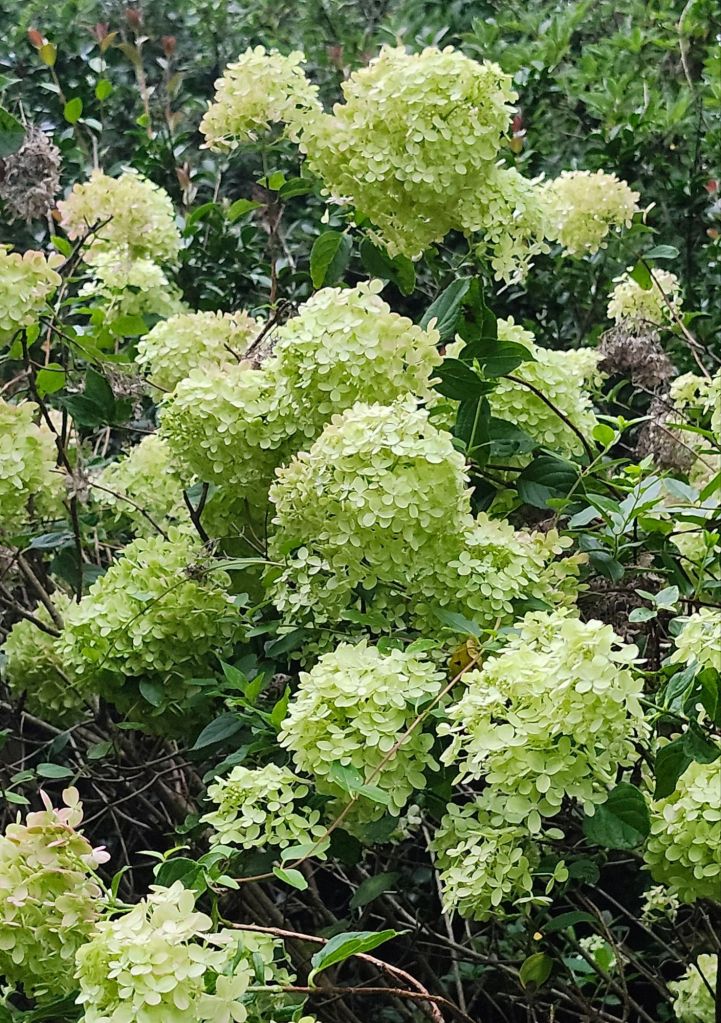
When the garden was begun thirty-seven years ago, ‘Tardiva’ (below) was among the most desirable panicled hydrangeas. Now, it is long forgotten, but not in this garden where one behind the koi pond has grown to nearly twenty feet. Four nearby seedlings have grown tall nestled along the pond’s edge with one growing in the pond’s shallow bog area. The flower structure of all are similar with slight variations in the shade of white.
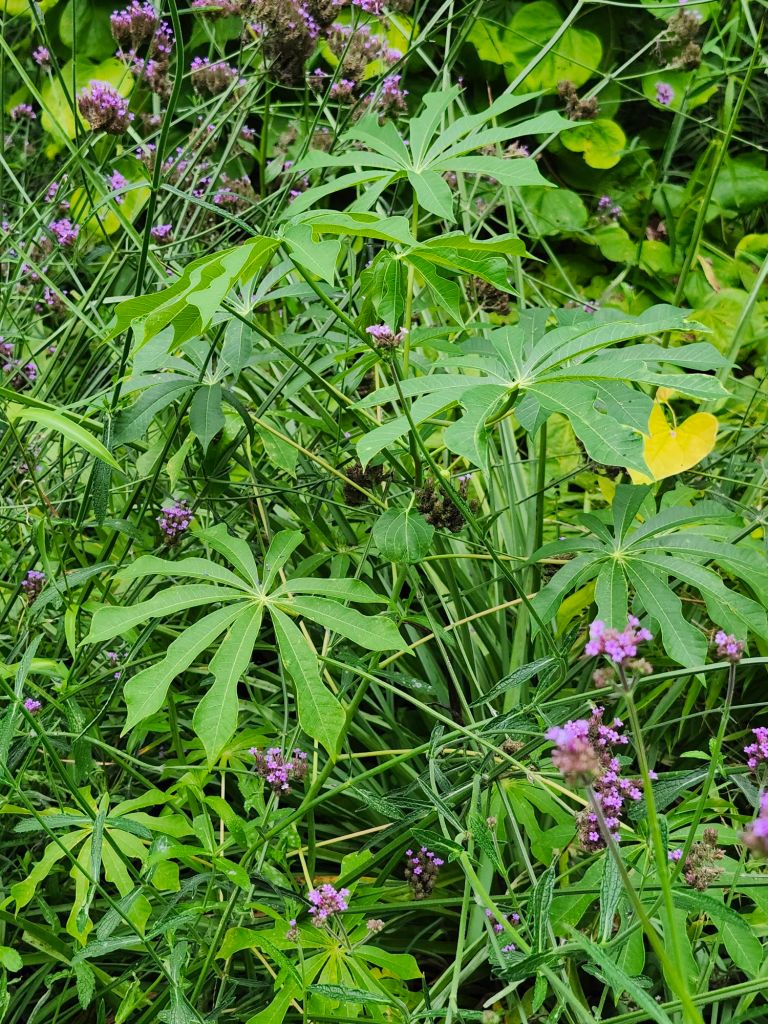
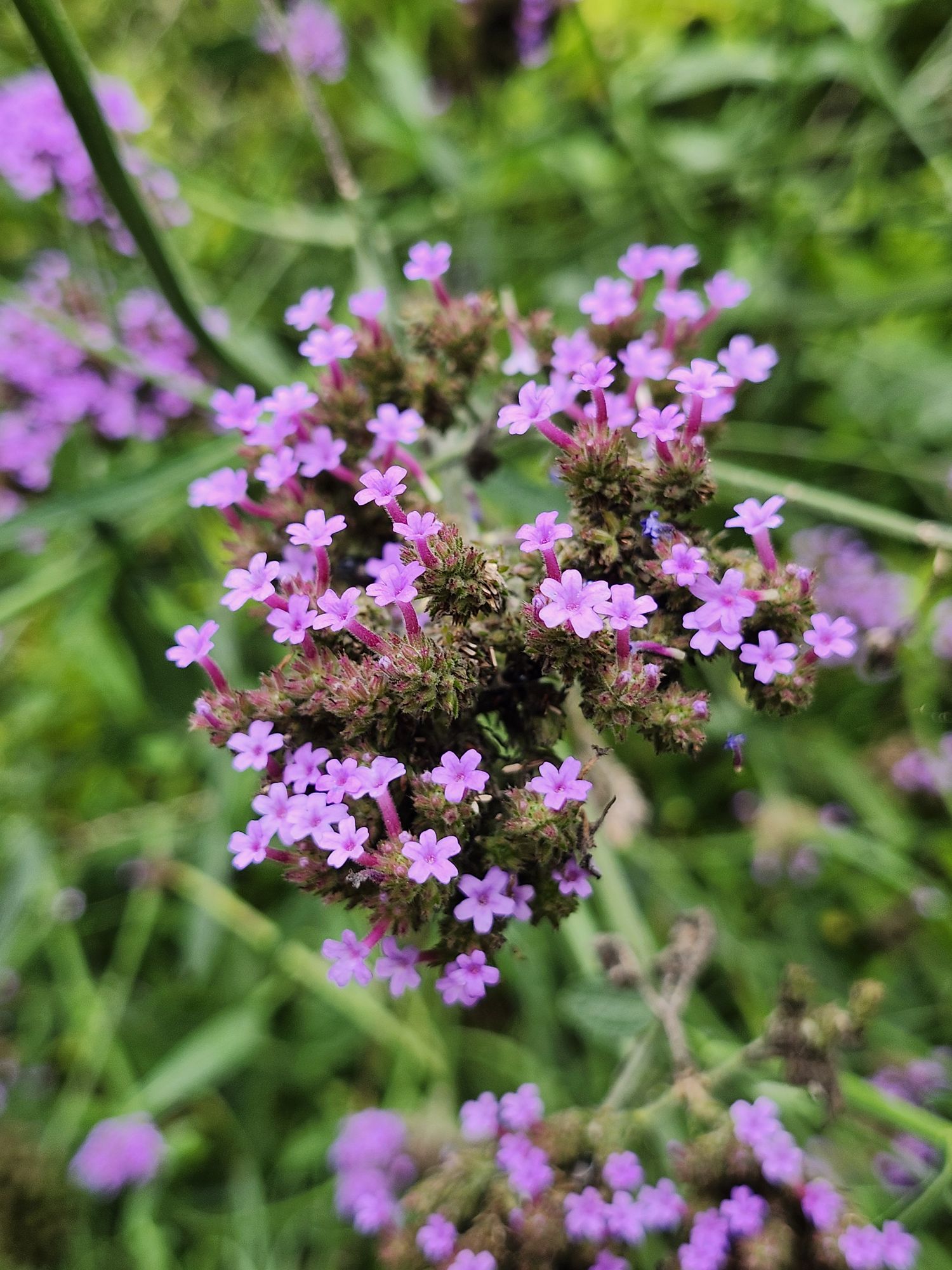
One of two Hardy tapiocas (Manihot grahamii, below) will soon rise above the tall verbenas (Verbena bonariensis, below) that wave in the slightest breeze. Subject to change (perhaps tomorrow), I’ve given up on growing the hardy bananas (Musa basjoo) that have failed repeatedly to survive winters in the damp soil of the lower rear garden. Instead, Rice Paper Plant (Tetrapanax papyifera) and the tapioca will be the tall tropicals that make little sense in the scheme of the garden. I expect I’ll add an insulating cover when temperatures fall below ten degrees (Fahrenheit), and while they are unlikely to rise much above six feet this year, I hope for a few additional feet in the future.


🤩🤩🤩🙌🏼🍃💚
Feel free to send some of that rain to southern Virginia, we seem to be in the middle of a drought somehow.
We were very dry until the storms began to hit a few weeks ago. I’m thankful for every drop after dry summers the past few years.