Removal of green reversions in the mass of Black Mondo grass (Ophiopogon planiscapus ‘Nigrescens’) demands meticulous attention, with green strands closely mingling though slightly taller than the black. Unfortunately, I lack this attentiveness among other shortcomings though in some cases I am able to sit up straight and mind my manners.
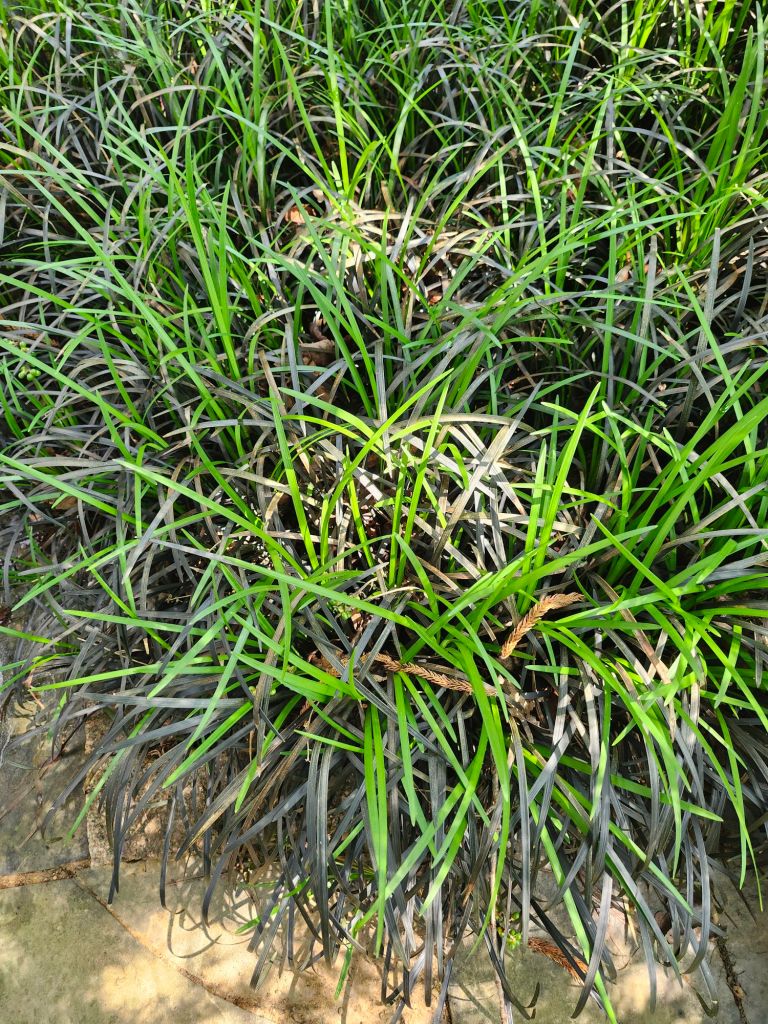
I’ve long been pleased that the slow growing black mondo has spread sufficiently that I’ve been able to steal small clumps to plant elsewhere. The recent green invasion is not unsightly, but of course it is a shame that I am resigned to allow it to take over. After a few brief interventions I realized the enormity of the task, so now I will monitor the progression and prevent the more vigorous green mondo from spreading further.
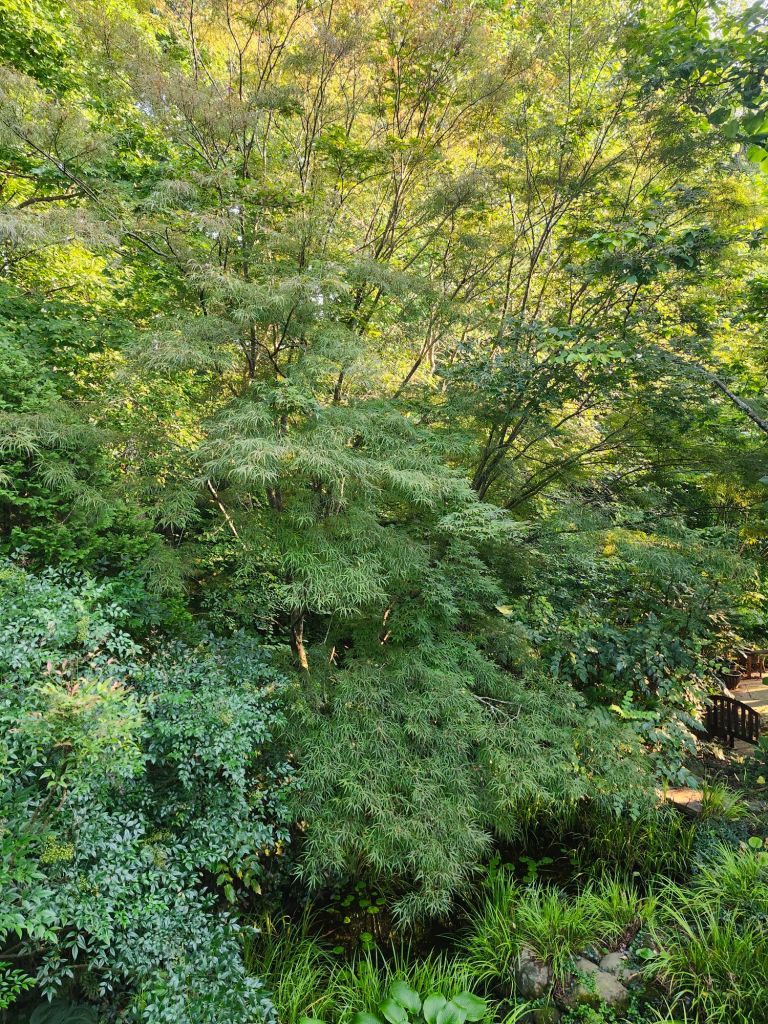
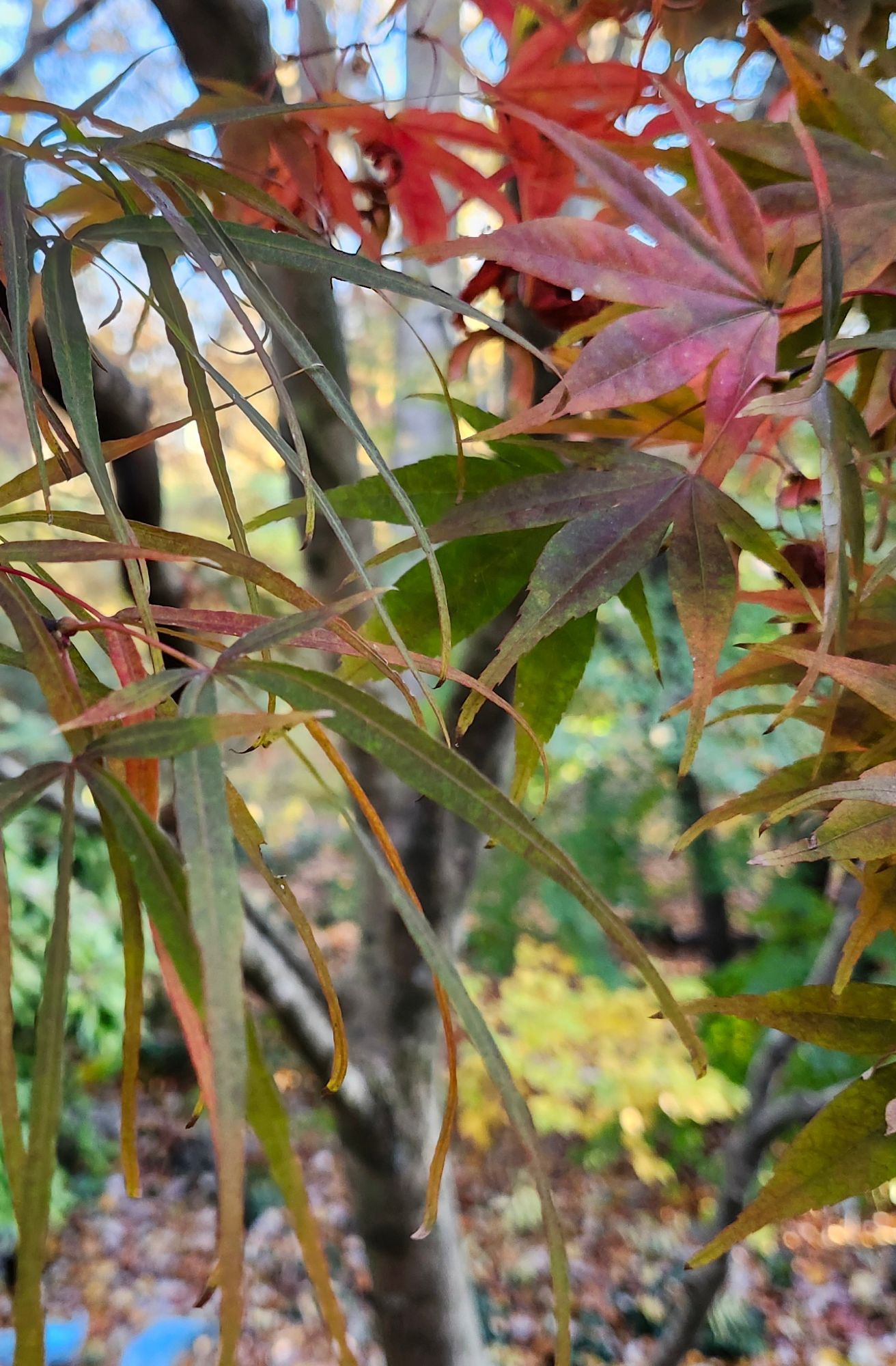
Reversions of plants with colored or variegated foliage are common, and most are more easily controlled than the mondo grass. Several branches of the red, narrow leafed ‘Atrolineare’ Japanese maple (Acer palmatum ‘Atrolineare’) that arches over the pond beside the sunroom have reverted to a more typical, red leaf (similar to ‘Bloodgood’ and others). On a younger tree this could be a concern, but these are several branches on a tree that spreads to thirty feet. Since the maple occupies the largest share of the view I have no choice but to keep an eye on it, but I expect no substantial progression.
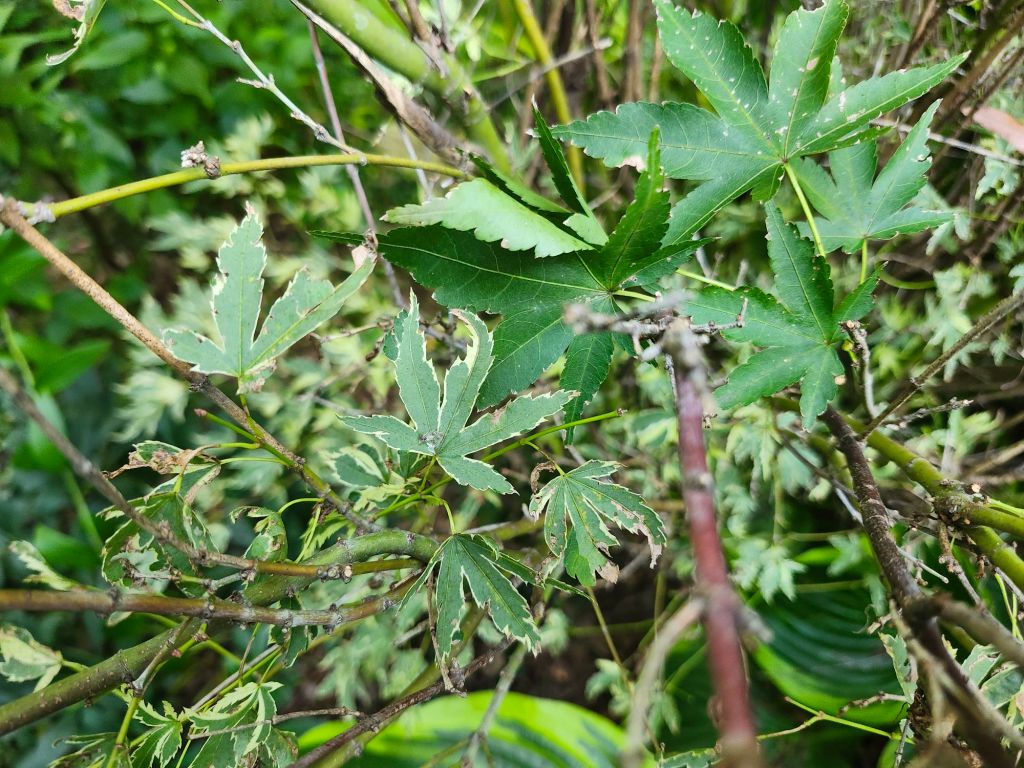
I regularly remove green reversions from the garden’s two ‘Butterfly’ Japanese maples ( Acer palmatum ‘Butterfly’, below). These are more vigorous than the maple’s variegated leaves, so the slow growing tree could quickly turn to green if they were not pruned. Here, the task is simple with a leaf or two snapped off by hand or a small branch pruned.
Reversions are far different from growth that suckers from below a graft. Many trees and shrubs that do not come true from seed, or that do not root easily from cuttings, are grafted. It is not unusual to find branches of weeping cherries and occasionally Japanese maples growing from below a graft. This growth is likely to be more vigorous and a danger to the preferred tree or shrub.
Several years ago, I noticed that half of a bushy witch hazel (Hamamelis) was not flowering. It was planted a bit out of the way, so this went on for several years until I followed the non-flowering branch down, discovering that it grew from beneath a graft. Many witch hazels are grafted onto the rootstock of our native Common witch hazel (Hamamelis virginiana).
At first, I decided not to do anything, to see if the common witch hazel would flower in autumn, and the other half later in winter. But, for whatever reason this didn’t work, so it is now a lopsided, half shrub, and I’m still waiting for flowers to verify its identity.


Oh, I see both quite often. ‘Gardeners’ are not trained to remove either reversion sports or suckers. Dark bronze New Zealand flax cultivars that start out compact and proportionate to their landscapes eventually turn lighter bronze and grow quite large. The same happens to variegated Pittosporum tobira.
Long ago, I grew a dark leafed flax for several years. Each year it reverted to a smaller and smaller plant. Finally, it reverted to dead. Not quite cold hardy even in a protected spot.