I was not surprised to wake this morning to see frost on the neighbor’s lawn. The early sunrise hits my small front lawn, so the frost melted before I woke up. Overnight temperatures were forecast to fall near the freezing point. I’m fortunate in retirement not to have to wake before sunrise to see the night’s low, but I’m sure it was close.
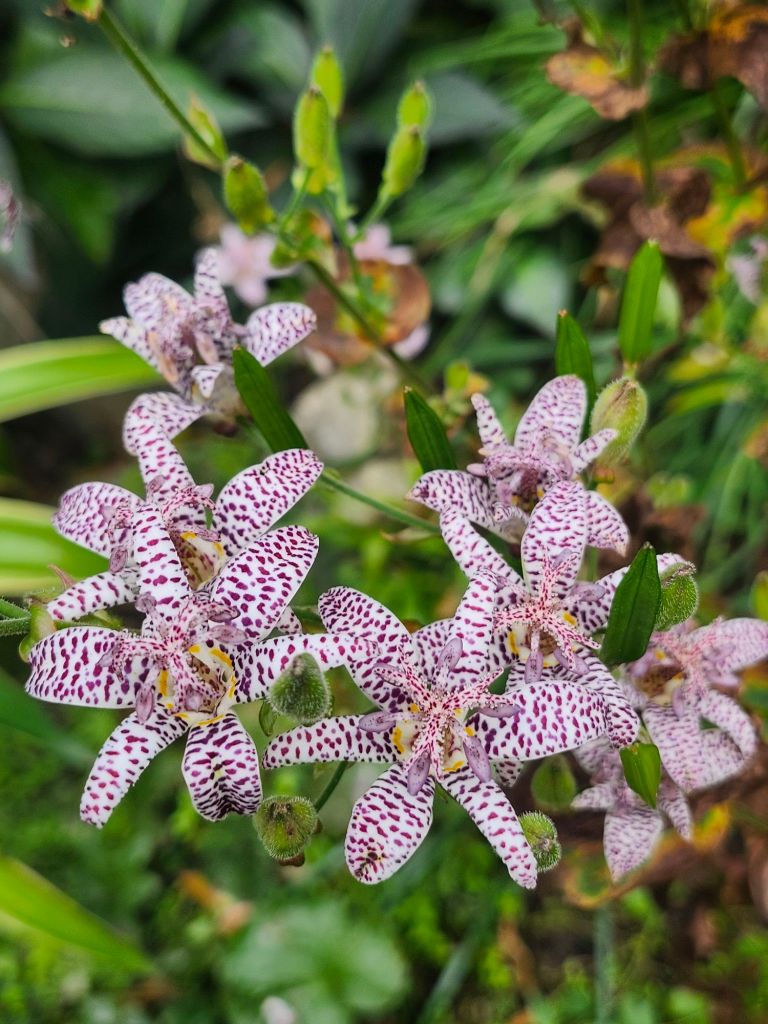
I waited until late morning, when temperatures rose above fifty degrees, to stroll the garden. I didn’t expect to see any damage from the cold, and sure enough there was little that stood out besides the daily increase in yellowing of foliage. Tropicals in the garden are generally cold hardy to short periods down to thirty degrees (Fahrenheit), and any plants flowering in October will usually hold up until temperatures fall into the upper twenties. I expect another week or two will pass before potted tropicals must be hauled into the basement for winter storage.
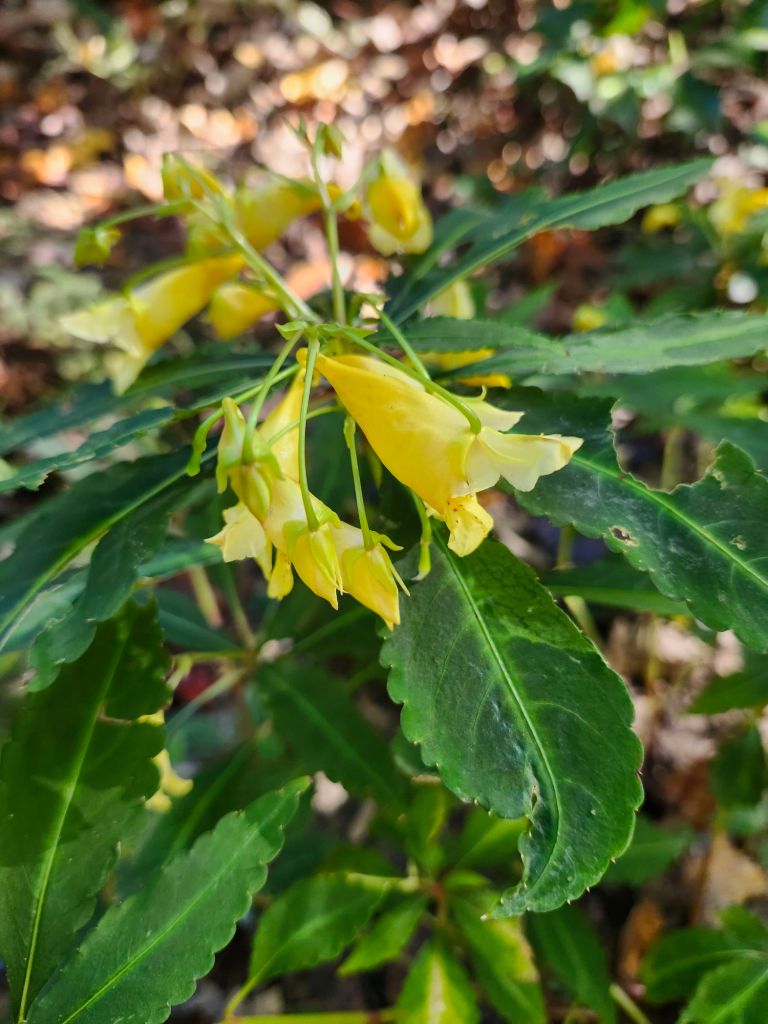
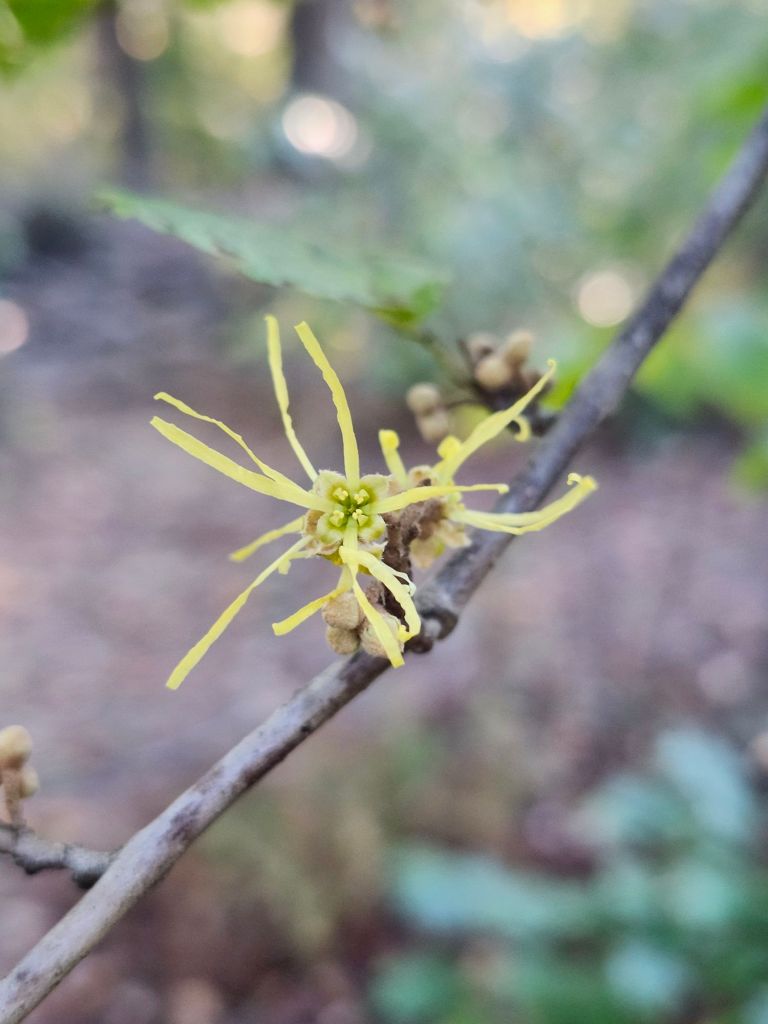
I first noticed common witch hazels (Hamamelis virginiana, below) flowering at higher elevations in local mountains the last week of September, so of course, I closely watch ones in the garden for our first blooms a few thousand feet lower. Today is the day, with a glimpse of the spidery, yellow flower unfurling from the small, rounded bud. Even at its peak in a few weeks, the common witch hazel will not match the floral display of the Ozark and Asian witch hazels, but it tolerates shade better than others and I’m happy to have several as other flowers begin to fade.
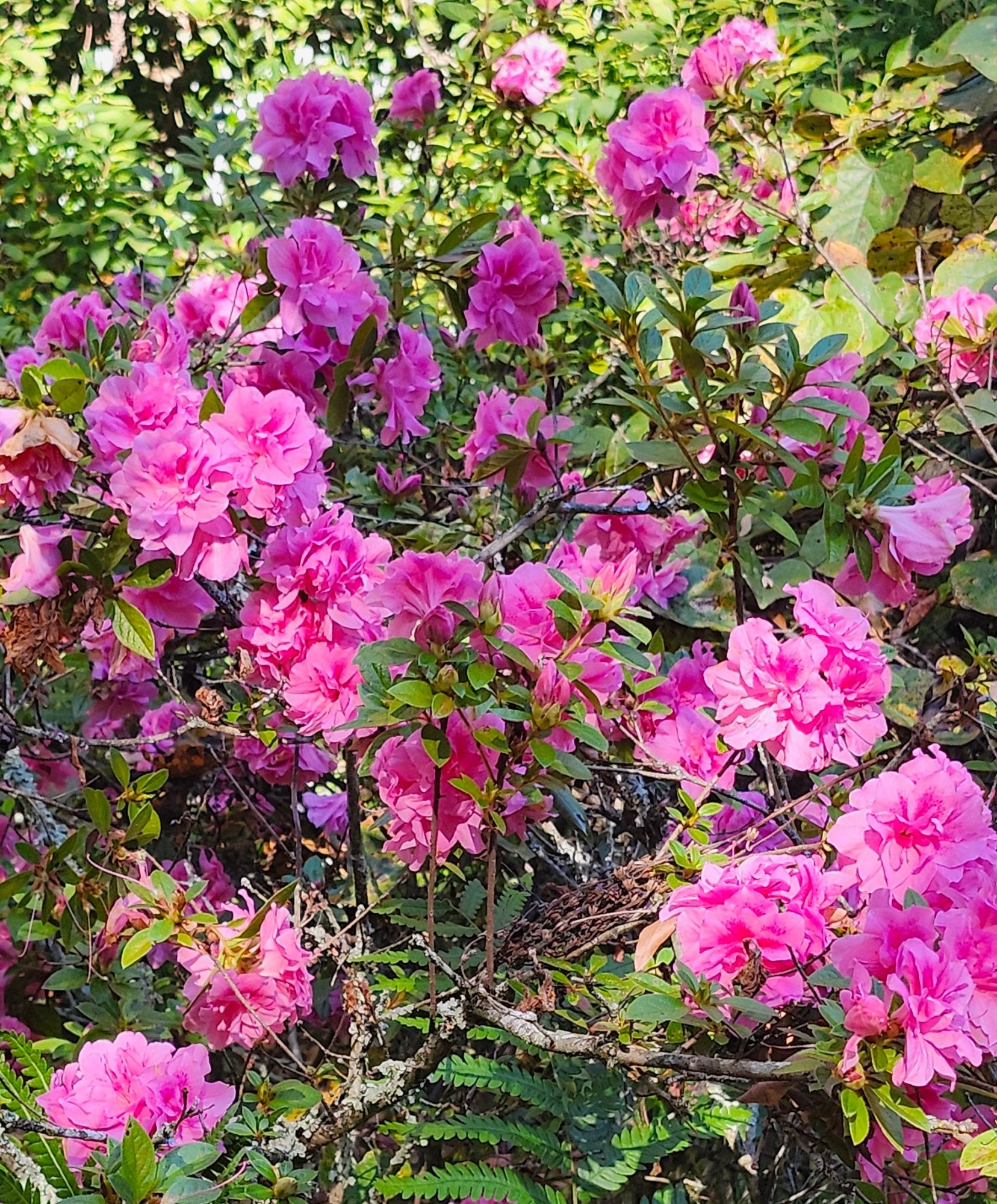
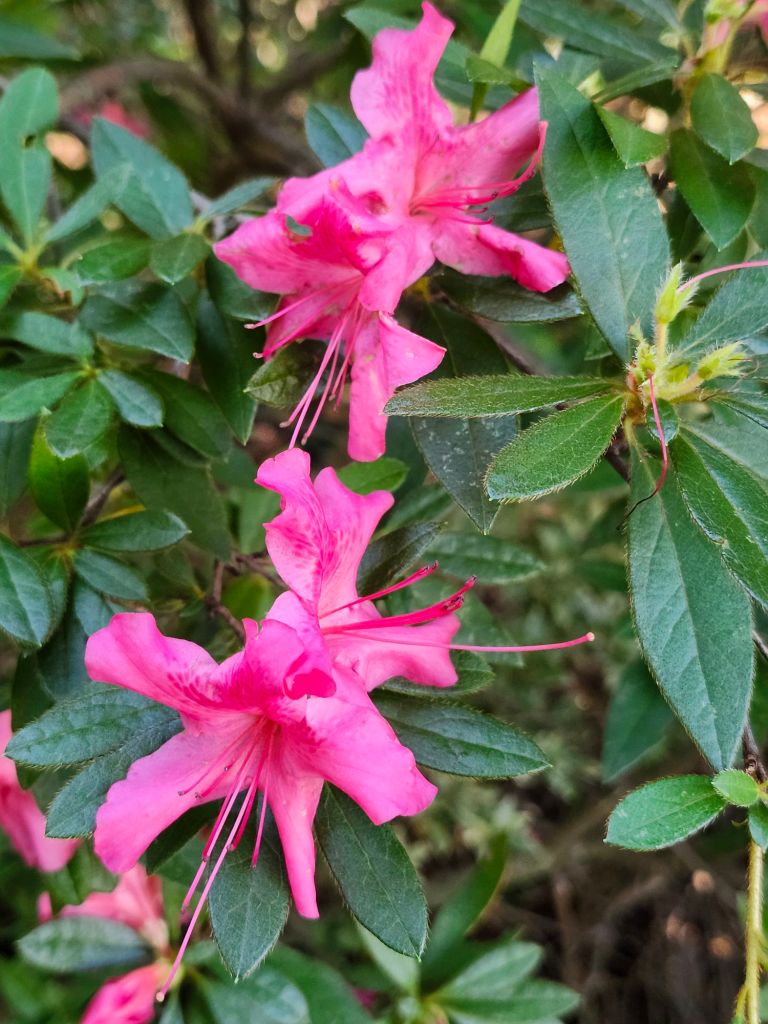
I expect reblooming Encore azaleas (below) to peak in September, but all have increased their flowering in recent weeks. All should remain in bloom until temperatures drop into the upper twenties. While camellias will pause, then continue flowering with milder temperatures, the azaleas will not flower again after a cold spell. Except Autumn Amethyst, that occasionally will have scattered flowers into December.
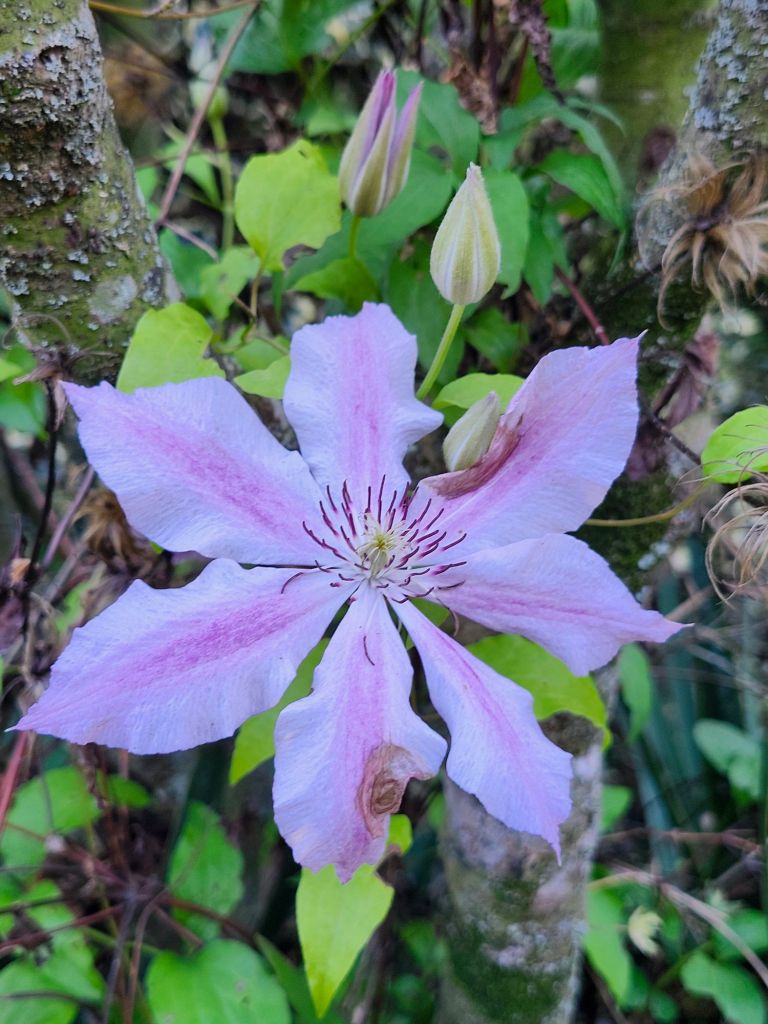
I am most surprised to see a flower and a bud on a clematis (below) that scrambles up a ‘Butterfly’ Japanese maple (Acer palmatum ‘Butterfly’) beside the koi pond. Undoubtedly, this is a result of a combination of weather events, but I can make no sense of it. Unlike the rhododendron with buds that will not reset for spring, the clematis’ bloom will not detract from its typical late spring flowering.