The delayed appearance of flower buds on the red-flowered ‘Akebono’ paperbush (Edgeworthia papyrifera ‘Akebono’) is curious but reason for joy as the garden begins its transition to winter dormancy. There are six fully budded, very large paperbushes (Edgeworthia chrysantha) in the garden with yellow tipped tubular, late winter flowers, but after fearing the newly planted Akebono’s doom following a twenty-seven degree (Fahrenheit) night in early May, I’m overjoyed by its survival and vigorous growth. And now, there are buds that promise flowers in late February.
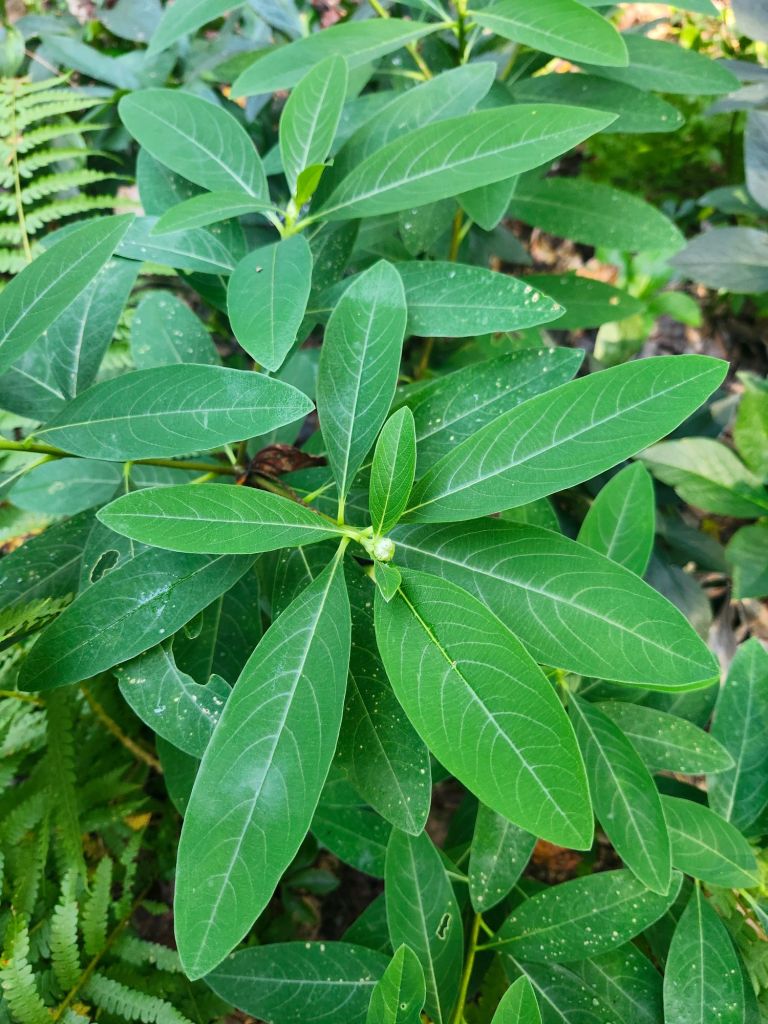
I expect that the development of flower buds was delayed by the exceptional growth from the small shrub planted in March, then damaged and pruned, to one that is now several times larger. I am hardly surprised by the substantial growth. Four shrubs in slightly damp soil in the rear garden have grown three to four times larger than references suggest at maturity. Three have grown wider than twenty feet, and all recovered quickly to fill gaps after damage in the late freeze.
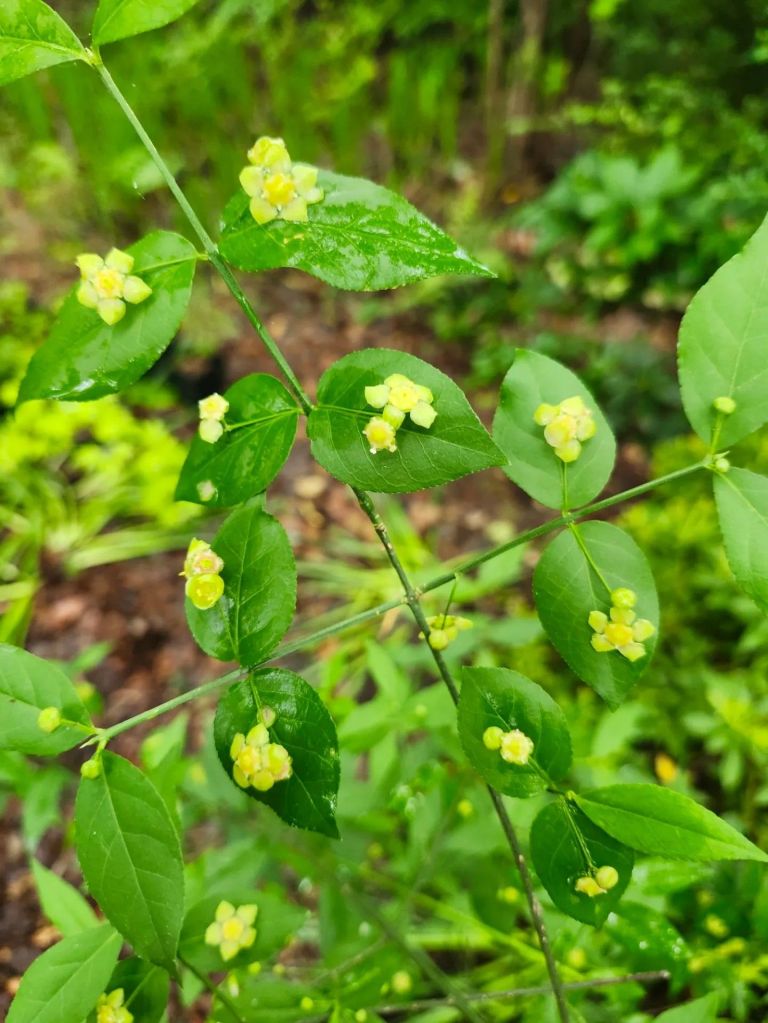
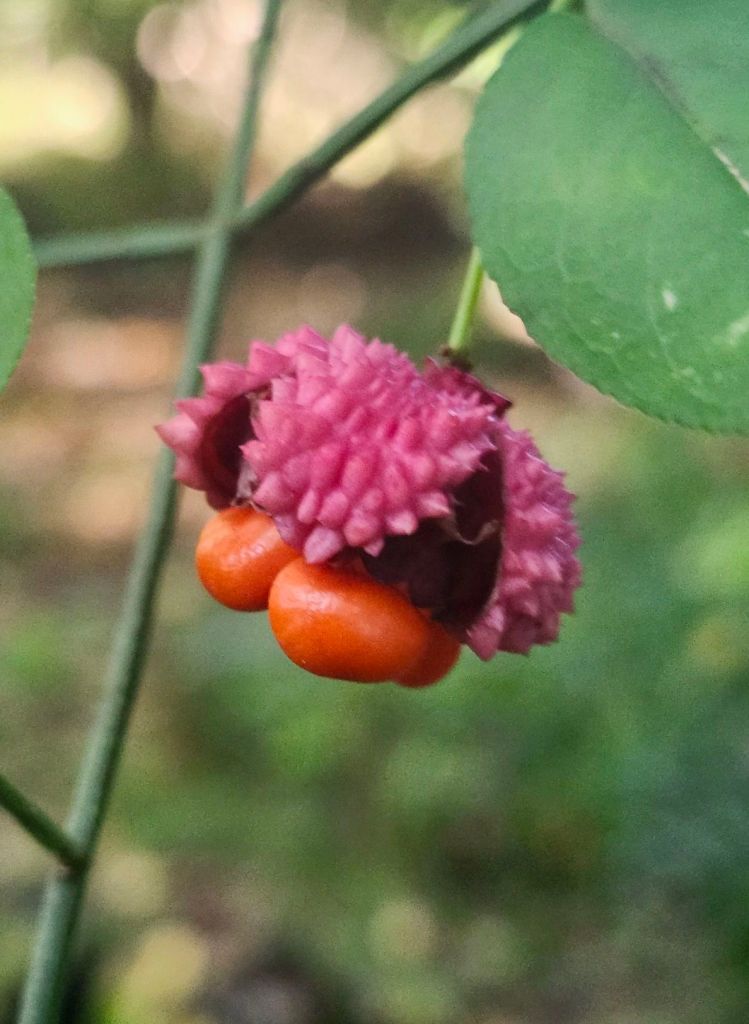
The strawberry bush (Euonymus americanus) along the forest’s edge has been slow to get going after planting a few years ago. I’ve considered replacing it in this dry shady spot, but it’s in a good location and it is making slow progress. The May flowers (above) of the strawberry bush are interesting, though not particularly showy, and today I see the marvelous seeds (below) that earn its common name.
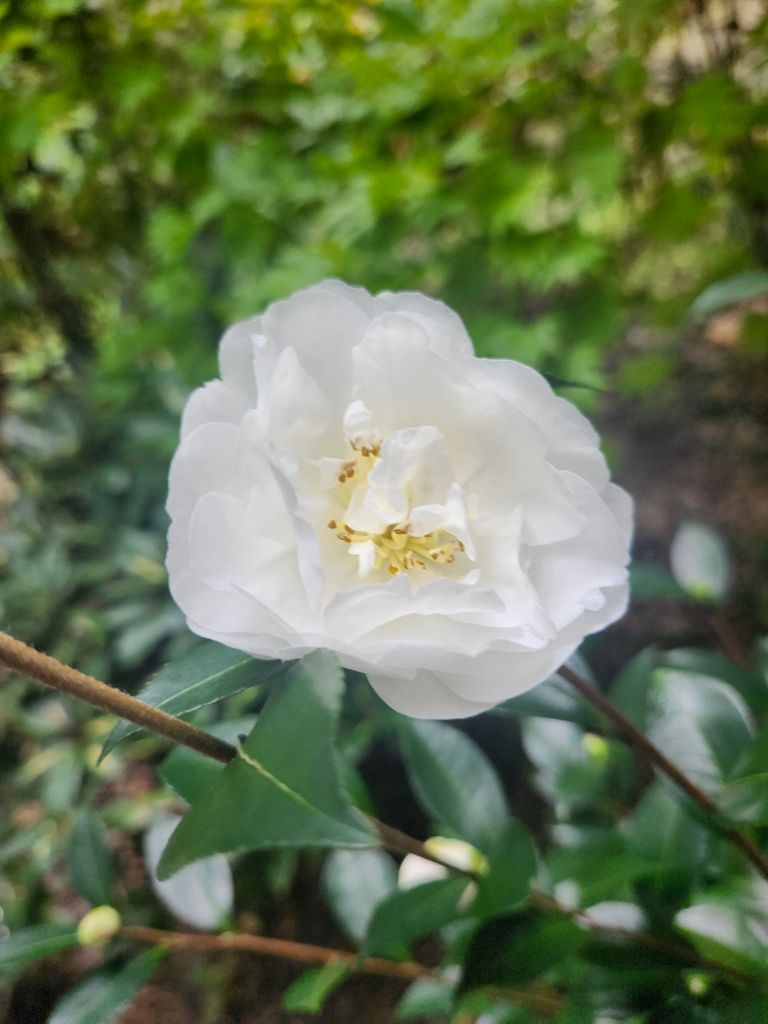
Several weeks ago, I noticed buds on the autumn flowering camellias, but with short hiking trips and several rainy days I hadn’t noticed flowers, until today, on the columnar, white-flowered ‘Autumn Rocket’ (Camellia sasanqua ‘Autumn Rocket’) at the corner of the sunroom. True to its name, growth of the camellia is rapid and straight up. It’s likely I’ll prune tips to encourage at least a little branching, though it’s growing in a tight space.
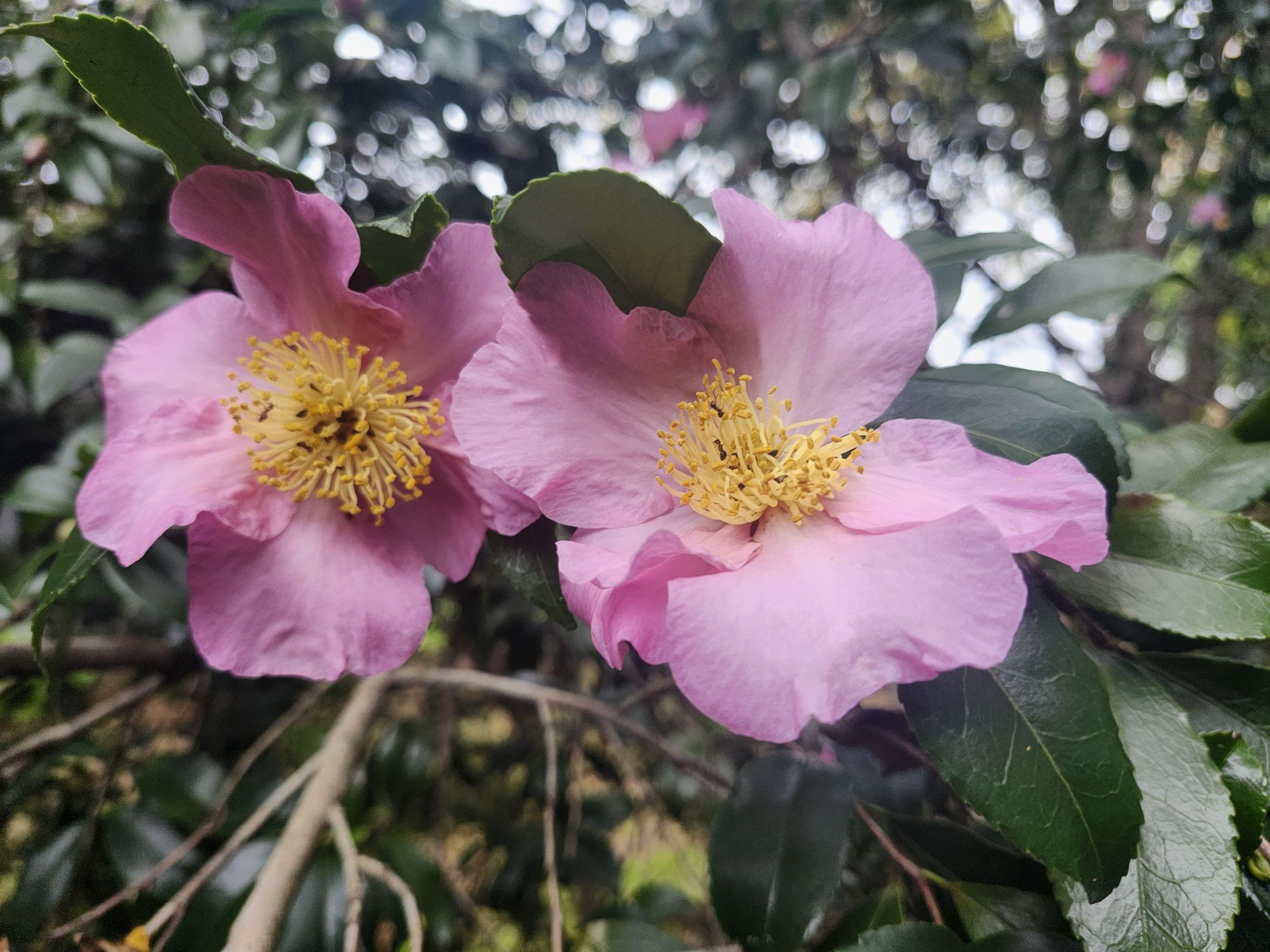
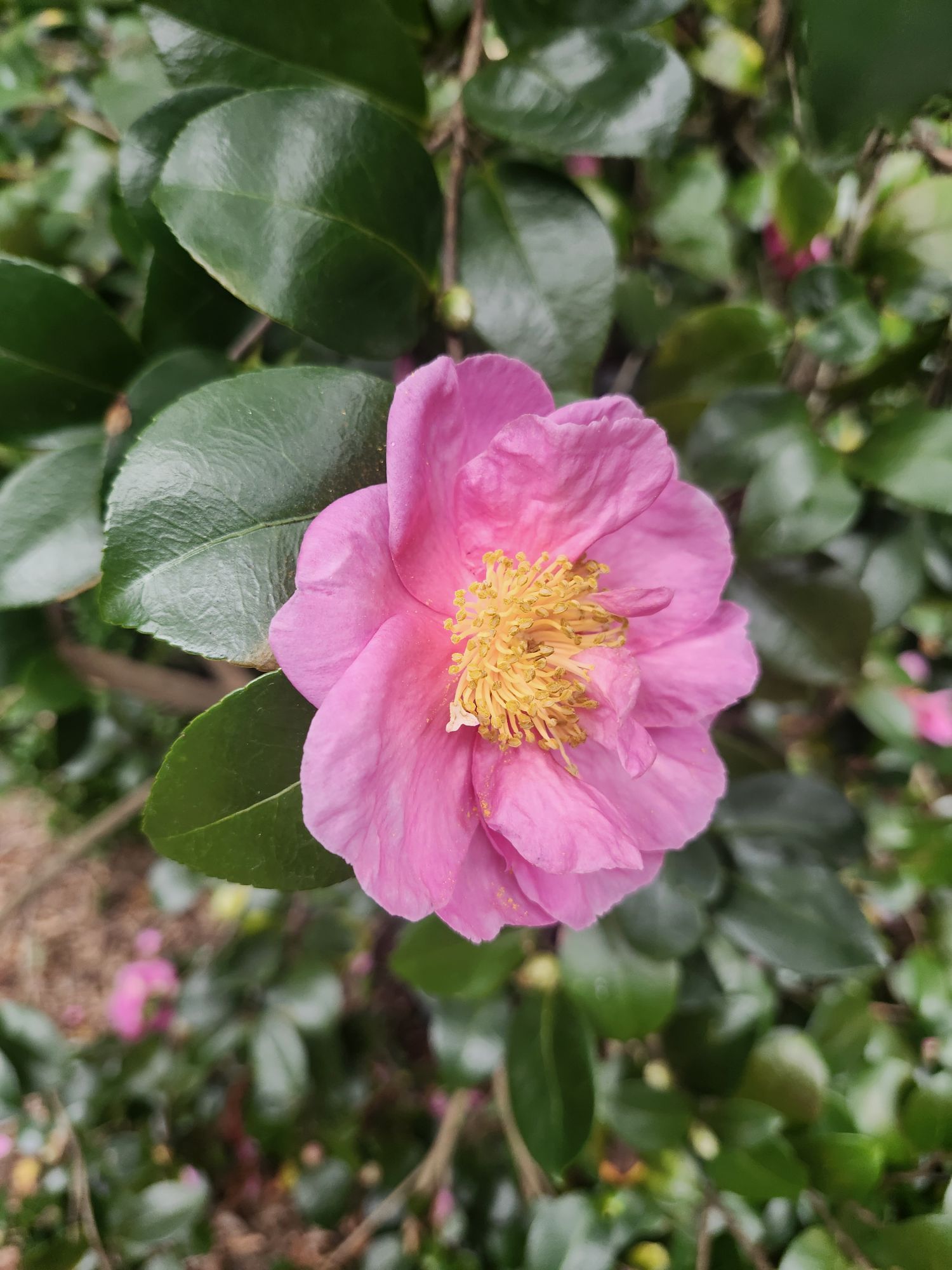
Of course, I then scouted the National Arboretum hybrids along the half sunny driveway that were all beginning to flower. Many will continue flowering into December with two beginning their flowering in December and continuing into the new year in periods of mild temperatures.
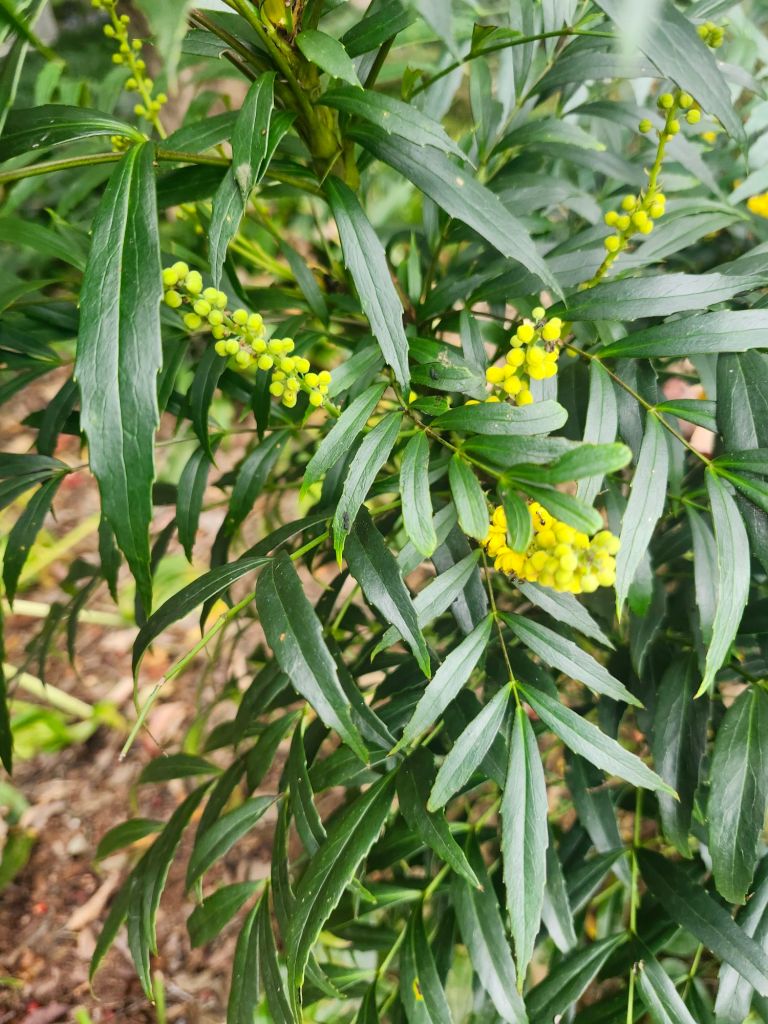
A few of the mahonias (Berberis eurybracteata ‘Narihira’, above) planted in spring are beginning their autumn flowering. Asian hybrids (Berberis x hortensis, formerly Mahonia x media) will begin flowering in November with some continuing into January. I greatly enjoy the winter blooms.
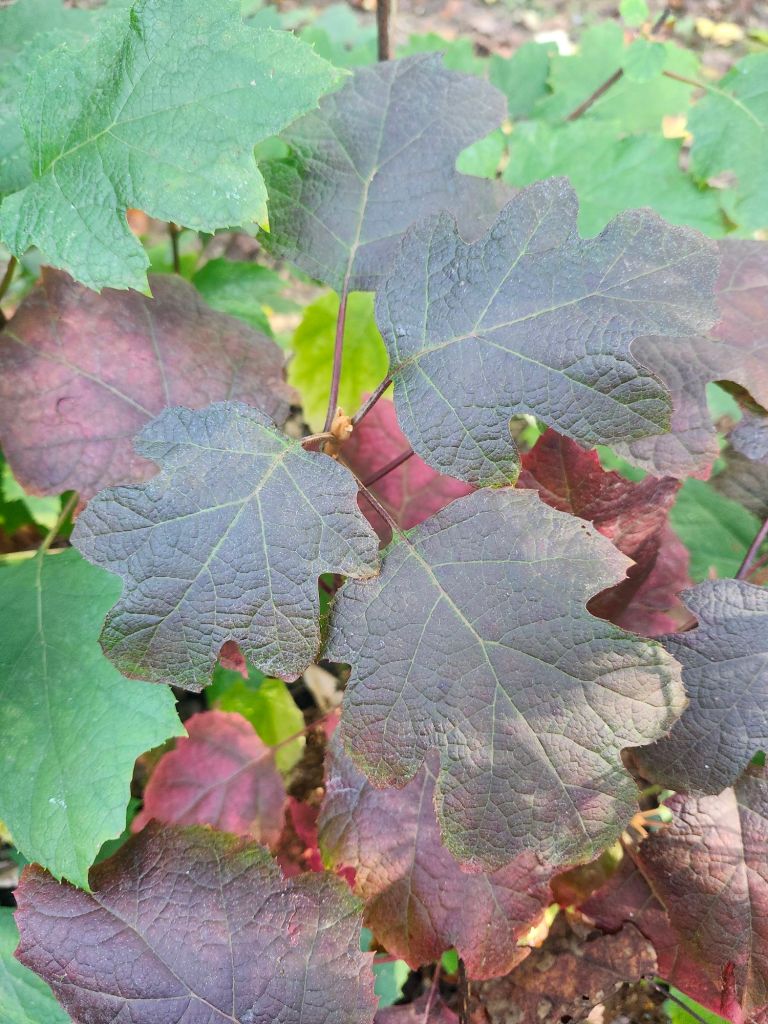
A year ago, leaves of Oakleaf hydrangeas (Hydrangea quercifolia, above) showed little autumn foliage coloring, so I’m happy to see one in the side garden beginning to turn. The leaves often persist into January while other shrubs are bare.

