With an ideal weather forecast, Barbara and I quickly planned a trip to the mountains to beat the flood of autumn leaf peepers. We found a cozy cabin for the stay that was close to the three hikes we planned. We might be able to sneak in another mid-week mountain hike closer to home before the leaf traffic picks up, but once it gets busy we typically hike from the bottom of the mountains or elsewhere, away from the leaf tourists to avoid traffic backups.
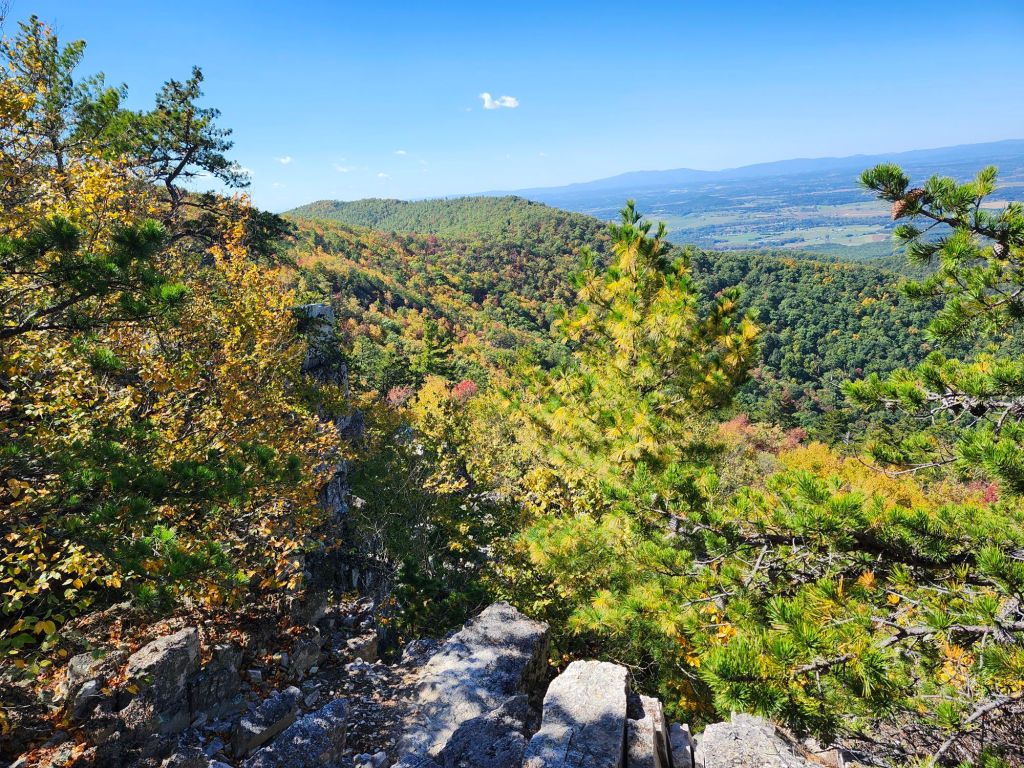
There are lots of reasons for hiking, but my wife correctly says that I’m not satisfied if there aren’t plants to enjoy. On this trip, there were plenty, and even some early autumn foliage color (below).
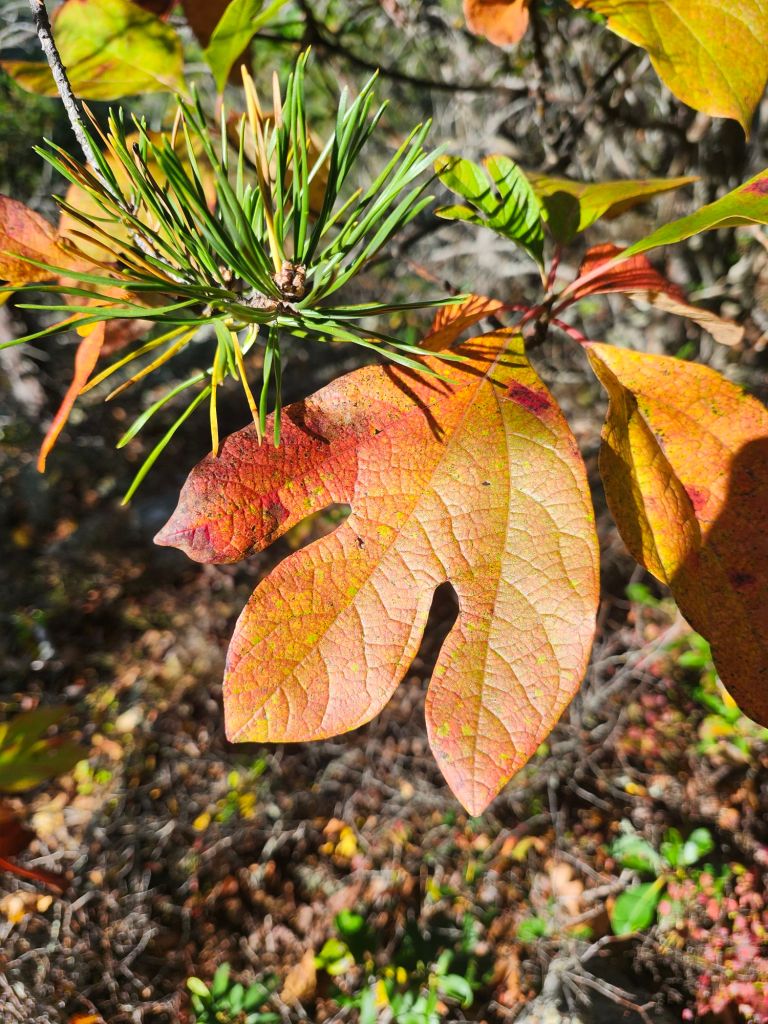
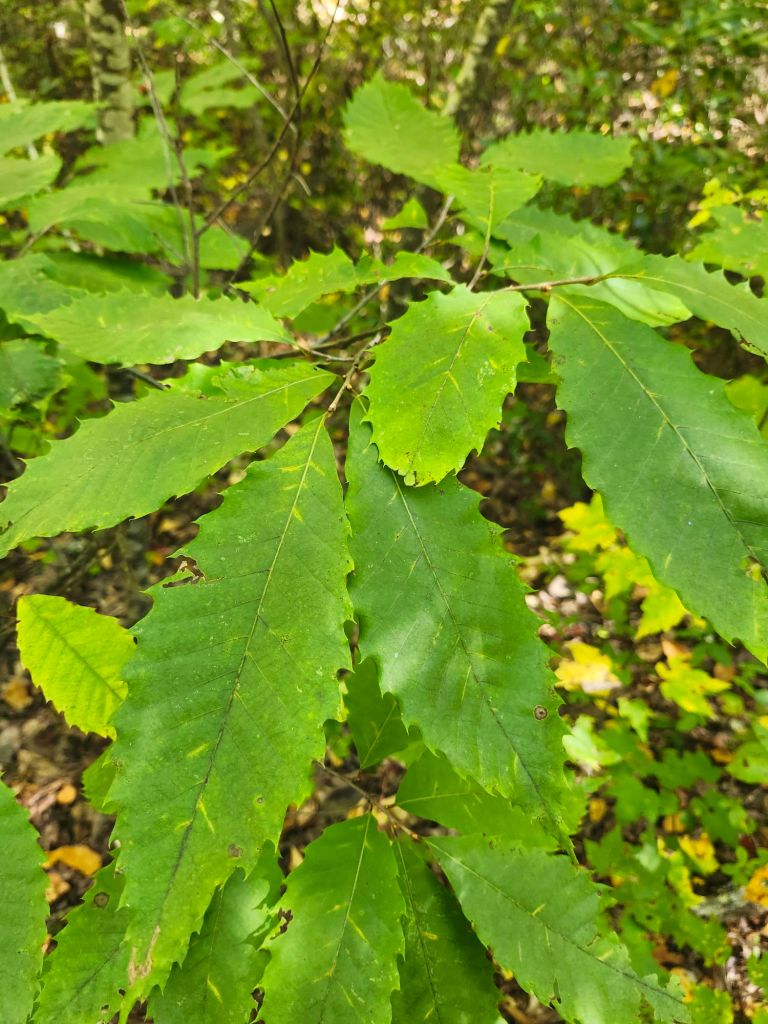
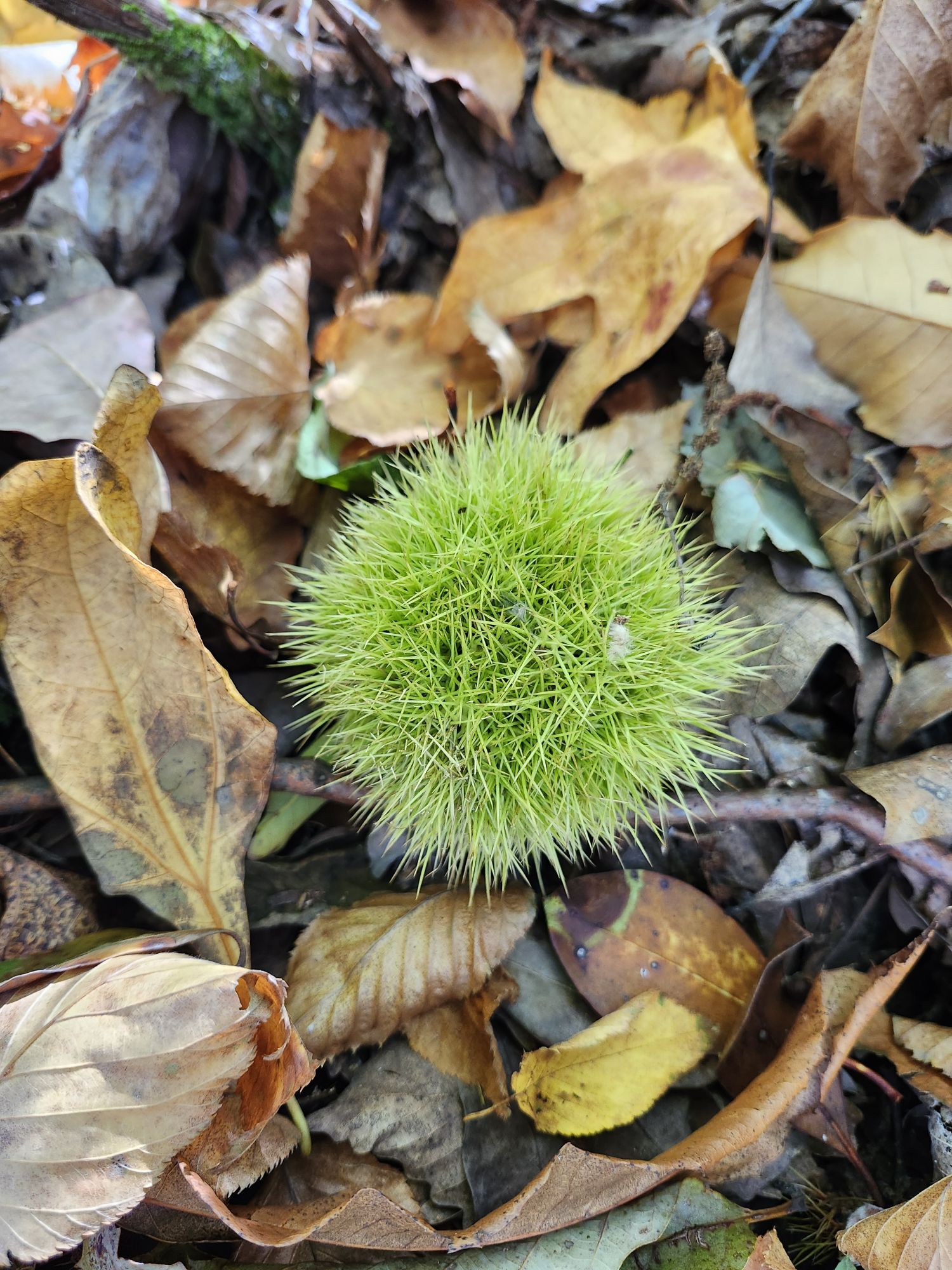
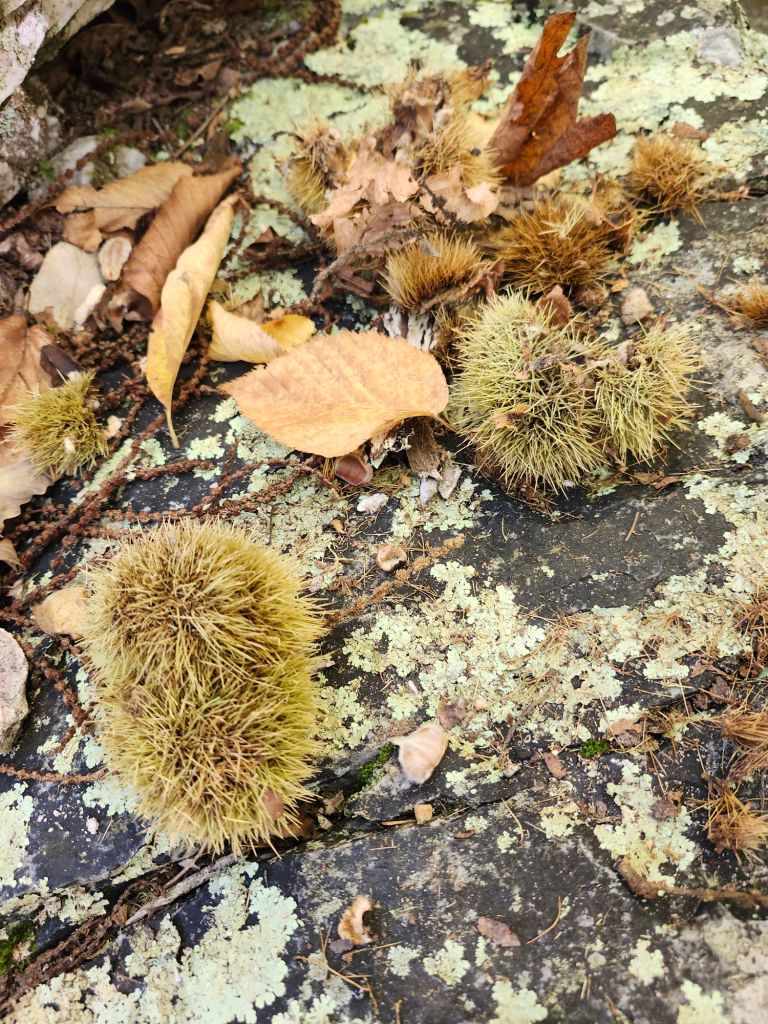
We often see small American chestnuts (Castanea dentata, above) while hiking in the mountains, typically beside the larger, blighted (and deceased) tree. While I’ve seen the prickly nut of non-native chestnuts planted in gardens, this is the first time I’ve seen a trail littered with the native’s nuts (below).
While chestnuts at lower elevations were small saplings, at three thousand feet we saw handfuls that were thirty feet or taller. Perhaps the blight will still catch up to them, but I was a happy hiker to see the trees that once dominated forests of the Appalachians.
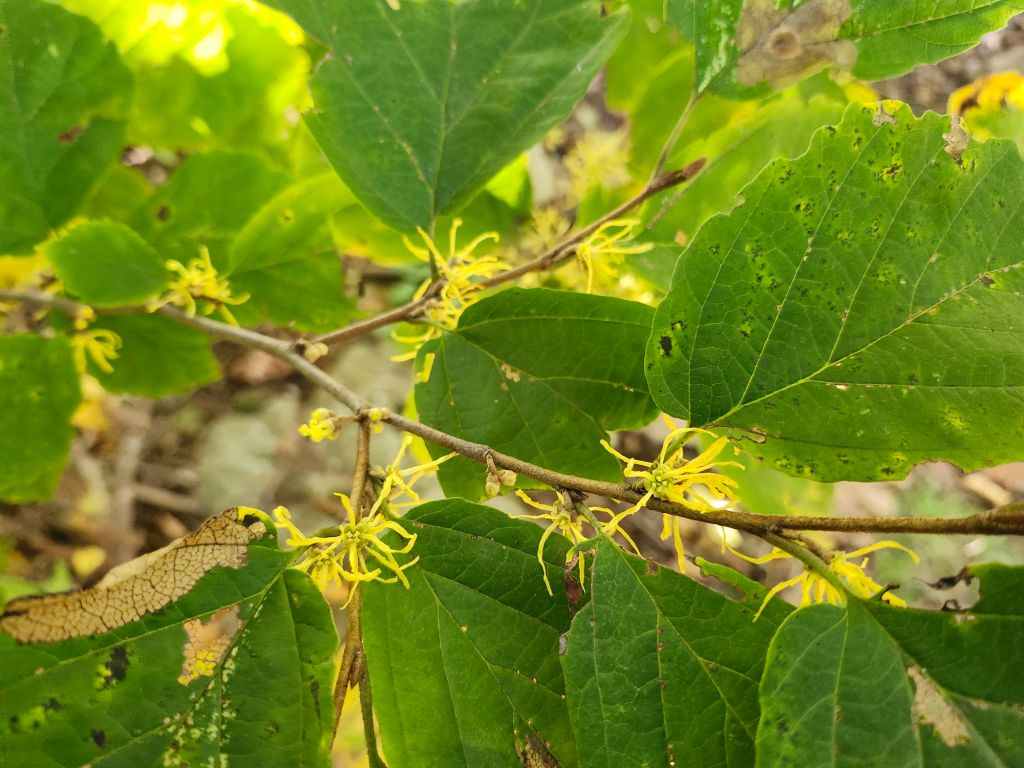
I expected to see common witch hazels (Hamamelis virginiana, below) flowering along the trails. At lower elevations, blooms were a scattered few, but higher up most were flowering while their leaves were just beginning to show some color. In my garden, and in the forest, the flowers are often obscured by foliage that falls after blooms have faded. I wonder if other October hikers notice the flowers.
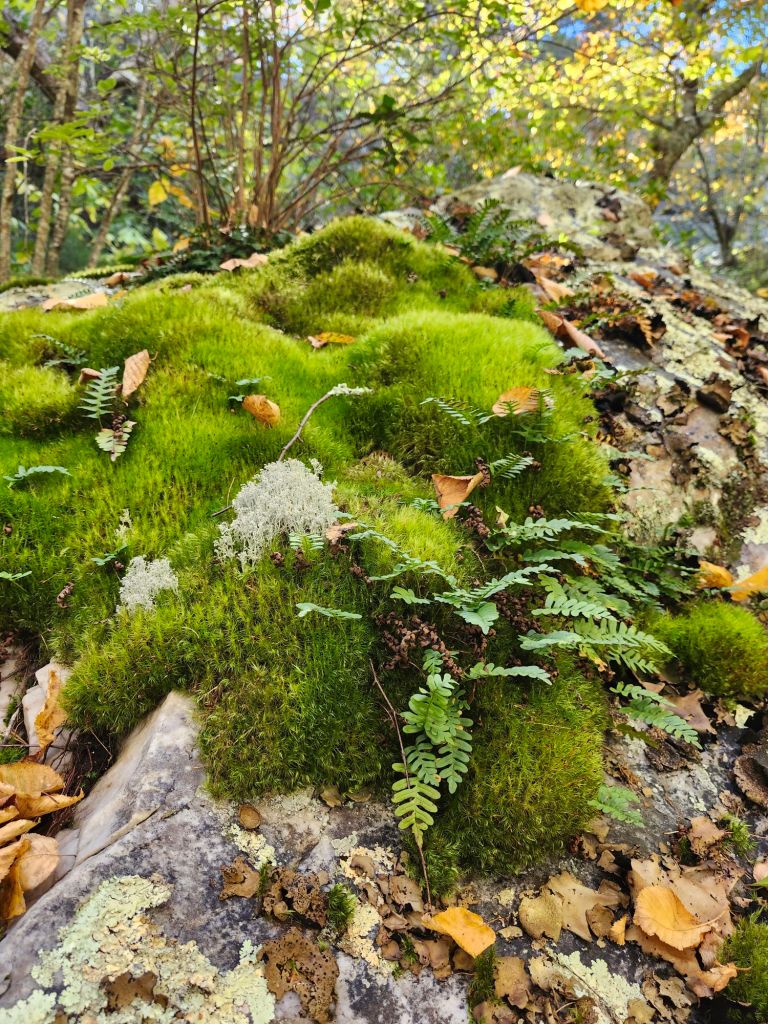
With recent rainfall, plants and mosses are unusually lush while standing beneath trees and shrubs beginning their autumn fade into dormancy.
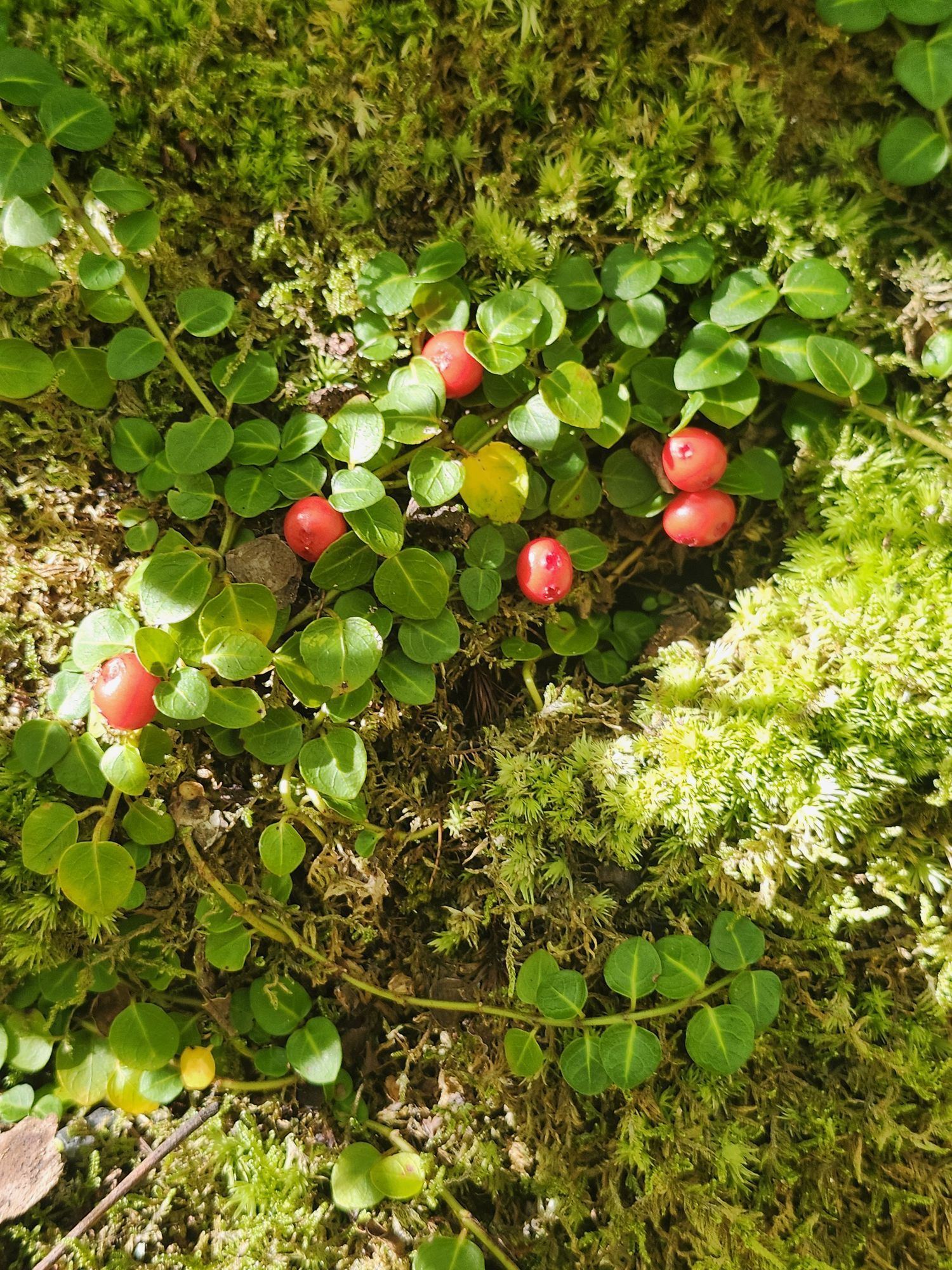
A lower elevation section of a trail that borders a creek was edged for long stretches by red-berried Partridgeberry (Mitchella repens, below). The low spreading ground cover was never happy in the garden. I suspect the soil was too dry. I must try again.
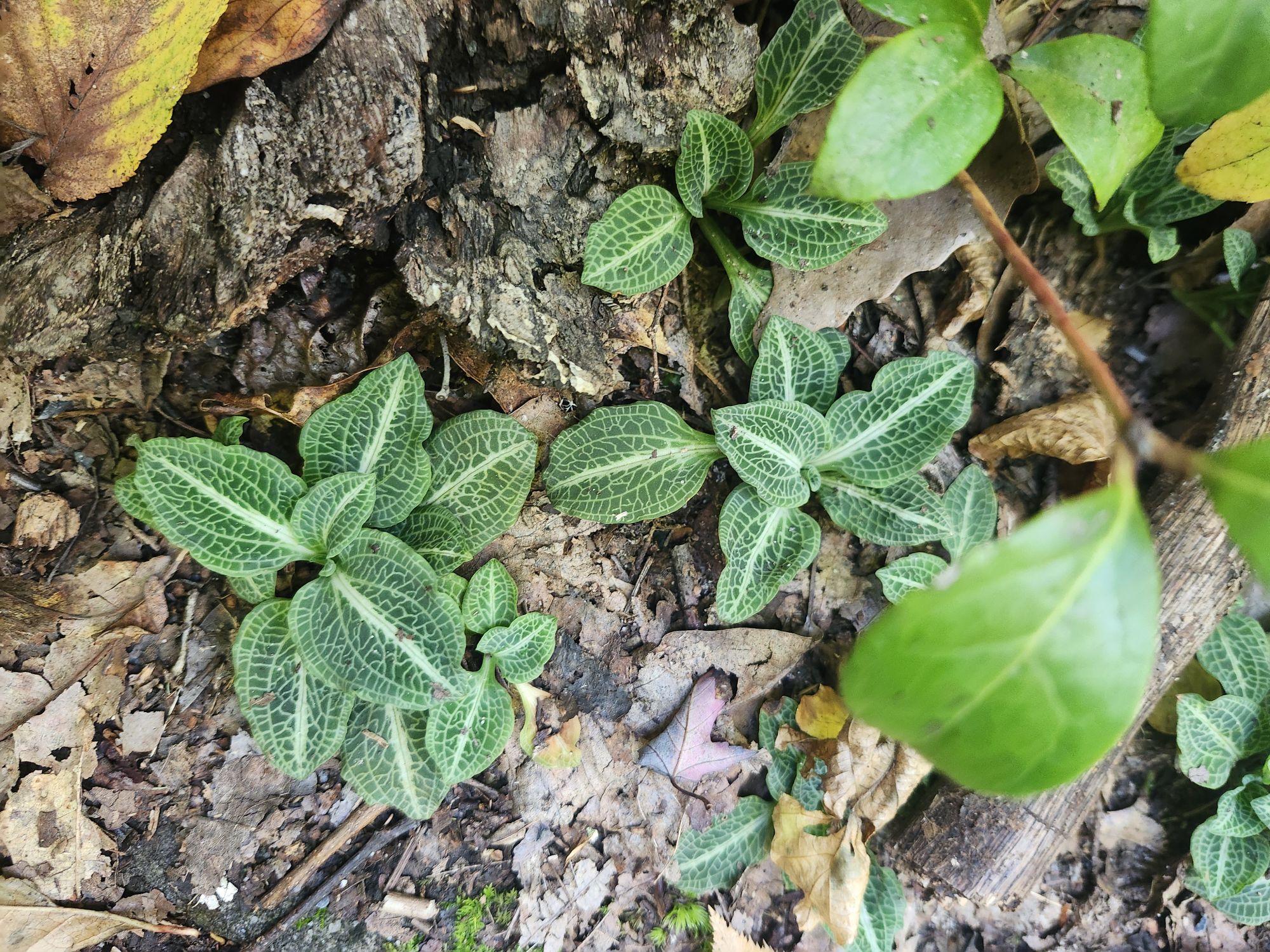
The Downy Rattlesnake Plantain (Goodyera pubescens, above) is the native orchid we see most often on our mountain hikes. We see its midsummer stalks of flowers less often. I suspect that ones in my garden have not reached the age where they will flower. I pay attention to the moisture and shade conditions so that I can provide similar placement.
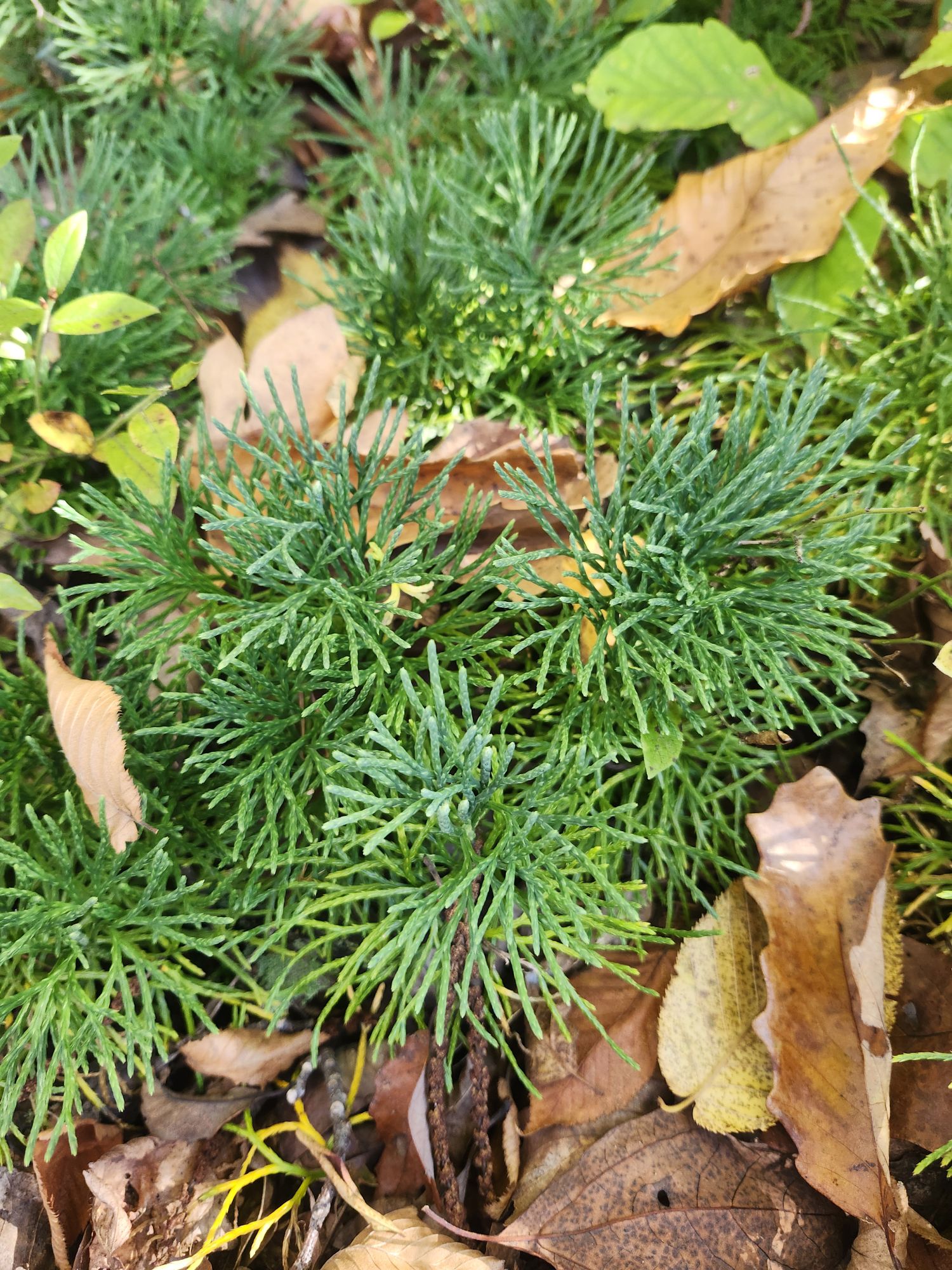
We regularly see clubmosses on trails, both running cedar and the more upright ground pine. This one appeared slightly denser, so I’m uncertain of its identity, but another interesting find that keeps me going on sometimes strenuous mountain hikes.

