Two Bottlebrush buckeyes (Aesculus parviflora, below) in a damp area of the lower rear garden flower a week later than an older and larger buckeye that I presume to be equally shaded in the side garden. Both areas nestle against the forest, and even as more evening sunlight enters the side garden since the tall Bigleaf magnolia (Magnolia macrophylla) fell a year ago, swallowtail butterflies are infrequently seen during its weeks of bloom.
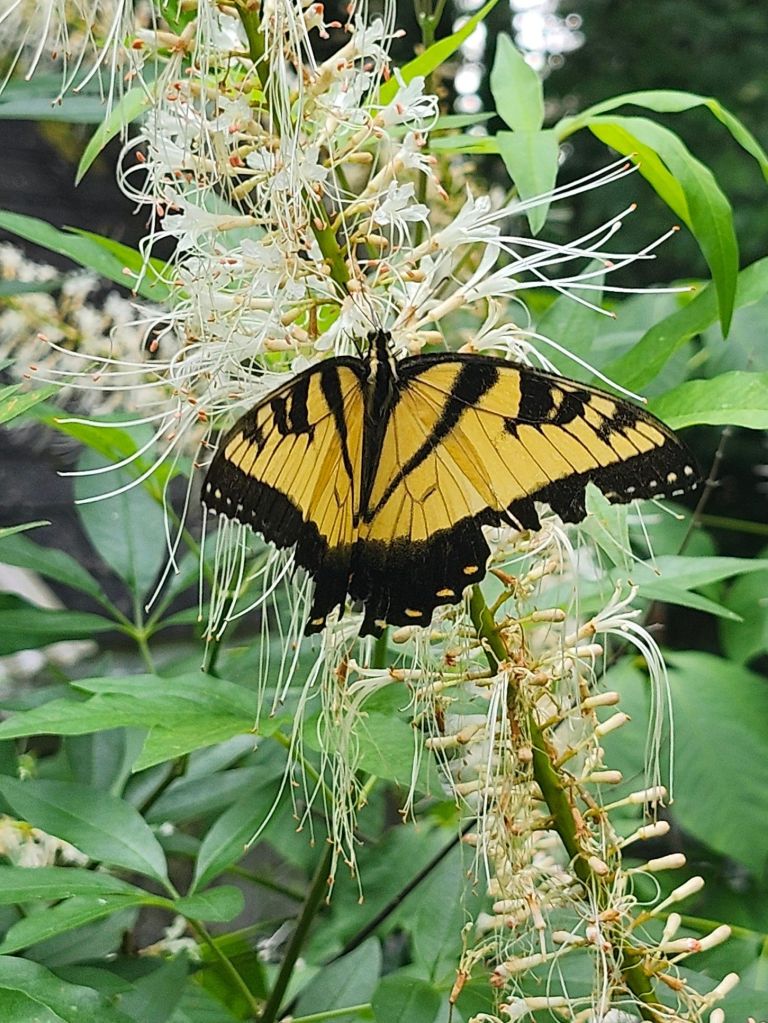
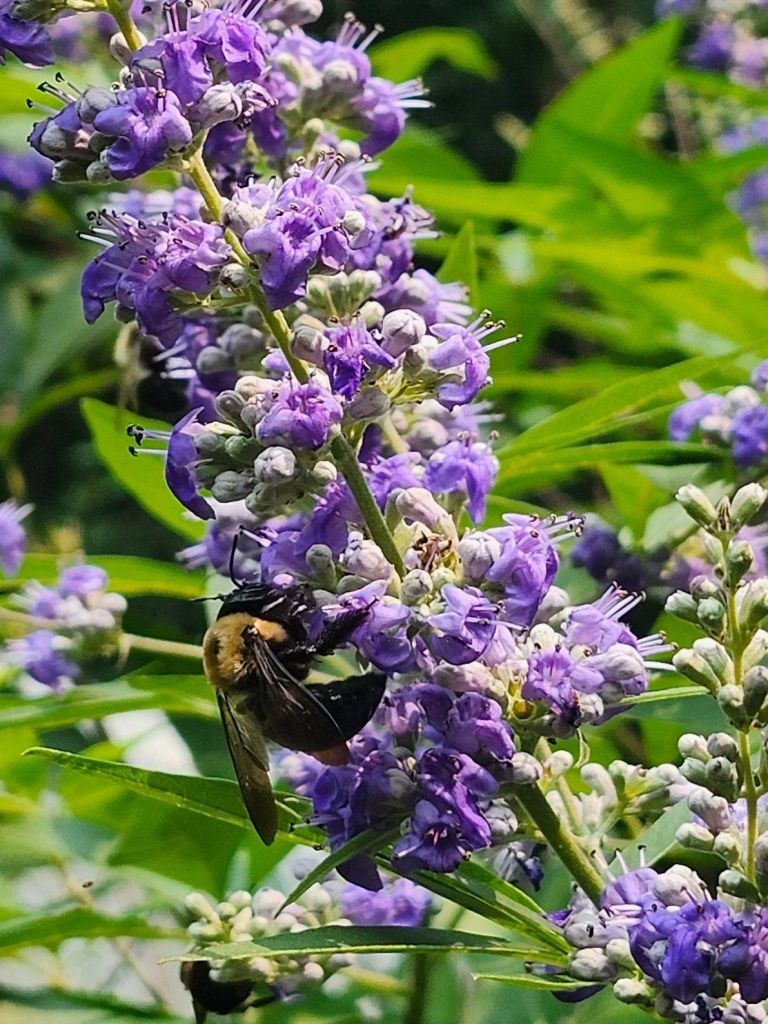
Swallowtails are abundant in the rear garden, feasting on the buckeyes’ white bottlebrush blooms as they wait for flowers of their favored Joe Pye Weeds (Eutrochium spp.) to open. The neighboring Chaste shrub (Vitex agnus-castus, below) is favored by Carpenter bees that occasionally drift next door to the buckeyes.
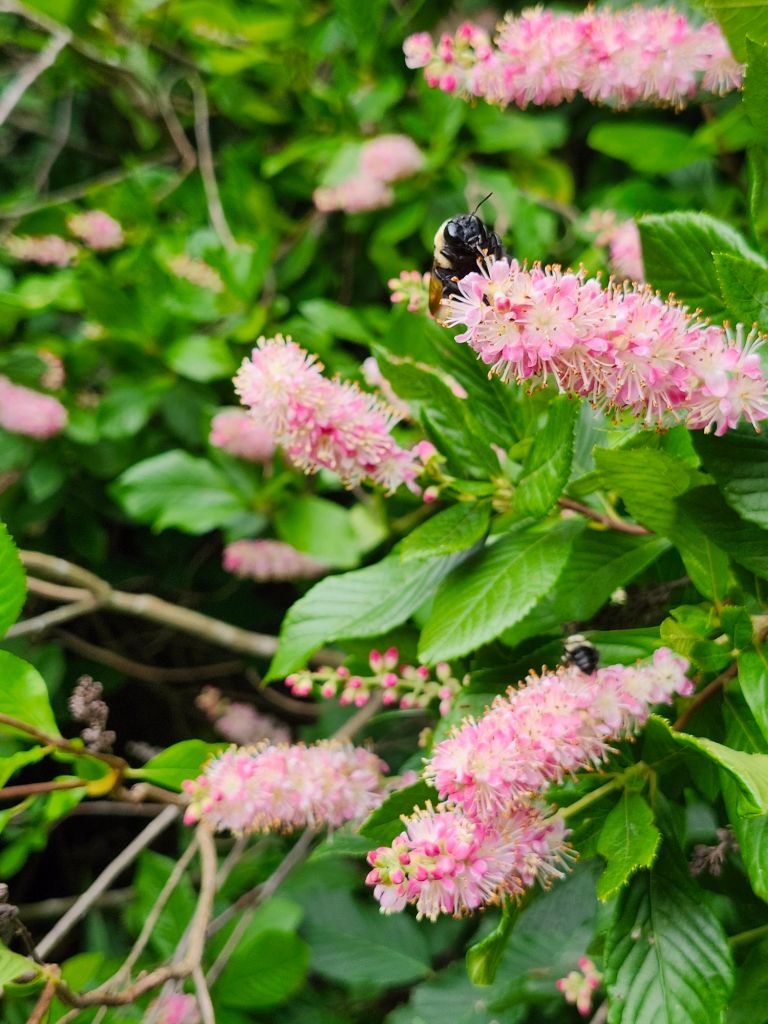
A Summersweet (Clethra alnifolia) in the dry shade of the side garden will not flower again this year. It survives, and fortunately there are several others to provide midsummer blooms. A pink flowered ‘Ruby Spice’ (below) is wedged between larger shrubs in the rear garden, with another in the shaded, side garden that flowers several weeks later. The sunnier location attracts abundant bees.
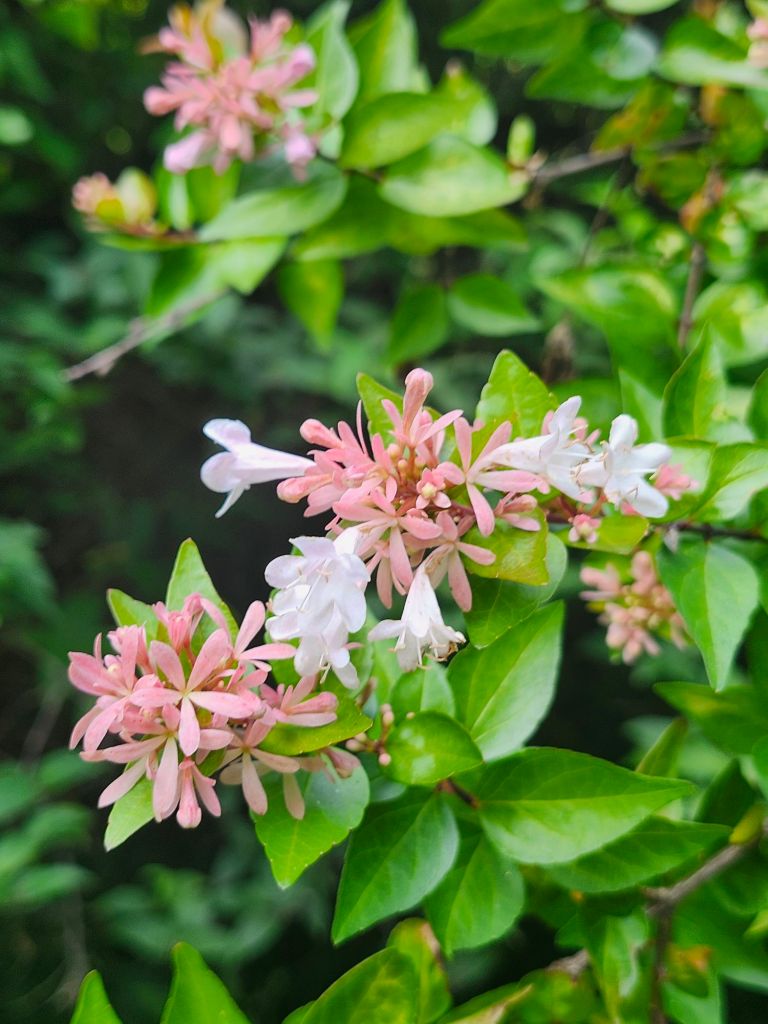
‘Canyon Creek’ abelia (Abelia x grandiflora ‘Canyon Creek’) is also crammed between larger growing neighbors, but its branches arch to fill the small void. Its yellow foliage stands out against a green background, and now its flowers will ornament the tall shrub until frost.
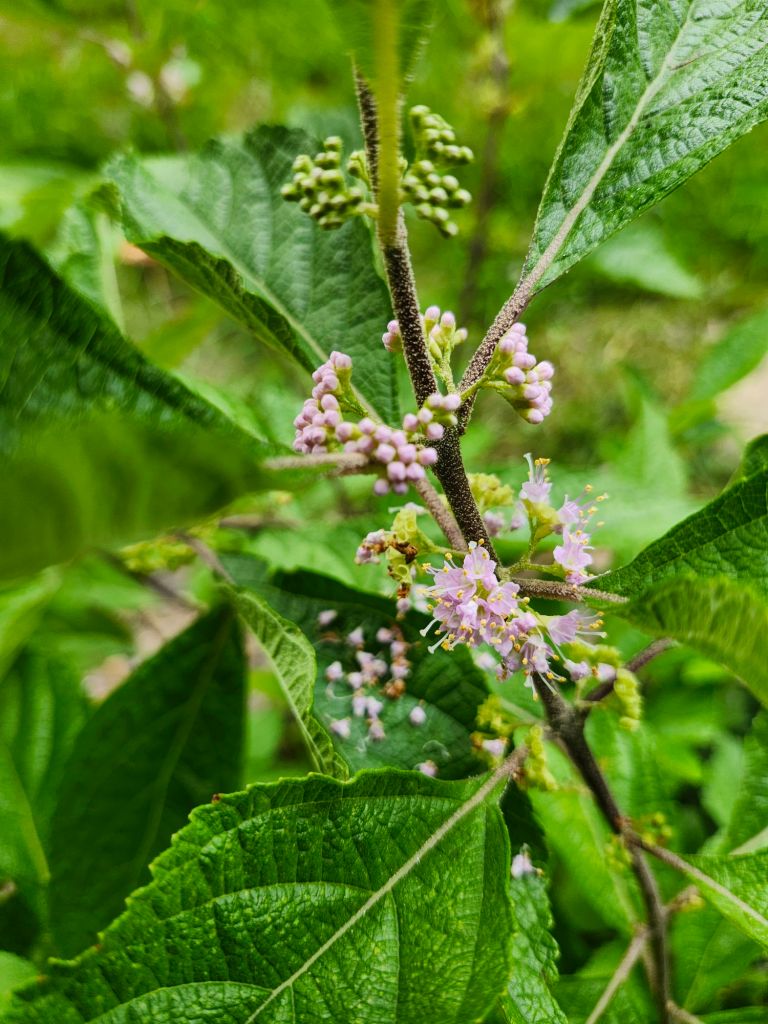
I’ve had difficulties with our native beautyberry (Callicarpa americana, below) with a few fading after several years. I expect that the newest location will work out. The flowers of beautyberries are unremarkable at a distance, but the abundant purple berries are a highlight in early autumn. Berries of the native beautyberry encircle branches, though the display is not significantly different from non-natives.
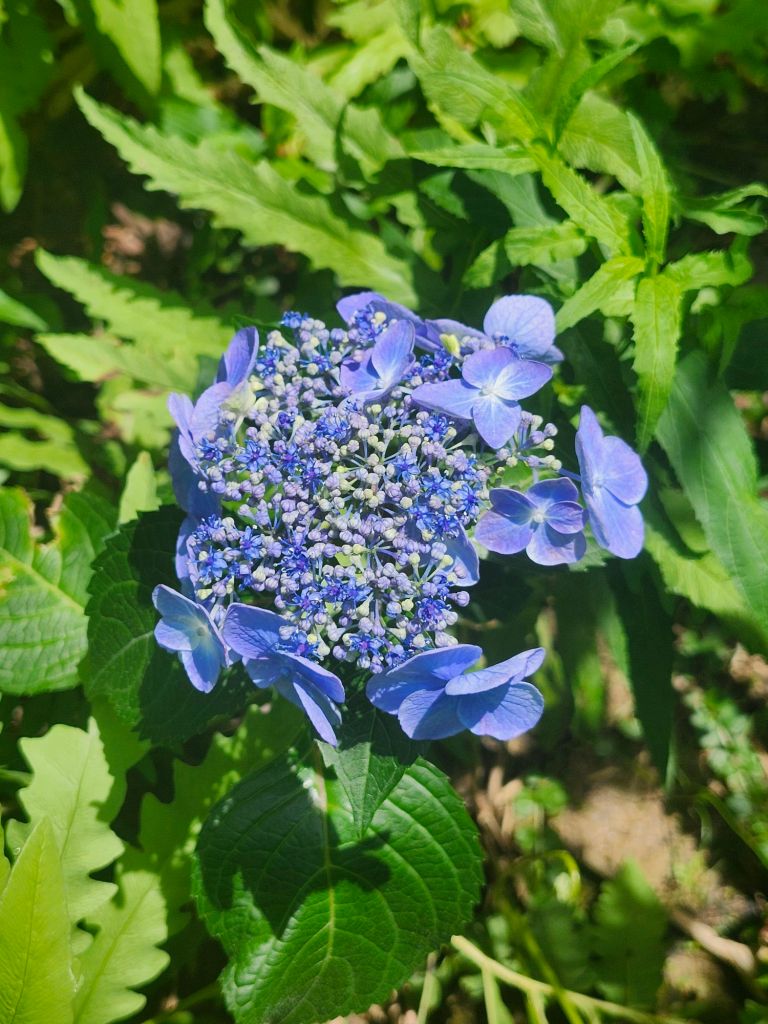
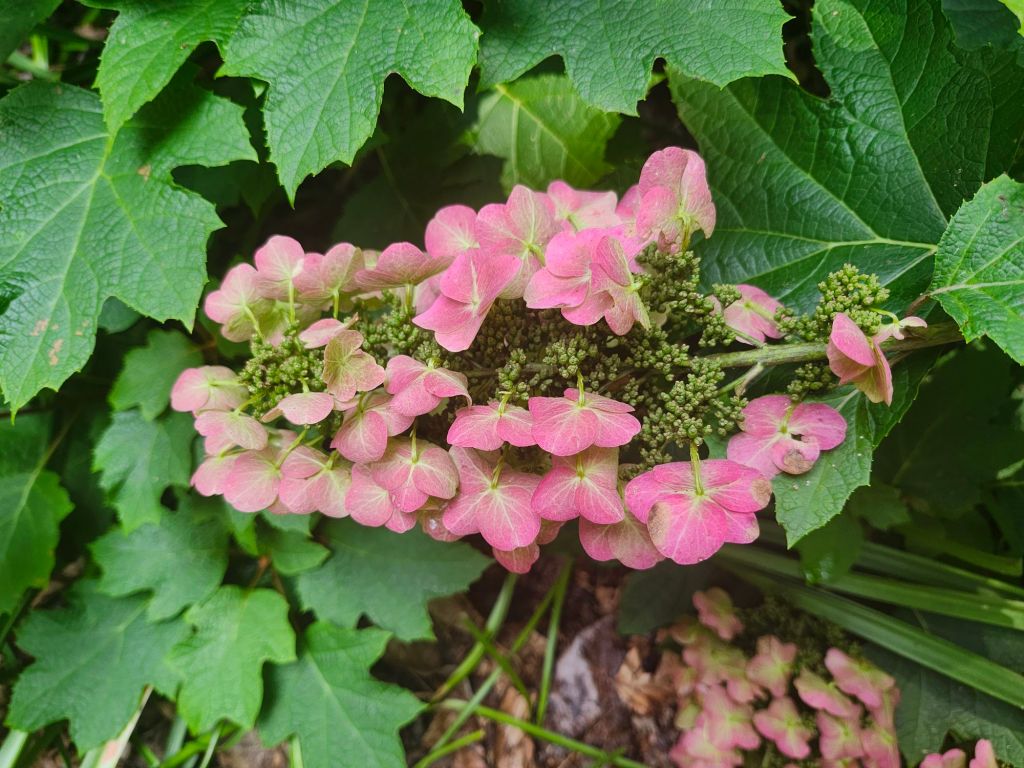
As Panicled hydrangeas (Hydrangea paniculata) begin their extended period of flowering, a few scattered flowers of mophead hydrangeas (Hydrangea macrophylla, above) remain. After winter damage and a late freeze, hydrangeas have flowered poorly. Unusually, Oakleaf hydrangeas (Hydrangea quercifolia, below) were also damaged by the spring freeze, so there are fewer flowers. But, while faded blooms often turn to tan in dry summers, the flowers are fading gracefully to pink.