A year ago, the tall Bigleaf magnolia (Magnolia macrophylla) in the side garden uprooted in a storm, falling to the ground with a small section of roots still contacting the ground. A wide but shallow tree throw (hole) was left, and of course the shallow roots contributed to the tree’s falling in the gusty wind.
A second large tree, a Swamp maple (Acer rubrum) in the forest just beyond the property line, snapped at a vulnerable Y crotch. Both trees fell in the same direction, and miraculously, only minor damage to a colony of sweetshrubs (Calycanthus floridus) was done with no damage from the fallen maple. The maple now partially obstructs the path used by neighborhood kids to cross the small creek to explore the forest.
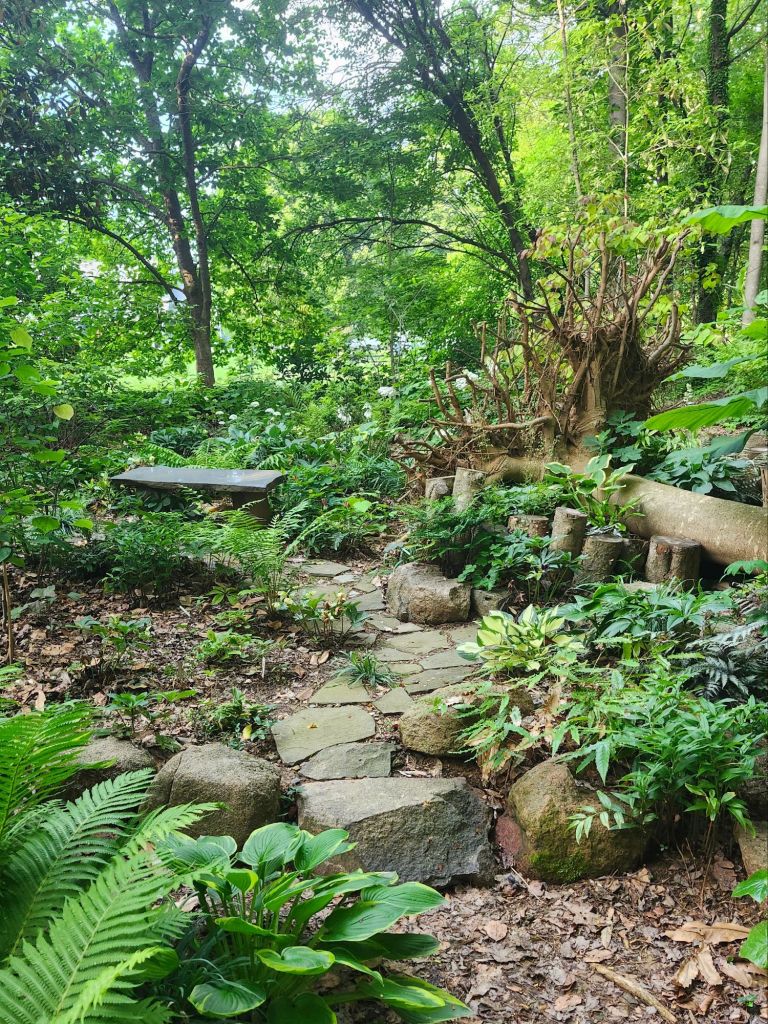
The character of the side garden changed immediately. The fifty foot magnolia cast deep shade beneath its large leaves, and while other neighboring trees shade most angles of sunlight, the midday sun shines brightly into the once protected area.
Cleanup of the fallen trees was slow going in the summer heat, then the dryness of autumn and the cold of winter. In fact, much of the magnolia remains untouched as it fell along the garden’s border and fortunately, directly upon a large pile of brush accumulated over the past decade. The brush pile is now considerably larger and a bit of an eyesore if you care to look past the sweetshrubs that quickly recovered. I’ve learned to ignore the mess.
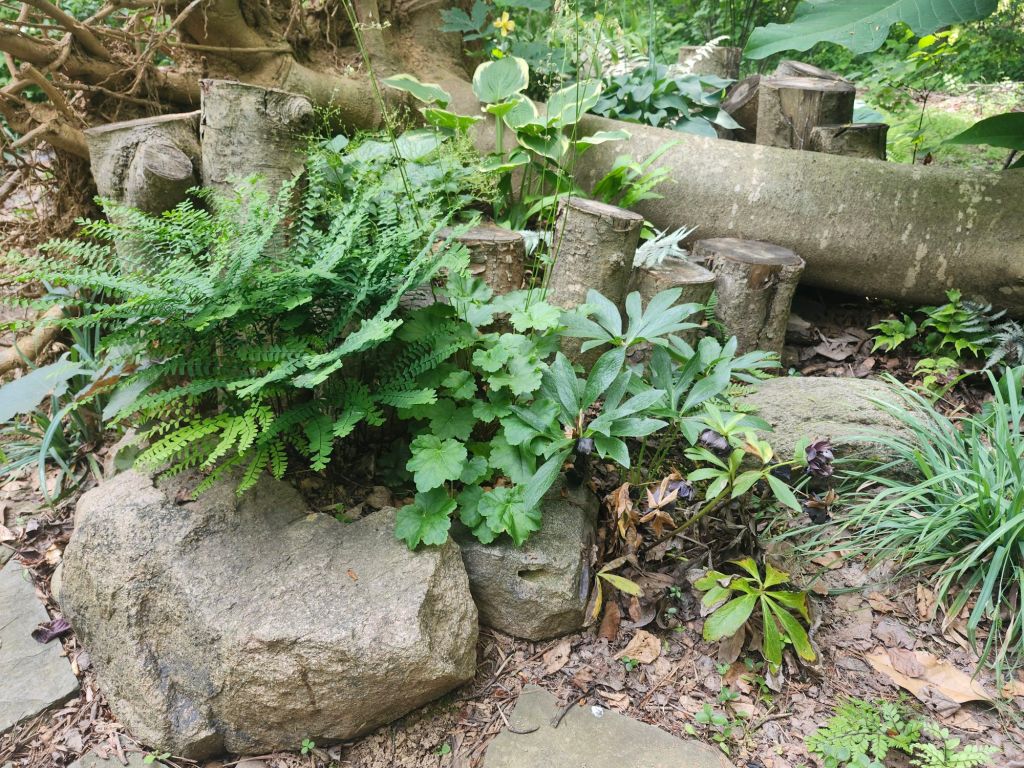
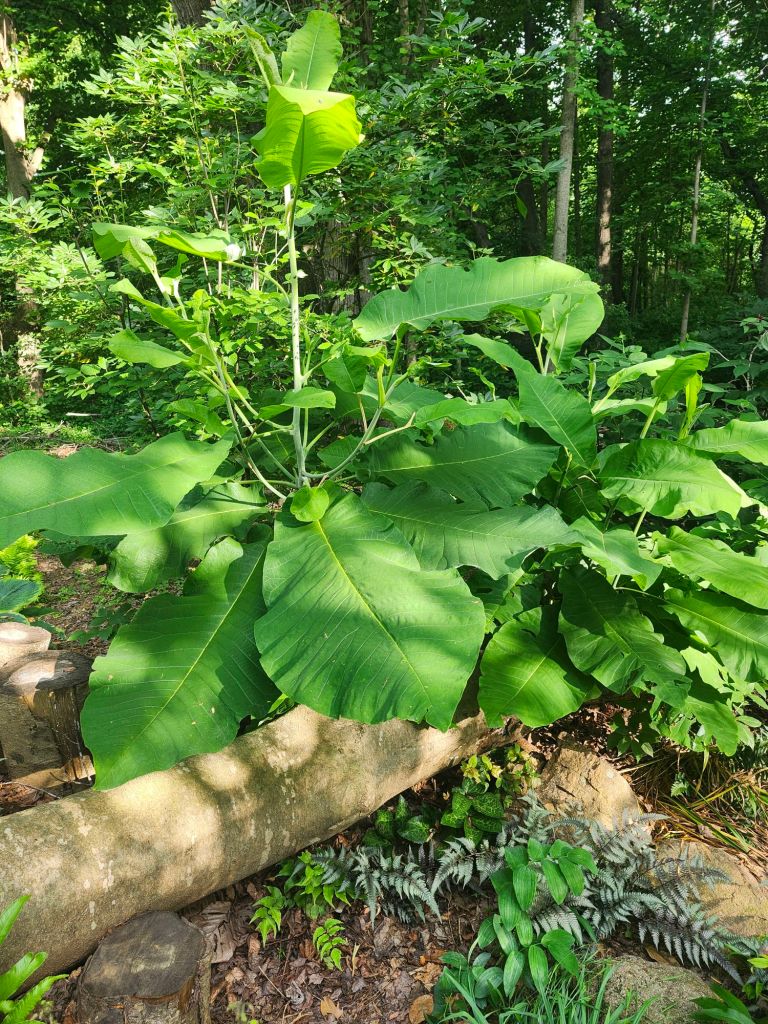
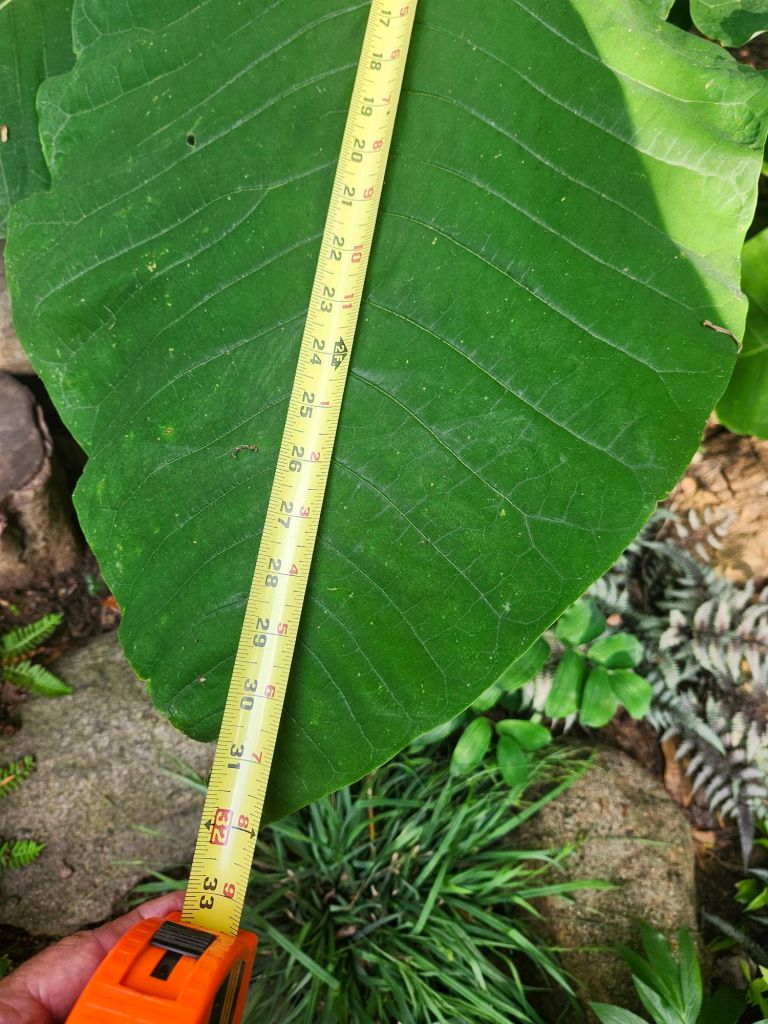
In fact, I did cut the tree into sections, but left in place the large mass of roots and a ten foot section of the trunk (above). Pieces of the trunk were placed upright and dug in, with the recess filled with soil. Ferns, coral bells (Heuchera) and hostas fill the stumpery that is partially shaded by the tall roots. This is now further shaded by huge leaves sprouting from the magnolia’s trunk (below). I don’t expect these to last the summer with few roots for support, but I expected they wouldn’t last this long. Possibly, there are enough roots intact to encourage the growth. I’ll watch with interest.
In deep shade, the area beneath the magnolia had been sparsely planted, but with new-found sunlight I’ve planted a few redbuds, several shrubs and a Ghost dogwood (Cornus wilsoniana) that is certain to be a favorite in a few years. Ferns and other shade plants tolerate the short period of direct sun.
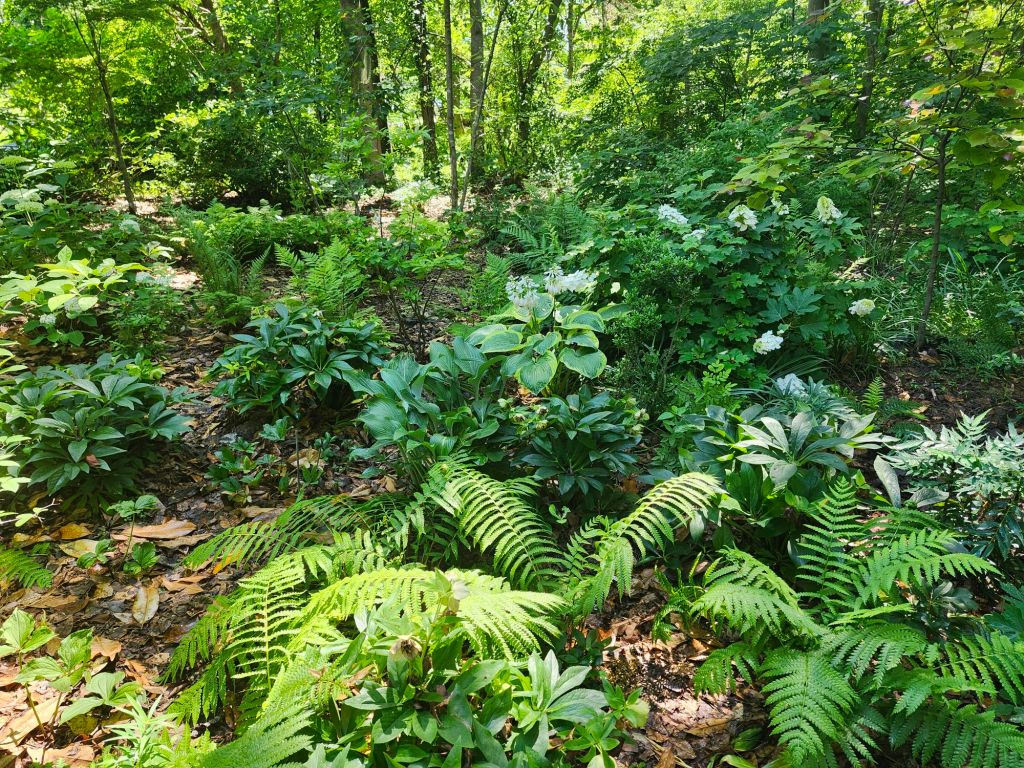
Sadly, a favorite magnolia was lost, but the opening has been filled by several trees and shrubs on my list, waiting for a spot.


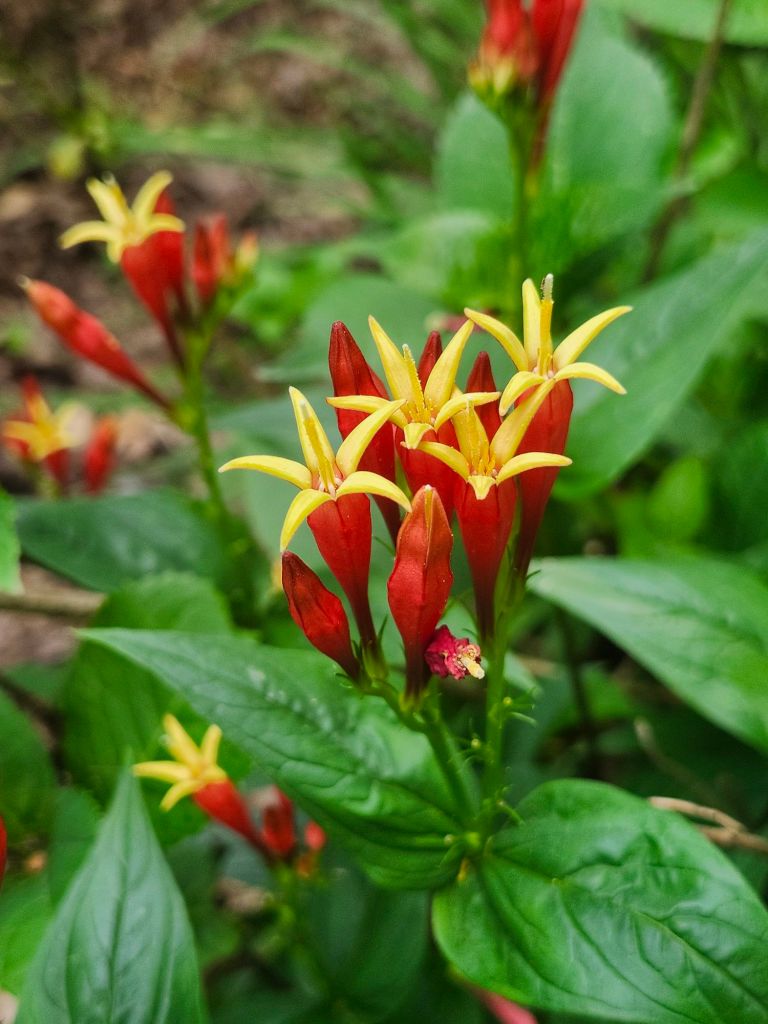
I love the look of those Indian Pinks. But these plant names often puzzle me, like, these Indian Pinks are red and yellow – not pink. Do they only bloom in fall?
The common name comes from the pink roots used by Indians for medicinal purposes. They flower in late spring into midsummer. I am often baffled by common names.