The summer began in an extended period with little rain and a substantial yearly shortfall. I feared this would repeat the recent dry summers, but the past month has seen repeated storms that have recovered much of our deficit. Still, there has been enough summer heat to stress some parts of the garden while others have grown with unusual vigor in damp soil.
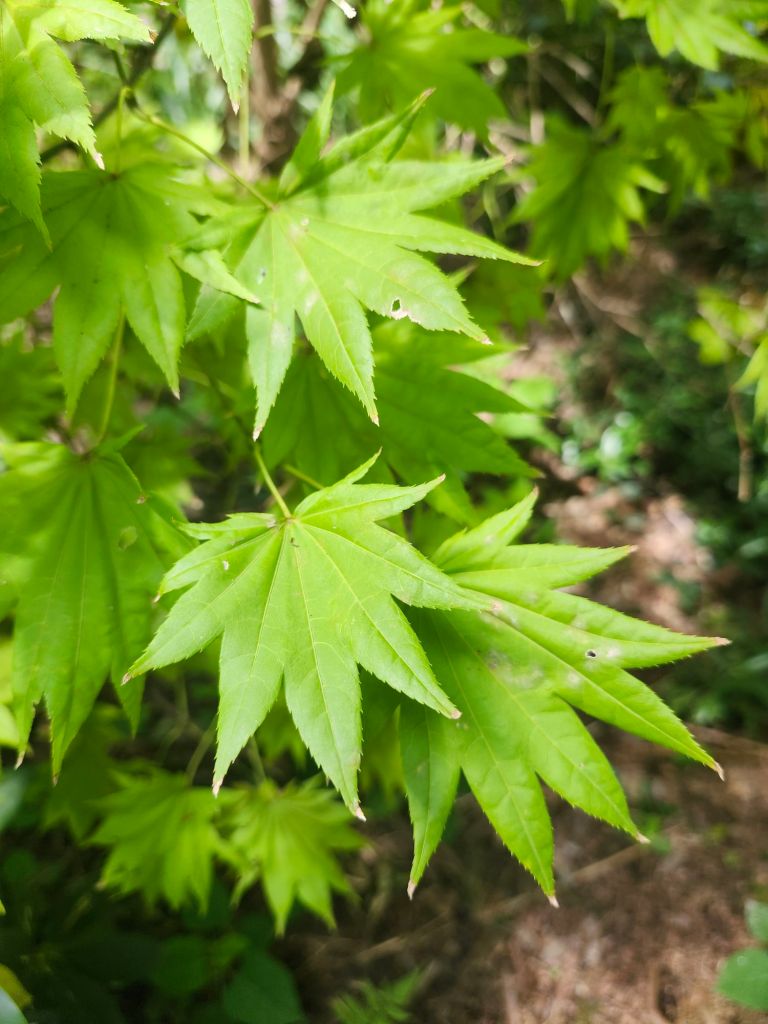
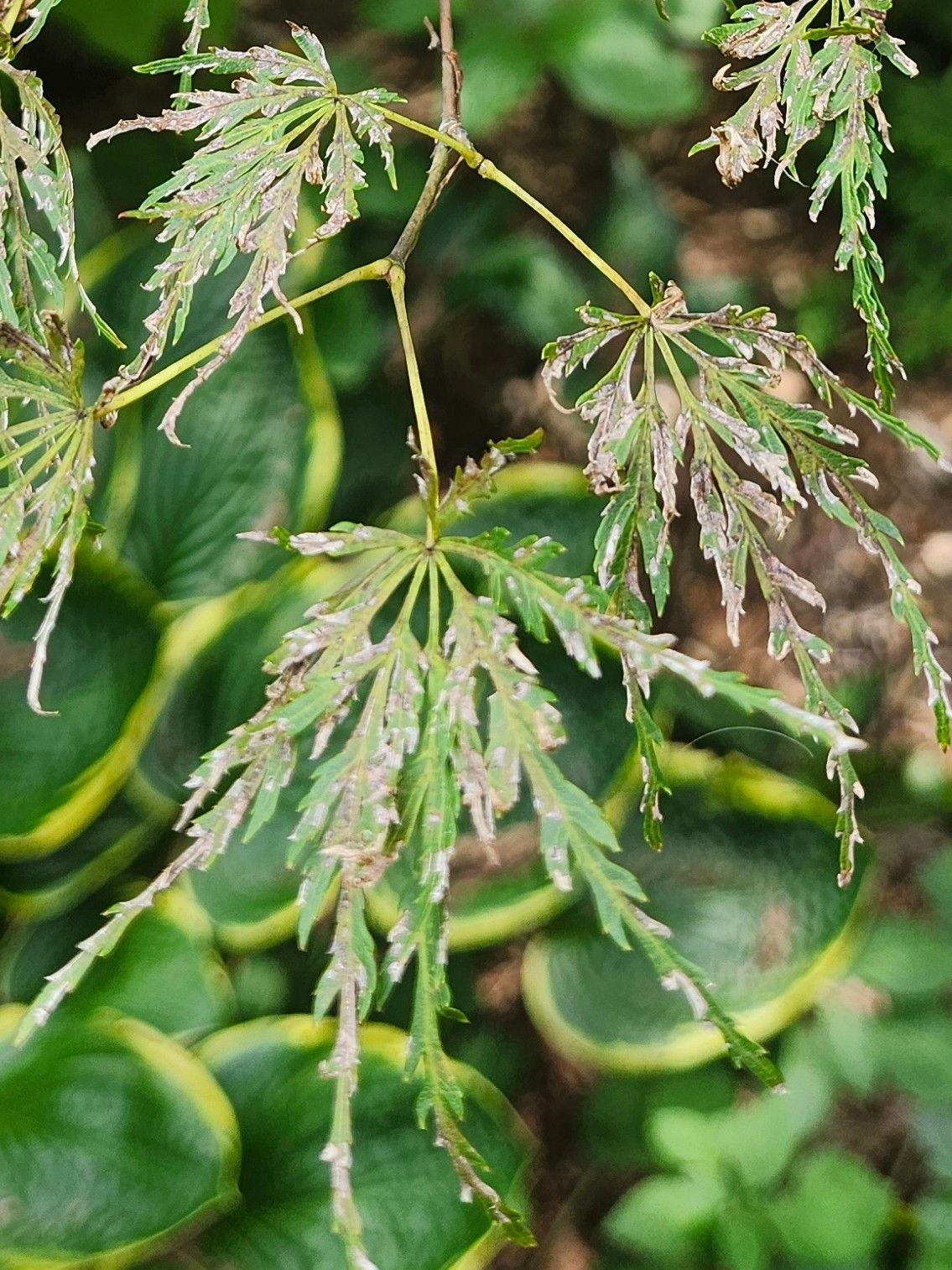
A number of Japanese maples were damaged in early spring by a late freeze. Newly emerged leaves turned to brown and fell, and months later, several retain leaves that are partially browned. Foliage of many maples (and other trees and shrubs) is more sparse than usual, though I expect all have recovered sufficiently that there is no concern for their long term health.
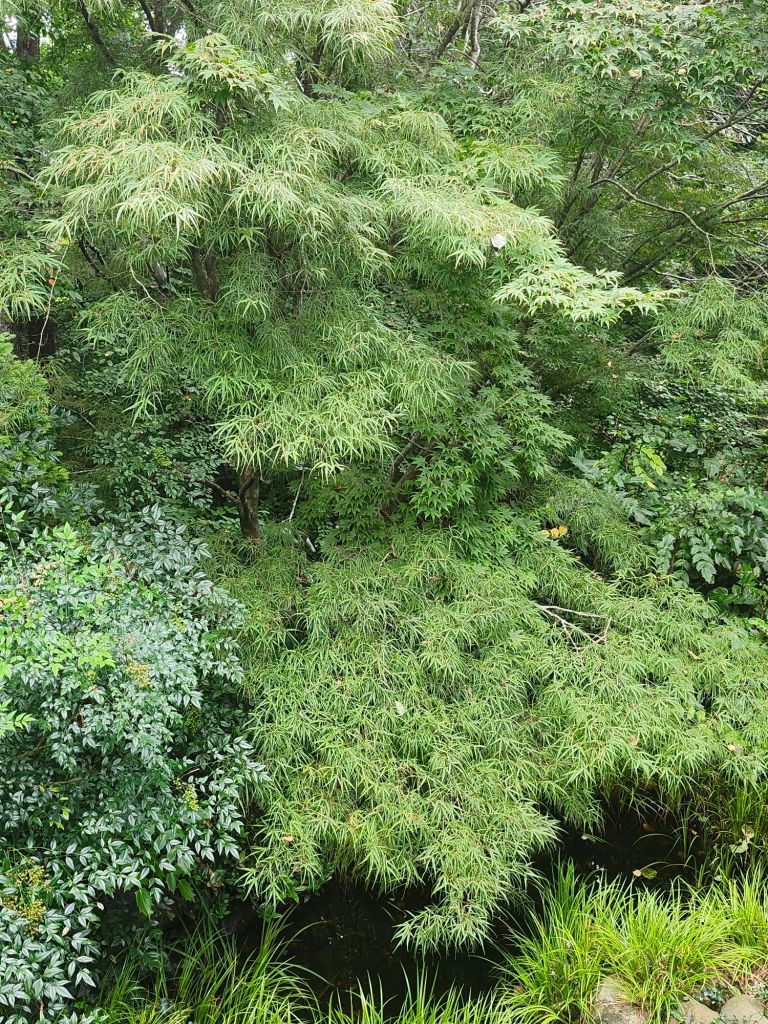
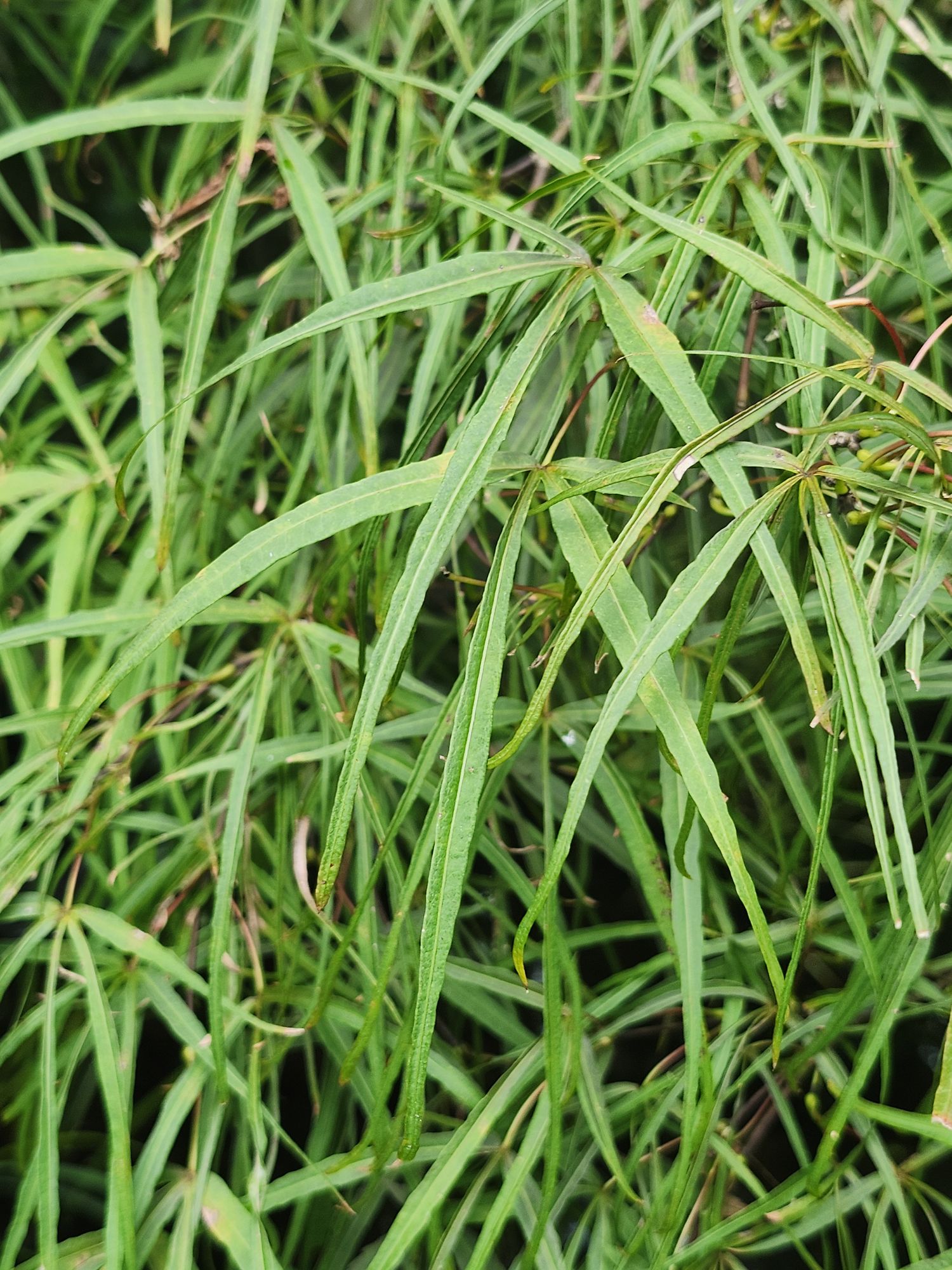
Typically, the colored foliage of Japanese maples fades in the summer heat of Virginia, and rain or not, this has happened on ones with red, yellow and variegated leaves. A few are disappointing, but like the rest of the garden, there are also joyful triumphs.
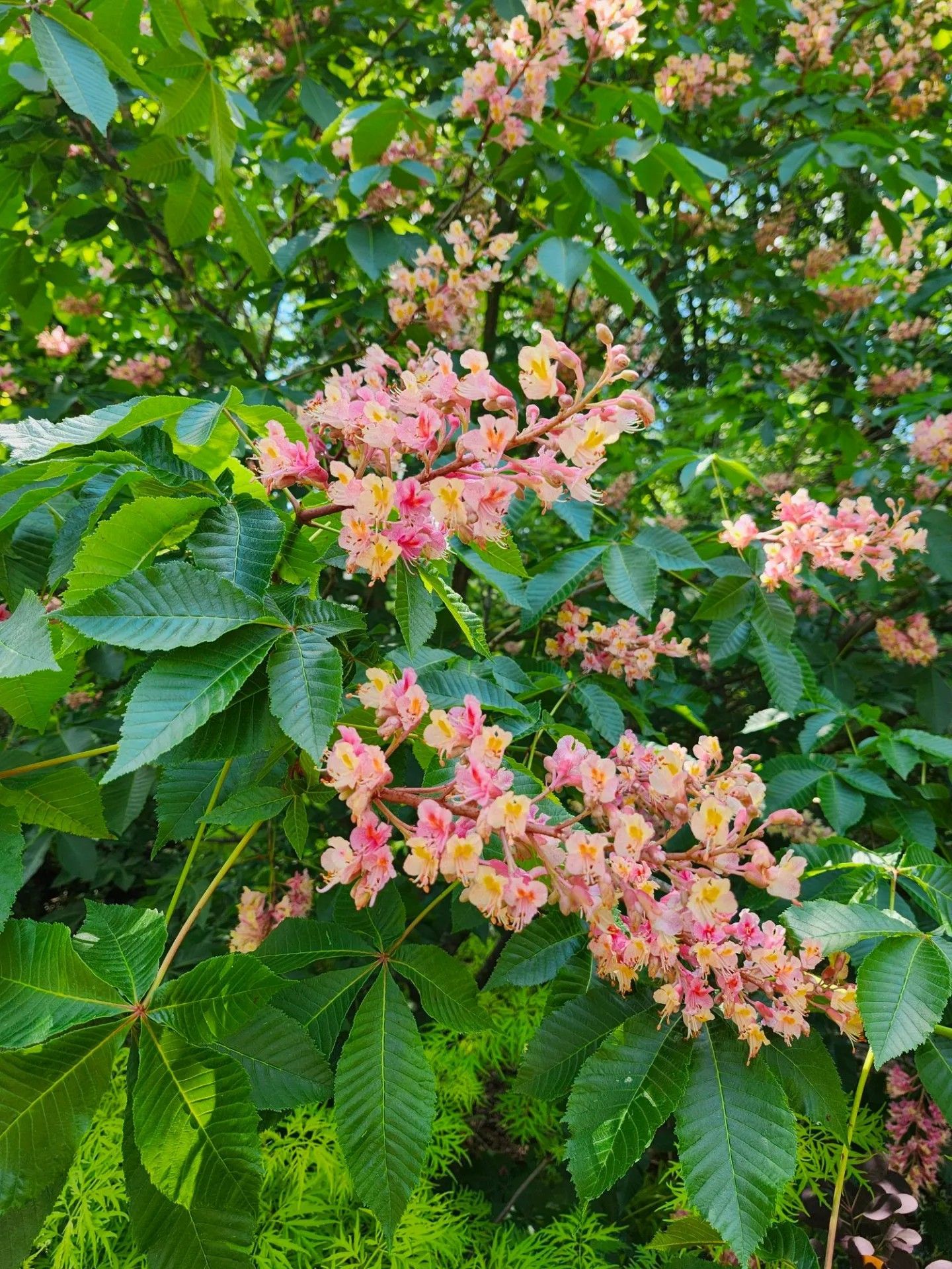
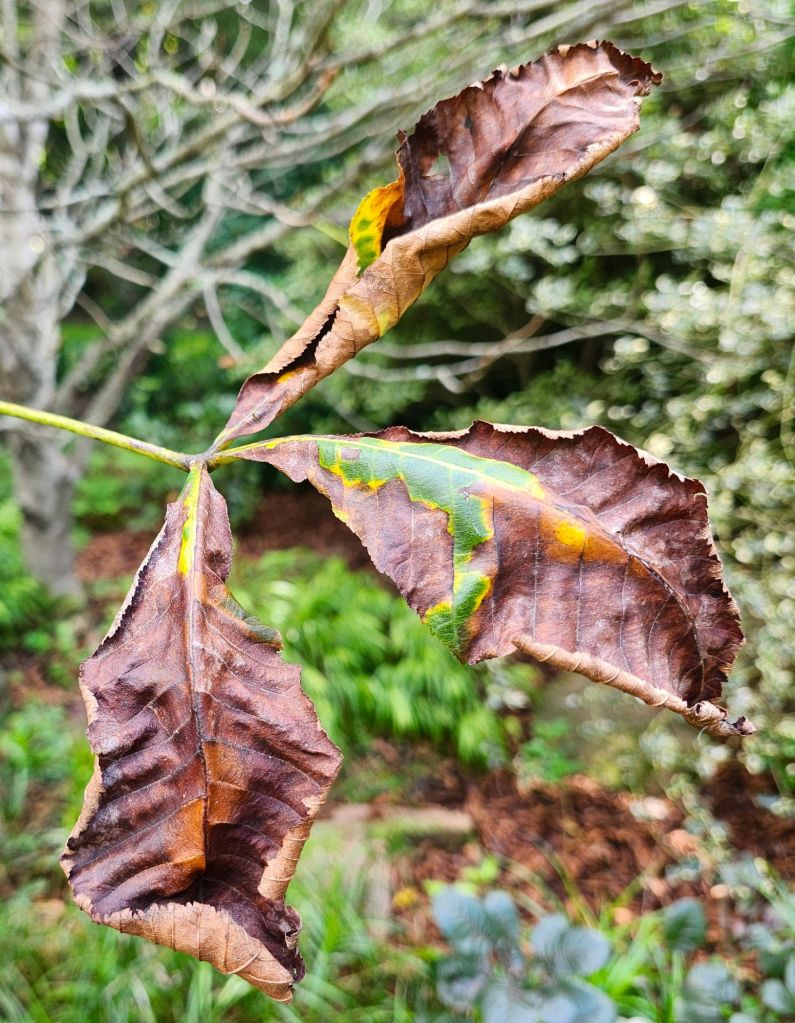
With regular rainfall and typical summer heat, the spotting of leaves of the Red Horse-chestnut (Aesculus x carnea, above) has accelerated. Today, many lower leaves have fallen and uppermost leaves are suffering. I suppose there is a fungicidal treatment to avoid the annual spotting, but I enjoy the tree through midsummer and look the other way afterwards. Of course, this is a benefit of having too many trees in the garden.
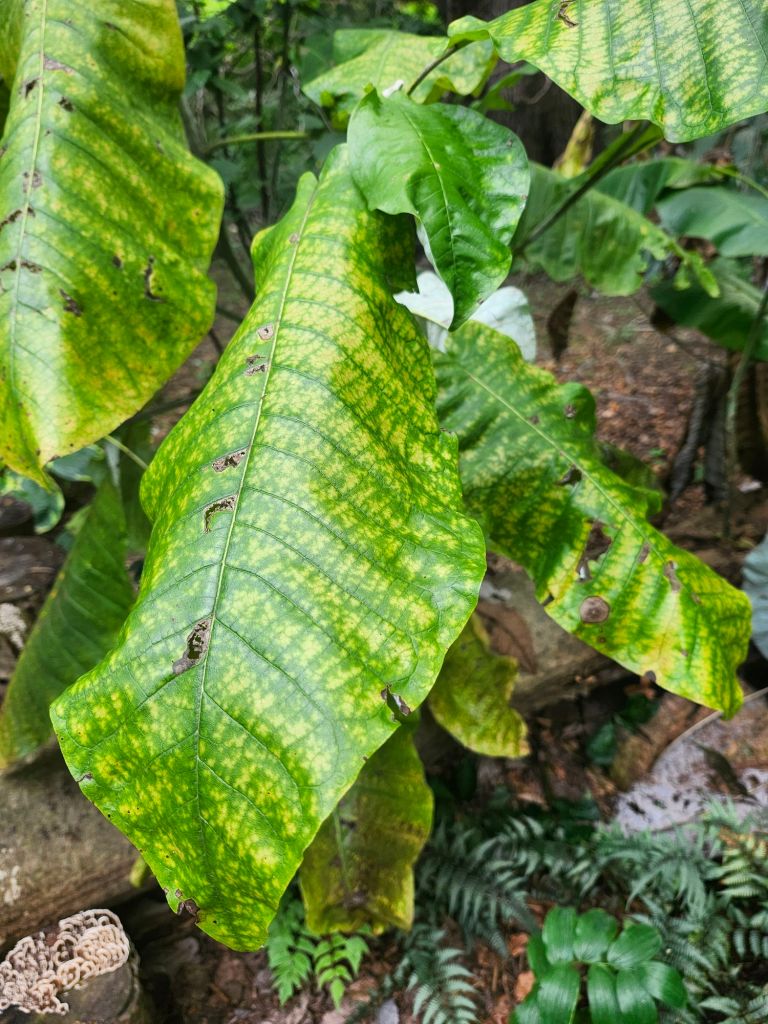
I’ve closely monitored the progress of two plants in the side garden that are expected to fill the void left by the storm damaged, fallen Bigleaf magnolia (Magnolia macrophylla). A tiny Ghost dogwood (Cornus wilsoniana, also Swida wilsoniana) has quickly grown to nearly seven feet, clearly thriving with the regular rainfall and part sun location. It will be years before its pale gray bark is seen, probably after I’m dead and gone, but I’m overjoyed to add it to the small dogwood collection. I hope to see flowers next year, but it might be a year too early.
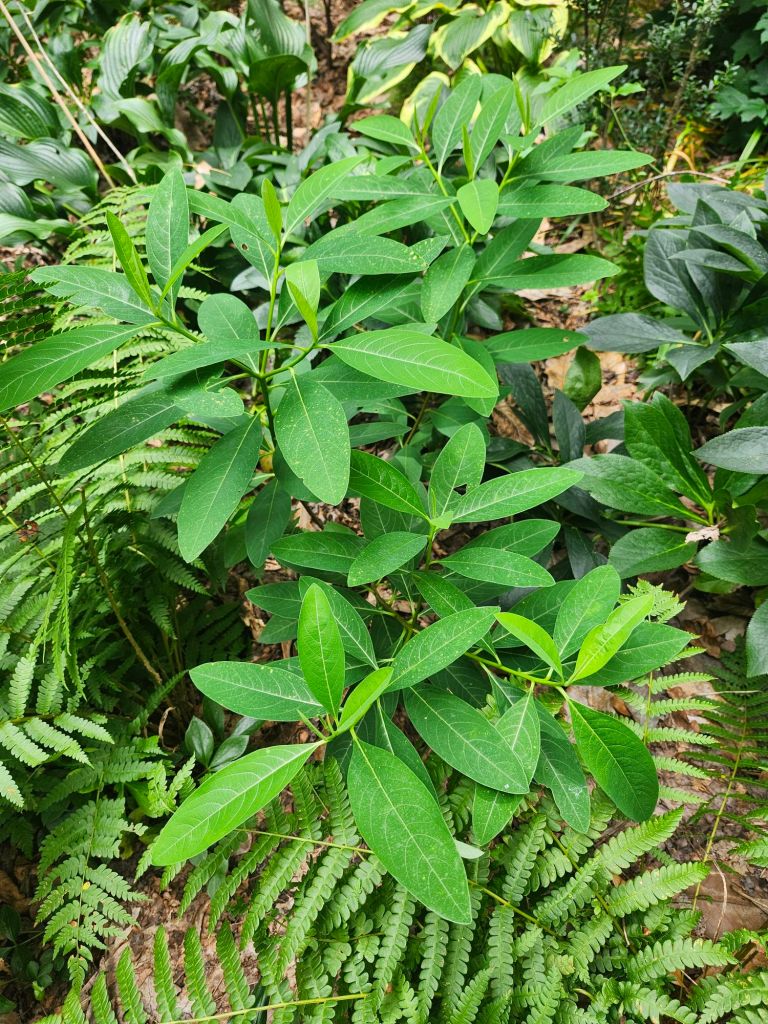
The red flowered paperbush (Edgeworthia papyrifera ‘Akebono’, below) lost all its emerging leaves in the spring freeze, but happily, it’s recovered. I feared that the newly planted paperbush would not survive, but it continues to grow with surprising vigor. Six other long established, widespreading paperbushes (Edgeworthia chrysantha) were damaged by the cold but quickly recovered, though their canopy is a bit thinner than usual.
Regular thunderstorms are not unusual through August, but this year they were dependable enough that I was comfortable planting despite high temperatures. An addition to the front garden was carved out of the small lawn with several new additions and a few transplants that were rescued from overgrown areas in the rear garden.
Several mailorders have been placed for delivery late in the month and I’ll soon make another trip to the garden center. After a few years of extended periods of dry weather, I’m so happy to be planting with no concerns.


Red horse chestnut normally gets shabby by now? That is interesting. The native (to here) California buckeye is unpopular because it is twice deciduous. It foliates in early spring, defoliated in the heat of summer, and then refoliates again in autumn before defoliating again for winter. It sounds complicated. Much of the time, the tree looks dead, and it does not always defoliate cleanly. Anyway, I know of only a few red horse chestnuts here, but was not aware that they get shabby by late summer. Perhaps they actually hold their foliage better because we get no rain.
With our persistent humidity, black spot and powdery mildew are inevitable, though worsened this year because of the regular rainfall. As the Horse-chestnut defoliates, plants in its shadow are happy for the sunlight.