I recently purchased a dwarf Japanese Umbrella tree (Sciadopitys verticillata ‘Picola’) from an area garden center that specializes in Japanese maples and conifers with very few typical offerings. My tiny car could only hold so many plants, so there were several treasures left behind, more than one because I couldn’t figure any place they’d fit into the garden.
Now, I’m tempted to go back, and when that happens my anxiousness increases by the day. Fortunately, I retain a modicum of good sense, but I am certain that I must return to purchase a tall, skinny, potted Franklinia (Franklinia alatamaha, below).
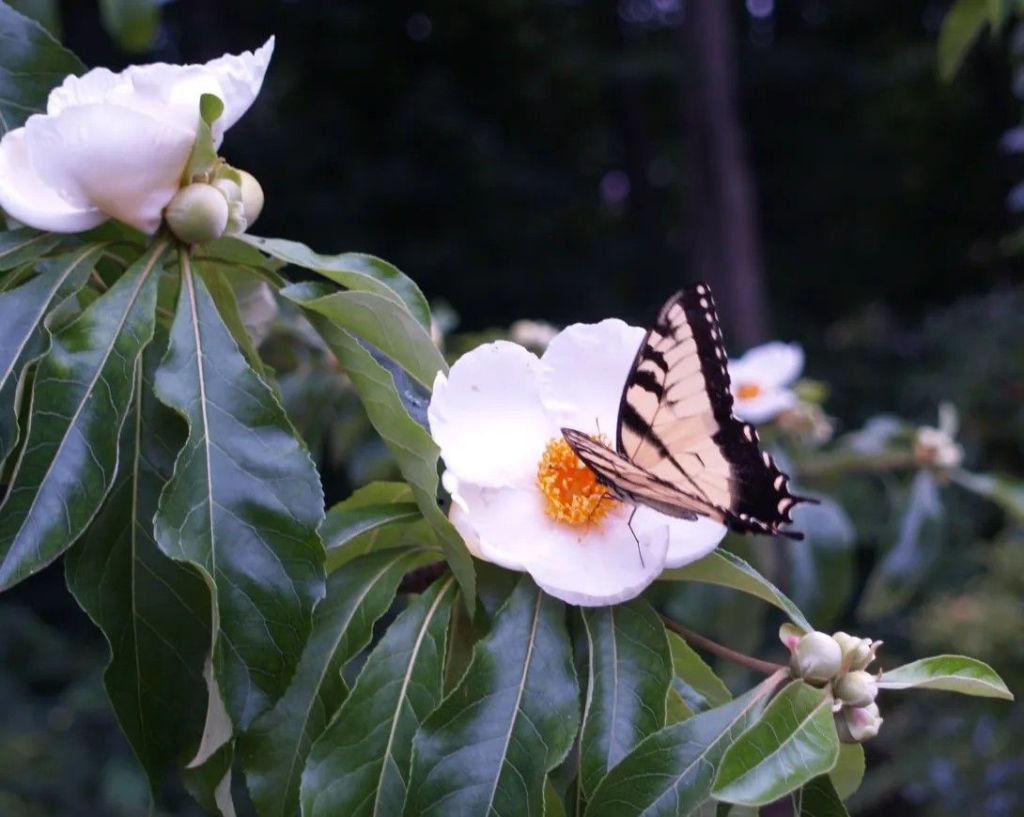
Years ago, a fine specimen grew at the halfway point of the rear garden. It flowered splendidly and occasionally its late summer blooms and glorious autumn foliage color would intersect. Sadly, the water table in the lower half of garden was raised when a retention pond was constructed near the rear property line by the land developer. The soil became too damp with the Franklinia declining along with a large holly and witch hazel.
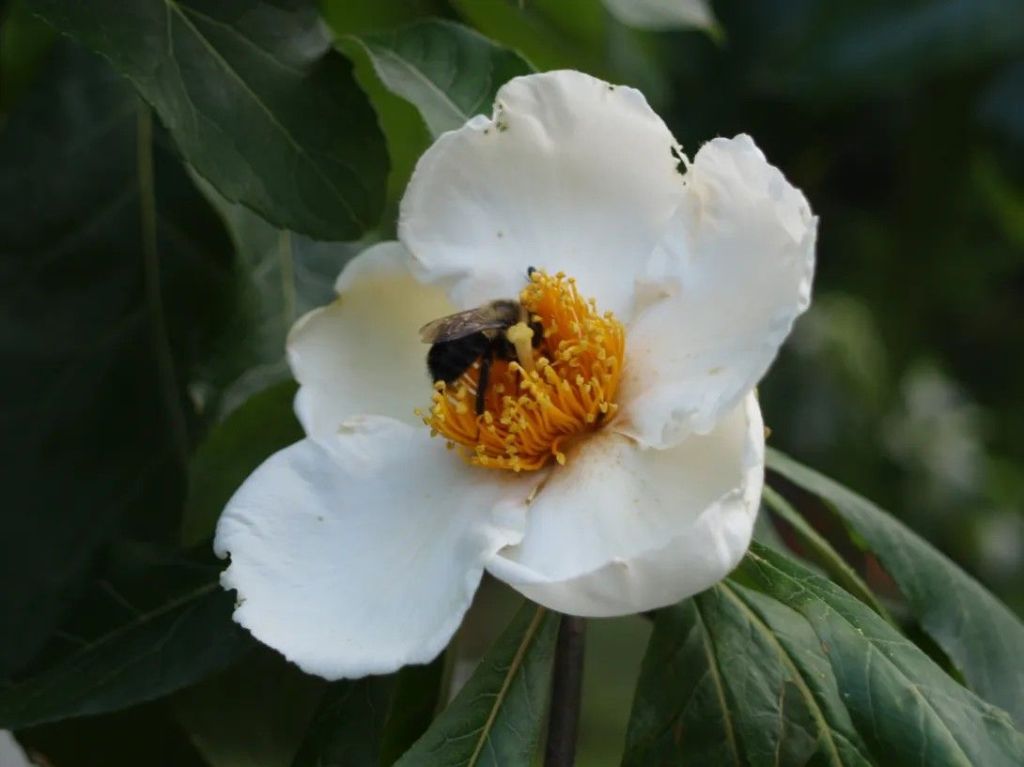
When the Franklinia was removed there were no suitable replacements and no place for one to go if it was found. After a few years, I obtained a Gordlinia (x Gordlinia grandiflora, below) that is a cross between Franklinia and a native shrub, Gordonia. Its flowers are very similar to Franklinia’s, and the foliage is similar, though it is evergreen with little autumn coloring. It was planted up the slope with a yellow twigged dogwood (Cornus sericea ‘Flaviramea’) replacing the Franklinia. Certainly, not an even swap.
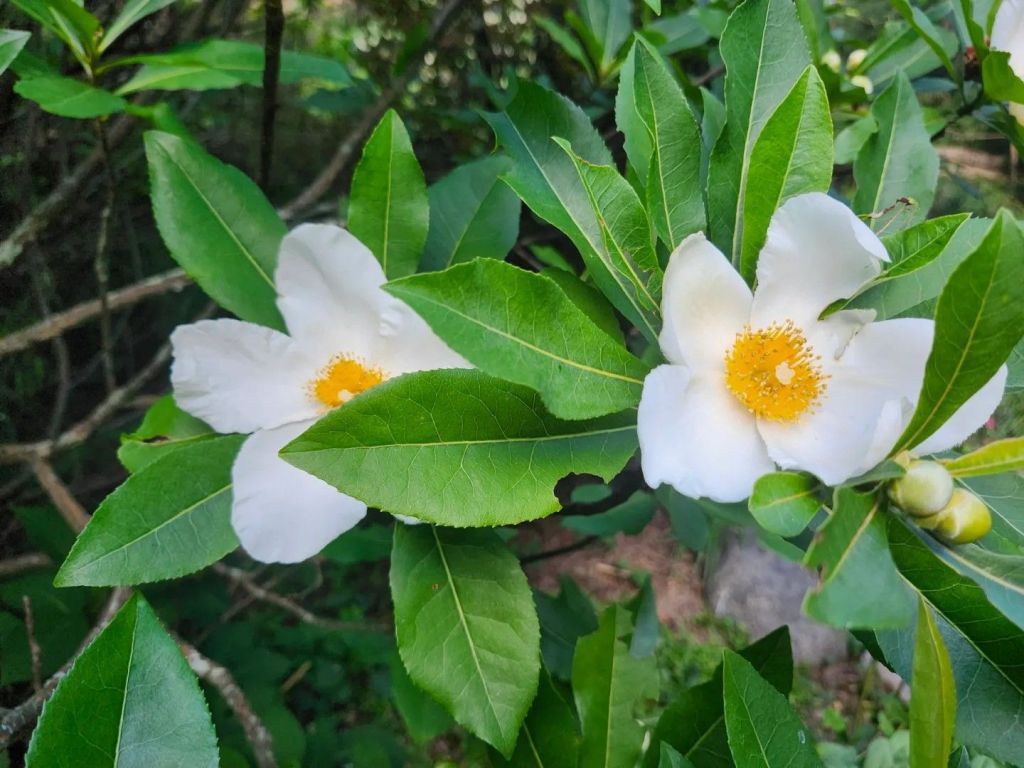
But, it’s not the same, and every time I stroll past the Gordlinia reminds me that I must have a Franklinia. Still, where would it be planted? Today, after mulling the question repeatedly, I have an idea, probably not one that is ideal, but I often accept a lesser standard if I want a plant badly enough. And, I do.
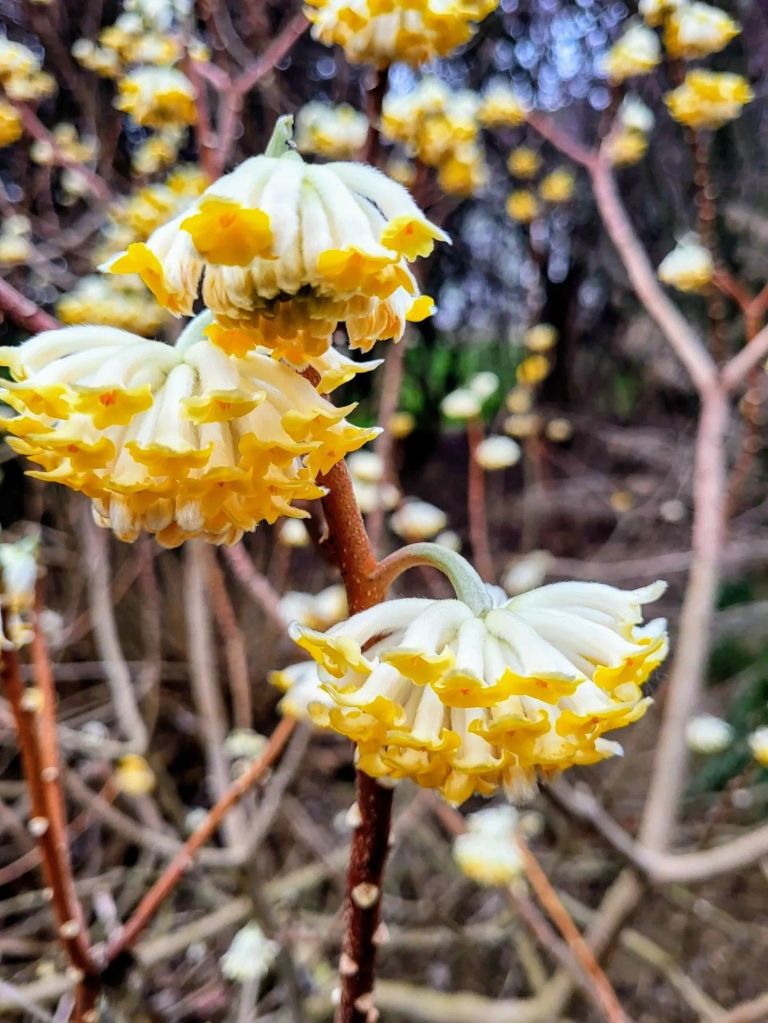
The spot I’m thinking about is in the area where the Bigleaf magnolia (Magnolia macrophyll) fell a year ago. It’s now densely planted, but there’s a small area where this skinny, four foot tree could be planted and hardly noticed for a few years as it grows. I think that’ll work, and while I’m at it I’ll add a small, narrow-leafed paperbush (Edgeworthia papyrifera) that caught my eye.
You’re right, none of this makes good sense. But remember, I claim only a modicum of sense that allows plenty of wiggle room for a bit of nonsense.

