The Monkey Puzzle (Araucaria auracana) has arrived, a gift from a longtime nursery friend in Oregon. Of course, it’s small, but not so small that there were not complications getting it home in my tiny car.
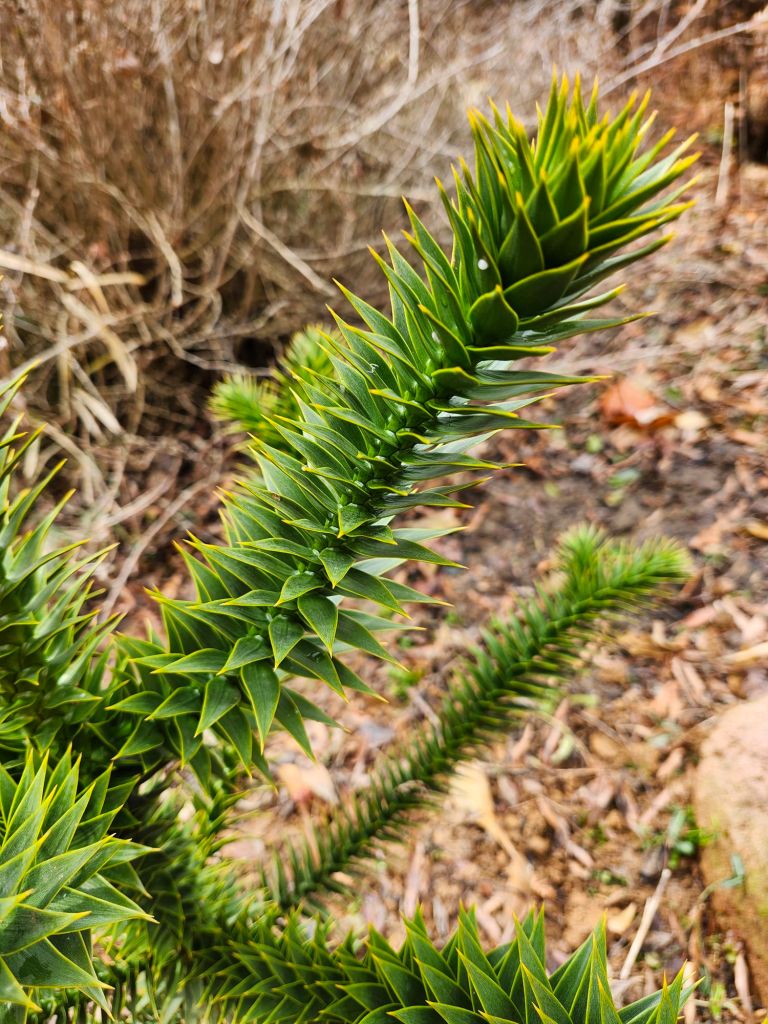
The spine covered tree was stuffed into the floor of the front seat (there is no back in this two-seater) with only slight difficulty. It was just short enough that I didn’t have to remove the convertible top while it was spitting rain. Getting it out was more complicated, but I managed to wrangle it out without broken branches or drawing blood.
The dilemma now is, where to plant it? Every choice spot involves removing something else, worry about the Monkey Puzzle’s proximity to another tree or shrub, or to a path. This is not a tree that can be brushed past without it inflicting injury.
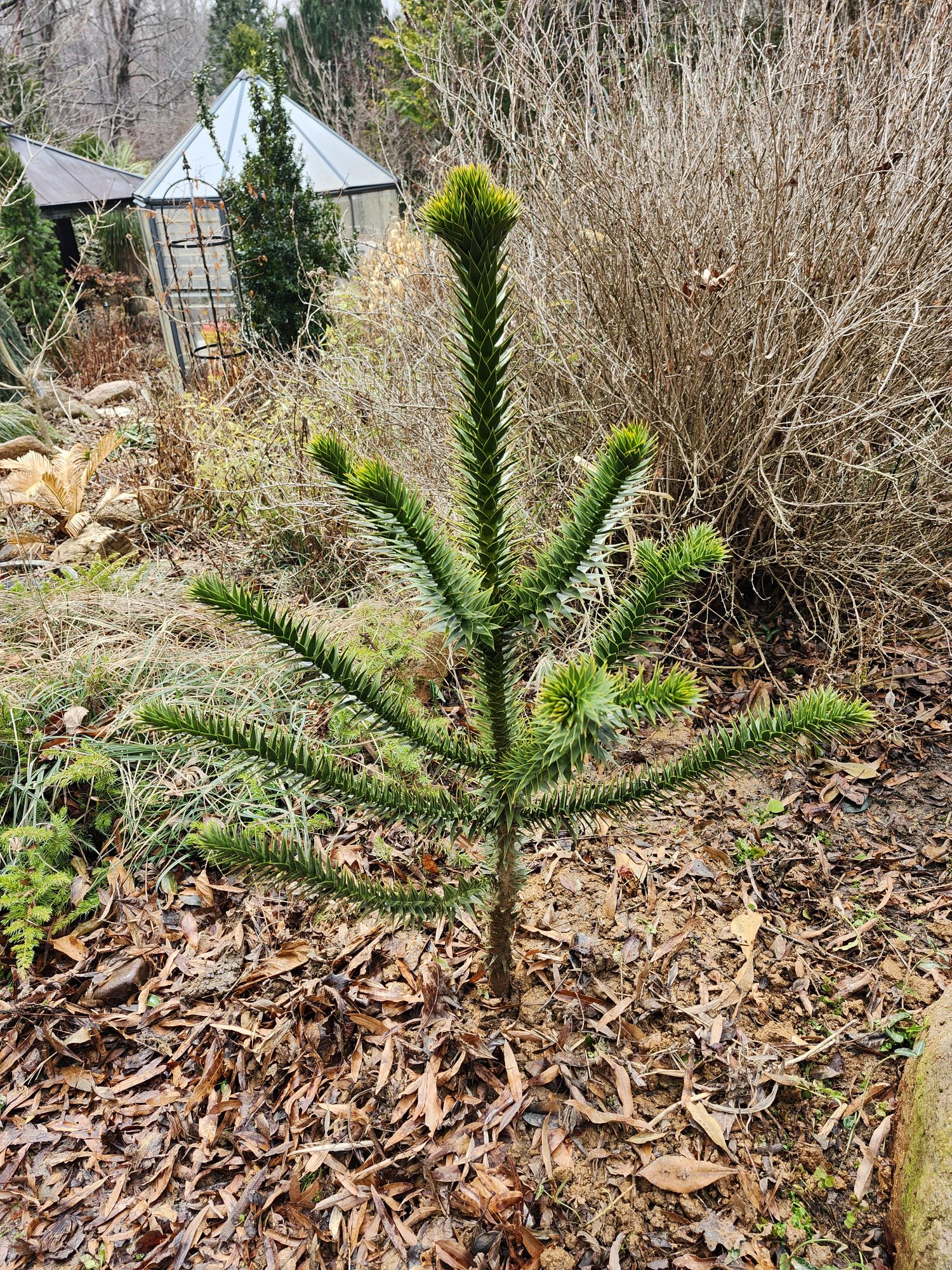
When the garden was considerably younger, a Monkey Puzzle was planted near the base of the driveway alongside a goldthread cypress (Chamaecyparis pisifera ‘Aurea’). The Monkey Puzzle declined over a few years in the poorly drained soil, which could be fortunate since the cypress has grown to thirty feet tall (a warning to pay no attention to nursery tags that state its mature size as six by six). One or the other would have had to go eventually, and while I’ve spent decades collecting Japanese maples, dogwoods, and redbuds, I now have an opportunity to give the Monkey Puzzle a prominent position where it won’t be threatened.
No doubt, I will not live long enough to see the tree grow to substantial size, but I’m thrilled to have one again. Barbara is not. She despises thorned or spined plants. She says they’re mean, and people who grow them or plant them are mean. Oh well, my Oregon friend is as nice as they come, and I’m probably nice, at least most of the time.
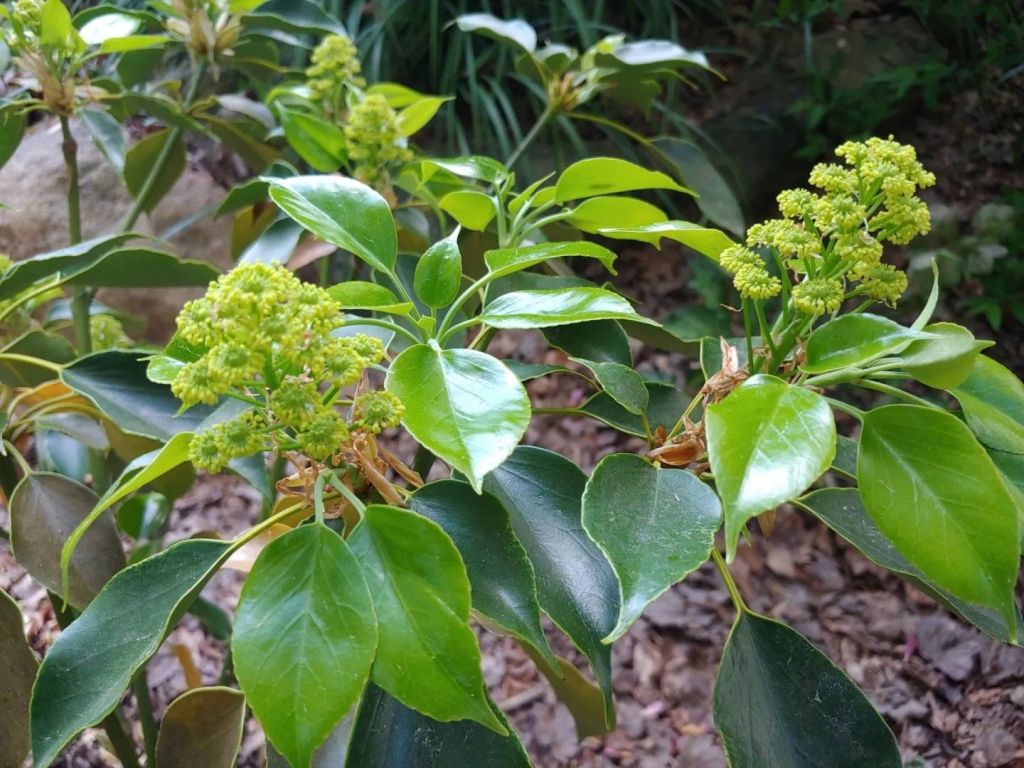
My first thought on where to plant it was just outside the sunroom where I’d see it every day. The Wheel Tree (Trochodendron arailiodes) that faded over the past few years has just been pulled out, but this spot could be a little too shaded.
The final spot decided upon is along the path to the rear garden. This is a little close to the path, so in a few years a branch or two might need to be clipped. But, it’s as sunny a spot as there is in this garden that becomes shadier every year. The benefit of this location from a design aspect is that, as it grows, visitors will wonder “what the heck is that?” as they walk down the driveway.
 Ramblin' through Dave's Garden
It is no wonder that species is rare. No one wants such offensive prickliness in their garden. It certainly makes a statement, though.
Seems like you’re siding with my wife. A little prickle never hurt anyone.