I’ve planted more fern varieties in the garden than any other plant, even the nearly forty varieties of Japanese maples. But, there are more of unknown nomenclature since many are similar in appearance and I lazily did not keep track while purchasing and planting them. A year ago, I began to label them, as inconspicuously as possible, but there are a dozen or more that I haven’t a clue to their identity. Known or not, I treasure them all.
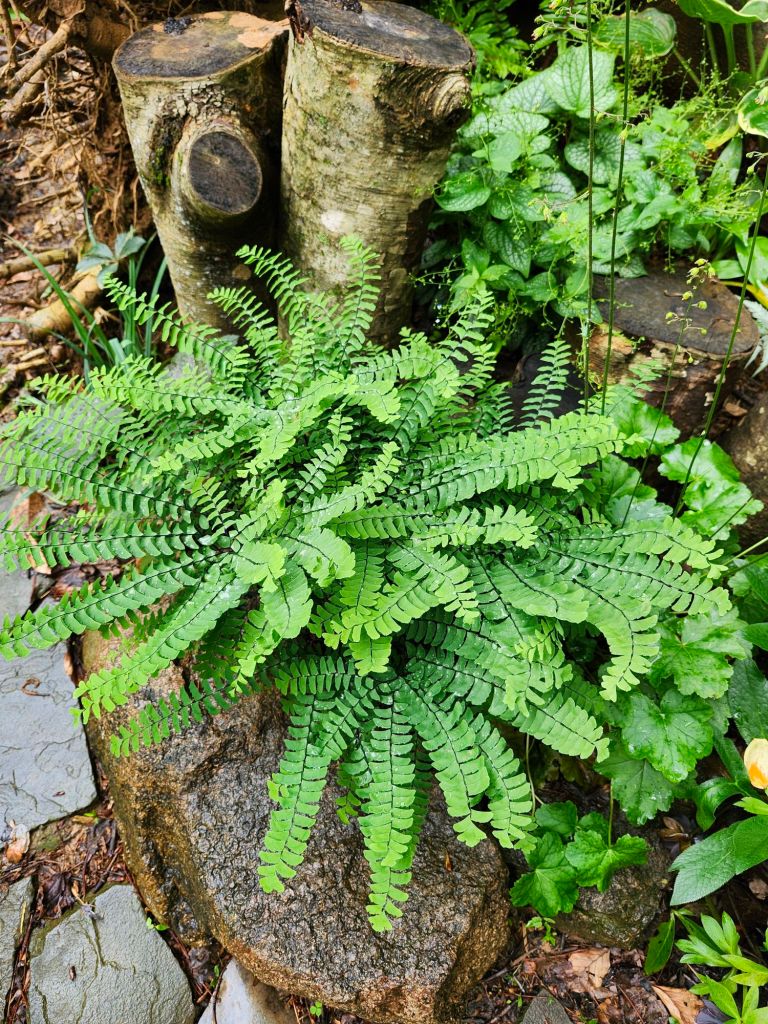
Christmas and Ostrich ferns were relocated from the forest that borders the garden years ago, and a few have blown in on the wind, I presume. They are an excellent filler and add textural contrast. A few have colorful fronds to spice up the spaces between green foliage. Only a few are evergreen and the browned foliage takes little effort to clean up in early spring.
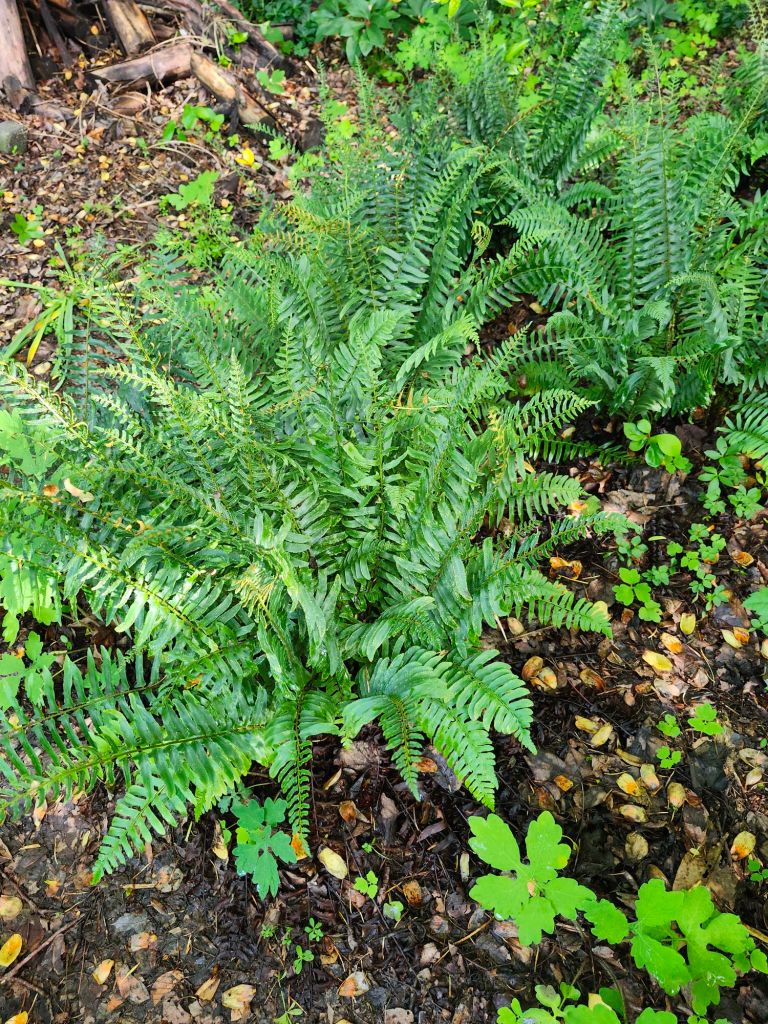
I must monitor the spread of Ostrich fern in the garden beside the upper circle patio. The fern was once allowed to fill this space, and since its partial removal a few years ago it seeks to reestablish itself by rhizomes and spores. The removal is not difficult if small ferns are pulled, but larger ones must be dug amidst the spreading hostas and toad lilies (Tricyrtis). It is barely a nuisance, and if it was more of one, the Ostrich ferns could easily be eradicated.
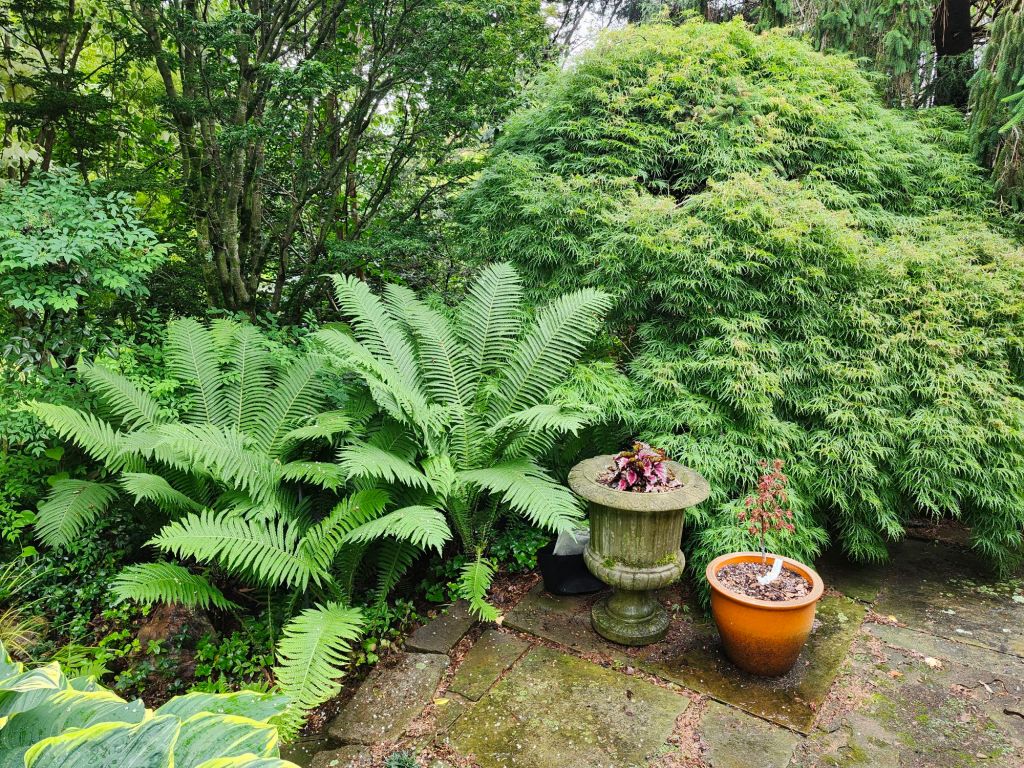
The Ostrich ferns were not completely removed when new planting accompanied construction of the sunroom. The tall fern works splendidly as a backdrop to smaller plants and poking through the edges of the wide spreading weeping maple (Acer palmatum ‘Viridis’). I’ll gladly suffer its occasionally annoying spread.
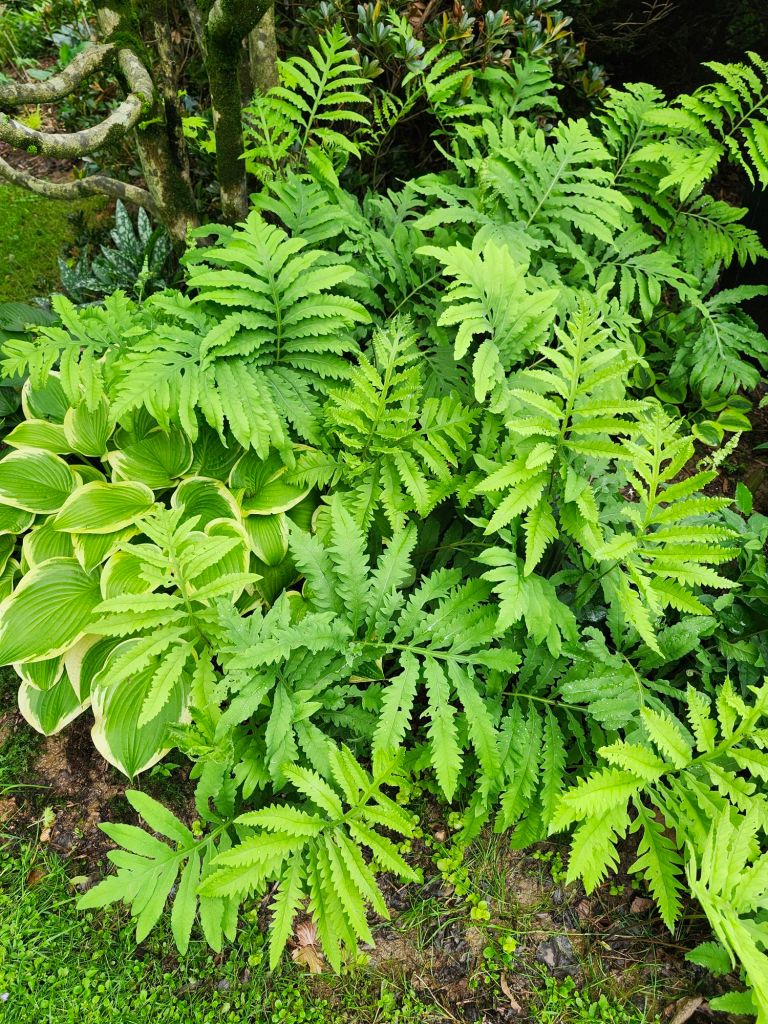
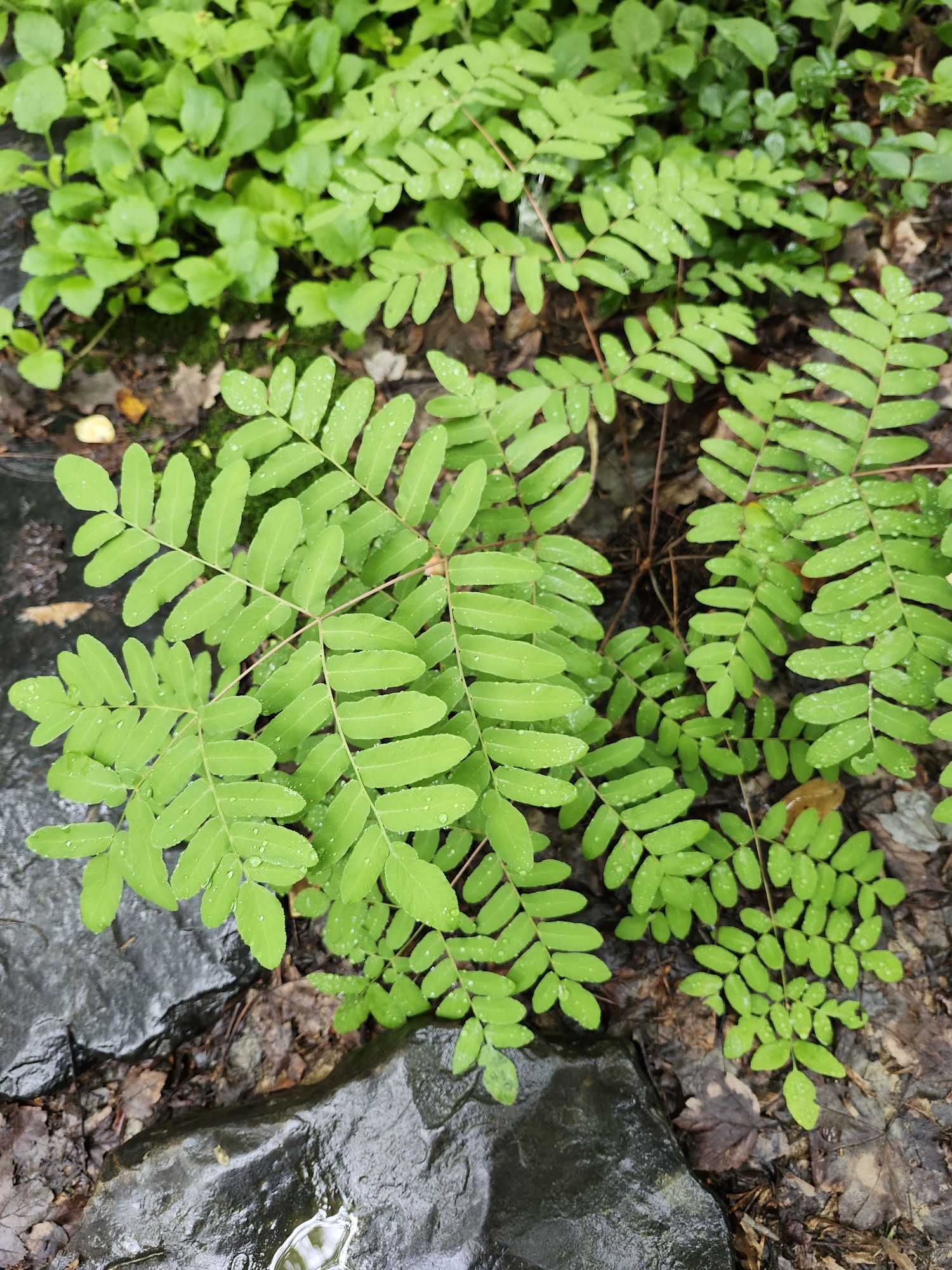
While Ostrich ferns were planted years ago, Sensitive ferns (Onoclea sensibilis) appear spontaneously, in places where they’re wanted, or not. I don’t have any idea where they came from, but once they’re here, you’re going to have more. Mostly, they pop up in damp, shaded areas, but a few have colonized in sunnier spots where they quickly turn brown in the summer sun. When it doesn’t shrivel in the sun, and where it’s allowed to stay, Sensitive fern adds a pleasant texture and lushness.
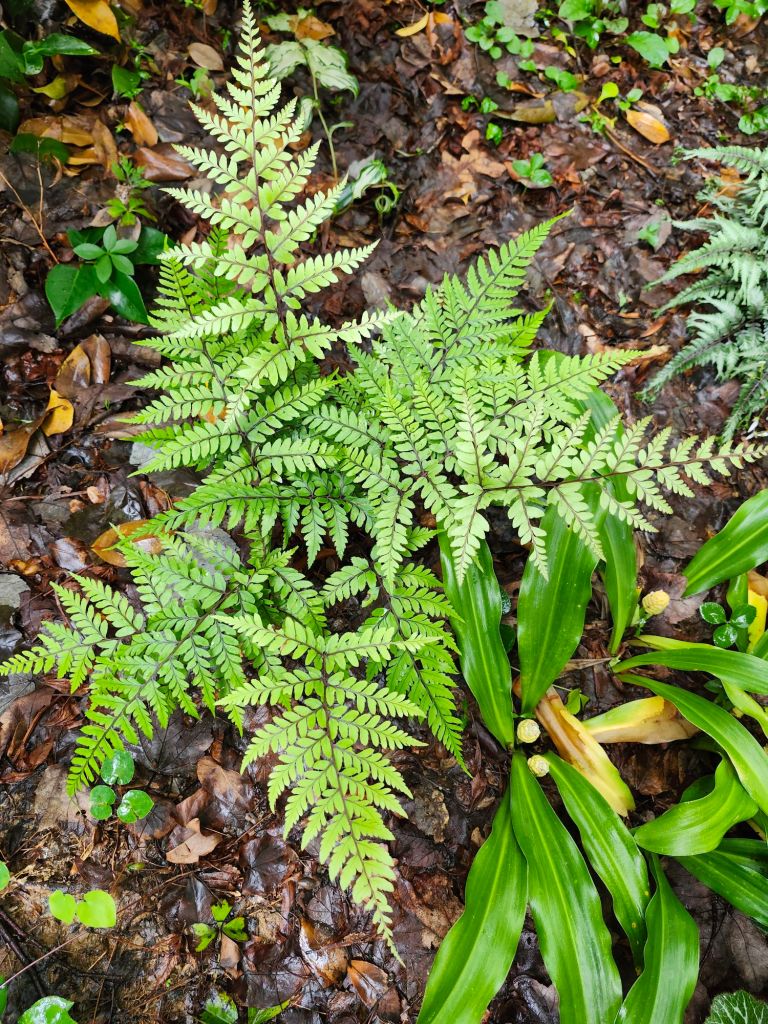
A few other ferns spread, but they weave pleasingly between trees and shrubs. A few weeks ago, I moved two Pinxter azaleas that were having trouble rising above tall Lady ferns. The transplant went without a hitch, and the azaleas are now in a more visible location.
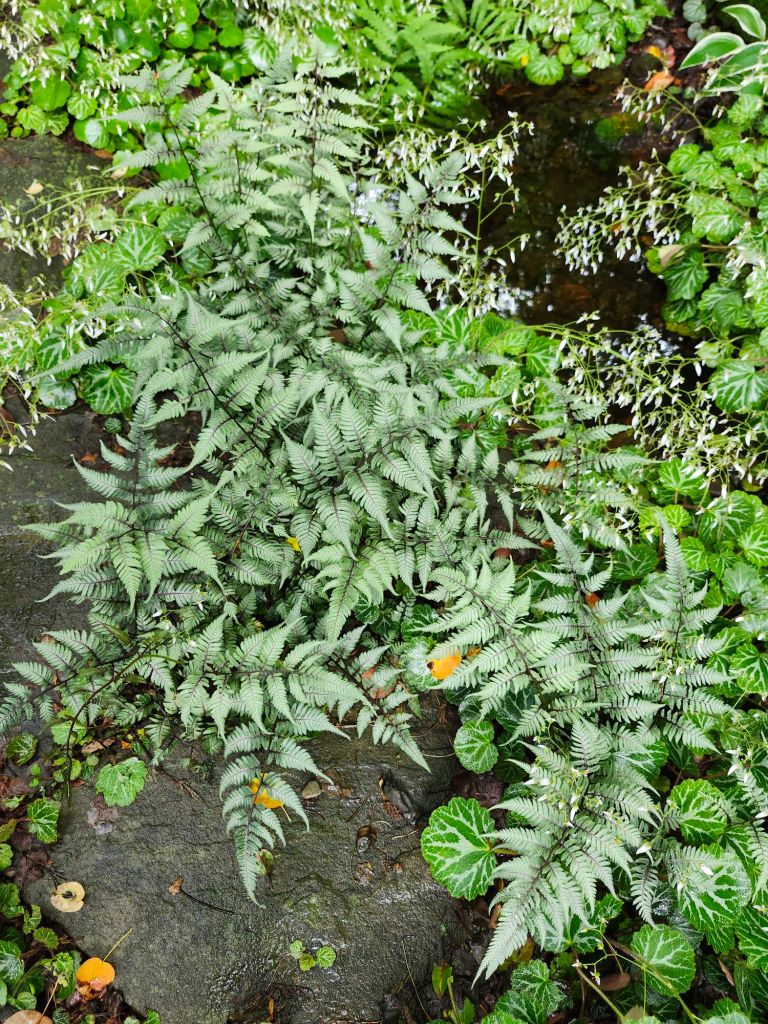
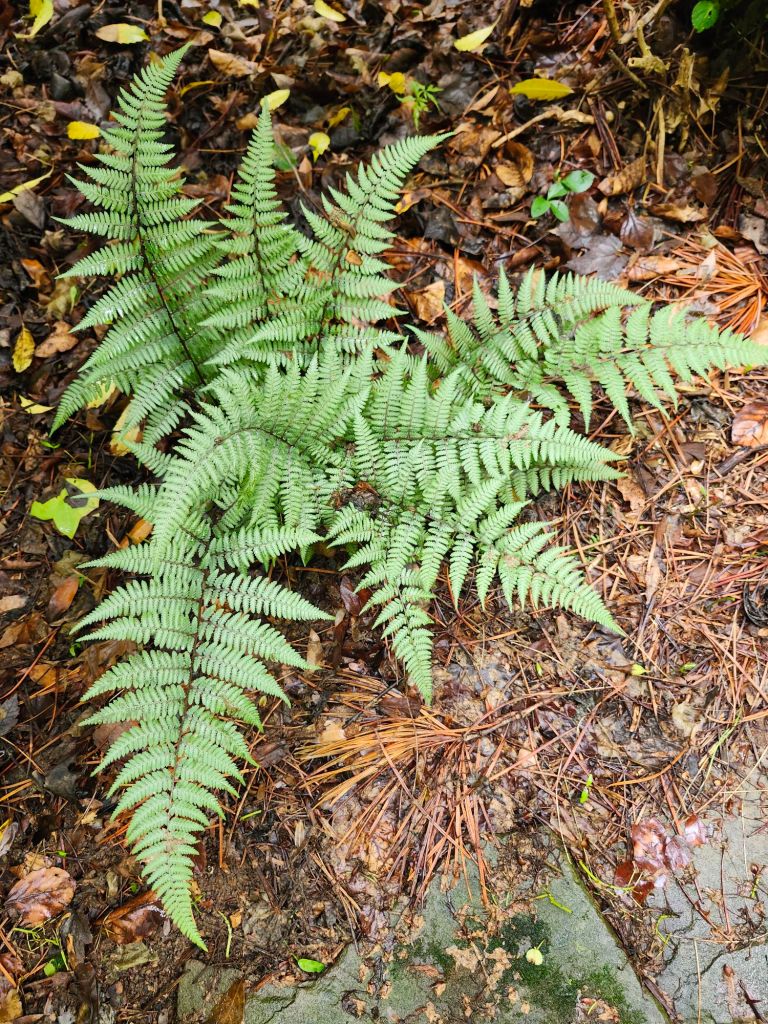
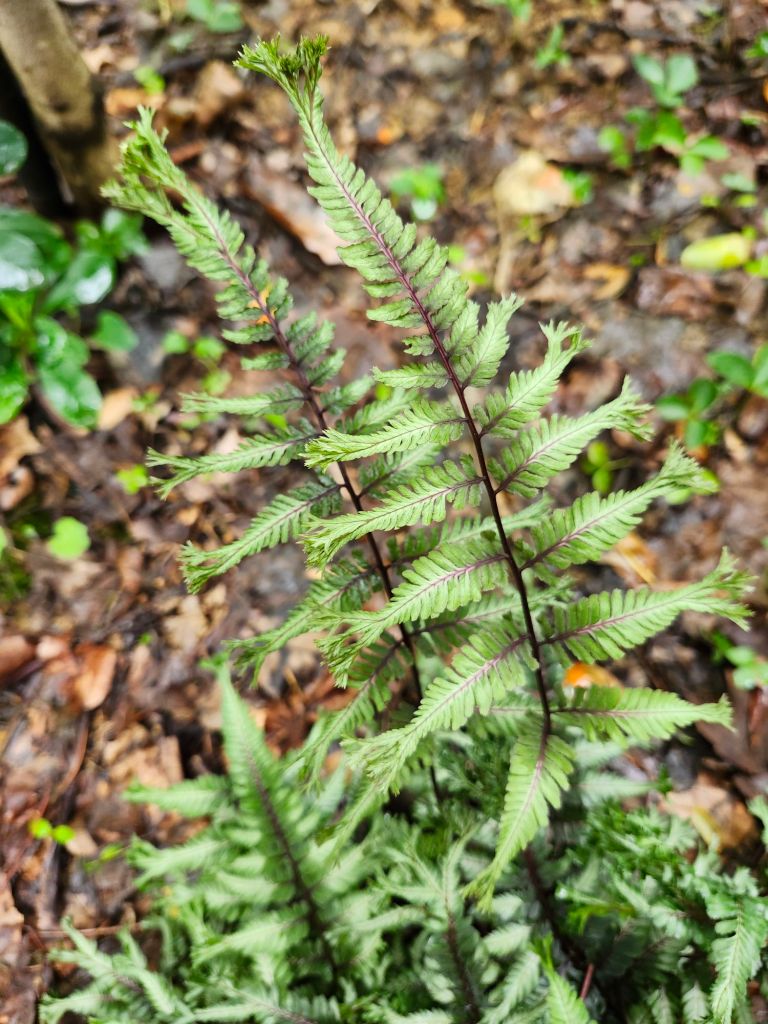
Japanese Painted ferns announced their happiness in the garden years ago, and today a few have become many as sporelings scatter through the side and upper rear gardens. The colorful ferns are planted through the shaded areas of the garden. Several have been moved from between gaps in stones of paths and patios, though on occasion one must be discarded. A few with crested leaves were added a year ago, and these appear just as vigorous.
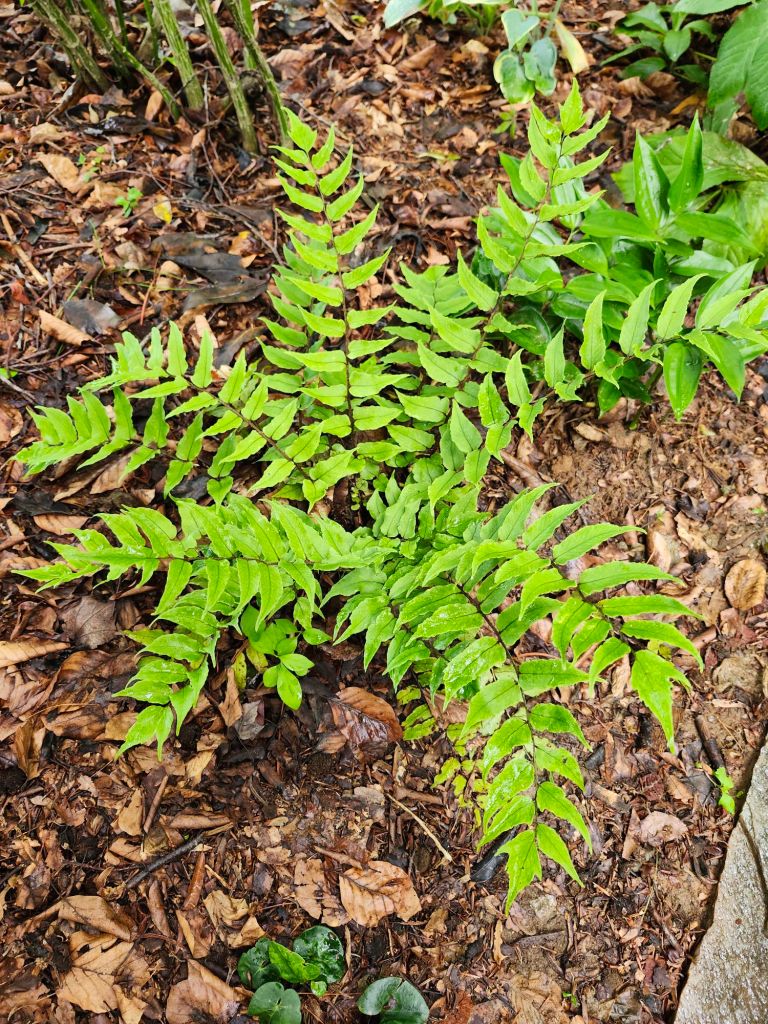
I’ve just planted another dozen varieties. All are tagged so I will have fewer excuses for not identifying this favorite group of plants.


Does Tasmanian tree fern perform well there. I know that it tolerates frost, but I do not know how cold it can get.
No, we regularly drop below 15 degrees, occasionally below 10, and this winter my place fell to -2. I have a tree fern but it goes into the basement for the winter.
Oh, yes. I know that they tolerate cold weather, but that is quite cold.