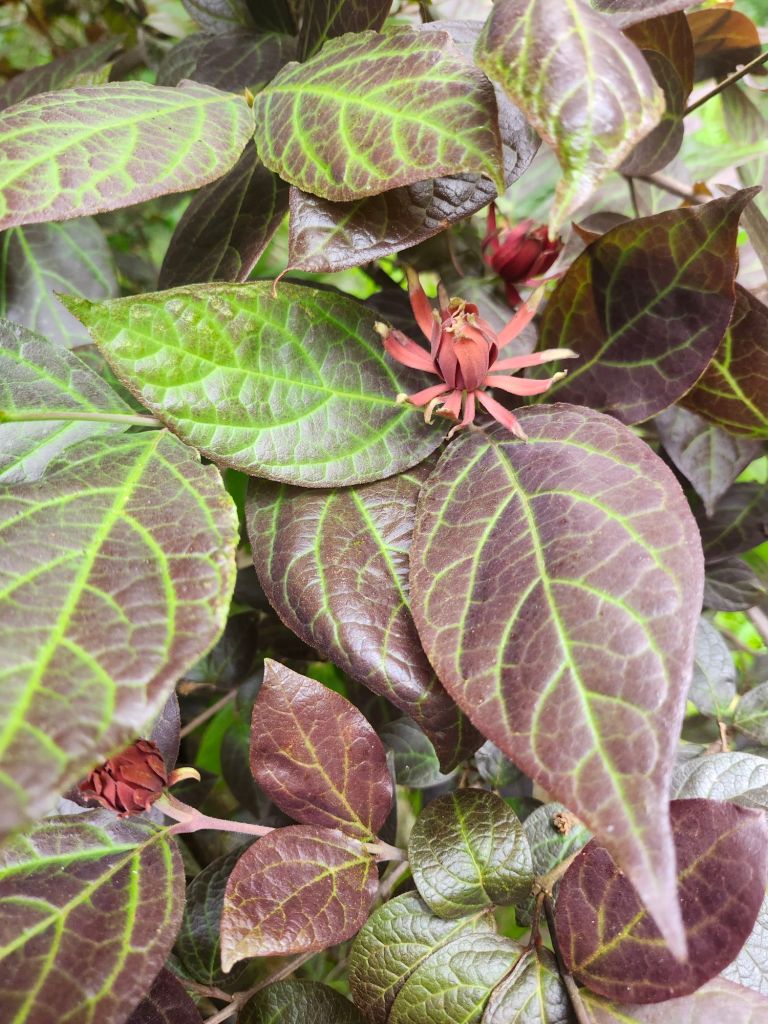
A number of sweetshrubs (Calycanthus floridus) are planted in the shaded side garden where most flower dependably though perhaps more sparsely than in more sun. The white flowered ‘Venus’ was moved recently from deeper shade where it regularly failed to flower, and ‘Michael Lindsey’ barely flowers though this year there were a few to encourage me to give it another year or two before considering a move.
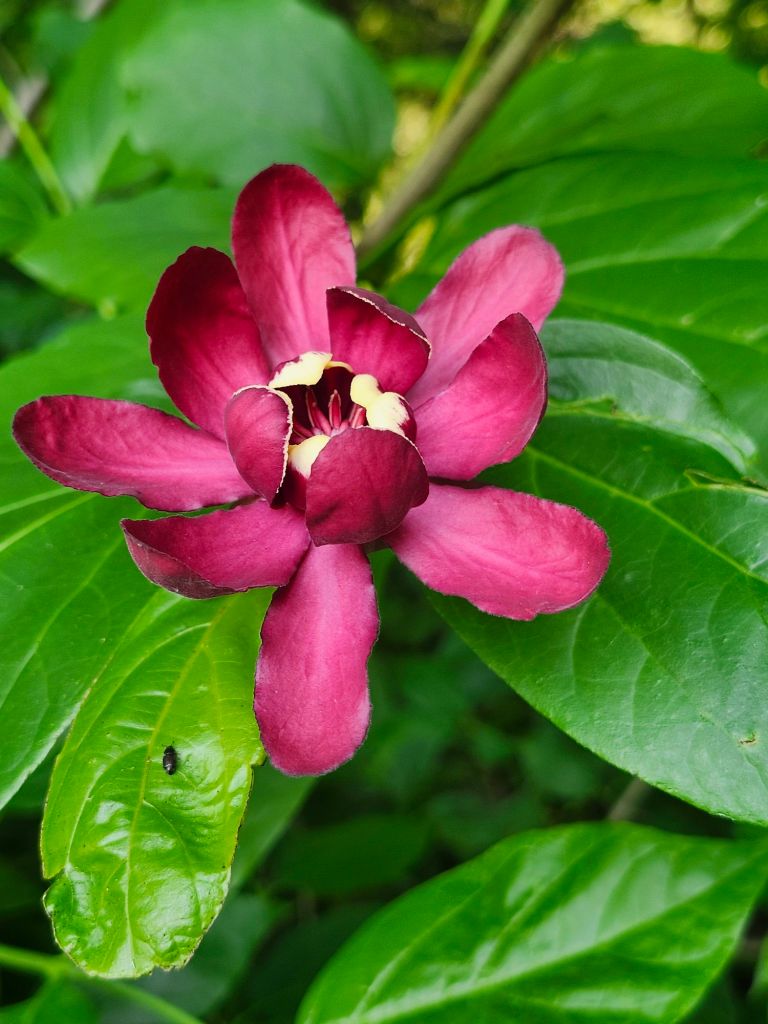
Several ‘Aphrodite’ were planted at the same time in shade and one with several hours of direct sun. The shaded sweetshrubs flowered earlier, while the one in part sun suffered damage to new growth in the mid-spring freeze. In mid-June it is now fully recovered and flowering abundantly. It is also several times larger and noticeably more vigorous than its more shaded friends.
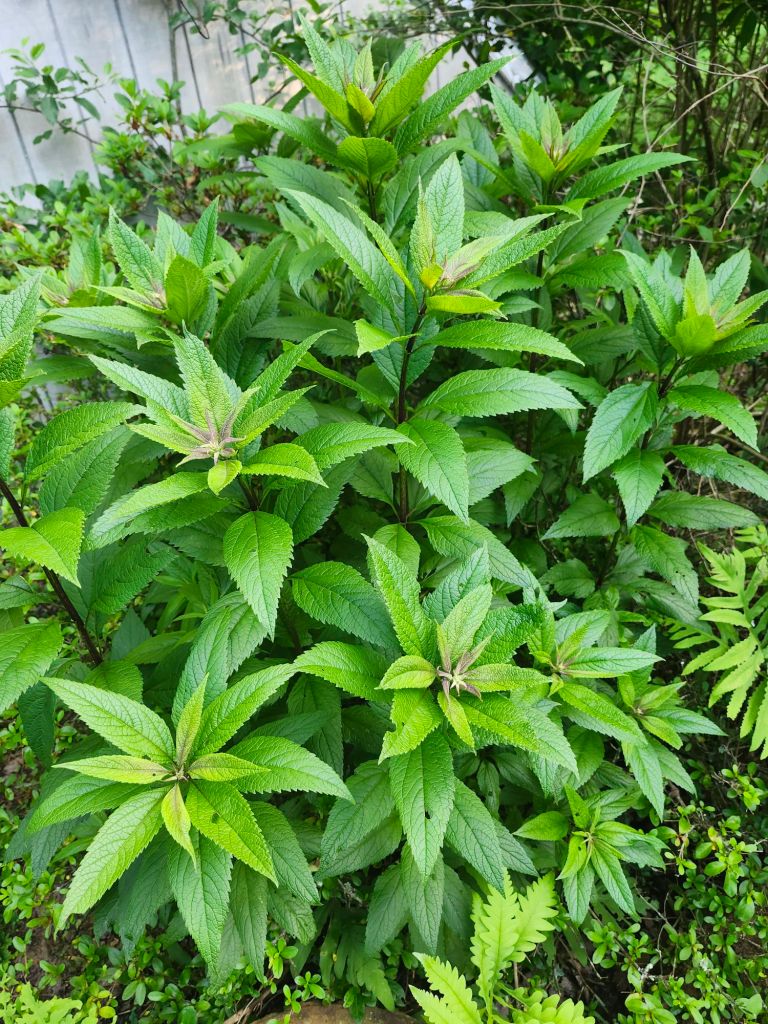
An evergreen azalea in the lower rear garden underperforms. It flowered splendidly this year, but that’s rare. The soil beside the garden’s shed is damp enough that a decades old Franklinia (Franklinia alatamaha) perished when a spring beneath the shed found new life. In recent years, a vigorous clump of Joe Pye Weed (Eutrochium maculatum, below) has sprung up through the azalea. If the azalea provided a more consistent show, I’d pull out the Joe Pye, but it’s the better of the two.
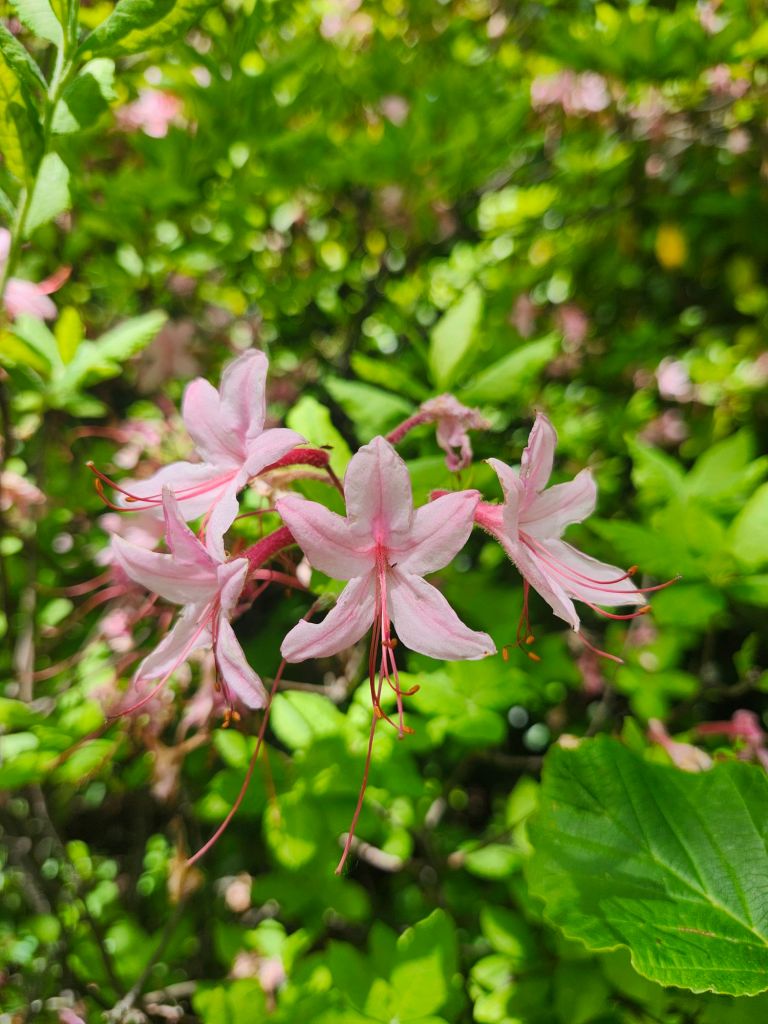
On a recent Appalachian Trail hike (A short section. This is our retreat on ninety degree days.) with my wife, a single Pinxter azalea (Rhododendron periclymenoides, below) remained in flower while others at lower elevations were long past bloom. I was thrilled to be able to smell it when I had seemingly lost that sense. One in the garden was recently transplanted as it failed to flower amidst a tall colony of Lady fern, and this encounter on the trail encourages me to plant more to join the scented Exbury azaleas.
The southern border of the garden is mostly shaded, but for a short period the sun pokes through for the benefit of the azaleas and camellias.


That is quite a few Calycanthus cultivars. Only ‘Hartlage Wine’ is commonly available here. I have never heard of ‘Venus’, but white sounds appealing.
Sweetshrubs are an afterthought in local garden centers, but I had a decades long advantage to travel to visit growers where I could bring in hundreds or just one of a plant.