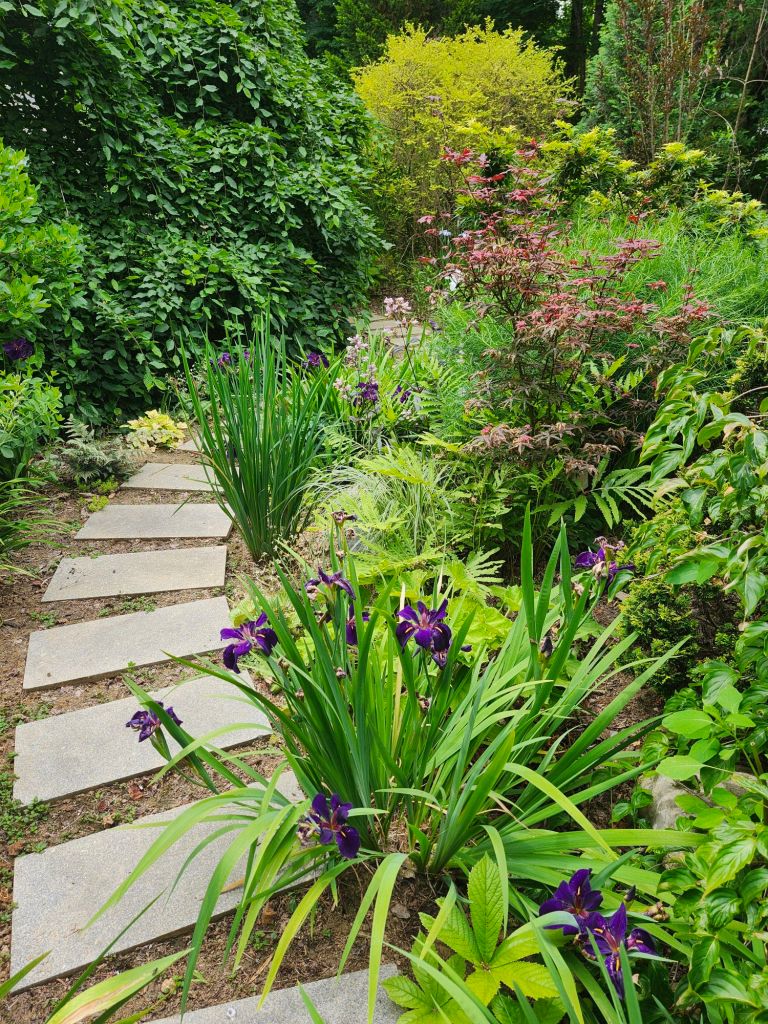
Into the start of June, the garden continues to look better by the day. The front walk is again partially covered by brown leaves fallen from ‘Seriyu’ and ‘Bloodgood’ Japanese maples that were spoiled in the late freeze, but that is progress to soon be rid of the unsightly, brown leaves. On the ground is better than in the tree. Through the spring, as the rest of the garden was splendid, at every turn a partially browned Japanese maple plagued the view. This is quickly improving as the damaged leaves fall and are replaced. I knew it would happen, but it took weeks, not days as I requested.
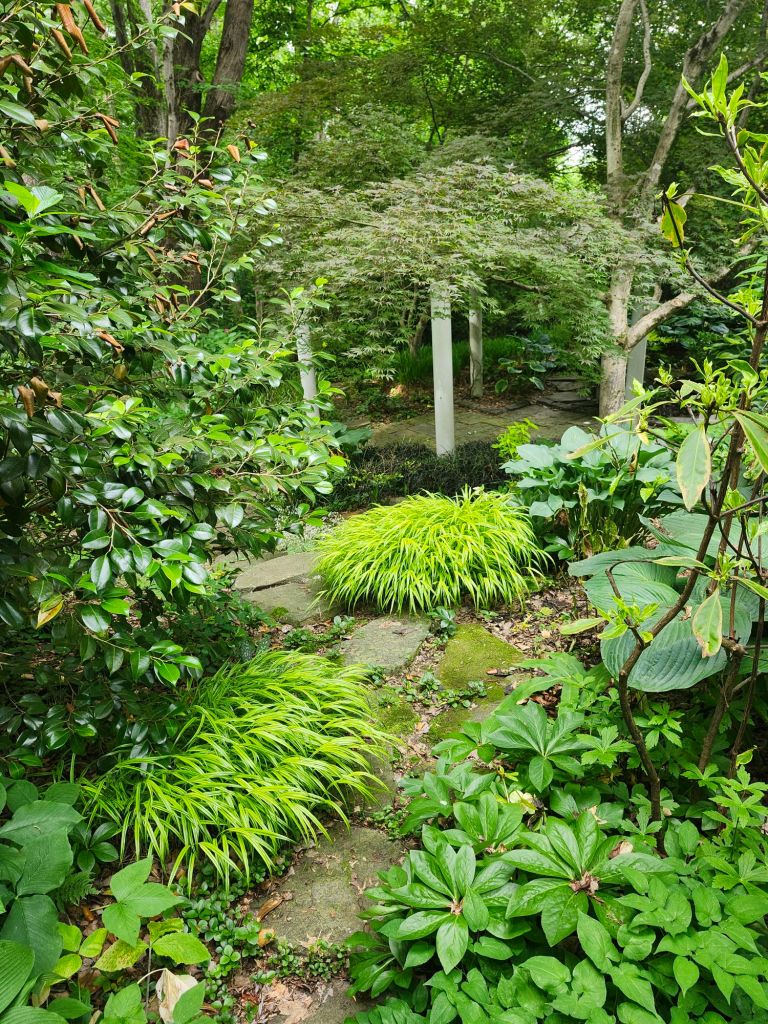
There seems little hope that the mophead hydrangeas (Hydrangea macrophylla) will soon recover from the harsh winter and late freeze that damaged branch tips (and flower buds) and then newly emerging leaves. No doubt, all will survive, and possibly all will regain good health by midsummer, but there will be few flowers and all have detracted from the view as I stroll the garden.
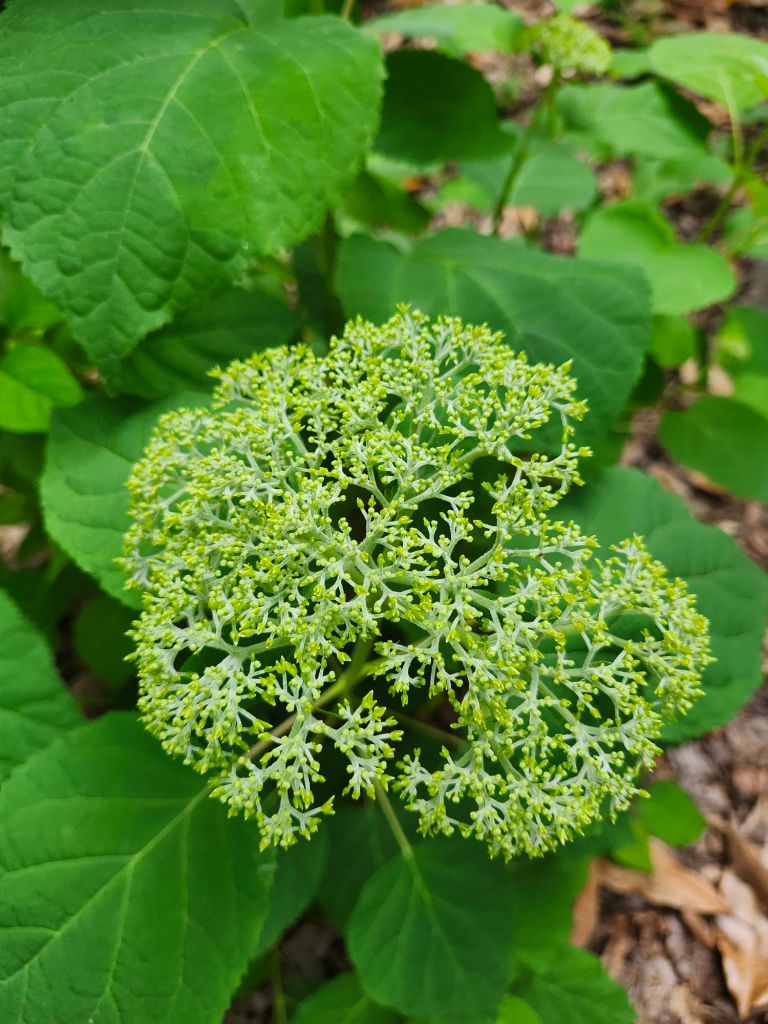
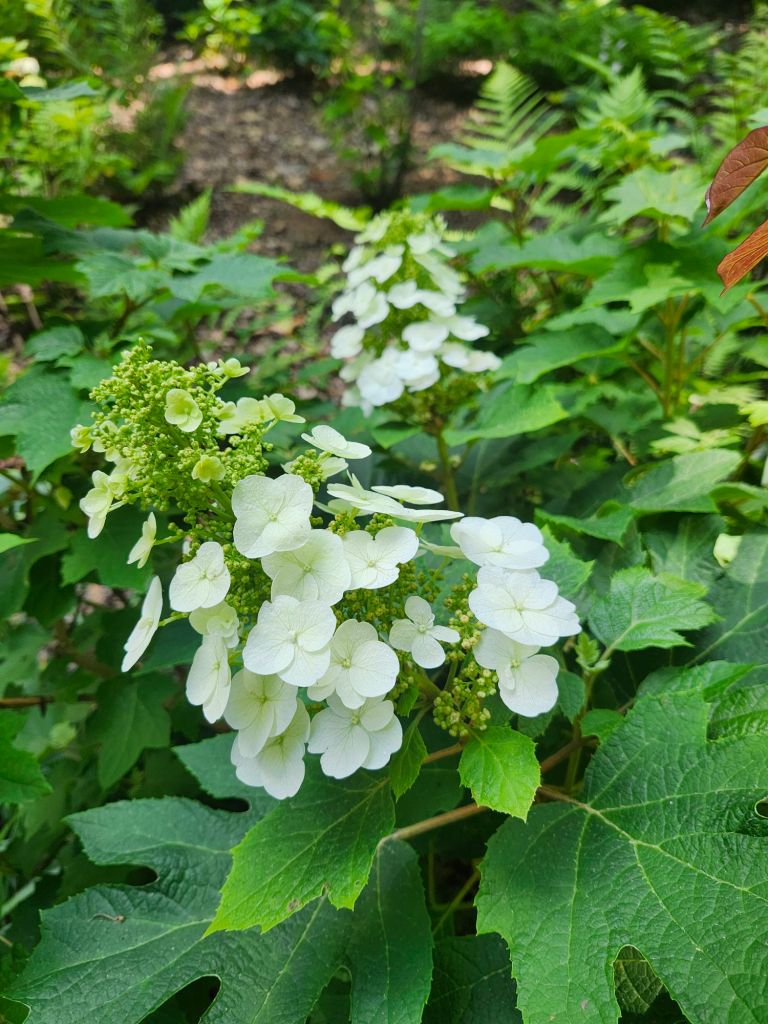
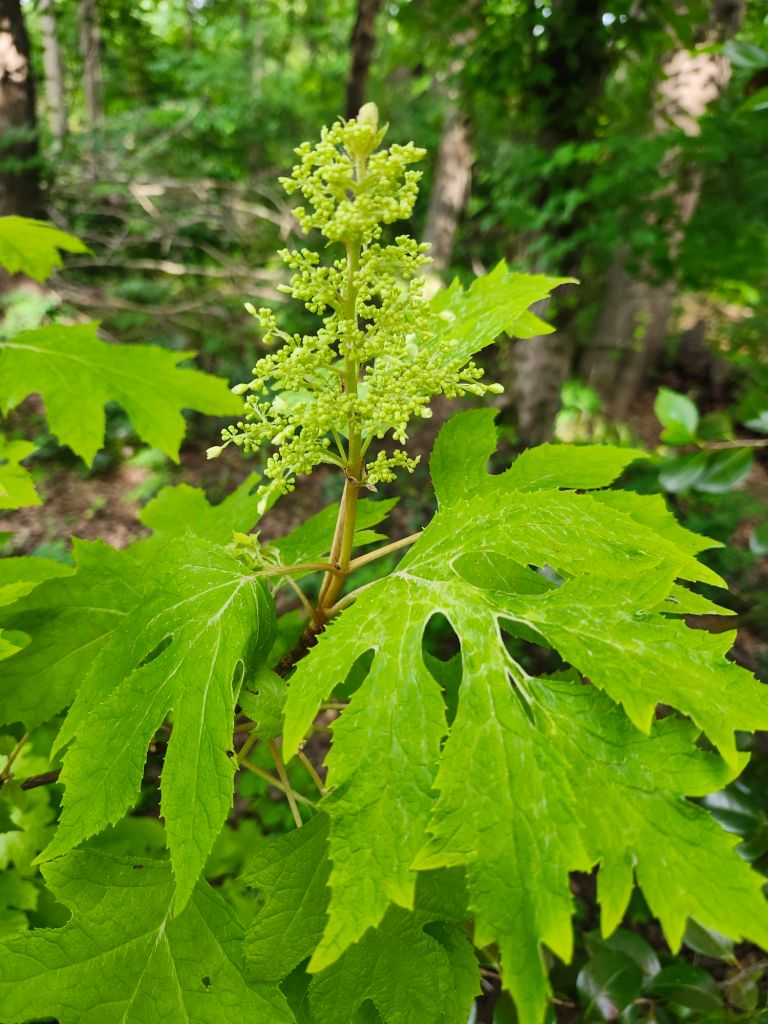
Of course, Smooth hydrangeas (Hydrangea arborescens, above), panicled (Hydrangea paniculata) and Oakleafs (Hydrangea quercifolia, below) were not damaged. Their flowering will proceed on schedule, and after seeing that deer munched a plant or two in the lower rear garden I recently sprayed the repellent. Just in time. A year ago, many flowers were lost as I dragged out my spraying schedule.
As new mophead hydrangeas are introduced, each seemingly with promises of dependable flowering that rarely are kept, my experience has encouraged me to slowly dig them out to be replaced with plants that are not spring eyesores. There are too many wonderful plants to suffer with ones that perform poorly. No doubt, there are areas where the mopheads perform splendidly, and occasionally they do here, but not always and maybe rarely though my opinion is skewed by their recent display of dead stems.
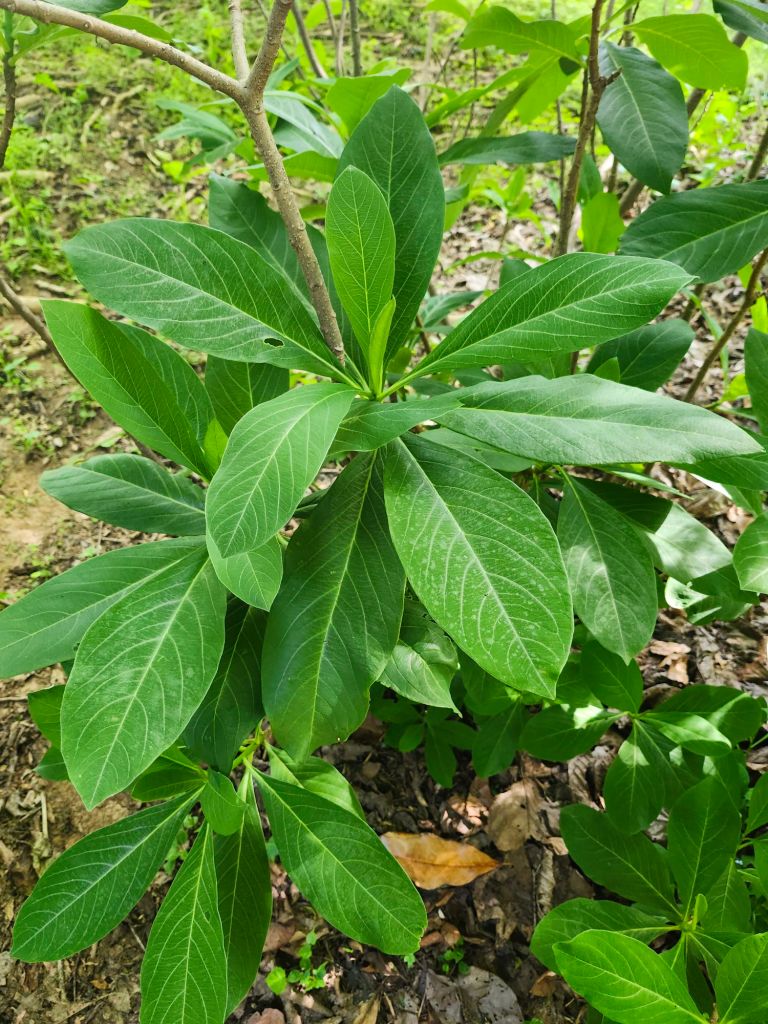
This has been an up and down year for the paperbushes (Edgeworthia chrysantha). With an extended period in January with temperatures just above and below zero (Fahrenheit), I figured that all flower buds would be lost. Happily, only a few were damaged with an exceptional period of flowering, but the new growth that followed was lost in the late freeze. Finally, the replacement leaves are filling in, though it will be several more weeks before the domed canopy is complete.
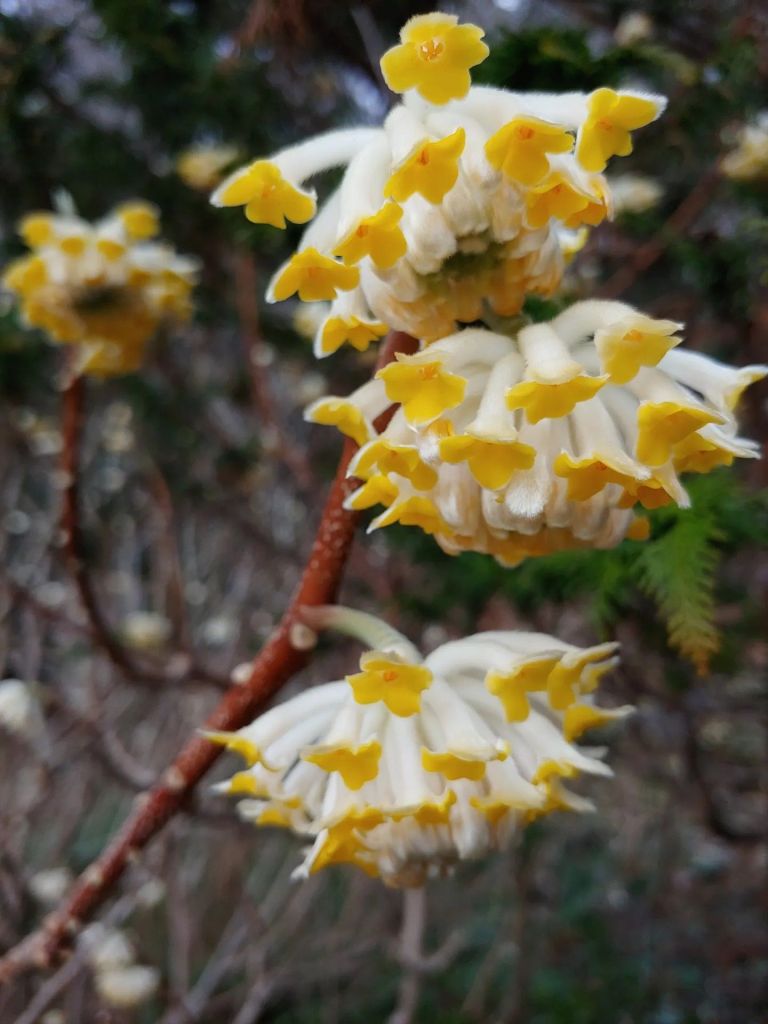
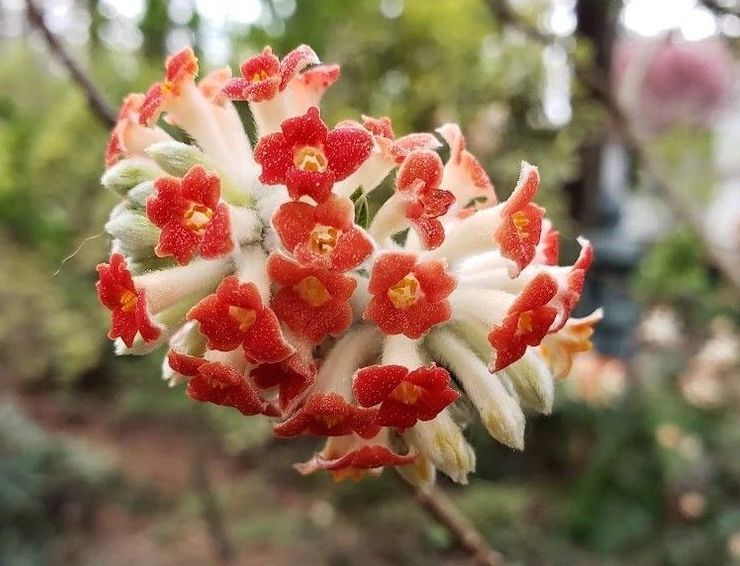
I am very pleased that the newly planted, red flowered ‘Akebono’ paperbush (Edgeworthia papyrifera ‘Akebono’, below) has revived from defoliating in the freeze. While more established trees and shrubs rarely suffer long term harm, newer plantings can struggle or perish. A smaller ‘Akebono’ was lost several years ago, very likely due to lack of care, so I’m thrilled that I was able to find another and that it made it through the loss of new leaves.
Of course, the few problems imply that the spring garden has been a disaster when the opposite is the case. Dogwoods have never been better and redbuds planted in recent years are exceptional. The dependably wonderful parts of the garden were another year better. There will always be a few sore thumbs that stand out, but as in every past year, the garden has never been better.