I don’t recall planting so many of the ‘Black Gamecock’ Louisiana iris (Iris louisiana ‘Black Gamecock’, below), but it’s everywhere in the lower rear garden. Of course, I knew that the rapidly expanding clumps were irises, but I believed they were mixed varieties, mostly of Japanese irises (Iris ensata). For once in my life, I tell Barbara, I was wrong, but the plants and blooms that obstruct the path are glorious, even if lacking in the intended variation.
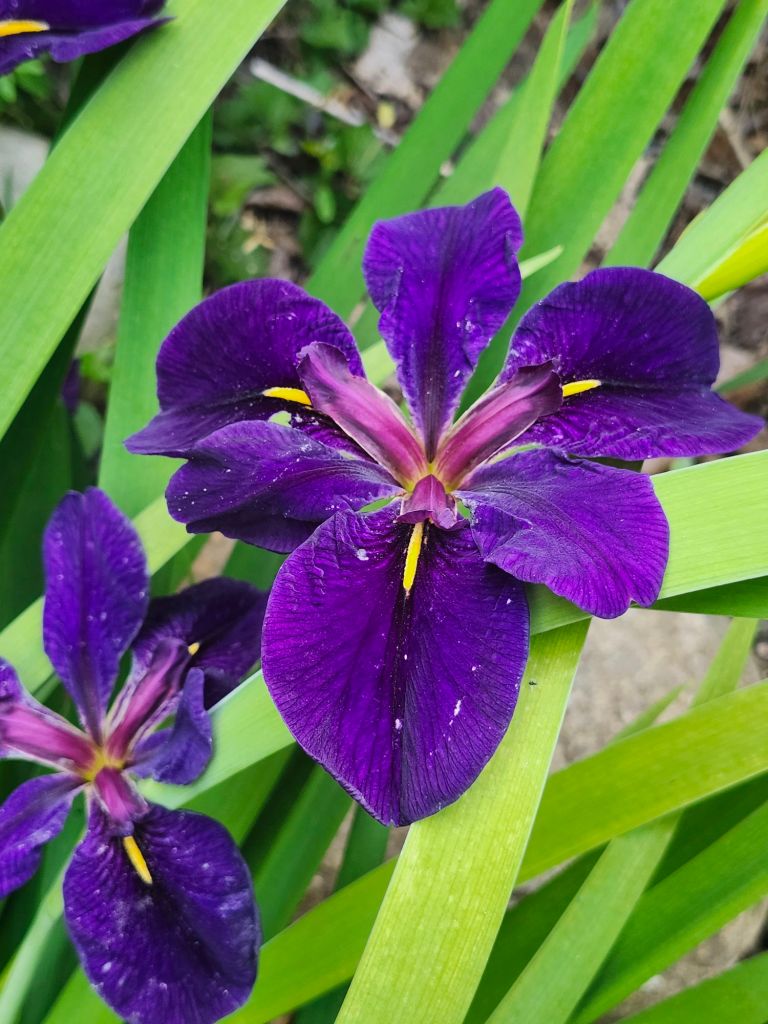
I suppose I could claim some design concept, such as repetition, though I’ve now admitted that I intended otherwise. I also did not fully intend to flood the shallow drainage ditch with irises, but both Louisiana and Japanese irises flourish in the damp soil that was turning to an unsightly weed patch. The irises and several other moisture tolerant perennials that I planted over the past year have eliminated much of the open ground, so my weeding labor has diminished considerably.
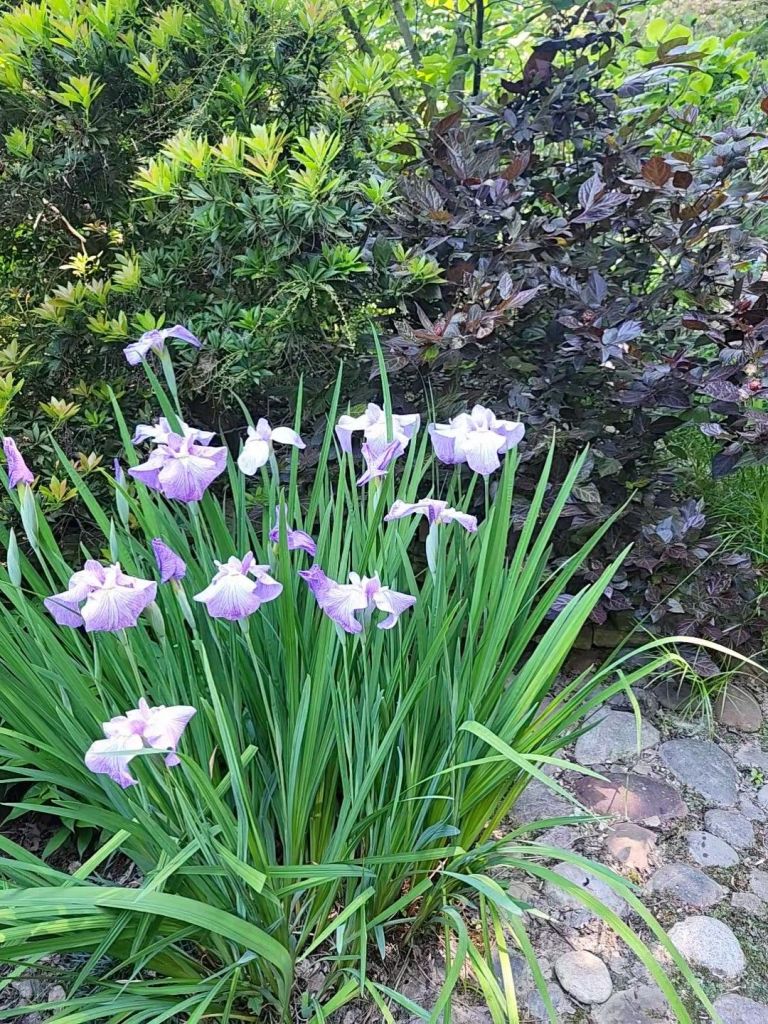
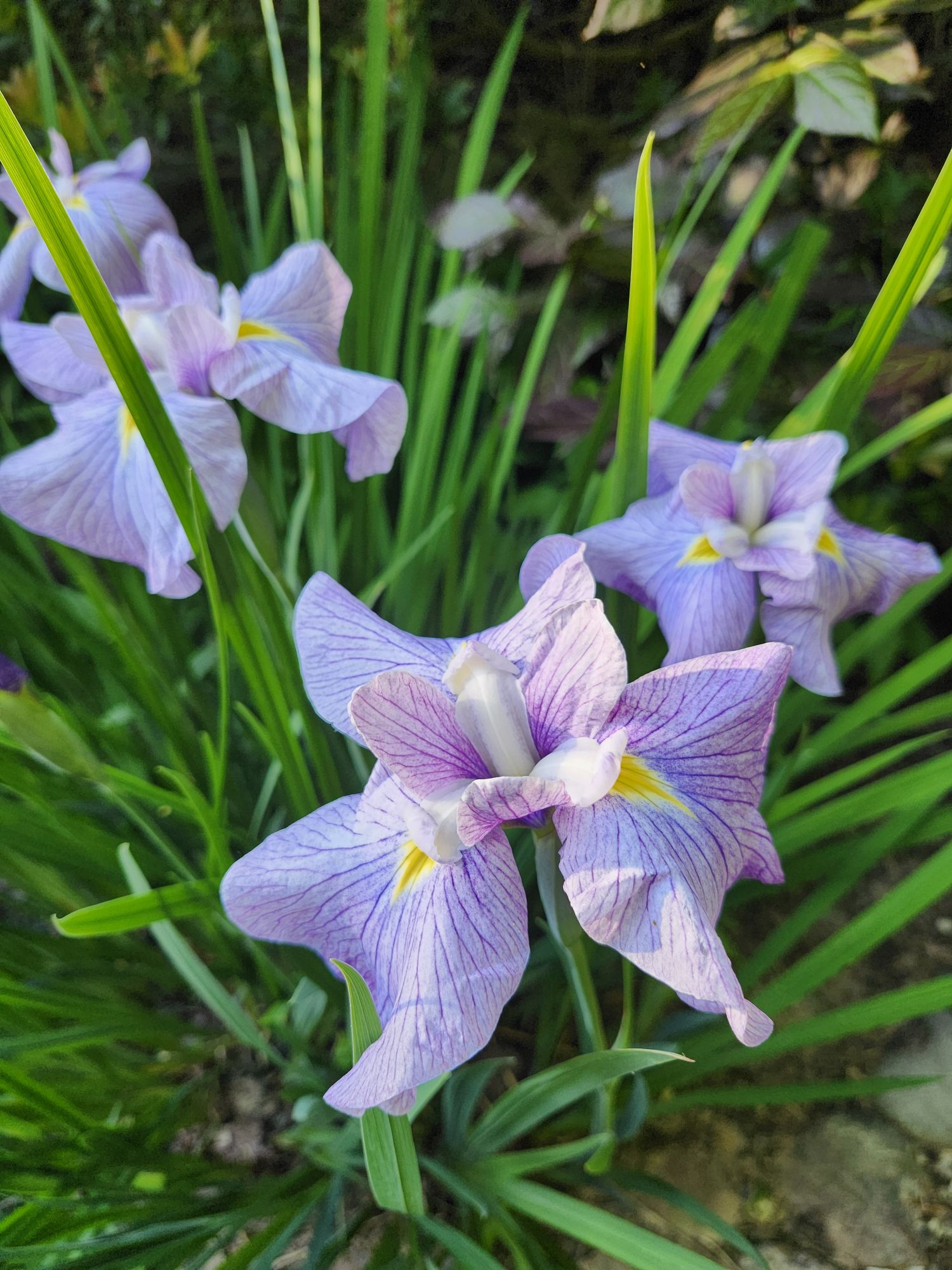
There is little doubt that the irises are ideally sited along edges of the ditch. (I should mention that ditch is probably too coarse a term for the shallow depression, but a “drainage depression” seems incorrect.) I’ve grown Japanese and Siberian irises (Iris sibirica) for years at the edges of ponds between boulders where their growth is restricted, but rarely in garden borders with room to spread. No doubt, several clumps will be divided, and perhaps entire clumps removed to vary the colors a bit.
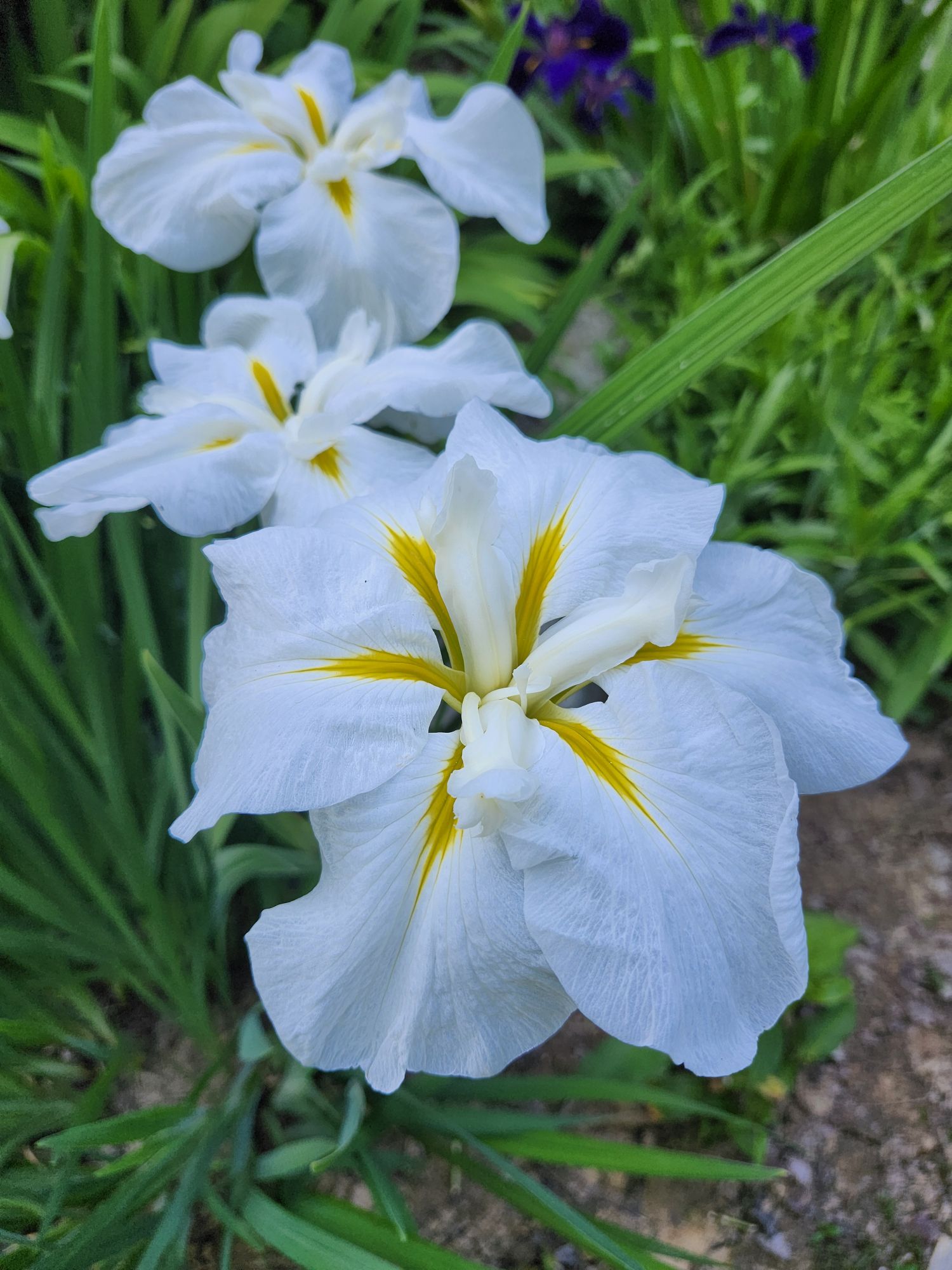
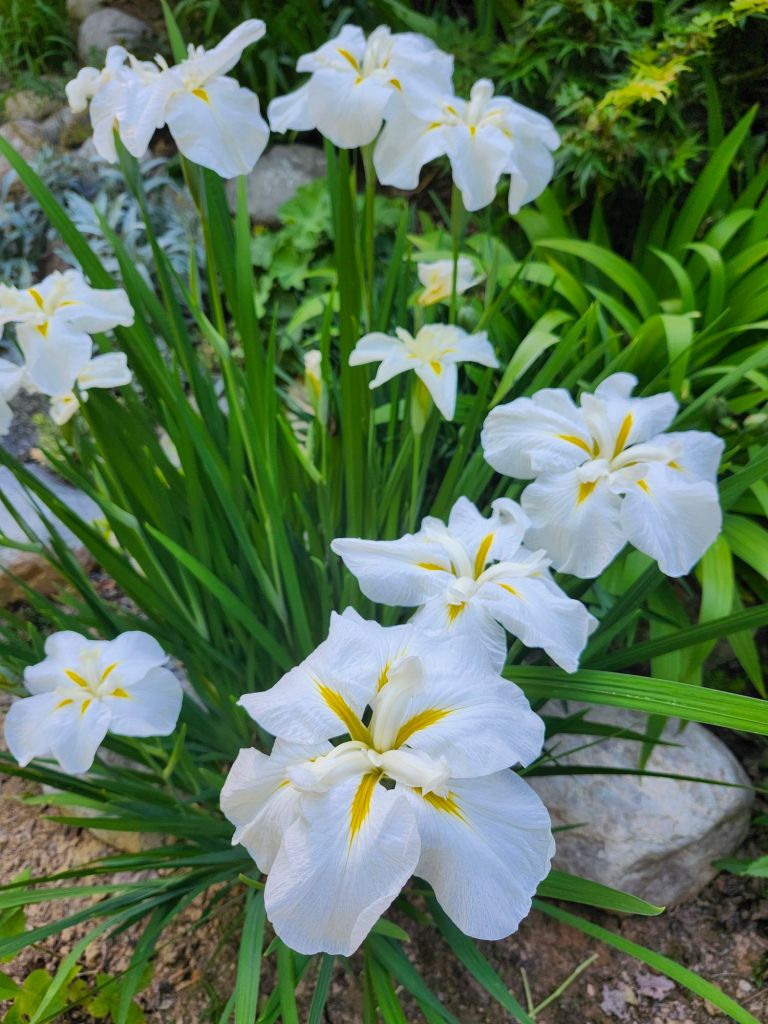
None of this is intended as a complaint. How could this be anything short of splendid? Also, the irises are ridiculously easy. In this soil that varies from waterlogged to slightly damp, nothing is needed, except of course, the division of flourishing clumps that have grown too large so that paths are completely obstructed.
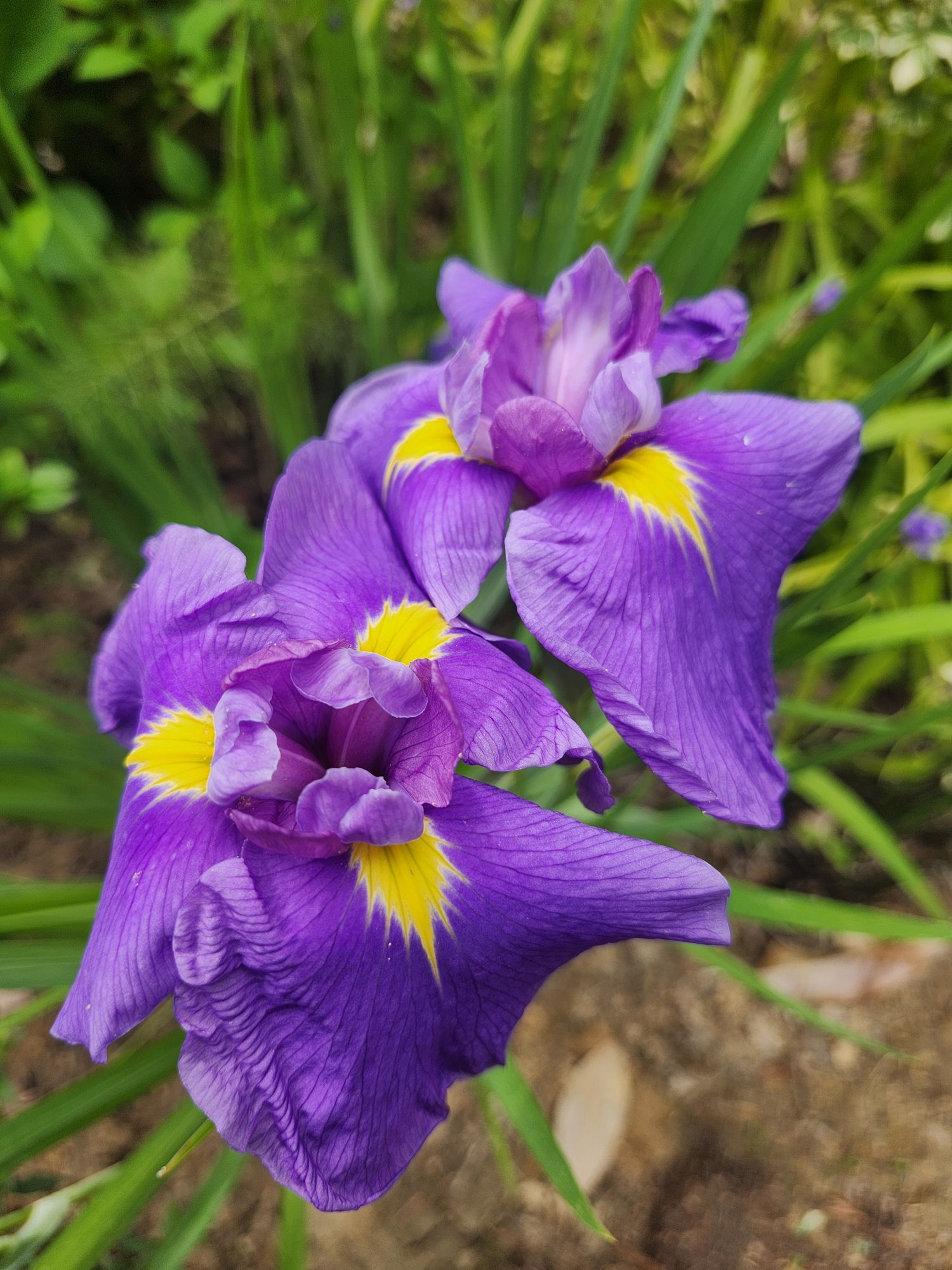
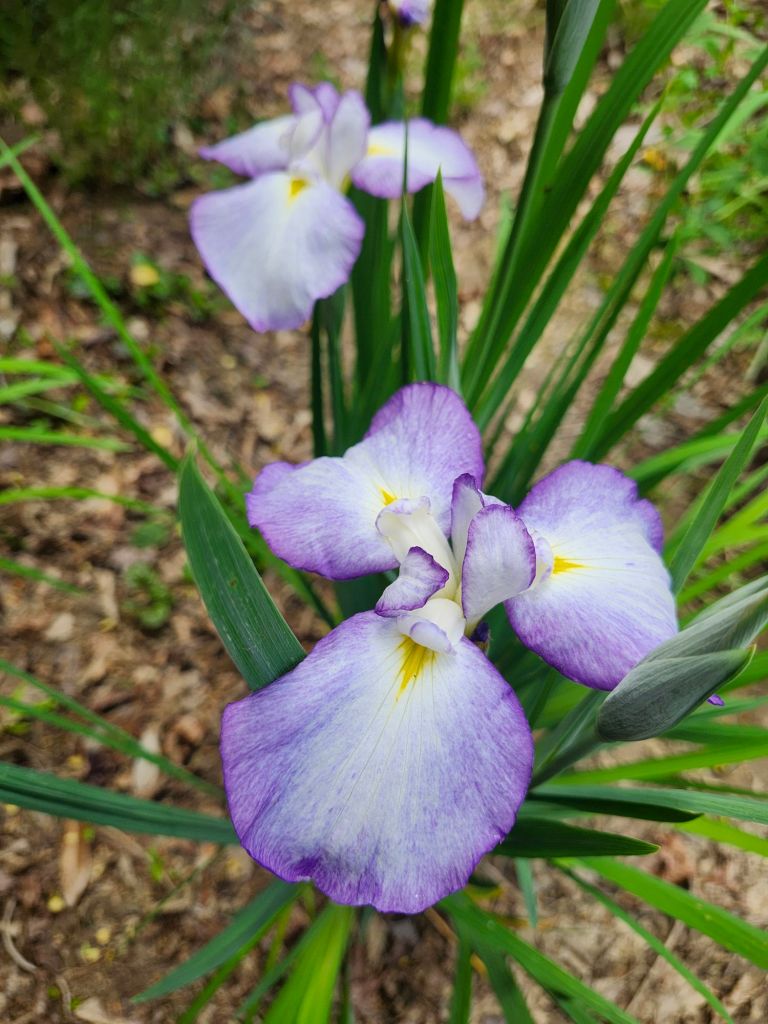
I must also mention that with additional varieties, the period of bloom is extended. There have been flowers of one iris or another for a month now, at the start of June, and I expect at least another ten days or two weeks with several still in bud. The blooms are large and beautifully colored. No care is required. The initial clump should be planted a few feet off a path that must be traveled, and the gardener should choose varieties for repetition or to vary colors. I will correct my error by moving some, and of course, I’ll happily add a few new varieties.
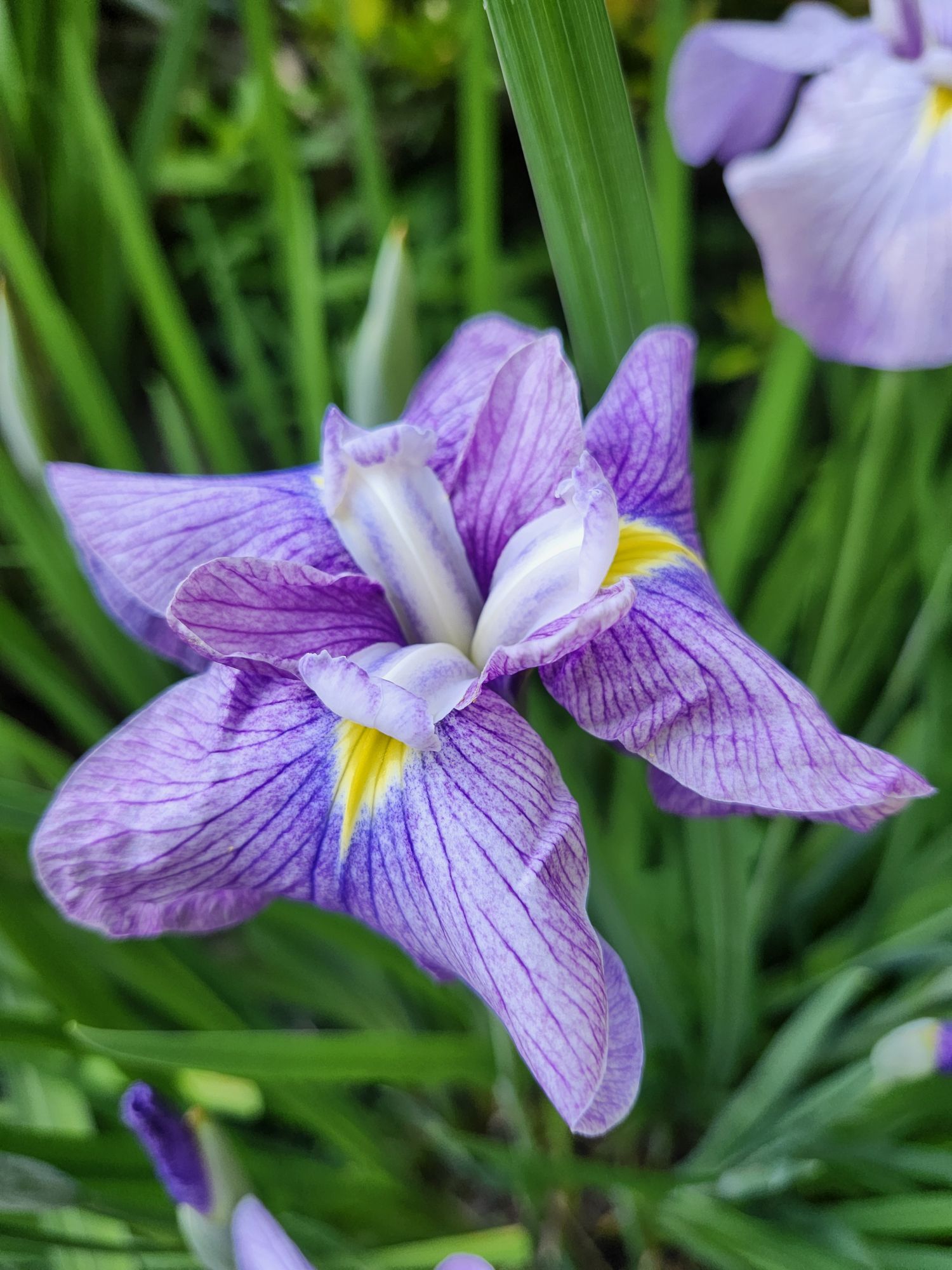


Beautiful irises!
‘Black Gamecock’ grows like a weed! Mine were almost completely eaten by gophers shortly after they were installed, but the few survivors are now replacing them. They are rad!
Fortunately, the rabbits residing nearby do not have an appetite for the irises. We have no gophers.